Ever feel like your stomach inflates like a balloon by afternoon? You’re not alone—and it’s not just what you ate for lunch. We've all been there, wondering why a healthy meal can leave you feeling so uncomfortable.
If you're tired of that digestive rollercoaster, it's time to get acquainted with two of your gut's most important allies. Think of it this way: digestive enzymes are the "prep cooks" that chop up your food, while probiotics are the "gardeners" who cultivate your gut's inner ecosystem.
Understanding how these two work—both on their own and together—is the first step toward finally feeling fantastic after you eat. We'll show you exactly how this dynamic duo can help you reclaim your digestive wellness and say goodbye to bloating for good.
Your Gut Health Dream Team
Let's be real, dealing with digestive drama is frustrating. You try to eat a healthy salad, and suddenly you feel like you've swallowed a balloon. Or you enjoy a slice of pizza with friends, only to regret it later with—dun, dun, dun—unwelcome gas. Yikes! We get it, and you are definitely not alone in this.
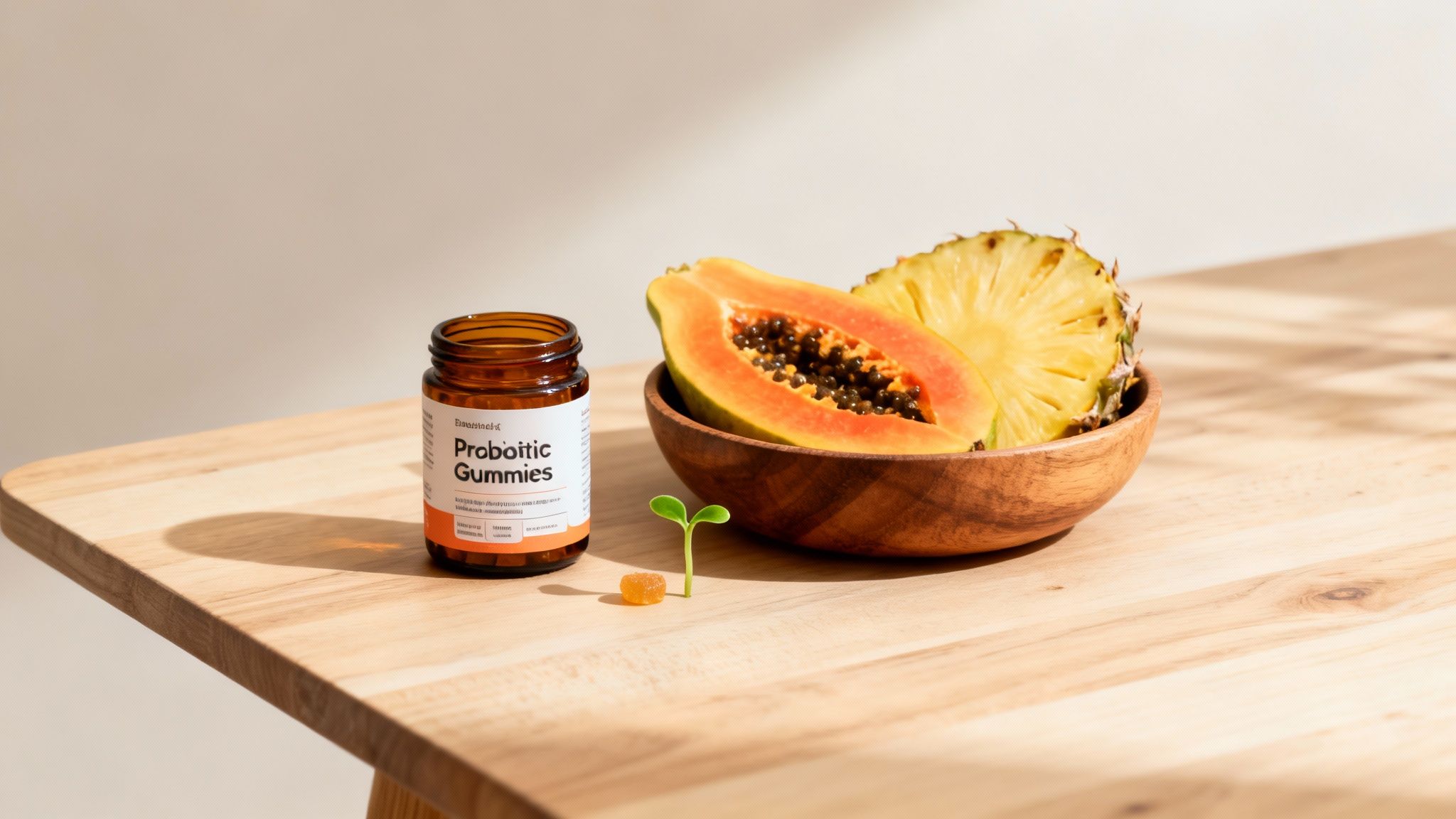
Many of us are searching for that one thing to solve bloating, indigestion, and that sluggish, heavy feeling. The great news? The answer might not be a single magic bullet, but rather a powerful partnership between probiotics and digestive enzymes.
Meet The Players: A Kitchen Analogy
Imagine your digestive system is a high-end restaurant kitchen. For everything to run smoothly and create a perfect dish (in this case, nutrient absorption!), you need a skilled team working in harmony.
-
Digestive Enzymes are the meticulous "Prep Crew." These are specialized proteins that act like tiny molecular scissors. Their job is to break down the large food molecules—carbohydrates, proteins, and fats—into smaller pieces your body can actually absorb and use. Without enough of them, that delicious meal just sits there, causing all sorts of trouble.
-
Probiotics are the "Master Gardeners" of your gut. These are the beneficial live bacteria that call your intestines home. They work tirelessly to maintain a healthy, balanced environment, fending off harmful microbes, supporting your immune system, and keeping the entire operation running smoothly.
So, while they have very distinct jobs, their work is deeply interconnected. When enzymes do their job well, they create a better environment for probiotics to flourish. Remember, supplements aren't the only tool; there are additional ways to support gut health with ingredients like olive oil that also help foster a thriving microbiome.
If this is all new to you, a great place to start is by understanding the foundation of a healthy gut. We have a helpful article that breaks down the essentials of natural probiotics and prebiotics and how they set the stage for digestive happiness.
Understanding Digestive Enzymes: The Unsung Heroes of Digestion
Ever wonder how that delicious avocado toast or hearty lentil soup actually fuels your body? The real credit goes to some tiny, unsung heroes working behind the scenes: digestive enzymes.
Think of them as microscopic scissors. Their one and only job is to snip apart the complex molecules in your food—proteins, fats, and carbs—into smaller, more manageable pieces. Without this crucial step, even the healthiest food would pass right through you, its nutrients locked away and unusable. It’s a powerful reminder that it's not just about what you eat, but what your body can actually absorb.
The Main Players on Your Digestive Team
Your body is a natural enzyme-producing powerhouse, with different types made in your mouth, stomach, and pancreas. Each one has a very specific assignment on the digestive assembly line.
- Amylase: This enzyme gets a head start, kicking off its work in your saliva to tackle carbohydrates from foods like bread, potatoes, and fruit.
- Protease: Found in your stomach and pancreas, this one is responsible for breaking down proteins from sources like beans, tofu, and nuts into their amino acid building blocks.
- Lipase: This enzyme is your fat-buster, breaking down dietary fats so your body can use them for energy and other vital functions.
When this system works like a well-oiled machine, digestion feels effortless. But sometimes, the production line slows down, leading to that all-too-familiar bloating, gas, and post-meal sluggishness. Yikes.
Why Might You Be Low on Enzymes?
It’s surprisingly common to experience a dip in your natural enzyme production. Several factors can throw a wrench in the works, leaving you feeling less than your best after eating.
One of the biggest culprits is simply aging. As we get older, our bodies naturally produce fewer enzymes. Chronic stress is another major factor—when your body is stuck in "fight or flight" mode, it puts digestion on the back burner. Certain health conditions or even just a poor diet can also deplete your precious enzyme reserves.
This is where the frustrating cycle begins. Food isn’t broken down properly, which leads to fermentation in the gut, causing uncomfortable gas and bloating. When this happens, it’s a clear sign your digestive system is calling for backup. Understanding this connection is the first step in learning how to improve nutrient absorption and get the most out of every meal.
Plant-Powered Enzymes to the Rescue
The good news is that nature provides a powerful solution. Certain plant-based foods come packed with their own natural digestive enzymes that can give your body the support it needs.
Two of the most celebrated plant-derived enzymes are:
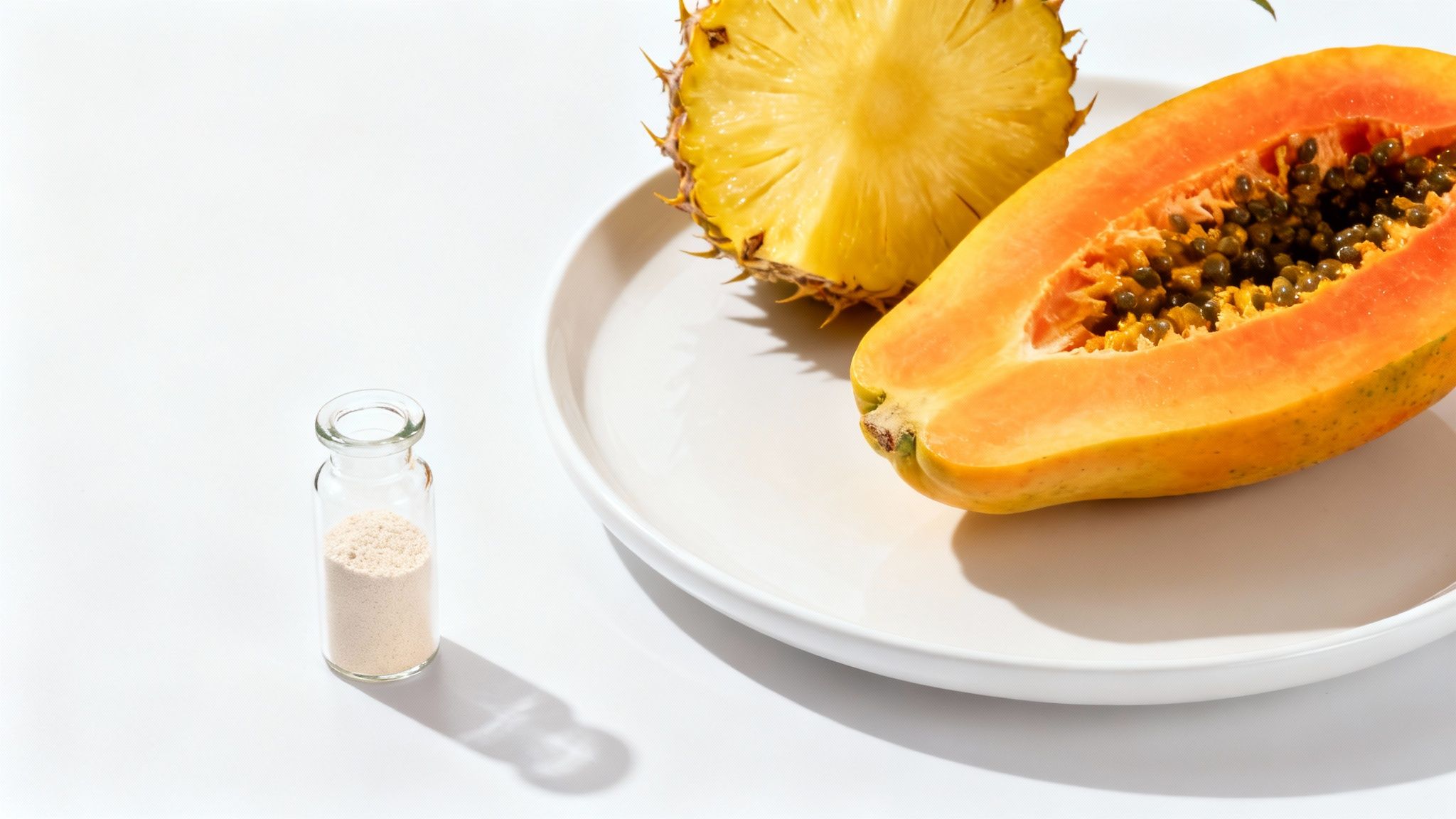
- Papain: Found in papaya, this is a fantastic protease that helps digest proteins.
- Bromelain: Sourced from pineapple, this enzyme also excels at breaking down proteins and has been noted for its soothing properties.
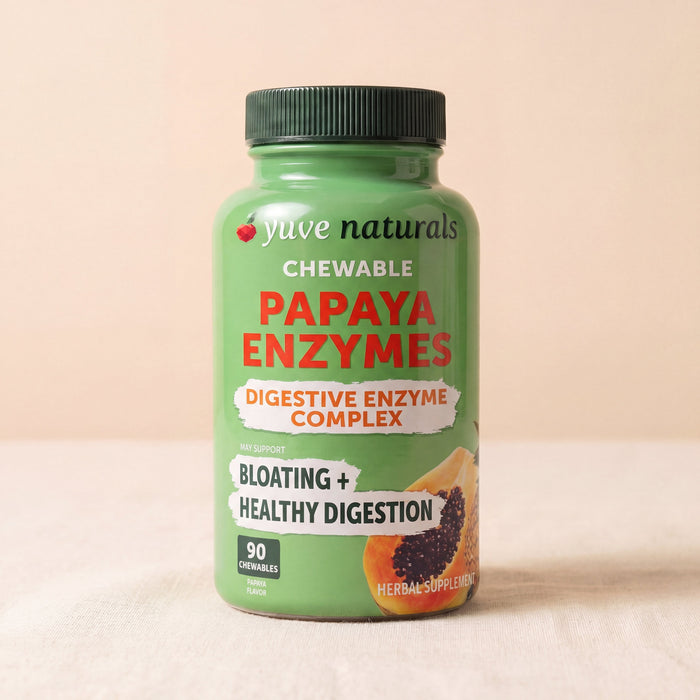
Incorporating these tropical fruits into your diet is a great start, but for consistent, targeted support, a supplement is a smart, proactive step. This is precisely why we created Yuve's Papaya Enzymes. These chewable tablets provide a concentrated dose of plant-based enzymes to take with your meals, making digestion smoother and more comfortable.
Think of it as giving your internal "prep crew" the extra tools they need to get the job done right, so you can enjoy your food without a second thought.
Meet Your Probiotics: The Good Guys In Your Gut
If digestive enzymes are the "prep crew" in your kitchen, think of probiotics as the master gardeners tending to your inner ecosystem. These are the live, beneficial bacteria that call your gut home, and their job is way more important than most of us realize.
Picture your gut as a vibrant, bustling community. When it's balanced, the good guys—your probiotics—are in charge. They keep the peace, help your body produce essential vitamins, and even support your immune system. It's a healthy, thriving garden where everything grows just right.
But sometimes, things get out of whack.
When The Garden Gets Overrun
Life happens. A round of antibiotics, a period of intense stress, or a diet heavy on processed foods can throw this delicate balance off. That's when the less-desirable microbes, the "weeds" of the gut, can start to take over, leading to familiar problems like:
- Unpredictable bloating and gas
- Irregular bowel movements
- Feeling sluggish or foggy
This imbalance is often called dysbiosis. It's a clear signal that your gut's friendly residents could use some backup. Getting that balance back is a huge step toward feeling energetic, comfortable, and truly well.
Meet The Most Common Probiotic Strains
You’ve probably seen names like Lactobacillus and Bifidobacterium on yogurt labels or supplement bottles. These are two of the most well-researched and beneficial families of probiotics, and each one contains different strains with specific jobs.
- Lactobacillus strains: Often found in fermented foods, these bacteria are pros at helping your body break down lactose (the sugar in milk) and supporting overall digestive wellness.
- Bifidobacterium strains: These are some of the very first microbes to set up shop in your gut as an infant. They play a massive role in maintaining a healthy gut lining and supporting your immune defenses.
For a natural source of these beneficial microbes, you can incorporate foods like Greek yogurt into your diet. Just remember, consistency is key when it comes to nurturing your gut garden. Want to dive deeper? Check out our guide on the best probiotics for digestive health for a more detailed look.
Why A Supplement Can Be A Game-Changer
While fermented foods are fantastic, getting a consistent, therapeutic dose of beneficial bacteria every single day can be a real challenge. That’s where a high-quality probiotic supplement becomes an invaluable part of your daily routine.
The demand for effective gut health solutions has absolutely exploded. The global probiotics market, valued at USD 114.31 billion in 2025, is projected to soar to an incredible USD 429.01 billion by 2035. This massive growth is being driven by a growing awareness of how a balanced microbiome impacts everything from digestion to immunity—exactly what people are looking for in clean, plant-based solutions. Learn more about the probiotics market surge.
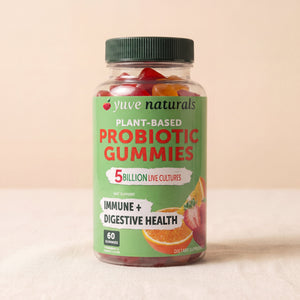
This is why we created our Yuve Vegan Probiotic Gummies. They deliver a powerful dose of beneficial bacteria in a delicious, easy-to-take form, making it simple and enjoyable to replenish your gut’s good guys. Taking them is a proactive step toward maintaining a happy, balanced gut so you can feel your best from the inside out.
How Probiotics And Enzymes Work Better Together
We've established that digestive enzymes are the "prep crew" and probiotics are the "gardeners" for your gut. But the real magic happens when they team up. Thinking of them as separate solutions completely misses the point of their incredible synergy—a partnership that can truly get your digestive health back on track.
They don't compete for the spotlight. Instead, probiotics and digestive enzymes are a powerful team, each making the other's job easier and far more effective. It's a self-sustaining cycle that creates the perfect conditions for your digestive system to work as it should.
The Synergistic Cycle: A One-Two Punch For Gut Health
Let's walk through a real-world example. Imagine you've just enjoyed a delicious, fiber-rich vegan chili. Here’s how this dynamic duo gets to work, step-by-step.
-
Enzymes Take the First Swing: The moment you start eating, the digestive enzymes you've taken with your meal (like Yuve Papaya Enzymes) spring into action. They get to work immediately, breaking down the complex carbohydrates from the beans, the proteins in the plant-based crumbles, and the healthy fats from the avocado on top.
-
Creating a Better Environment: By breaking down your meal so efficiently, the enzymes prevent large, undigested food particles from lingering and fermenting in your gut. This is huge—it means less bloating, less gas, and a much calmer, more hospitable environment for the good bacteria to live in.
-
Probiotics Arrive to a Welcoming Home: Now, your probiotics enter a gut that isn't in a state of chaos. The plant fibers from your chili have been partially broken down, creating prebiotics—the ideal fuel for your beneficial bacteria to feast on. This helps them thrive and multiply.
-
Probiotics Return the Favor: And here's where it gets really interesting. A healthy, robust probiotic population actually helps your body regulate its own natural production of digestive enzymes. It becomes a beautiful feedback loop where each component supports the other, leading to lasting digestive harmony.
This is all about moving from a state of imbalance back to a restored, balanced gut.
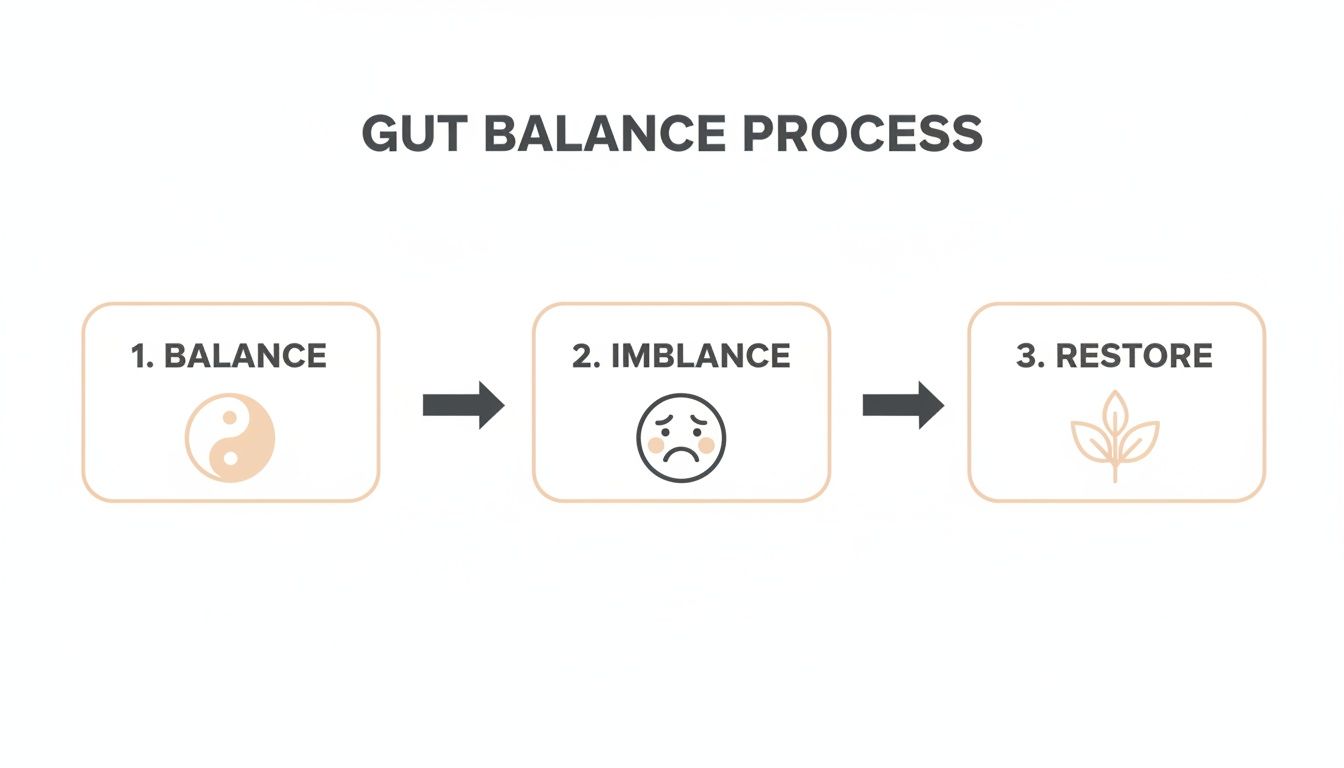
The journey from gut discomfort back to a state of balance is entirely possible when you restore the gut's natural processes.
A Founder’s Story: It Was A Breakthrough Moment
This powerful synergy isn’t just theoretical—it's deeply personal. Our founder, Sam, struggled for years with his own digestive issues. He'd eat what he thought was a perfectly healthy meal, only to be hit with uncomfortable bloating and that heavy, sluggish feeling that would tank his entire afternoon.
He tried everything. First, he focused solely on digestive enzymes. They helped, but didn't quite solve the underlying feeling of imbalance. Then he switched to probiotics, which improved things over time but didn't give him that immediate post-meal relief he desperately needed.
"I was so frustrated. It felt like I was missing a key piece of the puzzle. The breakthrough finally came when I started combining them—taking a plant-based enzyme with my meals and a quality probiotic every morning. It was like flipping a switch. The bloating stopped, I had more energy, and I could finally enjoy food without worrying about the aftermath." - Sam, Yuve Founder
Sam’s experience is the heart of why we offer both Yuve Papaya Enzymes and Yuve Vegan Probiotic Gummies. He realized that tackling digestive health from both angles was the key to not just managing symptoms, but building a truly resilient gut.
The Synergistic Action Plan
This table breaks down how enzymes and probiotics work together step-by-step for better digestion.
| Step | Digestive Enzymes' Role | Probiotics' Role |
|---|---|---|
| 1. Immediate Action | Begin breaking down fats, carbs, and proteins in your meal right away. | Stand by, waiting for the ideal environment. |
| 2. Environment Prep | Reduce large, undigested food particles, preventing gas and bloating. | Enter a calmer gut, ready for prebiotics. |
| 3. Fueling Up | Help create prebiotics (fiber) from the food you eat. | Feast on the prebiotics, allowing them to multiply and flourish. |
| 4. Long-Term Support | Provide immediate relief from digestive discomfort after meals. | Support the body's natural enzyme production, strengthening the whole system. |
By working in tandem, they create a gut environment that is both immediately comfortable and sustainable for long-term health.
The Growing Movement: A Smarter Approach
We're not the only ones who see the incredible potential of this combination. Pairing probiotics and digestive enzymes is becoming a go-to strategy for tackling stubborn gut issues for a reason. Market data shows their combined power can boost nutrient absorption and ease IBS-like symptoms by up to 30% in some clinical settings.
The wider probiotics market, which is increasingly including enzyme blends for better synergy, was valued at USD 87.70 billion in 2023 and is projected to reach USD 220.14 billion by 2030. You can discover more insights about the probiotics market on Grand View Research.
This isn't just a fleeting trend. It's a smarter, more complete approach to feeling your best from the inside out.
Who Can Benefit From This Gut Health Duo
So, we've broken down what probiotics and enzymes are, but the real question is probably lingering in your mind: is this combination something I actually need?
It’s a fair question, and the answer is that a surprising number of us could use this kind of targeted gut support. If you find yourself nodding along to any of the situations below, think of it as your gut’s way of asking for a little help. We’ve all been there, and thankfully, there’s a clear path to feeling better.
If You Regularly Deal With Post-Meal Bloating
Does your stomach feel fine in the morning, only to puff up like a balloon by the afternoon? That frustrating, uncomfortable bloat is one of the clearest signs that your digestive system isn't keeping up with demand.
This usually means your body is struggling to produce enough enzymes to break down food efficiently. When food hangs around too long in your gut, it starts to ferment, creating gas and that all-too-familiar bloating. This is where combining probiotics and digestive enzymes can be a real game-changer.
If Certain Foods Are Your "Frenemies"
Do you adore beans, broccoli, or lentils but hate the, well, musical side effects? Or does a little dairy turn into a big evening of regret? Many people have trouble digesting specific food groups, especially those loaded with fiber, lactose, or certain complex proteins.
This is a classic sign of an enzyme shortfall. A targeted supplement like Yuve Papaya Enzymes, taken just before a meal, can give your body the exact tools it needs to dismantle these tricky foods. It means you can finally enjoy them without dreading the aftermath.
If Your Energy Tanks After a Meal
Ever feel an overwhelming urge to nap right after eating? That sluggish, heavy feeling—often called a "food coma"—isn't a mandatory part of digestion. It can signal that your body is spending a huge amount of energy trying to process a difficult meal.
When enzymes step in to help break down food efficiently, your body doesn't have to work nearly as hard. That frees up energy, leaving you feeling light and revitalized after you eat, not drained and ready for the sofa.
If You Follow a Plant-Based Diet
A vegan or high-fiber diet is incredible for your health, but it definitely puts your digestive system to work. All those wonderful plant fibers, legumes, and whole grains demand a hefty supply of enzymes to be broken down properly. Supplementing can help your body access all the nutrients in your plant-powered meals while keeping the gas and bloating that can tag along with a high-fiber lifestyle in check.
This gut-health duo is quickly becoming a wellness essential for good reason. Market forecasts predict the combined sector will grow from USD 79.2 billion in 2025 to USD 165.1 billion by 2034, fueled by a growing awareness of how enzyme deficiencies affect digestion. Discover more insights about the probiotics market on GMI.
This isn't just about following a trend; it's about proactively supporting your body's core functions. Giving your system the support of Yuve’s probiotics and enzymes is a smart, powerful step toward enjoying food and feeling your absolute best.
A Practical Guide to Using Probiotics and Enzymes
Alright, let's turn theory into practice. Knowing what probiotics and digestive enzymes are is one thing, but knowing how to use them is where you’ll really start to feel the difference. Here’s how to build a simple, effective routine that fits into your life.
Timing Is Everything
One of the biggest questions people have is, "When should I take these?" And it’s a great question, because timing can definitely impact how well your supplements work.
- Digestive Enzymes: Think of these as your meal-time prep crew. You'll want to take them just before or right as you start eating. Their whole purpose is to break down the food you’re about to consume. If you wait until you're done eating, you’ve missed the window.
- Probiotics: These little helpers generally do best on an empty stomach. Taking them first thing in the morning or right before you go to bed gives the good bacteria a clearer path through the harsh stomach acid to where they need to go—your intestines.
But the most important rule of all? Consistency is key. Pick a time that works for you and stick with it every single day. That’s how you build lasting results.
How to Choose a High-Quality Supplement
Walking into the supplement aisle can feel overwhelming. To make it easier, you can ignore the flashy marketing and just look for a few key quality signals on the label. This is something we're obsessed with at Yuve.
Here’s a quick checklist of what to look for:
- 100% Vegan and Plant-Based: This confirms the product is free from animal ingredients.
- Non-GMO: A simple certification that tells you the ingredients haven’t been genetically modified.
- Gluten-Free and Allergen-Free: Absolutely essential if you have sensitivities to things like gluten, soy, or dairy.
- No Gelatin: Many capsules and gummies use gelatin, so keep an eye out for gelatin-free formulas.
These aren't just trendy buzzwords. They're indicators of a clean, well-made supplement designed to help your body without adding any unnecessary junk.
Your Simple Daily Gut Health Routine
Feeling your best shouldn't be complicated. The goal is to create simple habits that deliver real results without adding more stress to your day. Here's a practical plan to get you started on the path to a happier gut with probiotics and digestive enzymes.
Our founder, Sam, actually discovered that this exact routine was the ticket to finally ending his own digestive troubles. It’s the simple, two-step approach that Yuve was built on.
Here’s your easy-to-follow checklist:
- Before Your Main Meals: Take Yuve Papaya Enzymes. This small step gets your system ready to break down food efficiently, which can head off that post-meal bloat and heaviness before it even starts.
- Every Morning: Kick off your day with our delicious Yuve Vegan Probiotic Gummies. Making this a daily habit helps replenish the friendly bacteria in your gut, supporting long-term balance, a stronger immune system, and overall wellness.
By using this two-pronged approach, you’re supporting your digestive health from both sides. The enzymes offer that immediate, meal-specific relief, while the probiotics work quietly in the background to build a healthy, resilient gut. It’s a simple strategy for enjoying your food and feeling great, day in and day out.
Frequently Asked Questions
It's totally normal to have questions when you're thinking about adding new supplements to your routine. We want you to feel completely confident about your path to better gut health, so let's clear up a few of the most common things people ask about probiotics and digestive enzymes.
Can I Take Probiotics And Digestive Enzymes At The Same Time?
You absolutely can. In fact, taking them together is not only safe but often the best way to get the full spectrum of benefits. Think of them as two different specialists on your digestive team—they have separate jobs and work at different times, so they won't get in each other's way.
For a simple and effective routine, try taking your digestive enzymes, like Yuve Papaya Enzymes, right before you eat or with your first few bites. This timing gets them in position to help break down your food the moment it arrives.
As for probiotics, such as our Yuve Vegan Probiotic Gummies, taking them on an empty stomach first thing in the morning is often ideal. It gives them a clearer shot to your intestines. That said, the single most important factor is consistency, so find a time that you can stick with every single day.
How Long Does It Take To See Results?
This is a fantastic question, and the honest answer is: it depends, because everybody's gut is different. With digestive enzymes, many people report feeling a difference almost immediately. You might notice less bloating or that post-meal heaviness disappear after the very first time you use them. That fast relief is a game-changer.
Probiotics, on the other hand, are playing a longer game. You're not just looking for a quick fix; you're cultivating a thriving community of good bacteria in your gut. It can take one to two weeks of daily use to really start noticing changes like more regular digestion and a general feeling of balance. Be patient—the long-term benefits are definitely worth it!
Are Yuve's Supplements Safe For Vegans?
Yes, and we couldn't be prouder of it! This is at the very heart of what we do. Every single Yuve supplement, from our probiotics to our digestive enzymes, is 100% plant-based and vegan.
We built our brand to provide clean, reliable options for anyone leading a health-conscious life. That means our products are also:
- Non-GMO
- Gluten-Free
- Gelatin-Free
- Free from common allergens like dairy and soy
We believe you shouldn't have to compromise on your values to get effective supplements. You can feel great about what you’re putting into your body.
Ready to feel the difference a happy gut can make? Give your digestive system the powerful, plant-based support of the Yuve dream team. Start with our Papaya Enzymes to tackle mealtime discomfort and add our Vegan Probiotic Gummies to build a strong foundation for lasting gut health.