Ever feel like your stomach inflates like a balloon by afternoon? You’re not alone-and it’s not just what you ate. That frustrating, uncomfortable bloating can make you feel like your own body is working against you. Mealtime, which should be a source of joy, can quickly turn into a source of anxiety.
We've been there, and we get it. So many of us are trying to piece together the puzzle of our digestive health, and the first instinct is often to focus on what to cut out. But I do NOT think restriction is always the answer. Sometimes, the most powerful shift comes from what you decide to add in.
In this guide, you’ll learn why fermented foods are a time-tested, delicious way to boost your gut health, improve digestion, and support your immune system. We'll explore how these ancient superfoods can help you feel your best from the inside out, without drastic changes or complicated rules.
What Exactly Are Fermented Foods?
Think of fermentation as a natural transformation process, guided by beneficial microbes like bacteria and yeast. These tiny helpers essentially "pre-digest" the food, which does a few incredible things for your body:
- Creates Probiotics: The process cultivates live, friendly bacteria-the "good guys" that are essential for a balanced gut microbiome.
- Unlocks Nutrients: Fermentation can make vitamins and minerals in food more bioavailable, meaning your body can actually absorb and use them more easily.
- Reduces "Anti-Nutrients": It helps break down compounds found in some plant foods that can otherwise interfere with proper digestion.
If your gut health has been a constant battle, learning about the unmistakable signs of an unhealthy gut can be the first step toward finding relief. Fermented foods offer a natural way to start rebuilding a happier, more resilient digestive system.
How Fermentation Creates a Gut Health Powerhouse
Let's pull back the curtain on fermentation. It might sound like a complicated science experiment, but it’s actually an ancient, natural process that transforms everyday foods into something truly special for your gut.
Think of it as nature giving your digestive system a helping hand.
During fermentation, friendly microbes-mostly beneficial bacteria and yeasts-go to work on the food. They feast on the natural sugars and starches, breaking them down into simpler, more manageable forms. So, by the time you take a bite of sauerkraut or sip on a glass of kefir, a lot of the digestive heavy lifting has already been taken care of.
This "pre-digestion" process does something amazing: it unlocks the nutrients packed inside the food, making them far easier for your body to absorb. It’s like finding a key to a treasure chest of vitamins and minerals that your gut might have struggled to access on its own.
Unlocking Nutrients and Reducing Irritants
One of the most impressive tricks fermentation has up its sleeve is its ability to neutralize antinutrients. These are naturally occurring compounds in many plant-based foods-think grains, beans, and seeds-that can sometimes hinder our absorption of key minerals like iron and zinc.
As the good microbes work their magic, they effectively dismantle these antinutrients. The result is that you get more nutritional value from the food you’re eating. It’s a simple yet powerful way to maximize what you get from every meal.
This concept map breaks down how fermented foods can help turn a troubled tummy into a happy, thriving gut.
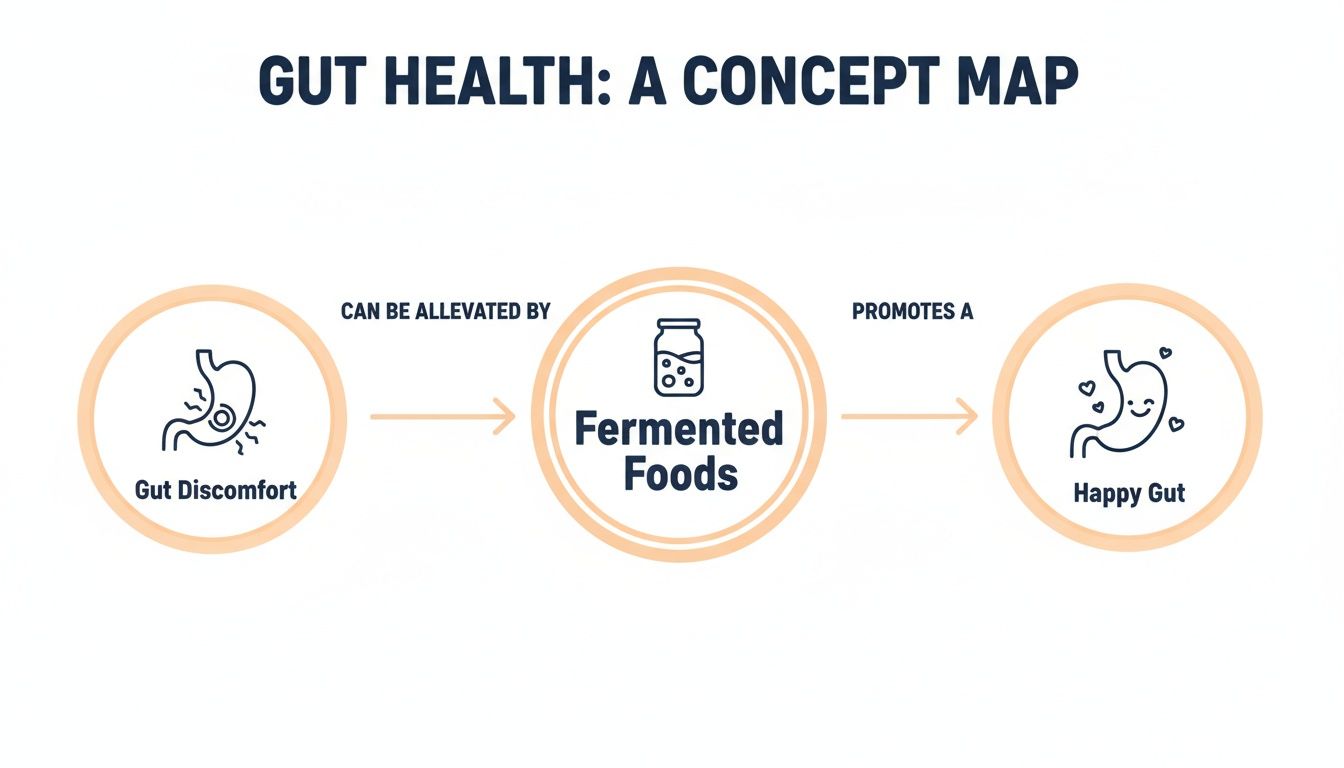
Ultimately, bringing these foods into your diet is a direct route to easing common digestive woes and building a more resilient internal ecosystem.
The Probiotic Power-Up
Now for the headliner: probiotics. These are the live, beneficial bacteria that are the stars of the fermentation show. A healthy gut is all about balance, but factors like stress, diet, and medications can easily throw things out of whack, leading to dun, dun, dun-unwelcome gas. Yikes!
Fermented foods act like reinforcements arriving on the battlefield of your gut. They introduce diverse, beneficial microbial strains that help restore balance, supporting everything from smooth digestion to a robust immune response.
By consistently including different fermented foods in your diet, you're constantly seeding your gut with these helpful allies. They help push out the less desirable microbes and create an environment where your body can truly flourish. If you’re curious about taking this further, it's worth learning more about how to incorporate natural probiotics and prebiotics into your routine. This small adjustment can be a cornerstone of lasting digestive health.
Building a Stronger Immune System from Your Gut
It might sound strange, but a huge chunk of your immune system-an estimated 70%-resides right in your gut. When you stop and think about it, though, it makes perfect sense. Your digestive tract is a major gateway to the outside world, so it has to be ready to stand guard.
Think of your gut microbiome as a bustling, vibrant ecosystem. A healthy one is like a thriving rainforest, filled with diverse species all working in harmony to keep the environment strong and resilient. This "rainforest" can easily fend off the occasional invader, whether it’s a common cold or a nasty stomach bug.
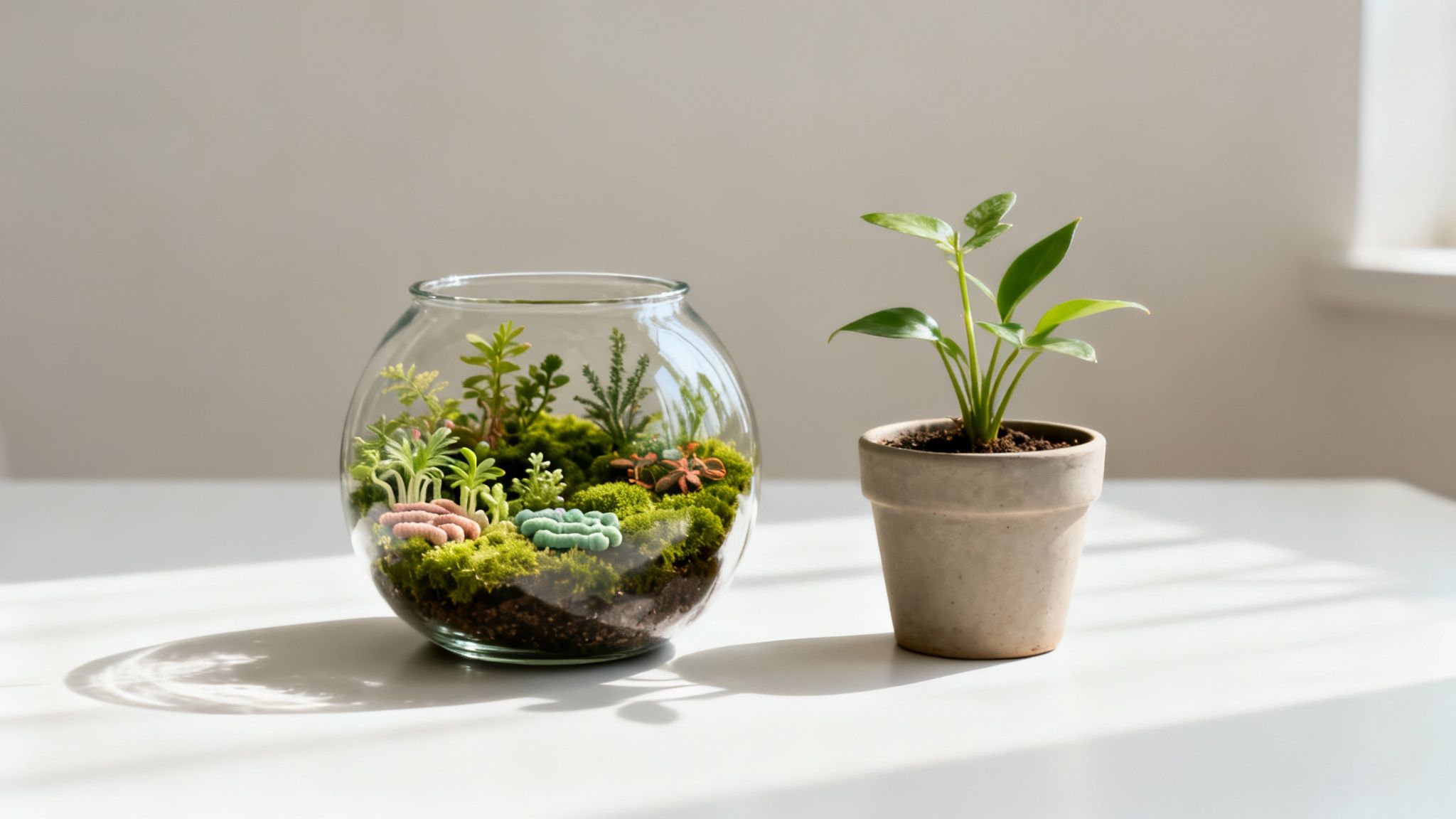
Now, imagine the opposite: a gut that lacks this diversity. It’s more like a monoculture farm, where only one type of crop is grown for miles. This kind of system is incredibly vulnerable. A single pest or a sudden drought can wipe everything out. In the same way, when your gut is low on beneficial bacteria, your immune defenses are weaker and can be easily overwhelmed.
How Fermented Foods Boost Your Defenses
This is exactly where fermented foods come into play. They act like reinforcements for your gut's support team, helping to populate it with the diverse allies it needs to stay balanced and ready for action.
When you enjoy foods like kimchi, sauerkraut, or miso, you’re sending live, beneficial bacteria straight to the front lines. These microbes get to work reinforcing your gut lining, making it a tougher barrier for harmful pathogens to cross. They also communicate with your immune cells, essentially coaching them to be smarter and more effective at their jobs.
Science Corner: A Stanford Study on Gut Diversity
A key clinical trial from the Stanford School of Medicine revealed that people who ate fermented foods every day saw a significant boost in their microbiome diversity. What this means for you is that a richer gut ecosystem is better at producing compounds that lower inflammation, which is crucial for preventing your immune system from getting overworked and stressed out. Adding a spoonful of sauerkraut to your plate isn't just about flavor-it's a direct investment in building a more resilient immune system.
Your Immune System’s Best Friends
So, how does it all connect? By consistently eating fermented foods, you aren’t just helping your digestion; you're actively cultivating a powerful internal defense force.
- They add diversity: Introducing new strains of good bacteria helps create that strong, "rainforest" environment in your gut.
- They reduce inflammation: A balanced gut helps dial down systemic inflammation, freeing up your immune system to fight actual threats.
- They strengthen the gut barrier: A healthier gut lining stops unwanted particles from leaking into your bloodstream and triggering an unnecessary immune response.
Every bite of fermented food is a deposit into your wellness bank account. It's a simple, proactive choice that pays dividends in your overall health and resilience, especially during times when you need your body to be at its strongest.
By focusing on nourishing your gut, you're giving your immune system the solid foundation it needs to protect you. If you're looking to take things even further, see our guide on how a probiotic can offer even more immune support. It's all about creating a powerful synergy for your health.
Easy and Delicious Ways to Eat More Fermented Foods
Okay, we've covered the science behind fermented foods, but let's get to the best part: actually eating them! Getting these gut-friendly powerhouses onto your plate is far easier than you might think. No complicated recipes or drastic diet changes required.
It's all about starting small and discovering what you genuinely enjoy. Think of it as adding a new layer of flavor to meals you already make, not a complete overhaul. A spoonful here and there can make a real difference.
Sam's Story: A Personal Journey with Fermented Foods
This was a game-changer for our founder, Sam. For years, he was locked in a frustrating cycle of digestive issues, feeling bloated and uncomfortable after nearly every meal. It felt like a constant guessing game of what to cut out next.
The real shift happened when he changed his focus from subtracting foods to adding them. He started with one simple habit: a spoonful of sauerkraut with his lunch every day. That's it. Within weeks, the difference was undeniable-less bloating, better energy, and a feeling of being more in tune with his body. This small, consistent change was one of the key moments that inspired him to create Yuve, helping others find that same relief.
Simple Swaps and Tasty Additions
Ready to follow Sam’s lead? Here are some incredibly simple ways to get started, with a focus on versatile and delicious vegan-friendly foods.
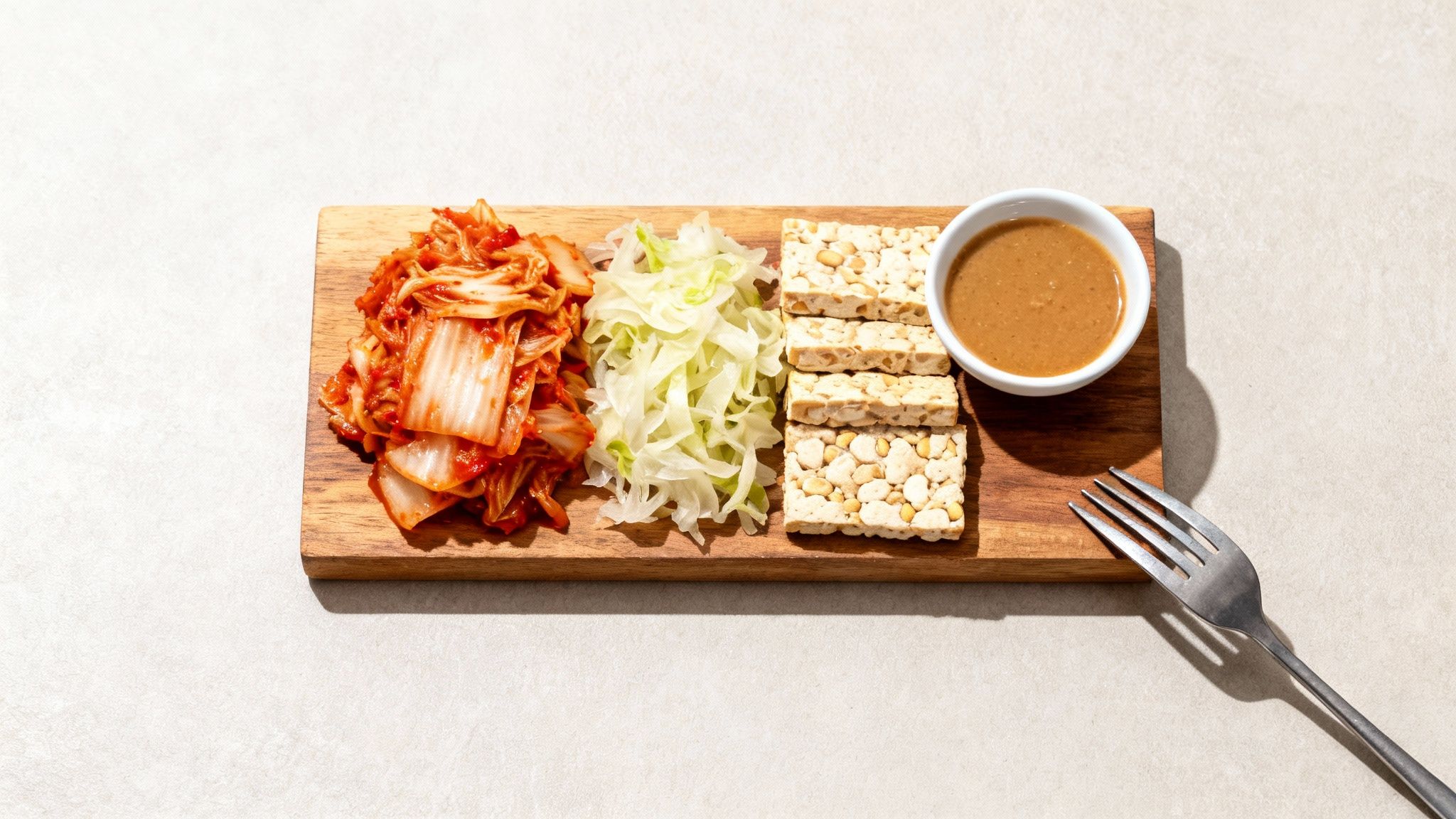
- Sauerkraut: Forget thinking of it as just a hot dog topping! A forkful of crisp, tangy sauerkraut can instantly elevate salads, sandwiches, and grain bowls with a zesty crunch and a probiotic punch.
- Kimchi: Spicy, savory, and brimming with flavor, kimchi is fantastic stirred into rice, folded into scrambled tofu, or even piled on a vegan burger. Just a little bit completely wakes up a dish.
- Miso: This fermented soybean paste is a secret weapon for creating deep, savory umami flavor. Whisk a small amount into salad dressings, soups, or marinades to give simple vegetable dishes an incredible depth.
- Tempeh: Made from fermented soybeans, tempeh is a firm, protein-packed block that’s a fantastic alternative to tofu. Try crumbling it into pasta sauces, slicing it for sandwiches, or cubing and baking it until perfectly crispy.
For an even deeper dive into the variety available, the world of Japanese fermented foods offers a huge range of unique flavors and textures to explore.
Your Guide to Vegan-Friendly Fermented Foods
| Fermented Food | Main Ingredient | Flavor Profile | Easy Way to Use It |
|---|---|---|---|
| Sauerkraut | Cabbage | Tangy, sour, crisp | Add to salads or sandwiches for a zesty crunch. |
| Kimchi | Cabbage, radish | Spicy, sour, umami | Stir into fried rice or serve alongside scrambled tofu. |
| Miso Paste | Soybeans, rice, or barley | Salty, savory, rich | Whisk into dressings, soups, or glazes for vegetables. |
| Tempeh | Soybeans | Nutty, earthy, firm | Crumble into chili, marinate and bake, or slice for a BLT. |
| Kombucha | Tea, sugar | Fizzy, sweet, tart | Drink as a refreshing alternative to soda or sugary drinks. |
| Water Kefir | Water, sugar grains | Bubbly, slightly sweet | A great dairy-free probiotic beverage, flavor with fruit. |
| Vegan Yogurt | Coconut, soy, almond | Creamy, tangy | Top with granola or blend into smoothies. |
This table is just a starting point. Don't be afraid to experiment and find what you love!
The goal isn’t perfection; it’s progress. Start with one food that sounds appealing and find one meal where you can easily add it. You might be surprised at how quickly it becomes a habit you look forward to.
The Surprising Perks Beyond Better Digestion
While fantastic digestion is a huge win, the benefits of fermented foods don't stop there. Think of a healthy gut as the central hub for your entire body's wellness. When it's balanced and thriving, the positive effects ripple outward, influencing everything from your mood to your metabolism.
One of the most fascinating connections is the gut-brain axis. This isn't just a vague concept; it's a constant, two-way communication superhighway linking your digestive system and your brain. The microbes in your gut are little chemical factories, producing neurotransmitters like serotonin-often called the "happy chemical"-that directly influence your mood and mental clarity.
So, when you're dealing with that frustrating brain fog or a persistently low mood, it could actually be a signal that your gut is calling for backup. By nourishing your microbiome with fermented foods, you're essentially helping it produce more of these mood-boosting compounds. You're supporting a sunnier outlook from the inside out.
Fueling Your Body for Better Energy
Beyond mental well-being, a balanced gut is a game-changer for your metabolic health. The good bacteria from fermented foods help your body manage blood sugar much more effectively. This means you can sidestep those dramatic energy spikes and crashes that have you reaching for another coffee by 3 PM.
They also make the nutrients from your food far more accessible. Fermentation can boost your body’s ability to absorb essential vitamins by as much as 30-50%.
A systematic review actually connected regular intake of fermented foods to significant improvements in metabolic markers. For example, eating them just a few times a week was associated with:
- 10-15% improvements in glucose levels
- A 12% reduction in LDL cholesterol
Discover more insights about these metabolic benefits. What this really means for you is more stable, sustained energy throughout the day. Instead of running on fumes, your body is efficiently turning food into fuel, helping you feel vibrant and focused.
Achieving True Holistic Wellness
It’s easy to think of our bodies as separate systems-digestion over here, mental health over there. But the truth is, everything is deeply interconnected. A happy gut is the foundation for a healthier you, period.
Supporting your gut isn't just about avoiding bloating. It's about investing in better mood, sharper thinking, and more consistent energy. The benefits of fermented foods show us that when you take care of your gut, your entire body reaps the rewards.
By adding these powerful foods to your plate, you’re not just chasing a single symptom. You’re nurturing the very core of your well-being. This is how you build a resilient, energized body that feels good to live in every single day.
Practical Tips and Quick Wins for Your Gut
Bringing probiotic-rich fermented foods into your diet is a brilliant first step. But if you really want to unlock all those amazing benefits, you’ve got to feed those good guys. Think of it like planting a garden: the probiotics from sauerkraut are the seeds, but they need fertilizer to grow.
That fertilizer is prebiotics-a special type of fiber your good gut bacteria love to eat. You can find prebiotics in foods like garlic, onions, bananas, and asparagus.
Of course, getting enough of that prebiotic fiber every single day can be tough, especially when life gets busy. This is where a targeted supplement stops being an optional extra and becomes a smart, proactive strategy. Pairing fermented foods with a high-quality supplement creates the perfect synbiotic environment for your gut to flourish.
Our Yuve Vegan Prebiotic + Probiotic Gummies are formulated to deliver this exact one-two punch. They give you both the beneficial probiotic strains and the prebiotic fuel they need to succeed, all in a simple, tasty form. By giving your gut bacteria this crucial support, you're not just improving your own health; you're also contributing to broader nutrition security efforts.
Here’s your quick-win checklist to get started:
- Start Small: Begin with just one forkful of sauerkraut or a splash of kefir a day.
- Be Consistent: A little bit every day is more effective than a lot once a week.
- Shop Smart: Look for "live cultures" or "raw" in the refrigerated section.
- Add Prebiotics: Don't forget to feed your new probiotic friends with fiber-rich foods.
- Supercharge Your Routine: Add Yuve's Prebiotic + Probiotic Gummies to ensure your gut has everything it needs to thrive.
FAQ: Your Fermented Food Questions Answered
It’s totally normal to have a few questions when you start adding fermented foods to your routine. Let's tackle some of the most common ones so you can feel good about what you're eating.
How much fermented food should I eat?
A great place to start is with one to two small servings a day. This isn't about eating a giant bowl of kimchi! A serving could be a forkful of sauerkraut, a couple of tablespoons of kimchi, or a small glass of kombucha. The real secret is consistency.
Is it normal to feel a little gassy at first?
Yes, absolutely! Think of it this way: you're introducing a whole new team of beneficial bacteria into your gut. There's a bit of a "getting to know you" phase as they rebalance your microbiome. It's a sign that good things are happening. If it's a bit much, just dial back your portion size for a few days.
Is store-bought as good as homemade?
It definitely can be, you just have to be a smart shopper. The key is to find products that are actually alive with good bacteria. When you're at the grocery store, head for the refrigerated section. Look for labels with phrases like "live cultures," "raw," or "unpasteurized." Pasteurization is a heating process that wipes out the beneficial probiotics you're looking for.
Ready to give your gut the full support it deserves?
Support your gut journey with Yuve Vegan Prebiotic + Probiotic Gummies!