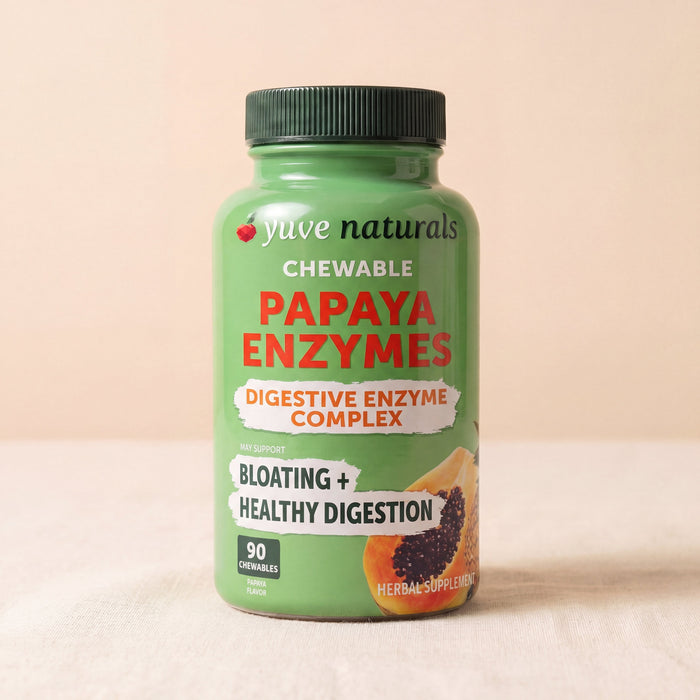
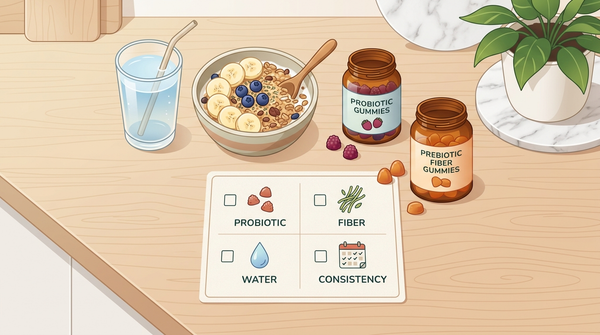
Ever feel like your stomach inflates like a balloon by afternoon? You’re not alone - and it’s not just in your head. That frustrating bloating, the unwelcome gas, or just a general feeling that your digestion is off-key is your body sending you an SOS. We get it, and we know how miserable it can be.
The good news is, relief is possible. But figuring out what kind of help your gut needs is the real challenge. This is where understanding the difference between digestive enzymes vs. probiotics becomes a total game-changer. Think of it this way: digestive enzymes are the "demolition crew" for your food, while probiotics are the "gardeners" for your gut. One provides immediate, meal-specific help, and the other offers long-term, foundational support.
In this guide, we'll cut through the noise and give you clear, straightforward answers. We’ll break down what each of these gut health allies does, who needs them, and how to choose the right one for your body. Let's get you on the road to finally feeling good after you eat.
Your Gut Is Trying To Tell You Something
Does your stomach ever feel like it's waging a protest after you eat? That all-too-familiar bloating, the uncomfortable gas, or just a general sense that digestion isn't going smoothly. We've been there, and we know how frustrating it is, especially when you feel like you're eating all the right things and still ending up miserable.
That feeling is often your body sending out an SOS. It's a signal that your digestive system might need some backup. But figuring out what kind of help is the real challenge. This is where a clear understanding of digestive enzymes and probiotics becomes a game-changer. One acts as a first responder for mealtime trouble, while the other works behind the scenes to build lasting gut resilience.
Why This is Personal for Us
This is more than just a guide for us; it’s personal. Our founder, Sam, battled these same digestive issues for years. His personal journey is what inspired Yuve—a commitment to creating clean, effective, plant-based supplements that genuinely help. We're here to help you finally listen to what your gut is telling you and give it the support it needs.
Digestive Enzymes vs. Probiotics: Key Differences
| Feature | Digestive Enzymes | Probiotics |
|---|---|---|
| Main Job | Break down macronutrients (carbs, fats, proteins). | Cultivate a balanced gut microbiome. |
| How They Work | Act directly on food particles to aid digestion. | Live in your intestines and support the existing ecosystem. |
| Best For | Immediate relief from meal-related issues like bloating & gas. | Long-term gut balance, immune function, and overall health. |
| Timing | Take with or just before a meal for maximum effect. | Take daily to maintain a healthy gut flora population. |
Understanding Digestive Enzymes: The Breakdown Crew
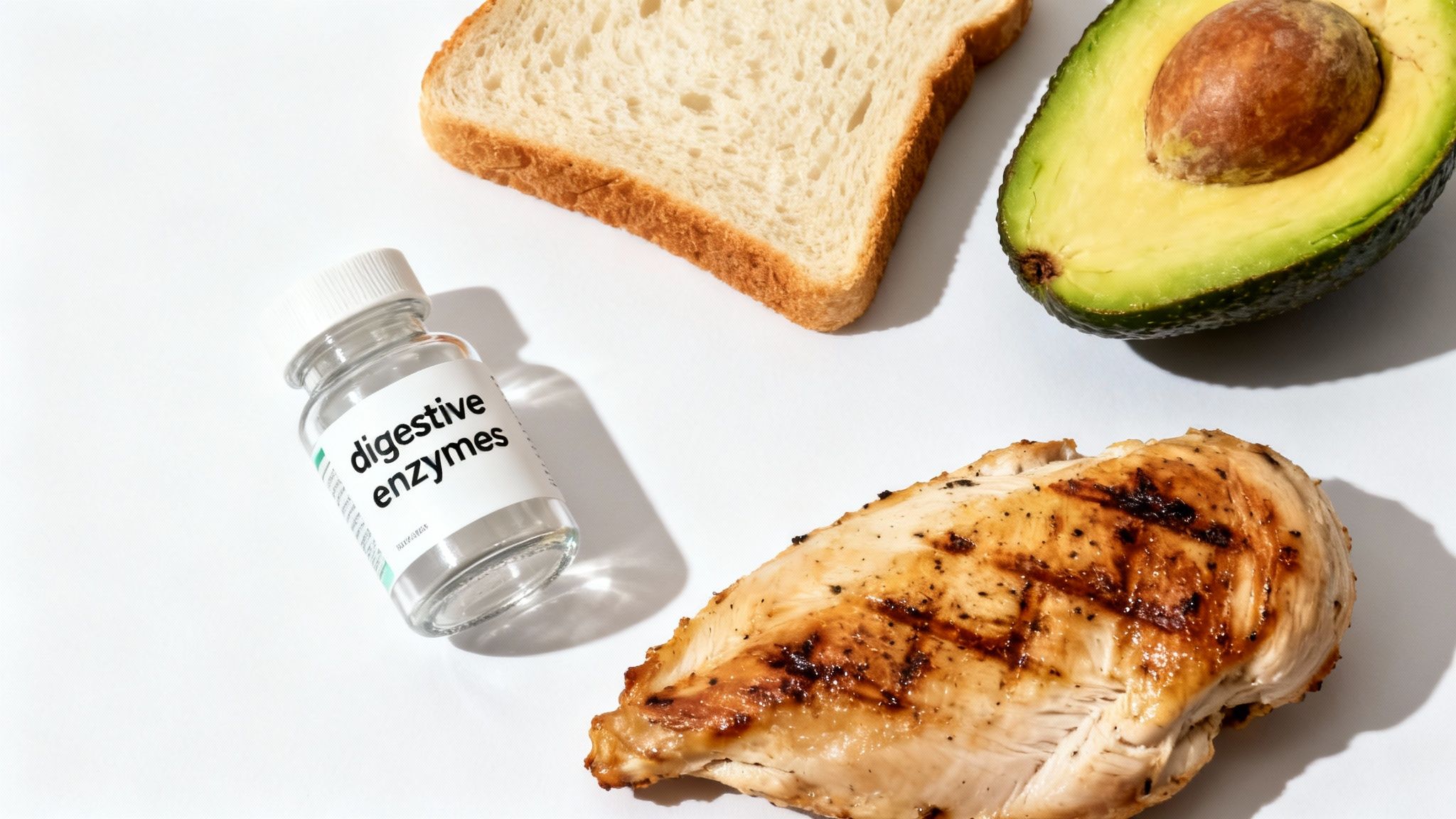
Let's think of digestive enzymes as a specialized kitchen staff inside your body. They are essentially protein-based catalysts- tiny biological scissors that meticulously snip apart the complex molecules in your food. Without them, a nutrient-rich meal remains locked away, unable to be absorbed.
When this breakdown process falters, you feel it. That uncomfortable bloating, embarrassing gas, and heavy, lead-balloon sensation in your gut are often the direct result of undigested food. Dun, dun, dun- unwelcome gas. Yikes!
While your body, particularly your pancreas and small intestine, is designed to produce these enzymes, that internal factory doesn't always run at full capacity. Factors like aging, chronic stress, and various health conditions can significantly slow down production, leaving you wondering why certain foods suddenly disagree with you.
The Key Players in Your Digestive Crew
Not all enzymes do the same job; each one is a specialist with a very specific assignment. Understanding who does what can help you figure out precisely where your digestion might be falling short.
Here are the main workers on the digestive assembly line:
- Amylase: This is your carbohydrate specialist. It gets to work immediately on starches from foods like potatoes, rice, and bread, breaking them down into simple sugars for quick energy.
- Lipase: The fat-processing expert. Lipase takes on fats and oils from sources like nuts, avocados, and dairy, converting them into smaller fatty acids and glycerol.
- Protease: This is your protein pro. It dismantles large protein molecules from meat, beans, and fish into amino acids, the essential building blocks for muscle repair and countless other bodily functions.
Beyond these three, there are also highly specialized enzymes for tricky foods. The most famous is lactase, the enzyme that tackles lactose, the sugar in milk and dairy products.
When your body doesn't make enough of a certain enzyme- like lactase- the result is food intolerance. The undigested food travels to the colon where it ferments, triggering that classic trifecta of bloating, gas, and discomfort.
Personal Story: Sam’s Pizza Night Woes
For the longest time, pizza night was a source of dread for our founder, Sam. He absolutely loves pizza, but he knew that about an hour later, he'd be doubled over on the couch feeling like an overinflated balloon. His stomach would churn, and the bloating was just plain miserable. For years, he just assumed he had a "sensitive stomach."
The real lightbulb moment came when he realized the problem wasn't the pizza itself, but specifically the cheese. His body simply wasn't producing enough lactase to handle that much dairy in one sitting. He wasn't broken; his digestive crew was just understaffed for that one specific task.
Finding a good lactase enzyme supplement completely changed things. Now, he can take one right before that first slice and actually enjoy dinner with his family, symptom-free. It’s a small adjustment that makes a huge difference.
This is a perfect illustration of how enzymes provide immediate, meal-specific support. By giving your body the exact tool it's missing, you help it do its job right then and there. This not only relieves discomfort but also ensures you're getting the full nutritional value from your food. To learn more, check out our guide on how to improve nutrient absorption.
Understanding Probiotics: The Gut Gardeners

If digestive enzymes are the demolition crew for your food, think of probiotics as the dedicated gardeners for your gut. Their job isn't to break down the specific meal you just ate. Instead, they focus on cultivating and maintaining a thriving, balanced internal ecosystem for the long haul.
Your gut is like a vast, complex garden. Probiotics are the beneficial bacteria that tend to this garden, making sure the "good plants" flourish while keeping the "weeds"- harmful bacteria- from taking over. This delicate balance, known as your gut microbiome, is absolutely fundamental to your overall wellness.
This internal community of trillions of microorganisms influences everything from how food moves through your gut to your immune system's strength, and even your mood. It’s a long-term project, not a quick fix for a single meal.
Meet The Gardeners: Lactobacillus and Bifidobacterium
When you start looking into probiotic supplements, you'll see a few names pop up constantly. Two of the most important and well-researched families are Lactobacillus and Bifidobacterium.
These aren't just random scientific terms; they represent powerful strains of good bacteria, each with its own special set of skills for tending to your gut garden.
- Lactobacillus: This group is famous for its work in the small intestine. They produce lactic acid, which helps create an environment where harmful bacteria struggle to survive. They're also key players in breaking down lactose (the sugar in milk) and supporting overall nutrient absorption.
- Bifidobacterium: You’ll find these bacteria primarily in your large intestine, or colon. They are champions at breaking down complex carbohydrates and fibers your body can't digest on its own. This process creates beneficial compounds that nourish your gut lining and support a healthy immune response.
It's easy to see why probiotics are so popular. Their broad benefits have made them a massive force in the wellness world. In fact, multiple analyses show that probiotics command around 80-83% of the entire digestive supplements market. That makes enzymes a much smaller, though growing, niche.
Science Corner: Do Probiotics Really Help With IBS?
It's frustrating to hear about supplements without knowing if they actually work. So let’s look at the science. For irritable bowel syndrome (IBS)- a condition that can cause chronic bloating, gas, and unpredictable bowel habits- the research on probiotics is very encouraging.
A comprehensive 2018 review in the journal Nutrients looked at multiple studies and found that specific strains of probiotics, particularly Bifidobacterium infantis, significantly improved IBS symptoms. Patients reported less abdominal pain, less bloating, and more normalized bowel function compared to those who took a placebo.
What does this mean for you? It shows that adding the right "gardeners" to your gut can have a real, measurable impact on calming a chaotic digestive system. It’s not just about feeling a little better; it’s about restoring order and function from the inside out. For a deeper dive into which strains are most effective, you can explore our guide on the best probiotics for digestion.
This long-term approach of nurturing your microbiome is what truly sets probiotics apart in the digestive enzymes vs probiotics debate.
Digestive Enzymes Vs. Probiotics: A Side-By-Side Comparison
We’ve met the “breakdown crew” (enzymes) and the “gut gardeners” (probiotics). Now, let’s put them head-to-head to see how they really stack up. It's easy to mix them up since they both operate in the world of gut health, but their jobs are fundamentally different.
Thinking about digestive enzymes vs. probiotics is a bit like comparing a chef to a farmer. The chef (the enzyme) immediately gets to work, prepping the ingredients you just brought home for tonight's dinner. The farmer (the probiotic), on the other hand, spends weeks nurturing the soil to ensure you have a steady supply of healthy produce for months to come. Both are crucial for a great meal, but they operate on completely different timelines and with different goals.
The Core Job: What Do They Actually Do?
The biggest difference boils down to their primary mission. One is all about immediate action, while the other is focused on creating a healthy environment.
-
Digestive Enzymes: Their one and only job is to break down food molecules. These are non-living proteins that act like microscopic scissors, snipping large fats, proteins, and carbs into smaller pieces your body can actually absorb. They work directly on the food you just ate, right now.
-
Probiotics: These are living microorganisms that take up residence in your gut. Their role is to maintain a healthy, balanced microbial community, support your immune system, and crowd out harmful bacteria. They work on the environment where your digestion takes place.
The simplest way to remember it: If you feel bloated the second you finish a bowl of ice cream, that points to an enzyme issue (not enough lactase to break down lactose). If you struggle with unpredictable digestion from one day to the next, that’s where probiotics can help by supporting the overall system.
To make this even clearer, let's break it down in a simple table.
Digestive Enzymes vs. Probiotics at a Glance
This table offers a clear comparison of the core functions, timing, and ideal use cases for digestive enzymes and probiotics to help you choose the right one for your gut.
| Feature | Digestive Enzymes | Probiotics |
|---|---|---|
| Primary Role | Break down food molecules (fats, proteins, carbs) | Support a balanced gut microbiome |
| Nature | Non-living proteins (catalysts) | Living microorganisms (bacteria/yeast) |
| Timing of Action | Immediate, during a meal | Long-term, cumulative effect over days/weeks |
| Best Time to Take | Just before or with a meal | Daily, at a consistent time (often on an empty stomach) |
| Ideal For | Meal-specific issues like bloating, gas after eating | General gut health, immunity, post-antibiotic recovery |
| Example Scenario | Feeling awful after eating a greasy, high-fat meal | Dealing with irregular bowel movements and general discomfort |
As you can see, they aren't interchangeable. One is a tactical tool for a specific job, while the other is a long-term strategy for building a healthier foundation.
Timing is Everything: When to Take Them
Because their jobs are so distinct, timing is critical. Taking them correctly ensures they can do their best work exactly when and where they’re needed most.
For digestive enzymes, the rule is simple: take them with food. They need a meal to act on. Taking an enzyme on an empty stomach is like sending a chef into an empty kitchen- there’s nothing to do. For the best results, take them just before you start eating or with your first few bites.
For probiotics, consistency is the name of the game. You're trying to build up a thriving community, not just tackle a single meal. Taking them daily at a consistent time helps maintain a steady population of beneficial bacteria. Whether it's first thing in the morning or right before bed, just find a routine that sticks.
Who Benefits Most From Each?
So, which one is right for you? It really comes down to the specific signals your body is sending.
You might need digestive enzymes if:
- You consistently feel bloated, gassy, or uncomfortably full right after eating.
- Certain foods always seem to cause trouble, like dairy, fatty meals, or beans.
- You sometimes notice undigested food in your stool.
- You're getting older, as our natural enzyme production tends to decline with age.
You might need probiotics if:
- Your digestion feels generally unpredictable- some days are fine, others are not.
- You've recently finished a course of antibiotics, which can wipe out good gut bacteria.
- You deal with ongoing issues like IBS or chronic constipation.
- You're looking to support your overall immune health and build long-term gut resilience.
The market definitely reflects these different needs. Probiotics tend to have a wider range of clinically studied applications- from helping with antibiotic-associated diarrhea to managing certain IBS symptoms- which explains their broad appeal. You can see these trends reflected in industry analyses like this one from Grand View Research. In contrast, enzymes are often viewed as a more targeted solution for immediate, mealtime discomfort.
Ultimately, navigating the digestive enzymes vs. probiotics debate is about listening to your body. One offers a direct solution for meal-related distress, while the other provides foundational support for a healthier gut over the long haul.
How to Choose the Right Gut Support
Knowing the difference between digestive enzymes and probiotics is one thing, but figuring out which one your body is asking for can feel like solving a puzzle. Let's be honest, the goal isn't just to learn the science- it's to feel confident in your choices and finally get some relief.
Let’s walk through a few common, real-life scenarios. Think of this as your practical decision-making guide, helping you connect your specific symptoms to the right kind of support. This is all about moving from confusion to clarity.
For Immediate Post-Meal Bloating
You just finished a great meal, but not even 30 minutes later, it starts. That dreaded feeling of your stomach inflating like a balloon, along with uncomfortable gas and pressure. It's a classic case of post-meal distress.
This is a clear signal for digestive enzymes. Your discomfort is happening right now, tied directly to the food you just ate. It’s a sign your body’s "breakdown crew" is understaffed for the job, and undigested food is starting to ferment in your gut.
The Solution: A broad-spectrum digestive enzyme supplement taken just before or with your meal can be a total game-changer. It provides the immediate backup your system needs to break down fats, proteins, and carbs efficiently, stopping that bloat before it even begins.
For That Never-Ending Battle with Dairy
Does a bowl of ice cream, a slice of cheesy pizza, or even a splash of milk in your coffee spell disaster for you? If dairy consistently leads to cramping, gas, and bloating, you're almost certainly dealing with a very specific enzyme shortage. I do NOT think you should have to give up your favorite foods for good!
This is the work of lactase, the enzyme responsible for breaking down lactose, the sugar found in milk products. When you don't produce enough of it, lactose goes undigested and wreaks havoc.
Your Go-To Solution: This is where a targeted enzyme supplement really shines. Yuve Lactase Enzymes are your best friend for dairy nights. Taking one right before you indulge gives your body the exact tool it's missing to handle lactose, letting you enjoy your favorite foods without fear. It's a smart, proactive step to feel great and enjoy food without discomfort.
For Recovering After a Round of Antibiotics
Have you recently finished a course of antibiotics? While these medicines are crucial for fighting off nasty bacterial infections, they can also act like a bomb in your gut garden, wiping out both the bad and the good bacteria.
If you're feeling "off"- with unpredictable digestion, irregular bowel movements, or just a general sense of imbalance after being sick- this is a prime time for probiotics. Your mission now is to rebuild and repopulate your gut's ecosystem.
The Solution: The focus should be on reseeding your gut with beneficial bacteria. A daily probiotic helps restore that delicate balance, bringing in friendly "gardeners" to nurture the environment and crowd out any lingering troublemakers.
For Building Long-Term Gut Resilience
Maybe you don't have one specific trigger food, but your digestion just feels…unreliable. Some days are fine, others are a mess of bloating and discomfort, and you can't seem to pinpoint why. You’re not looking for a quick fix for one meal; you want to build a stronger, more resilient digestive system from the ground up.
This is the core mission of probiotics. They work behind the scenes to create a healthier gut environment over time. By tending to your microbiome, you're supporting everything from smoother digestion and better nutrient absorption to a stronger immune system.
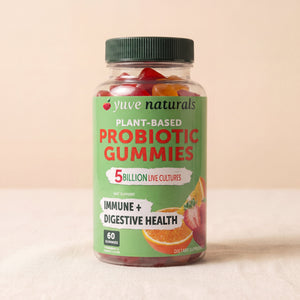
Our Daily Habit Solution: For foundational, long-term gut health, we recommend incorporating Yuve Vegan Probiotic Gummies into your daily routine. They make it easy and delicious to consistently supply your gut with the beneficial bacteria it needs to thrive. Think of it as a daily investment in a happier, more balanced gut.
The global interest in gut health is soaring for a reason. Consumer awareness metrics show that roughly 70% of people now recognize the link between digestive health and overall wellness. Plus, online searches for terms like "gut health" have jumped by over 30% in recent years. You can discover more insights about these consumer trends on futuremarketinsights.com. Choosing the right supplement is a key part of this wellness journey, and to do it well, it's essential to know how to read supplement labels and understand exactly what you are getting.
Can You Take Digestive Enzymes And Probiotics Together?
This is one of the most common questions we get, and I'm happy to report that the answer is a big, enthusiastic YES! Not only can you take digestive enzymes and probiotics together, but they often work best as a team.
Think of them as a powerful one-two punch for comprehensive gut health. They don't get in each other's way because they work in different locations and on different schedules. Enzymes are the immediate-action crew, getting to work in your stomach and upper small intestine as soon as you eat. Probiotics are the long-term gardeners, focusing their efforts further down the line in your large intestine to cultivate a healthy, balanced environment.
Creating a Complete Gut Health System
By combining these two allies, you’re tackling gut health from both angles: immediate mealtime relief and foundational, long-term wellness. It’s a truly synergistic relationship.
- Enzymes Handle the “Right Now”: They ensure your food is broken down efficiently, preventing the fermentation that leads to bloating and gas.
- Probiotics Build for “Later”: They work to create a resilient gut microbiome, which improves overall digestion, supports immunity, and helps keep everything running smoothly day after day.
This decision tree shows how to pick the right support, whether you're facing immediate bloating or a long-term imbalance.
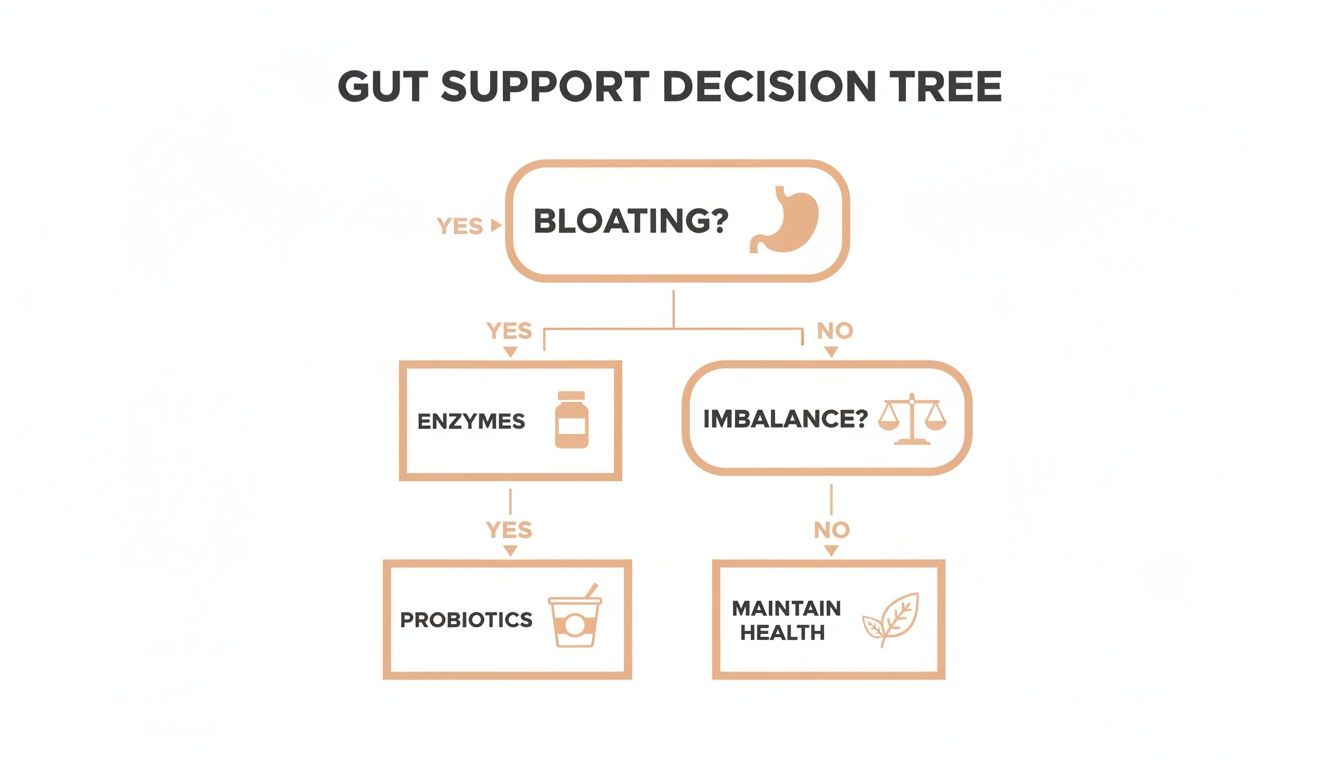
As the flowchart illustrates, enzymes are the go-to for meal-specific issues, while probiotics lay the foundation for a consistently happy gut.
Practical Tips for Timing Your Supplements
To get the most out of this dynamic duo, a little strategic timing goes a long way. It’s simple, but it makes a significant difference.
Our Pro Tip: Take your digestive enzymes just before or with your meal. For probiotics, consistency is key- take them at the same time every day, like first thing in the morning or right before bed. This routine helps both supplements do their job effectively.
For instance, you could take Yuve Lactase Enzymes right before enjoying a cheesy pasta dinner to head off any immediate discomfort. Then, make a Yuve Vegan Probiotic Gummy part of your morning ritual to continuously support your gut microbiome.
This combined strategy provides a tactical solution for problem meals and a long-term investment in your digestive wellness. You get the best of both worlds- feeling great after you eat and building a healthier gut for the future.
Common Questions About Gut Health Supplements
Diving into the world of gut health can feel a little overwhelming, and it's normal to have questions. You're definitely not alone in looking for clear, straightforward answers. We've gathered some of the most frequent questions we hear about the digestive enzymes vs probiotics debate to help you make choices that feel right for you.
How Long Does It Take For Digestive Enzymes To Work?
Think of digestive enzymes as your mealtime support crew. They're designed to act fast. For best results, you should take them right before or with the first few bites of a meal, and they start their job immediately.
Their purpose is to help break down the food you’re eating in that moment. Most people notice a difference- like less bloating or that uncomfortably full feeling after a big meal- within about 30 to 60 minutes. They're all about providing on-the-spot relief.
How Do I Know If I Need A Probiotic?
If your gut issues seem more persistent and aren't just tied to a specific meal, a probiotic might be what you're looking for. It's often a sign that your gut microbiome- the entire ecosystem of bacteria in your digestive tract- could use some long-term reinforcement.
A probiotic could be a good fit if you're dealing with:
- Ongoing digestive unpredictability, like inconsistent bowel habits.
- Chronic bloating that doesn’t seem to be caused by one particular food.
- A gut that feels "off" after a course of antibiotics.
- A goal to support your immune system, since a huge part of it is based in your gut.
Probiotics are for nurturing a healthier gut environment over the long haul, not for a quick fix after a heavy dinner. For those focused on a broader approach to nutrition, integrating protein powder into cooking can also be a great way to boost overall dietary support.
Are There Any Side Effects Of Taking Enzymes Or Probiotics?
For most people, both supplements are very safe and well-tolerated. Still, it's always wise to know what you might expect.
When you first start taking probiotics, it's not unusual to experience some mild, temporary gas or bloating for a few days. Don't let it alarm you; this is typically just your gut microbiome adjusting as the new, helpful bacteria settle in.
Digestive enzymes, when taken with food as directed, rarely cause side effects. The key is to stick with high-quality, clean formulas and pay attention to how your body responds. And, of course, it's always a good idea to chat with your doctor if you have any specific health concerns.
Here at Yuve, our passion is creating clean, plant-based supplements that support your gut health journey from every angle. Whether you're seeking immediate relief at mealtimes or aiming for sustained balance, we have a solution crafted for you.
Ready to build a happier, more resilient gut? Explore our collection of vegan supplements at https://www.getyuve.com.