Feeling completely wiped out even after a full night's sleep? What about that frustrating brain fog that makes it impossible to focus? If this sounds familiar, you’re not alone- and it’s definitely not a sign that you’re failing at your plant-based lifestyle.
It’s incredibly discouraging to feel sluggish when you’re putting so much effort into being healthy. We totally get it. Let's get to the bottom of it together. This guide will help you navigate the common nutritional hurdles of veganism, exploring why certain vitamin and mineral gaps can pop up and what that actually feels like day-to-day.
Why You Might Feel Off On A Vegan Diet
We're not going to get bogged down in dry scientific lectures. We're talking about real-life signs your body might be sending you. Think brittle nails that refuse to grow, sudden mood swings that come out of nowhere, or that strange pins-and-needles feeling in your hands or feet.
A well-planned vegan diet is one of the healthiest ways to live, but a few key nutrients just aren't as easy to come by in plant foods. They're either less abundant or your body has a harder time absorbing them from plant sources.
The usual suspects often include:
- Vitamin B12: Absolutely essential for healthy nerves and making red blood cells.
- Iron: The workhorse that carries oxygen around your body, keeping fatigue at bay.
- Vitamin D: Critical for strong bones and a resilient immune system. We dive deep into what you should know about Vitamin D in our detailed guide.
The B12 Blind Spot
If there's one nutrient every vegan needs to be aware of, it's Vitamin B12. Since it's not naturally present in plant foods, a deficiency can easily sneak up on you.
One major review of studies found that some vegans were only getting 0.3–0.5 micrograms (µg) of B12 per day. That's a tiny fraction of the recommended 2.4 µg for adults. It's a common blind spot that, left unchecked, can lead to serious and sometimes irreversible symptoms.
Think of this as your roadmap to feeling vibrant and energized again. We'll unpack the most common vegan vitamin deficiency symptoms, explain the "why" behind them in simple terms, and show you exactly how to thrive on a plant-based diet.
Quick Symptom Checker For Common Vegan Deficiencies
Use this quick-reference table to help you identify potential nutrient gaps based on how you're feeling. It's not a diagnostic tool, but it can point you in the right direction for further investigation.
| Symptom You're Feeling | Potential Nutrient Deficiency To Consider |
|---|---|
| Extreme fatigue, weakness | Iron, Vitamin B12 |
| Pale or yellowish skin | Iron, Vitamin B12 |
| Brain fog, poor concentration | Vitamin B12, Iron, Omega-3s |
| Mood changes, depression | Vitamin B12, Vitamin D, Omega-3s |
| Tingling or numbness ("pins and needles") | Vitamin B12 |
| Brittle hair and nails | Iron, Zinc, Biotin |
| Frequent colds or infections | Vitamin D, Zinc, Iron |
| Muscle weakness, bone pain | Vitamin D, Calcium |
| Cracks at the corners of your mouth | Iron, Zinc, B Vitamins |
Remember, these symptoms can have many causes. This chart is simply a starting point to help you connect the dots between how you feel and what your body might need.
The Five Key Nutrients Every Vegan Should Track
Going vegan is a fantastic journey, but let's be real- it comes with a little homework. You have to be more mindful about a few key nutrients that are either harder to find in plants or trickier for our bodies to absorb from them. Think of it like learning the cheat codes for a video game; once you know them, you’re set up for success.
We're going to walk through five of the most important nutrients to keep on your radar: Vitamin B12, Iron, Vitamin D, Iodine, and Omega-3s. Understanding what they do is the first step to truly listening to what your body is telling you.
Vitamin B12: The Non-Negotiable
If there’s one nutrient that’s a non-negotiable for every single vegan, it’s Vitamin B12. This vitamin is a powerhouse, essential for your nervous system and the production of healthy red blood cells. Since B12 is actually made by microorganisms and found almost exclusively in animal products, a plant-based diet doesn't naturally provide it.
A B12 shortfall can lead to some of the most classic vegan vitamin deficiency symptoms, like that persistent fatigue that coffee just can't seem to fix, brain fog, and a strange tingling or numbness in your hands and feet. Because this nutrient is so critical, trying to get it from food alone just isn't a reliable strategy.
A high-quality B12 supplement isn't just a "nice-to-have"- it's a foundational part of a healthy, sustainable vegan lifestyle.
Iron: For Energy and Focus
Ever feel so tired you could fall asleep at your desk? Or get winded just walking up a flight of stairs? Your iron levels might be the culprit. Iron is the key ingredient for making hemoglobin, the protein in your red blood cells that acts like an oxygen delivery service to your entire body.
While plants like lentils, spinach, and tofu do contain iron, it’s a type called non-heme iron. The catch is, our bodies don't absorb it nearly as easily as the heme iron from animal sources. This can lead to iron-deficiency anemia, which brings on symptoms like extreme weakness, pale skin, and brittle nails.
The infographic below shows how these common feelings- like vanished energy or brain fog- can often be the first signs of a nutrient gap.
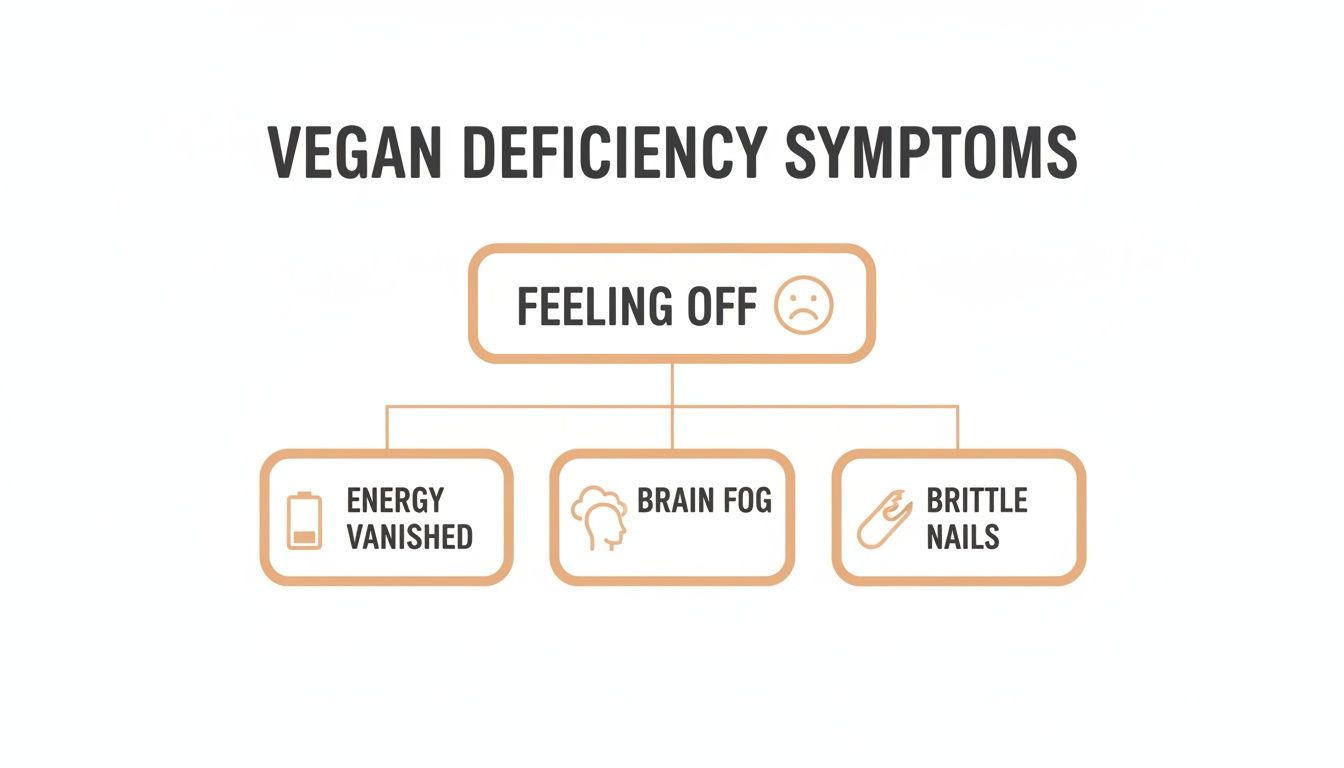
This visual helps connect the dots between feeling "off" and the specific physical signs your body might be showing you.
Vitamin D: The Sunshine Vitamin
Vitamin D is crucial for absorbing calcium, keeping your bones strong, and supporting a robust immune system. Our main source isn't actually food- it's sunlight! But for many of us, especially during the winter months or in less sunny climates, getting enough sun exposure is a real challenge.
While some plant milks and mushrooms are fortified with Vitamin D, it’s often not enough to maintain optimal levels. The symptoms of a deficiency can be subtle and easy to miss, including things like muscle weakness, bone pain, and getting sick more often than usual. It's a key reason why many health experts recommend supplementation for everyone, not just vegans.
If you’re unsure where you stand, it's wise to learn about specific blood tests for vitamins and minerals to get a clear picture.
Iodine and Omega-3s: The Unsung Heroes
Finally, let’s talk about two less-discussed but equally important players on the team.
- Iodine: This mineral is vital for your thyroid, the gland that regulates your metabolism. A deficiency can cause an underactive thyroid, leading to symptoms like unexpected weight gain, feeling cold all the time, and crushing fatigue. While iodized salt is a common source, you can also find it in sea vegetables like seaweed.
- Omega-3s (EPA & DHA): These fatty acids are famous for their role in brain health and taming inflammation. The plant-based form, ALA (found in flax, chia, and walnuts), has to be converted by the body into the more usable EPA and DHA- and that conversion process isn't very efficient. A shortfall could contribute to dry skin, mood changes, and poor concentration.
Keeping these five nutrients in check is the key to thriving on a plant-based diet. For more guidance, explore our deep dive into the best supplements for a vegan diet to create a well-rounded plan.
Understanding How A B12 Deficiency Affects Your Body
So, why is Vitamin B12 always the hot topic? Let's break down what this powerhouse nutrient actually does and what happens when you don't get enough. It's front and center in any conversation about vegan vitamin deficiency symptoms for a very good reason.
Think of B12 as the protective insulation around your body's electrical wiring- your nervous system. This coating, known as the myelin sheath, makes sure the signals zipping from your brain get to the rest of your body quickly and without interference.
When B12 levels drop, that protective layer starts to wear thin. This is exactly why a tell-tale sign of a deficiency is that weird tingling or numbness in your hands and feet. Your body's wiring is essentially getting frayed, causing signals to misfire.
The Energy Connection
But it doesn't stop with your nerves. Vitamin B12 is also a critical ingredient for making healthy red blood cells. Picture your red blood cells as a fleet of tiny delivery trucks, and their only job is to haul life-giving oxygen everywhere, from your brain right down to your toes.
Without enough B12, your body can’t build these little trucks properly. The ones that do get made can end up too big and clumsy to do their job right, a condition called megaloblastic anemia. This means fewer, less effective trucks are on the road, and oxygen delivery slows to a crawl. The result? That bone-deep fatigue and weakness that no amount of sleep can seem to fix.
This isn't just a physical drain, either. It has a real impact on your mental well-being. A UK report found that a quarter of vegans struggling with deficiencies were also battling persistent tiredness and even depression. It’s a stark reminder of how a physical nutrient gap can mess with your mood and day-to-day happiness.
B12 Sources and The Vegan Reality
Here’s the challenge for vegans: B12 is made by microorganisms and is almost exclusively found in animal products. Foods rich in B12 include meat, fish, eggs, and dairy. While vegans need to get their B12 from fortified foods and supplements, understanding other concentrated sources can provide a broader nutritional perspective. For instance, you can learn more about diverse sources of Vitamin B12 to see why it's so naturally abundant in non-plant foods.
This is precisely why a B12 supplement isn't just an optional add-on for a vegan diet- it’s absolutely essential. Trying to rely only on fortified foods like nutritional yeast or plant milks can be a bit of a gamble, since the amounts can vary wildly from brand to brand.
A consistent, high-quality supplement is the smartest and most reliable way to ensure you're getting the B12 your body needs to protect your nerves, build healthy blood cells, and keep your energy levels stable.
Taking this one simple, proactive step takes all the guesswork out of the equation. It gives you the peace of mind to stop worrying about potential deficiencies and start focusing on enjoying the incredible benefits of your plant-based lifestyle, feeling energized and clear-headed every single day.
How To Create A Proactive Nutrient Plan
Alright, we've covered the "what" and the "why." Now let's get to the most important part: the "how." Knowing about potential vegan vitamin deficiency symptoms is one thing, but actually building a plan to prevent them is how you take back control of your health.
This isn’t about chasing perfection. It’s about being smart and consistent.
Let's dive into a practical playbook. We'll start by building a strong foundation with nutrient-dense foods and then add the most crucial safety net- smart supplementation. Think of it as a two-pillar approach to feeling your absolute best.
Pillar One: Fortify With Food
Your plate is always your first line of defense. By consciously working certain plant-based powerhouses into your weekly rotation, you can significantly boost your intake of several key nutrients. You don't need to eat all of these every single day, but making them a regular part of your diet is key.
For a Healthy Iron Supply:
- Lentils and Chickpeas: These are fantastic in soups, salads, and curries. A single cup of cooked lentils packs a serious iron punch.
- Tofu and Tempeh: Versatile soy-based proteins that soak up flavor beautifully, whether you're making a stir-fry or baking them.
- Spinach and Kale: Dark leafy greens are your best friends. Sauté them, blend them into smoothies, or use them as a hearty salad base.
- Pro-tip: Always try to pair these iron-rich foods with a source of vitamin C- like bell peppers, broccoli, or just a squeeze of lemon juice. This simple trick can dramatically increase how much iron your body absorbs.
For Iodine and Thyroid Support:
- Sea Vegetables: Nori (for sushi), wakame (in miso soup), and dulse flakes are all excellent sources of iodine. An easy trick is to sprinkle dulse flakes on popcorn or salads.
- Iodized Salt: A simple switch in the kitchen can make a real difference. Just remember not to go overboard on your overall salt intake.
For Brain-Boosting Omega-3s:
- Flaxseeds, Chia Seeds, and Hemp Seeds: Sprinkle these on your morning oatmeal, blend them into smoothies, or make a simple chia pudding. Your brain will thank you.
- Walnuts: The perfect afternoon snack that just so happens to be loaded with healthy fats.
To get the full picture of plant-based options, check out our guide on the best vegan sources of omega-3 fatty acids.
Pillar Two: The Non-Negotiable Supplement
This is where we need to be direct and honest. While food is foundational for getting enough iron, iodine, and omega-3s, food alone is not a reliable strategy for getting enough Vitamin B12 as a vegan.
I do NOT think anyone should risk it. The same often goes for Vitamin D, depending on where you live and how much sun you get.
This isn’t a failure of a vegan diet; it’s just a biological reality. Vitamin B12 is made by microorganisms and simply doesn't occur naturally in plant foods. Trying to get enough from fortified cereals or plant milks is like trying to fill a bucket with a leaky cup- it’s inconsistent and leaves you vulnerable. That's how those sneaky vegan vitamin deficiency symptoms can creep up on you. Yikes!
This is precisely why a high-quality supplement isn’t an "extra"- it’s a foundational, non-negotiable part of a thriving vegan lifestyle.
A clean, effective supplement removes all the guesswork and provides the peace of mind you deserve. Think of it as your insurance policy for long-term nerve health, sustained energy, and mental clarity.
Yuve's Vegan Vitamin B12 is designed to be that reliable cornerstone of your nutrient plan. Taking one small step each day protects your body from the fatigue, brain fog, and nerve tingling that can derail your wellness journey. It’s not just about avoiding deficiency; it’s about setting yourself up to feel vibrant, focused, and full of life, every single day.
Your Daily Checklist For A Thriving Vegan Life
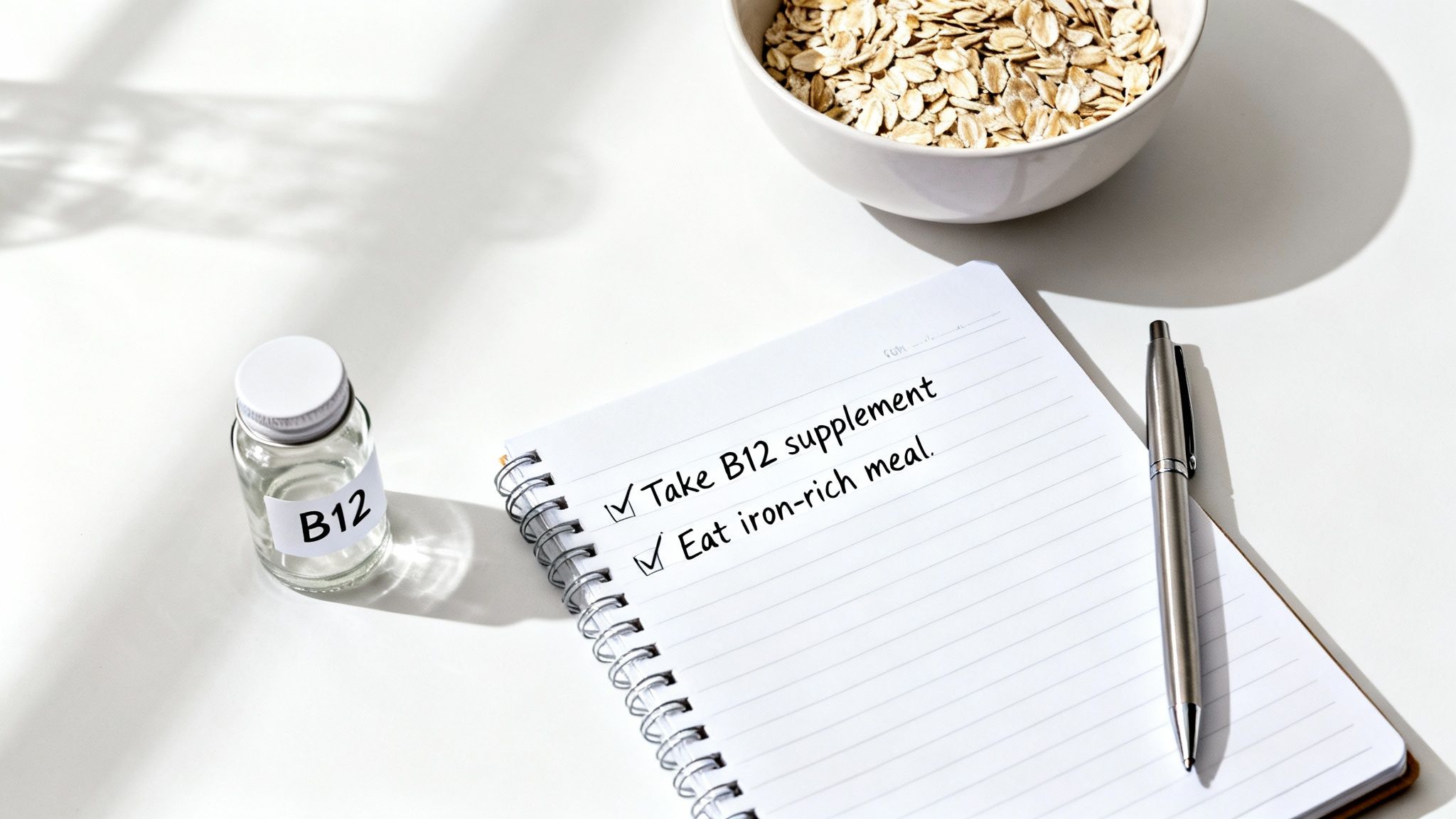
Feeling a little overwhelmed by all this information? I totally get it. When you're trying to keep an eye on potential vegan vitamin deficiency symptoms, it can feel like you're juggling a dozen different things. But it doesn't have to be that complicated.
Let's boil it all down into a simple, actionable checklist you can actually use to stay on track. This isn't about being perfect overnight. It’s about building small, consistent habits that create huge, vibrant results over time.
Think of this as your roadmap for turning knowledge into action. With a simple routine in place, thriving on a plant-based diet isn't just possible- it's pretty straightforward.
Daily Habits For Success
These are the non-negotiables. They're the small daily actions that truly make the biggest impact.
- Take Your B12 Supplement With Breakfast: This is the big one. Make it an automatic habit by keeping your Yuve Vegan B12 supplement right next to your coffee machine or tea kettle. One simple action protects your nerve health and energy levels without you even having to think about it.
- Include a Plant-Protein Source at Every Meal: Aim to add beans, lentils, tofu, tempeh, or a handful of nuts to your breakfast, lunch, and dinner. This is key for keeping your energy stable and naturally boosting your iron intake.
- Add a Source of Healthy Fat: A tablespoon of chia seeds or ground flaxseeds sprinkled over your morning oats or blended into a smoothie is an effortless win. It's a super easy way to get those crucial omega-3s for brain health.
Weekly Wellness Check-In
Carve out a few minutes each week- Sunday afternoons are great for this- to plan ahead. This little bit of prep ensures your diet stays diverse and packed with the good stuff.
- Plan Three Iron-Rich Meals: Get intentional about it. Schedule at least three meals that feature iron powerhouses like spinach, lentils, or fortified cereals. Maybe that’s lentil soup on Monday, a massive spinach salad on Wednesday, and a tofu stir-fry on Friday.
- Eat the Rainbow: Take a quick glance at your meal plan for the week. Are you seeing plenty of different colors? Aim for a wide variety of fruits and veggies to make sure you're covering your bases with different vitamins and antioxidants.
- Try a Sea Vegetable: Feeling a bit adventurous? Toss some nori into a wrap or sprinkle dulse flakes on a savory dish. It’s a simple way to get a natural iodine boost for your thyroid.
“Building a routine isn’t about restriction; it’s about creating freedom. When your nutrition is on autopilot, you free up mental energy to focus on everything else you love about your life.”
Annual Health Partnership
Think of your doctor as a partner in your health journey. A proactive approach is always the smartest one, so don't be afraid to advocate for what you need.
- Request Annual Blood Work: Once a year, ask your doctor to run a blood panel to check your key nutrient levels. Be sure to mention you follow a vegan diet and want to specifically check your Vitamin B12, Vitamin D, and iron (ferritin). This data gives you a crystal-clear picture of what's working and what might need a little tweak.
- Discuss Your Supplement Routine: Be totally open with your healthcare provider about your diet and any supplements you're taking, like your daily Yuve B12. This helps them provide advice that's truly personalized and effective for you.
Common Questions About Vegan Nutrition
It’s completely normal to have questions when you’re shifting to a plant-based diet. In fact, it’s a great sign that you’re being mindful of your health! Let's tackle a few of the most common concerns I hear about preventing vegan vitamin deficiency symptoms.
Can I Get Enough B12 From Fortified Foods Alone?
This is a fantastic question, and the short answer is: probably not. While fortified foods like nutritional yeast, some cereals, and plant milks are great additions to your diet, relying on them as your only B12 source is a bit of a gamble.
The amount of B12 can vary wildly between brands, and your daily intake can fluctuate depending on what you eat that day. For something as crucial as nerve health, a dedicated B12 supplement is simply the safest and most dependable way to ensure you’re consistently getting what you need.
How Soon Will I Feel Better After Starting Supplements?
Patience is a virtue here, but the good news is that you will feel a difference! The timeline really depends on the nutrient and just how depleted your levels were when you started.
Some people notice a boost in energy within a few weeks of starting B12 or iron. For others, it might take a couple of months to fully replenish their body's stores and feel the full effect. The most important thing is consistency- taking your supplement every day is what builds real, lasting results.
Do All Vegans Need To Supplement?
For Vitamin B12, the answer is a straightforward and resounding yes. Since B12 isn't naturally found in plant foods, supplementing is non-negotiable for virtually every vegan to avoid a deficiency.
When it comes to other nutrients like Vitamin D, iron, and iodine, the answer is more personal. It really depends on your specific diet, where you live (sun exposure for Vitamin D is a big factor!), and your unique health profile. That said, taking a proactive approach with a high-quality supplement is often the smartest move for long-term wellness and your own peace of mind.
Ready to build a reliable wellness routine? Yuve makes it simple with clean, effective supplements designed for a thriving plant-based life.
Explore Yuve’s Vegan B12 supplement today and take the guesswork out of your nutrition.