Ever feel like your stomach inflates like a balloon by afternoon? You’re not alone- and we get how frustrating that constant bloating, gas, and digestive guesswork can be. It’s tempting to blame that one thing you ate, but the real culprit is often deeper: an imbalance in your gut flora.
This guide is your roadmap to finally feeling better. We're going to cut through the confusion and show you exactly how to balance gut flora with simple, actionable steps. We'll explore the power of your plate, the role of smart supplements, and lifestyle habits that can bring your digestive system back into harmony.
What Is Gut Flora, Anyway?
Let's get right to it. Your gut flora, also called your gut microbiome, is the massive community of bacteria, fungi, and other microbes living inside your digestive tract. This isn't just a random jumble of bugs; it’s a highly organized ecosystem that has a massive impact on your overall health.
When your gut flora is in balance, it helps with:
- Digesting food properly: It works to break down fibers your body can't handle on its own.
- Absorbing nutrients: It ensures you get the maximum benefit from the food you eat.
- Supporting your immune system: A huge portion of your immune function- around 70%!- is actually located in your gut.
- Regulating your mood: The gut-brain connection is powerful. A happy, balanced gut often contributes to a happier mind.
This isn't about jumping on another restrictive diet; it’s about making smart, sustainable choices that become second nature. We know this journey firsthand- our founder Sam's own struggles with digestive issues are what inspired our mission to find real, simple solutions that actually work. Let’s get you on the path to feeling your absolute best. For a deeper look, you can learn more about the specific signs of an unhealthy gut in our detailed article.
The Power of Your Plate: How Diet Shapes Your Gut
Let's get practical. If you think of your gut as a garden, then your diet is the soil, the seeds, and the fertilizer all rolled into one. What you eat directly feeds the trillions of microbes in your digestive tract, either helping the good guys flourish or letting the troublemakers take over. It’s the single most powerful tool you have to start feeling better.
This perspective simplifies everything. We're not talking about restrictive diets or cutting out entire food groups. The goal here is to focus on adding in the good stuff. You'd be amazed at how small, consistent additions can make a world of difference.
This infographic breaks down some of the most common signs that your gut garden might need a little extra TLC.

If you're dealing with bloating, gas, or just that unpredictable "what's my stomach going to do today?" feeling, those are clear signals that your gut flora is out of balance and calling for support.
Feed Your Friends with Prebiotics
First things first, let's talk about prebiotics. Think of these as the fertilizer for your gut garden. They’re special types of fiber your body can't digest, so they travel all the way down to your colon where your beneficial bacteria get to have a feast.
When your good gut bugs munch on prebiotics, they produce amazing compounds like short-chain fatty acids (SCFAs) that nourish your gut lining and help calm inflammation.
Here are some easy ways to get more of this "fertilizer" into your diet:
- Garlic and Onions: These are flavor powerhouses and gut health champions. Add an extra clove of garlic to your sauce or slice some raw red onion into your salad.
- Asparagus: Lightly steam or roast it as a side dish. It’s packed with inulin, a type of prebiotic fiber your gut microbes absolutely love.
- Bananas (especially slightly green ones): These contain resistant starch, which acts just like a prebiotic. Slice one over your oatmeal or toss it in a smoothie.
- Oats: A warm bowl of oatmeal is a fantastic, prebiotic-rich start to your day.
Plant New Seeds with Probiotics
Next, we need to plant some new seeds. That’s where probiotics come in. Probiotics are the live, beneficial bacteria found in fermented foods and supplements. Eating them directly introduces new, helpful residents into your gut community.
This is especially critical if your gut has taken a hit from things like stress, a round of antibiotics, or a period of not-so-great eating.
Easy ways to add probiotic "seeds":
- Yogurt or Kefir: Look for brands that explicitly state "live and active cultures" and have minimal added sugar. Kefir, a drinkable yogurt, is often even more potent.
- Sauerkraut and Kimchi: These fermented cabbage dishes are tangy, delicious, and teeming with good bacteria. Add a spoonful to your eggs, tacos, or sandwiches for a flavor and health kick.
- Kombucha: This bubbly, fermented tea is a great swap for sugary sodas. Just keep an eye on the sugar content, as it can vary a lot between brands.
A Personal Tip: I used to think fermented foods were too "out there" for me. I started small by adding just a forkful of sauerkraut alongside my dinner. Now, I actually crave that tangy crunch! It was a simple swap that made a noticeable difference in my daily digestion.
If you want to dive deeper, we have a whole guide dedicated to the best fermented foods for your digestion.
Your Gut-Friendly Food Shopping List
To make this even easier, here’s a quick-reference shopping list. Think of it as a cheat sheet for your next trip to the grocery store.
| Food Category | What to Look For | Simple Way to Eat It |
|---|---|---|
| Prebiotic Veggies | Garlic, onions, leeks, asparagus, Jerusalem artichokes | Sauté into stir-fries, roast as a side, or add raw to salads. |
| Prebiotic Fruits | Slightly green bananas, apples, berries | Blend into smoothies, top your yogurt, or enjoy as a simple snack. |
| Probiotic Dairy | Plain yogurt, kefir (look for "live cultures") | Use as a base for smoothies, mix with granola, or make a savory dip. |
| Fermented Foods | Sauerkraut, kimchi, kombucha, miso | Add a spoonful to sandwiches or bowls, sip kombucha, or use miso in soups. |
| Fiber-Rich Grains | Oats, barley, quinoa | Make a hearty breakfast porridge or use as a base for a grain bowl. |
Keep this list handy, and you'll find it's simple to work these powerhouse foods into meals you already love.
Small Swaps, Big Wins
You don't need a complete dietary overhaul to balance your gut. It’s all about making small, sustainable swaps that add up over time.
- Breakfast Swap: Instead of a sugary cereal, try a bowl of plain Greek yogurt with berries and a sprinkle of chia seeds. You're getting probiotics, prebiotics, and fiber all in one.
- Lunch Boost: Add a side of kimchi to your sandwich or grain bowl for an instant probiotic punch.
- Dinner Upgrade: Use bone broth instead of water when you cook rice or quinoa. It’s incredibly soothing for the gut lining.
- Snack Smart: Grab an apple with a handful of almonds instead of a processed snack bar.
Exploring different dietary frameworks, like understanding the benefits of an alkaline diet, can also be enlightening. The real key is to listen to your body and find what makes you feel your best. Remember, you’re building a healthier, more resilient gut one bite at a time. Be patient with the process.
A Smart Supplement Strategy with Probiotics
While a food-first approach is the bedrock of a healthy gut, sometimes your system needs a more targeted boost. Think of your diet as the daily upkeep for your gut's garden. A high-quality probiotic supplement, on the other hand, is like calling in the expert landscapers after a major disruption, like a round of antibiotics or a period of intense stress.
This is where a smart supplement strategy becomes a game-changer for rebalancing your gut flora.

It’s not about just grabbing any bottle off the shelf. To really see a difference, you need to understand what’s inside and why it matters for your specific needs.
Science Corner: Why Strains Matter
Let's get a little nerdy for a moment, but I promise to keep it simple. When you look at a probiotic label, you'll see names like Lactobacillus acidophilus or Bifidobacterium lactis. These aren't just fancy scientific terms; they’re specific strains of bacteria, and each one has a different job inside your gut.
-
Lactobacillus strains: These are some of the most well-known "good guys." They mostly set up shop in your small intestine and are fantastic for helping you digest food and absorb nutrients. They’re especially famous for producing lactic acid, which helps keep bad bacteria in check.
-
Bifidobacterium strains: These powerhouses tend to live in your large intestine. They're crucial for breaking down fiber and other complex carbs your body can't handle alone. Plus, they play a huge role in supporting your immune system.
What This Means for You: A 2024 review from Harvard found that a multi-strain probiotic is often more effective than a single-strain one. Picking a probiotic with a variety of well-researched strains from both these families gives your gut a more well-rounded support system. It’s like having a diverse team of specialists working to keep things running smoothly.
Making Probiotics Simple and Effective
Navigating the supplement aisle can feel totally overwhelming. Pills, powders, capsules, billions of CFUs- what do you actually need? From my experience, I can tell you that consistency is far more important than complexity. If a supplement is a hassle to take, you probably won't stick with it.
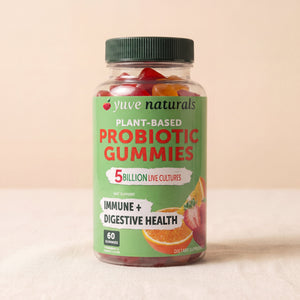
That’s exactly why we formulated Yuve's Probiotic Gummies. We wanted to take the guesswork out of it.
Our gummies deliver a potent blend of beneficial strains designed to support not just your digestion but your immune system, too. They’re delicious and easy to remember, making it a simple, enjoyable part of your daily routine. This isn't just an optional add-on; it's a proactive step toward achieving consistent gut harmony and feeling your best every single day.
And the benefits go beyond just digestion. Certain probiotic strains have even been shown to directly impact cravings, demonstrating how probiotics can help tame sugar cravings and support a healthier diet.
A Real-Life Gut Turnaround
Sometimes, hearing someone else’s story makes all the difference. We recently heard from a customer, Maria, who shared her experience.
"After a strong course of antibiotics for a sinus infection, my digestion was an absolute wreck. I was bloated, uncomfortable, and nothing felt right. I was eating all the 'right' foods, but it felt like my system was still in chaos. I started taking the Yuve Probiotic Gummies every morning, and within about two weeks, I noticed a huge shift. The bloating calmed down, and I just felt... normal again. It was such a relief."
Maria’s story is so common. Antibiotics are lifesavers, but they can act like a wildfire in your gut, wiping out both the bad and the good bacteria. Repopulating your gut with a targeted probiotic is one of the kindest and most effective things you can do to help it recover.
Lifestyle Habits That Heal Your Gut Beyond Food

When we talk about balancing gut flora, everyone’s mind immediately jumps to food. But that's only seeing part of the picture. The reality is, how you live sends constant signals to your microbiome. Your stress levels, how well you sleep, and even how you move your body can either be a huge help or a major hindrance.
I get it- the last thing anyone needs is another overwhelming wellness checklist. So instead, let's look at a few simple, achievable habits that can genuinely make a world of difference in calming down that digestive chaos.
Tame the Stress-Gut Connection
Ever felt those "butterflies" in your stomach before a big meeting? Or felt queasy during a stressful family argument? That’s your gut-brain axis in action, and it's a powerful, two-way communication line. When you’re constantly stressed out, your body is flooded with the hormone cortisol.
This stress hormone can really do a number on your gut. It weakens the intestinal lining and throws the delicate balance of your friendly bacteria out of whack, creating an environment where the less-desirable microbes can take over. This often translates to more bloating, gas, and discomfort for you.
Take a deep belly breath. One of the fastest and most effective ways to dial down cortisol is through deep, intentional breathing. Try it right now: Inhale slowly through your nose for a count of four, hold it for four, and then exhale slowly through your mouth for a count of six. Just a few minutes of this each day tells your nervous system it's safe to stand down.
Managing stress isn't about trying to eliminate it completely- that’s just not realistic. It's about weaving small pockets of calm into your day to give your gut a chance to reset.
Prioritize Restorative Sleep
Sleep is prime time for your body’s repair crew to get to work, and that absolutely includes your gut. When you skimp on quality sleep, it can throw your entire system off balance.
Research consistently shows a direct link between poor sleep and a less diverse, less resilient microbiome. Think of it this way: your gut bacteria operate on their own daily rhythm, or circadian clock, just like you do. Messing with that rhythm through inconsistent sleep makes it much harder for the good guys to do their jobs.
Here are a few practical tips to improve your sleep hygiene for a happier gut:
- Create a wind-down routine: About an hour before you plan to sleep, dim the lights, put your phone away, and do something relaxing. Read a book, listen to some chill music, or do some gentle stretching.
- Stick to a schedule: As much as possible, try to go to bed and wake up around the same time every day- yes, even on weekends. This helps anchor your body's internal clock.
- Make your bedroom a sanctuary: Your room should be cool, dark, and quiet. This environment sends a powerful signal to your brain that it’s time for deep, restorative rest.
Getting a solid seven to nine hours of quality sleep is honestly one of the most powerful things you can do for your microbial allies.
Embrace Mindful Movement
When you’re feeling bloated and sluggish, lacing up your sneakers might be the last thing on your mind. But you don't need to run a marathon; in fact, overly intense exercise can sometimes add more stress to your system.
Instead, gentle, mindful movement can be a game-changer for your gut. Things like a brisk walk, a restorative yoga class, or a leisurely bike ride have been shown to boost the good bacteria and increase overall microbial diversity.
Movement also stimulates gut motility- the natural muscular contractions that keep food moving through your digestive tract. This is key for preventing constipation and ensuring things run smoothly, which is crucial for a healthy microbial environment.
Just start small. A simple 20-minute walk after dinner is a fantastic way to aid digestion and help manage blood sugar. The goal here is to find something you actually enjoy, so it feels less like a chore and more like an act of self-care.
Your 7-Day Gut Reset Action Plan
We've talked a lot about the science behind gut health. Now, it's time to put that knowledge into practice. I know from experience that when you're just starting out, the sheer amount of information can feel overwhelming. It’s easy to get stuck wondering where to even begin.
That’s why I’ve put together this straightforward, 7-day gut reset plan. Forget about perfection. This is all about building momentum with small, sustainable wins. Think of it as a gentle nudge in the right direction, not a complete, stressful life overhaul.
A Simple Daily Checklist to Get You Started
This is your personal gut-health kickstart. Feel free to follow it day-by-day, or simply pick one thing to focus on for the entire week. The most important part is just to start.
-
Day 1: Add One Fermented Food. Your mission is to get one serving of a probiotic-rich food onto your plate today. It could be a spoonful of sauerkraut with your dinner, some kimchi mixed into rice, or a small glass of kefir. You’re literally adding new, beneficial "seeds" to your gut garden.
-
Day 2: Take a 15-Minute Brisk Walk. Movement is one of the most underrated tools for gut health. It gets your digestive system moving and your microbes love it. A quick walk after a meal can do wonders for that sluggish, post-food feeling.
-
Day 3: Try One New Plant. Variety is the spice of life- and the key to a diverse microbiome. Today’s challenge is to eat one fruit, veggie, nut, or seed you don't normally reach for. Ever tried jicama? What about adding some lentils to your soup? Go for it.
-
Day 4: Practice Deep Belly Breathing. Stress is a major gut disruptor. Find a quiet moment and take five deep breaths. A simple pattern is to inhale for a count of four, hold for four, and exhale slowly for six. This little exercise signals to your gut-brain axis that it's okay to chill out.
-
Day 5: Drink One Extra Glass of Water. So simple, yet so important. Proper hydration is critical for maintaining a healthy gut lining and keeping things regular. Your only goal today is to add just one more glass of water to your usual intake.
-
Day 6: Unplug Before Bed. An hour before you plan to sleep, put the phone and laptop away. The blue light from our screens can mess with our natural sleep cycle, which has a direct knock-on effect on our gut's internal clock. Pick up a book or listen to some music instead.
-
Day 7: Make Your Probiotic a Habit. This is the easiest win of the week. Take your daily probiotic. It's the most reliable way to ensure you're consistently delivering beneficial bacteria to your gut, no matter what else the day throws at you.
Make It Effortless with Yuve
Let's be realistic- life happens. Some days you just don't have the time or energy to whip up a perfectly balanced, fiber-rich meal. That's where having a reliable backup comes in handy.
Making Yuve's Probiotic Gummies part of your morning routine is the simplest step you can take for your gut. It’s like a daily insurance policy, making sure your microbiome gets consistent, targeted support. Think of it as your shortcut to consistency.
Restoring your gut is a journey, not a sprint. Some days will feel great, and others you'll eat the pizza and skip the walk. That’s life, and it's perfectly fine. What matters is building a foundation of good habits that you can always return to.
Your Win Is Our Win: I'd genuinely love to hear how this 7-day plan works for you! Share your small victories in the comments below. Did you try a new vegetable? Notice a change after your daily walk? Your story might be just the motivation someone else needs to start their own journey.
Your Gut Flora Questions Answered
Okay, we've gone through a lot of the "how-to" stuff, but I know this is where the specific questions pop up. It's totally normal. Think of this as our little sit-down to clear up the common sticking points so you can move forward feeling confident.
How Long Does It Take to Balance Gut Flora?
This is the big one, isn't it? We all want that finish line in sight. The honest, no-nonsense answer is: it's different for everyone. Your microbiome is as unique as your fingerprint, so there's no single timeline.
You might start noticing small wins within just a few days of upping your fiber and adding in a probiotic- maybe you feel a little less puffy or things just seem more... predictable. That's a great sign. But for deep, lasting change, you need to think in weeks and months, not days. Research from Harvard Health has shown that simple diet changes can start shifting your gut microbes in as little as 24 to 72 hours. The catch is that building a resilient ecosystem that consistently works in your favor requires consistency.
A Realistic Timeline: I always tell people to give it at least 3 to 4 weeks of consistent effort before expecting to feel a major, undeniable shift. Be patient with your body. It's working hard to find its balance again.
Can I Balance My Gut Flora Without Supplements?
You absolutely can. Let’s be clear: the bedrock of a healthy gut is, and always will be, a diet packed with diverse, fiber-rich plants and fermented foods. You can make incredible progress with food alone.
Think of supplements as a strategic boost.
Your diet is like carefully tending to your garden's soil. A high-quality probiotic is like bringing in a flat of hardy, pre-grown flowers and planting them exactly where you need them most. It gives your gut a concentrated dose of the good guys, which is especially helpful if your system has been hit hard by a round of antibiotics, a period of high stress, or a nasty bug. It just helps you bounce back much faster.
What Are the Main Signs of an Unbalanced Gut?
Your body is pretty good at sending up flares when your gut microbes are out of sync. The most obvious signs are digestive:
- Persistent bloating and gas (the kind that has you reaching for sweatpants after every meal).
- Constipation or diarrhea- or the incredibly frustrating seesaw between the two.
- That vague stomach discomfort you can never quite put your finger on.
But the signals don't stop there. An imbalance can show up in ways that seem completely disconnected, like unexplained fatigue, skin issues, powerful sugar cravings, mood swings, or even an immune system that seems to catch every cold making the rounds. If any of this sounds familiar, it's a huge clue that your gut could use some support.
Are Digestive Enzymes the Same as Probiotics?
This is a fantastic question and a super common point of confusion. They are definitely not the same, but they work together like a dream team for happy digestion.
Here's the breakdown:
- Probiotics are the live, beneficial bacteria themselves. They become part of your microbiome's community, working to keep everything in balance.
- Digestive enzymes are non-living proteins that are more like tiny molecular scissors. They help your body break down specific parts of your food- fats, proteins, carbs- into smaller pieces you can actually absorb.
For instance, if dairy gives you trouble, a digestive enzyme supplement like Yuve's Lactase Enzymes provides the specific "scissors" needed to break down lactose, the sugar in milk. Probiotics support the whole ecosystem, while enzymes help with the actual nuts and bolts of digesting a meal.
Ready to give your gut the consistent, targeted support it deserves? Yuve's Probiotic Gummies make it simple and delicious to nurture your microbiome every single day.
Shop Probiotic Gummies and start your journey to a happier gut!