
How to Fix Stomach Problems for Good
Ever feel like your stomach inflates like a balloon by afternoon? You’re not alone - and it’s not just about what you ate for lunch. When your stomach starts acting up, it can feel frustrating and totally derail your day. We get it.
The good news is, finding relief doesn't have to be complicated. This guide is your promise: we'll walk you through simple, actionable steps to calm your gut right now and build a foundation for lasting digestive peace. We'll cover everything from quick food swaps and lifestyle tweaks to the powerhouse supplements that can make all the difference. Think of us as your partner in figuring this out.
Your Immediate Action Plan for a Calmer Stomach
When your stomach decides to rebel, you need a game plan. One minute you're fine, the next you're dealing with that awful trifecta of bloating, gas, and discomfort. Dun, dun, dun - unwelcome gut chaos. Yikes!
Let's get you feeling better, fast. Here's your digestive first-aid kit for calming an upset gut right now. This isn’t about a long list of "don'ts." It's about making a few smart, intentional choices to get your gut back on your side, starting with your very next meal.
Identifying Common Triggers and Quick Fixes
Let's be honest, half the battle is figuring out what set your stomach off in the first place. Was it the greasy takeout from last night? The stress from that big project at work? Or maybe the extra scoop of ice cream? It can be incredibly frustrating trying to connect the dots.
To help you become a better digestive detective, here is a quick reference guide. It covers some of the most common culprits behind stomach trouble and what you can do about them on the spot.
Common Stomach Triggers and Your First-Line Fixes
This table is your cheat sheet for identifying what's causing your discomfort and how to deal with it fast.
| Common Trigger | What It Feels Like | Your Quick Fix |
|---|---|---|
| Heavy or Greasy Foods | A lead-weight feeling in your stomach; sluggishness, bloating, and maybe some heartburn. | Sip on warm ginger tea to get things moving and take a gentle 10-minute walk. |
| Dairy (Lactose) | Gas, bloating, cramps, or a sudden dash to the bathroom within a couple of hours. | A high-quality lactase enzyme, like Yuve Lactase Enzymes, taken right before you eat dairy is a go-to for dairy nights. |
| Stress or Anxiety | That classic "nervous stomach" - butterflies, cramping, or that urgent feeling. | Stop what you're doing and take five minutes for deep breathing. Inhale for 4 counts, hold for 4, and exhale slowly for 6. |
| Eating Too Quickly | Instant bloating and feeling uncomfortably full, mostly from swallowing air. | Make a point to put your fork down between bites. Chew your food until it’s almost liquid. |
Think of these quick fixes as your immediate response tools while you work on a more sustainable, long-term strategy for gut health.
The Growing Focus on Gut Health
It’s not just you - everyone seems to be talking about gut health these days, and for good reason. The market for digestive health products is expected to soar to $270 billion by 2034.
A huge part of this is our growing understanding of the gut-brain connection. A 2021 study in the Journal of Clinical Medicine highlighted just how deeply stress impacts gut function, affecting everything from motility to inflammation. What this means for you is that managing stress is just as important as watching what you eat. The great news is that you have a lot more control than you might think.
Small, consistent changes really are the secret to lasting relief. If bloating is your main issue, you might want to check out our guide on how to reduce stomach bloating. It’s full of practical tips that build on what we're talking about here.
Decoding Your Gut's Distress Signals
When your stomach is acting up, it’s not just random noise - it’s your body trying to tell you something. But figuring out exactly what it’s saying can feel like a full-time job. Is it what you ate for lunch? Or is it something more?
Let's play detective. We'll dig into the common culprits behind bloating, gas, and that general "off" feeling. It often goes way beyond food, looping in things like stress, sleep, and your daily routines. Getting to the root cause is the only way to find lasting relief.
Food Intolerance vs. Food Sensitivity
One of the first things to clear up is the confusion between a food intolerance and a sensitivity. People use them interchangeably, but they’re two very different biological responses.
- Food Intolerance: This is purely a digestive problem. The classic example is lactose intolerance. Your body can't produce enough of the lactase enzyme to break down milk sugar, leading to a pretty immediate and unpleasant result: gas, bloating, and a mad dash to the bathroom.
- Food Sensitivity: This is an immune system reaction. When your immune system flags certain food proteins as a threat, it can trigger a cascade of inflammation. The symptoms are often delayed - showing up hours or even a couple of days later - and can be surprisingly varied, from digestive upset to headaches, brain fog, and even joint pain.
This delay is why sensitivities are so tricky to pinpoint without a bit of tracking. An intolerance usually makes itself known right away, but a sensitivity can be much sneakier.
Start a Simple Food and Symptom Journal
I know what you’re thinking - another thing to track? But I promise, this is a game-changer. You don't need a fancy app or a complicated spreadsheet. A simple notebook is perfect.
For the next one or two weeks, just jot down these key things:
- What you ate and when you ate it. Get specific! Instead of "salad," write "spinach salad with chickpeas, tomatoes, and balsamic vinaigrette."
- How you felt afterward. Note any bloating, gas, stomach cramps, or even shifts in your energy and mood. Pay close attention to the timing - did symptoms kick in 30 minutes later, or did they show up the next morning?
- Other lifestyle factors. Did you have a stressful work meeting? A terrible night's sleep? A really tough workout?
After a week or so, you’ll start seeing patterns you never would have noticed otherwise. Maybe that 3 p.m. slump isn't just about being tired; maybe it’s connected to the bread in your lunchtime sandwich. This is your chance to finally connect the dots.
This decision tree gives you a great visual for troubleshooting what's going on. It walks you through common scenarios and points you toward the most likely cause, whether it's what you ate, stress, or something else.
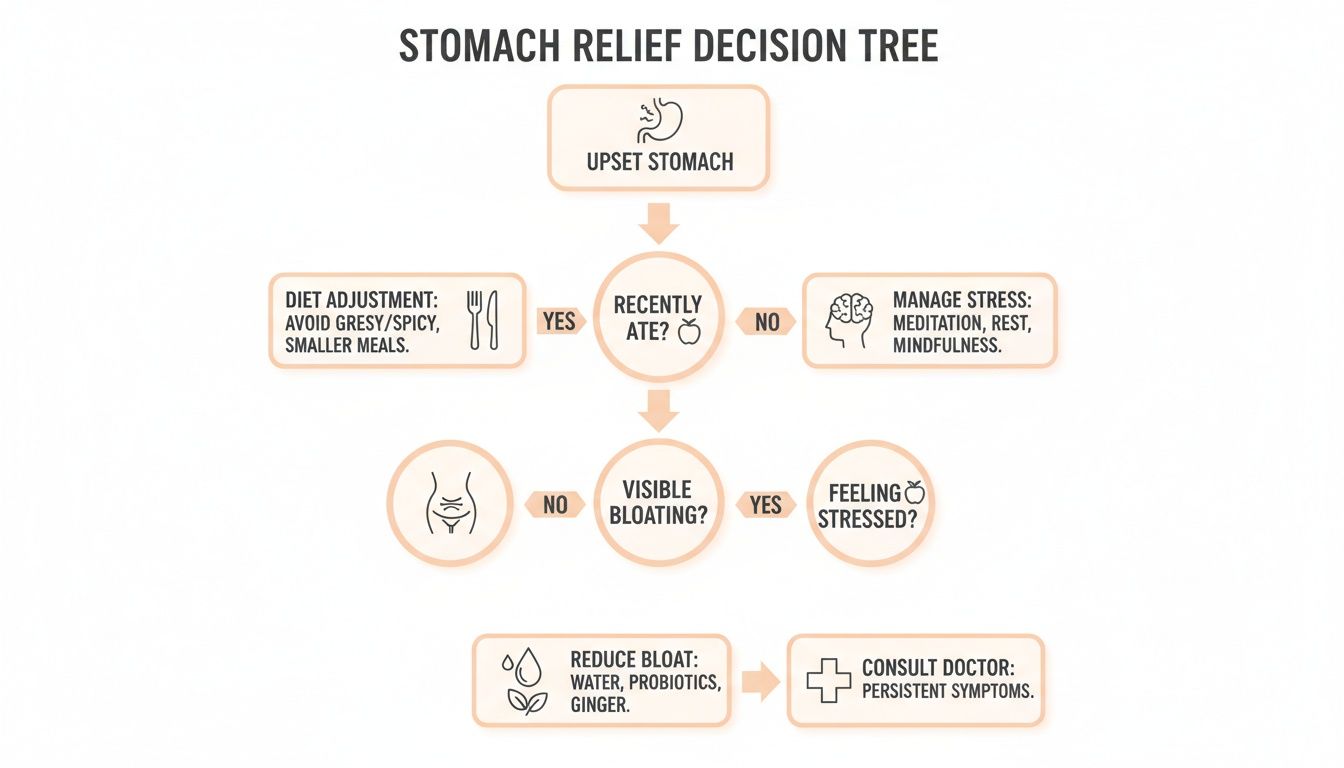
Follow the branches based on your symptoms to help narrow down what you should try first.
Understanding Gut Motility
Let's touch on a concept called gut motility. It sounds technical, but it's really just the term for how food moves through your stomach and intestines. Think of it like traffic on a highway.
If motility is too slow, food lingers in your gut. It starts to ferment, creating gas and that awful heavy, bloated feeling. On the other hand, if traffic is moving too fast, your body doesn't get enough time to absorb all the nutrients from your food, which can lead to diarrhea and urgency.
Key Takeaway: A lot of stomach issues aren't caused by a single "bad" food, but by the speed at which your entire system is operating. Things like stress, not drinking enough water, and a lack of fiber can all throw your motility out of balance.
For a deeper dive into what's driving your symptoms, you might consider understanding your gut health through specialized tests. They can provide a level of insight that goes far beyond what a food journal can show you on its own.
Building Your Gut-Friendly Plate with Prebiotics and Enzymes
Let's get practical. The food you put on your plate is one of the most powerful tools you have for building a happy, resilient gut. This isn't about bland, restrictive diets; it's about making smart, delicious additions that create digestive harmony from the inside out.
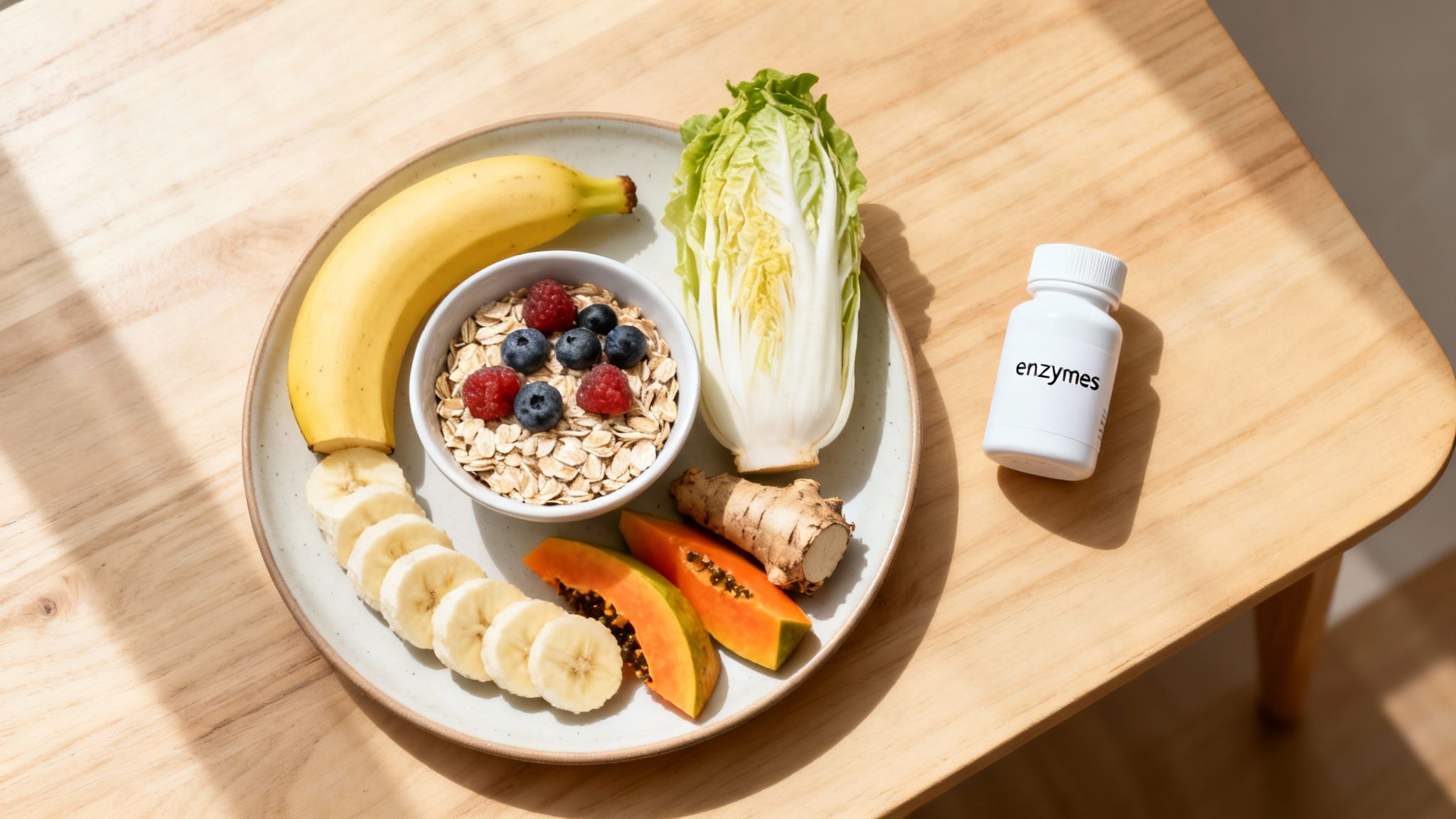
To do this, we need to talk about two of your gut’s best friends: prebiotics and enzymes. One feeds the good microbes already living in your gut, and the other helps you break down your food efficiently. When they work together, they can make a world of difference for anyone serious about fixing their stomach problems for good.
The Power of Prebiotics: Your Gut's Favorite Fuel
Think of your gut microbiome as a garden. Probiotics are the seeds (the good bacteria), but prebiotics are the fertilizer. They're special types of fiber that your body can't digest, so they make their way to your colon to become a five-star meal for your beneficial gut bacteria.
When your good bacteria feast on these prebiotic fibers, they produce incredible compounds called short-chain fatty acids (SCFAs). These little powerhouses help strengthen your gut lining, calm inflammation, and improve overall digestive function. It's a beautiful, symbiotic relationship.
Our Founder's Journey: Yuve's founder, Sam, discovered early on that just eating "healthy" wasn't the whole story. The real breakthrough came from eating smart. Incorporating prebiotic-rich foods was a major turning point in his own struggle with digestive issues, helping him build a more robust and balanced gut environment.
The best part? You don't have to look far to find these gut-nourishing fibers. They’re hiding in plain sight in many delicious, everyday foods.
Stocking Your Pantry with Prebiotic Powerhouses
Adding more prebiotics to your diet is probably easier than you think. Here are a few simple swaps and additions to get you started:
- Slightly green bananas: When they're not fully ripe, bananas are packed with resistant starch, a fantastic prebiotic. Slice one over your morning oatmeal or blend it into a smoothie.
- Oats and barley: These whole grains are a great source of beta-glucan, a prebiotic fiber that not only feeds good bacteria but also helps keep you regular.
- Onions, garlic, and leeks: As members of the allium family, these are rich in fructans, another powerful prebiotic. They also happen to form the flavor base for countless delicious soups, stir-fries, and sauces.
- Chicory root: You’ll often find this in coffee alternatives or fiber bars. Chicory is one of the best sources of inulin, a true prebiotic superstar.
It's no surprise the digestive health supplements market is projected to hit $34.5 billion by 2035, with prebiotics being a massive driver. They directly address common issues like constipation, which affects a staggering 16% of adults worldwide. Adding prebiotic-rich foods or supplements can truly make a difference.
For even more ideas, check out our detailed guide on what foods are high in prebiotics.
To make it even simpler, here's a quick checklist to help you stock your kitchen for success.
| Your Gut-Friendly Pantry Checklist |
| :--- | :--- | :--- |
| Food Category | Examples to Include | Why It Helps |
| Whole Grains | Rolled oats, barley, quinoa | Provides beta-glucan and fiber to fuel beneficial bacteria. |
| Fruits | Slightly green bananas, apples, berries | Rich in pectin and resistant starch, which act as prebiotics. |
| Vegetables | Onions, garlic, leeks, asparagus, artichokes | Excellent sources of inulin and fructans, potent prebiotic fibers. |
| Legumes | Chickpeas, lentils, black beans | Packed with fiber and resistant starch for a happy gut microbiome. |
| Nuts & Seeds | Flaxseeds, chia seeds, almonds | Offer a blend of fiber and healthy fats that support gut health. |
Keeping these items on hand makes it easy to build gut-friendly meals without even thinking about it.
When Healthy Foods Still Cause Trouble: The Enzyme Solution
Have you ever eaten a perfectly healthy meal - a big salad loaded with beans, nuts, and raw veggies - only to end up feeling heavy and bloated? It’s beyond frustrating. The reality is, sometimes even the "best" foods can be tough for our bodies to break down. I do NOT think you should give up on healthy foods; you just need the right support.
This is where digestive enzymes come in. Your body naturally produces enzymes to dismantle proteins, fats, and carbs into smaller molecules you can actually absorb. But things like age, stress, and certain health conditions can dial back your natural enzyme production.
When you don't have enough of the right enzymes, food sits in your digestive tract for too long, fermenting and leading to that all-too-familiar gas, bloating, and discomfort.
Taking a supplement like Yuve Papaya Enzymes with your meals is a smart, proactive step to support more efficient digestion. The papain and bromelain in our formula help break down tough proteins and fats, making balanced eating easier and helping to prevent that post-meal bloat before it even starts.
Ultimately, building a gut-friendly plate is a cornerstone of achieving nutrition security and taking control of your well-being.
Bringing in Probiotics and Soothing Herbal Helpers
You've already done the hard work of building a gut-friendly plate with prebiotics and enzymes, which is a huge leap forward. But to really cultivate a resilient, balanced digestive system, we need to bring in some reinforcements. It's time to talk about repopulating your gut with the good guys and calming any lingering irritation with nature's own remedies.
Think of it this way: your diet lays the foundation. Probiotics and herbs provide the targeted support that can make a massive difference in how you feel from one day to the next.
Your Gut's Best Friends: Probiotics
Your gut is home to a bustling community of trillions of microorganisms - your microbiome. When this community is in harmony, digestion just works. But things we all deal with, like stress, a less-than-perfect diet, or a course of antibiotics, can knock that delicate balance out of whack.
This is where probiotics step in. They are live, beneficial bacteria that help restore order. They’re like a peacekeeping force for your insides, crowding out the troublemakers and getting your internal ecosystem back on track. A happy microbiome isn't just about digestion; it's crucial for everything from absorbing nutrients to supporting your immune system.
Making Probiotics an Easy Daily Habit
You can absolutely get probiotics from fermented foods like kimchi, kombucha, or dairy-free yogurt. The tricky part? Getting a consistent, therapeutic dose from food alone is tough. That’s why a high-quality supplement often becomes a cornerstone of a solid gut-health strategy.
And I don't mean just grabbing any bottle off the shelf. You want a clean formula with scientifically-backed strains. Yuve’s Vegan Probiotic Gummies, for instance, are designed to be a simple and effective tool for daily gut maintenance. They deliver the good bacteria you need without common irritants like gelatin or other artificial junk, making it an easy (and delicious) habit to stick with.
If you want to get into the nitty-gritty of choosing the right supplement, our guide on the best probiotics for digestion breaks down exactly what to look for.
The Gentle Power of Calming Herbs
Beyond repopulating your gut, nature offers a whole apothecary of gentle herbs that have been trusted for centuries to soothe an upset stomach. These aren't just old wives' tales; modern science is catching up and validating what people have known for generations.
Adding these herbs to your routine can offer targeted relief for specific symptoms, working beautifully alongside your diet and probiotic regimen.
Here are a few of the most reliable herbal allies for your gut:
- Ginger: This is the undisputed champion for nausea and indigestion. Ginger contains compounds called gingerols that help relax the stomach muscles and gently speed up stomach emptying. This keeps food moving along so it doesn't just sit there causing trouble.
- Peppermint: Known for its incredible ability to ease cramps and spasms, peppermint works by relaxing the muscles of your digestive tract. This can be a lifesaver for the painful cramping that comes with gas and bloating. A warm cup of peppermint tea after a meal can feel like a gentle hug for your insides.
- Chamomile: Think of chamomile as the ultimate anti-inflammatory for your gut. It’s famous for its calming properties, which help reduce irritation and soothe the lining of your stomach and intestines. It's especially helpful when you know stress is a trigger for your stomach issues.
A Personal Story: Our founder, Sam, discovered that the combination of a daily probiotic and calming herbal teas was a real turning point. The probiotic worked on the foundational balance, while a cup of ginger or chamomile tea provided that immediate, soothing relief on days his stomach felt extra sensitive. It was this one-two punch that truly helped him feel in control.
These herbs are wonderful as simple teas, but you'll also find them in many digestive supplement blends. Their gentle yet effective action is the perfect complement to a comprehensive gut-healing plan. By pairing the restorative power of probiotics with the soothing nature of these herbs, you create a powerful approach to finding lasting digestive comfort.
Essential Lifestyle Habits for a Happy Gut
If you want to fix your stomach problems for good, you have to look beyond what’s on your plate. It’s also about how you live. The way you handle stress, move your body, and even sleep creates the environment where your digestive system either struggles or thrives.

Let's get into the simple, yet powerful, habits that can bring some serious relief and build a foundation for lasting gut health. These aren't complicated protocols - just small, intentional shifts that can add up to a much happier you.
Taming the Gut-Brain Connection
Ever had that "nervous stomach" feeling before a big meeting? That’s your gut-brain axis in action. Your brain and gut are in constant communication, and when you're stressed, your stomach is often the first to know about it.
Stress flips the switch on your "fight-or-flight" response, which immediately diverts blood away from your digestive system. The result? Things slow down, inflammation creeps up, and you’ve got a perfect recipe for bloating, cramps, and general discomfort.
To counter this, you need to deliberately activate your body's "rest-and-digest" mode. This isn't just a nice-to-have; it's a biological requirement for your digestion to work properly.
Here are a few ways to get started:
- Mindful Eating: Before taking that first bite, just pause. Take three deep, slow breaths. Look at your food, smell it, and actually appreciate it. This simple act sends a signal to your brain that it’s safe to focus on digestion.
- No More Desk Lunches: Eating while you’re distracted - whether you're firing off emails or scrolling through your phone - is a huge trigger for an upset stomach. Step away from the screen and give your meal your full attention, even if it's just for 15 minutes.
- Calm Your Mind: Try adding a 5-minute daily mindfulness or meditation practice into your routine. Apps like Calm or Headspace are fantastic starting points with guided sessions that can help lower your overall stress levels.
The Importance of Movement and Rest
How you move - and how you don't - has a direct impact on how well your digestive system works. It's all connected.
A gentle walk after a meal is one of the best things you can do to support healthy gut motility (that’s the technical term for how food moves through you). A quick 10-to-15-minute stroll helps stimulate your stomach and intestines, which can prevent that heavy, sluggish feeling.
Just don't overdo it. Intense exercise right after you eat can pull blood away from your stomach, making things harder on your digestive system.
Sleep is just as important. Your gut does some of its most critical repair work overnight. When you skimp on sleep, you're robbing your digestive system of this crucial healing time. That can lead to more inflammation and a more sensitive stomach the next day. Make it a priority to get 7-9 hours of quality sleep each night.
Hydration Is Not Negotiable
Finally, let's talk about water. I know it sounds basic, but you'd be surprised how many people overlook it. Proper hydration is absolutely essential for fixing stomach problems. Water helps break down food, allows your body to absorb all those good nutrients, and keeps everything moving smoothly.
Pro Tip: If you struggle with constipation, dehydration is often a primary culprit. A good rule of thumb is to drink half your body weight in ounces of water daily. So, if you weigh 150 pounds, that’s 75 ounces of water.
It's no surprise that people are looking for natural solutions, especially when 20% of Americans report dealing with chronic gut issues. Studies showing that herbal blends with ginger and peppermint can cut nausea by 40% really highlight this shift toward preventive care. This is why supportive habits, enzymes, and herbs are now seen as essential tools for a healthy gut. You can discover more insights about this trend and see how North America is leading the market.
When It’s Time to See a Doctor
Everything we’ve covered so far gives you a powerful toolkit for managing your gut health at home. Honestly, you can make a massive difference in how you feel just by being mindful and consistent. But a crucial part of taking charge of your health is knowing your limits and recognizing when it’s time to bring in a professional.
Some symptoms aren't just your gut reacting to that new lentil soup. They’re your body's way of sending up a flare, signaling that you need a doctor to take a closer look and figure out what's really going on under the hood.
Don't Ignore These Red Flags
Most of the time, a bit of bloating or an off day is manageable with the diet and lifestyle tweaks we've discussed. But some signs are non-negotiable and demand a doctor's attention.
If you experience any of these, it's time to make that appointment:
- Unexplained weight loss - especially if you haven't been trying to lose weight.
- Severe or persistent pain that doesn't let up or is bad enough to wake you from sleep.
- Any blood in your stool or vomit. This is always a reason to call your doctor right away.
- Trouble swallowing or feeling like food is getting stuck in your throat or chest.
- A sudden, major change in your bowel habits (like going from regular to constant diarrhea or constipation) that lasts more than a week.
- Debilitating fatigue that you can't explain away with a few late nights.
This list isn't here to scare you. It’s here to empower you. Knowing what to look for allows you to act decisively and shift from worrying about a symptom to actively addressing it.
How to Have a Productive Doctor's Visit
Walking into an appointment prepared can completely change the outcome. When you're put on the spot, it's easy to forget key details. A little prep work ensures your doctor gets the full, accurate story.
Your Action Plan: For a week before your appointment, keep a simple symptom journal. Jot down what you eat and drink, when your symptoms flare up, and how intense they are. This data is invaluable for your doctor - it helps them connect dots you might not even see.
Also, come with a written list of questions. You might ask about specific tests, what the diagnostic process looks like, or what immediate changes they suggest. Think of yourself and your doctor as a team. The shared goal is to uncover the root cause and build a sustainable plan that gets you back to feeling good.
Your Quick Wins Checklist
Feeling overwhelmed? Don't be. Start with these simple, actionable steps this week.
- Take five deep breaths before each meal. This simple act switches you into "rest-and-digest" mode.
- Put your fork down between bites. Slowing down is one of the easiest ways to prevent swallowing air and feeling bloated.
- Add one prebiotic-rich food to your day. Try a slightly green banana in your smoothie or a side of asparagus with dinner.
- Take a 10-minute walk after your biggest meal. Gentle movement is a game-changer for digestion.
- Consider an enzyme supplement. If healthy foods still leave you bloated, a product like Yuve Papaya Enzymes can offer immediate support.
Remember, this is a journey, not a race. Be kind to yourself, and celebrate the small wins. We're here to help you feel better, one step at a time. Let us know in the comments which tip you're going to try first!
Ready to build a happier gut? Yuve is here to support you every step of the way with clean, vegan supplements designed for real results. Start with our powerful Papaya Enzymes to make every meal a more comfortable one.


