Ever feel like your stomach inflates like a balloon by afternoon? You’re not alone- and we get how frustrating that constant bloating and discomfort can be. You try to eat right, but it feels like your gut just has a mind of its own.
The good news is, you're in the right place. We're going to break down the difference between prebiotics and probiotics in simple terms, so you can finally understand what your gut needs to feel its best. This isn't just about science- it's about getting back to enjoying your food and your life without digestive drama.
Your Gut Health Dream Team: Prebiotics and Probiotics
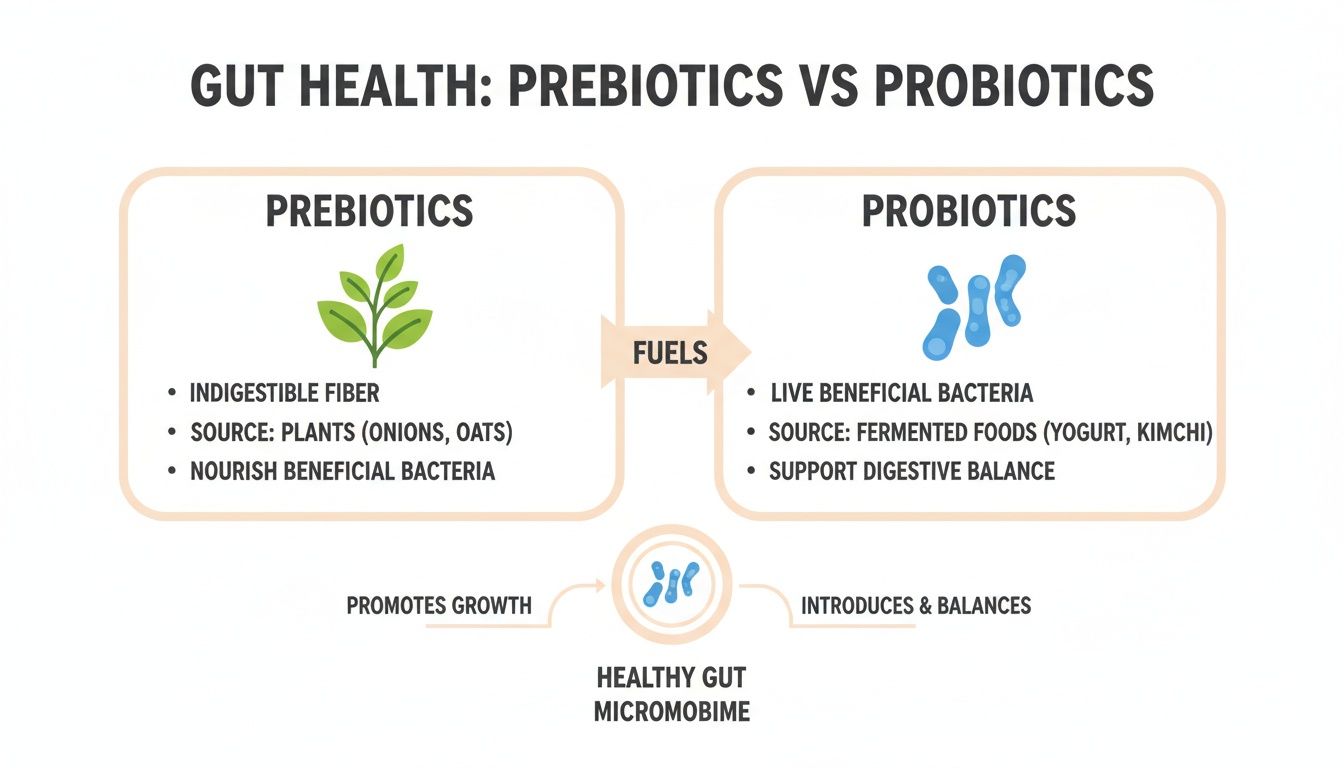
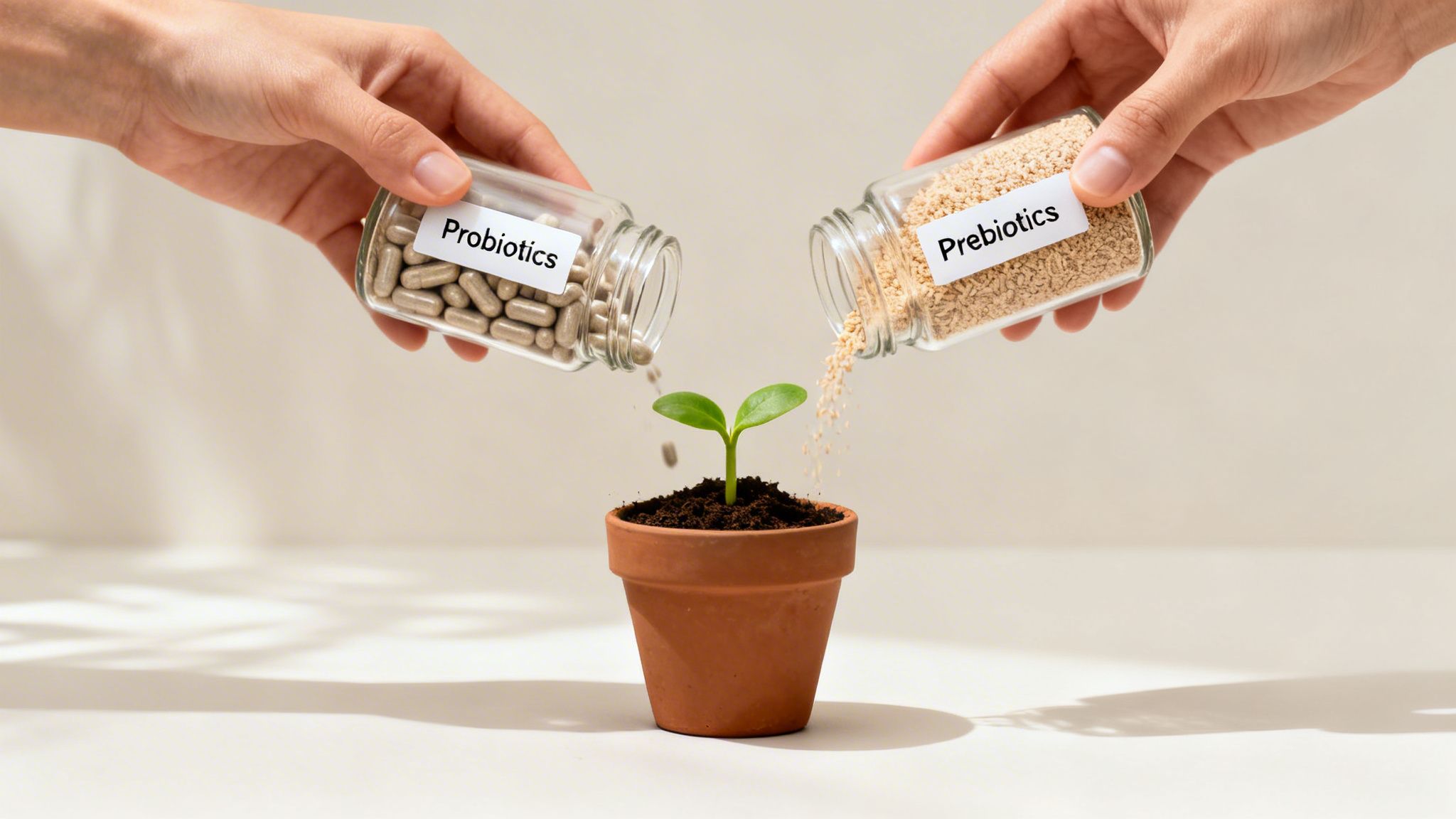
Let's get straight to it. Think of your gut like a garden. Probiotics are the good seeds (beneficial live bacteria) you plant to grow a healthy, diverse ecosystem. But what good are seeds without nourishment? That's where prebiotics come in- they're the high-quality fertilizer (specific plant fibers) that ensures those seeds sprout and flourish.
Trying to use one without the other is like having a team of all-star players but forgetting to give them any food or water. For your gut to truly thrive, you need both prebiotics and probiotics working in sync.
Prebiotics vs. Probiotics at a Glance
To make it even clearer, here’s a quick breakdown of their core functions and sources. This table helps you see their distinct but complementary roles.
| Feature | Prebiotics (The Fuel) | Probiotics (The Live Helpers) |
|---|---|---|
| What It Is | A type of plant fiber that feeds good gut bacteria. | Live, beneficial bacteria that live in your gut. |
| Main Job | To nourish and help the good bacteria already in your gut multiply. | To add more good bacteria to your gut microbiome. |
| Common Sources | Garlic, onions, bananas, chicory root, oats. | Yogurt, kefir, kimchi, tempeh, high-quality supplements. |
| State | Non-living fiber. | Living microorganisms. |
The fundamental difference comes down to their function. Probiotics are the living bacteria themselves- like the well-known Lactobacillus and Bifidobacterium strains- that you introduce to your system to boost your gut population.
On the other hand, prebiotics are non-digestible fibers from foods like chicory root (inulin is a common one) that your body can't break down. Instead, they travel to your colon to become a food source for your resident good bacteria, helping them multiply and thrive.
Research confirms that while probiotics can directly improve digestive comfort, prebiotics supercharge their effects by giving them the nourishment they need to grow. If you're curious about the science, you can find more information in this deep dive into the probiotic and prebiotic market.
How Prebiotics Nourish Your Gut From Within
It’s time to give prebiotics the credit they deserve. While probiotics often steal the show, think of prebiotics as the unsung heroes working diligently behind the scenes. They are the true foundation for a healthy, resilient gut.
Essentially, prebiotics are special types of plant fibers. They're uniquely tough, built to withstand the acidic journey through your stomach and small intestine without breaking down. Their real work starts when they arrive in your colon, where they become the preferred food source for your beneficial gut bacteria.
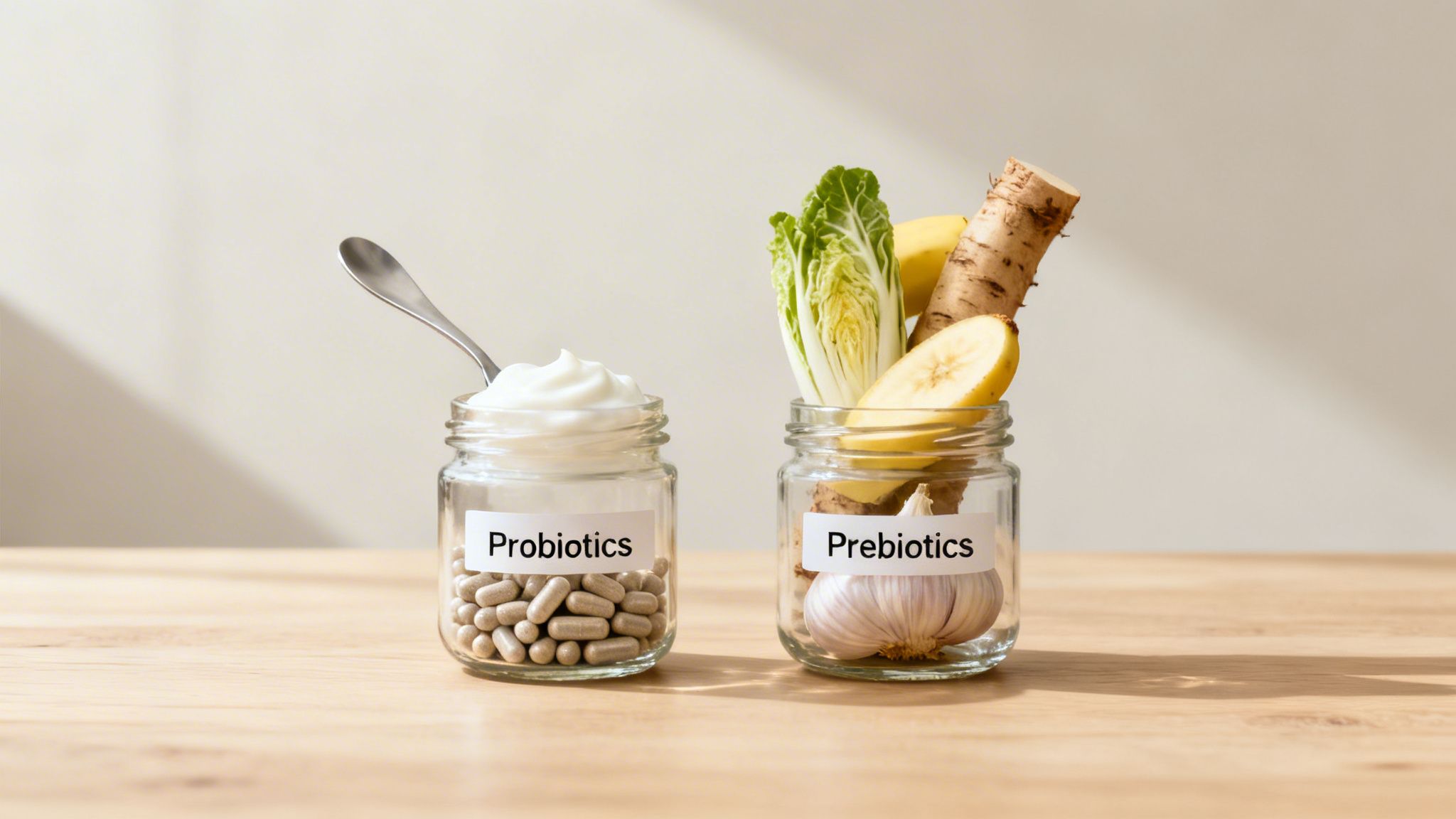
This feeding process, known as fermentation, is where the magic really happens. As your good bacteria feast on these prebiotic fibers, they produce incredible health-promoting compounds called short-chain fatty acids (SCFAs).
Science Corner: The Power of SCFAs
Of all the SCFAs, one of the most vital is butyrate. Think of butyrate as the primary fuel for the cells lining your colon. Keeping these cells well-fed and healthy is absolutely crucial for maintaining a strong gut barrier.
A strong gut barrier acts like a gatekeeper for your bloodstream. It’s what prevents undigested food particles, toxins, and other harmful substances from "leaking" out of your gut and triggering inflammation elsewhere in your body.
But the benefits don’t end there. The SCFAs they help create also play a few other key roles:
- Reduce inflammation both inside the gut and systemically.
- Support your immune system, a massive portion of which is located in your gut.
- Improve mineral absorption, helping your body pull more nutrients from the food you eat.
So, when you think about the difference between prebiotics and probiotics, remember this: prebiotics are the fuel that helps your own gut bacteria produce these amazing benefits from the inside out. They don't just add good microbes; they nourish and strengthen the beneficial communities you already have.
Adding Prebiotic-Rich Foods to Your Diet
The best part is that you don't have to look far to find these gut-nourishing fibers. Many common and delicious plant-based foods are loaded with prebiotics.
Here are some fantastic, everyday options to get you started:
- Garlic and Onions: These kitchen workhorses do more than just add flavor.
- Bananas (especially slightly green ones): They are rich in a type of resistant starch that your gut microbes thrive on.
- Oats: A simple bowl of oatmeal is a wonderfully comforting way to feed your gut.
- Chicory Root: This is a true prebiotic powerhouse, often found in fiber supplements or coffee alternatives.
- Asparagus and Artichokes: Both of these veggies are packed with the good stuff.
By consciously incorporating these foods, you’re actively tending to your gut microbiome every day. For more ideas, take a look at our detailed guide on what foods are high in prebiotics.
Understanding Probiotics: The Live Allies for Your Digestion
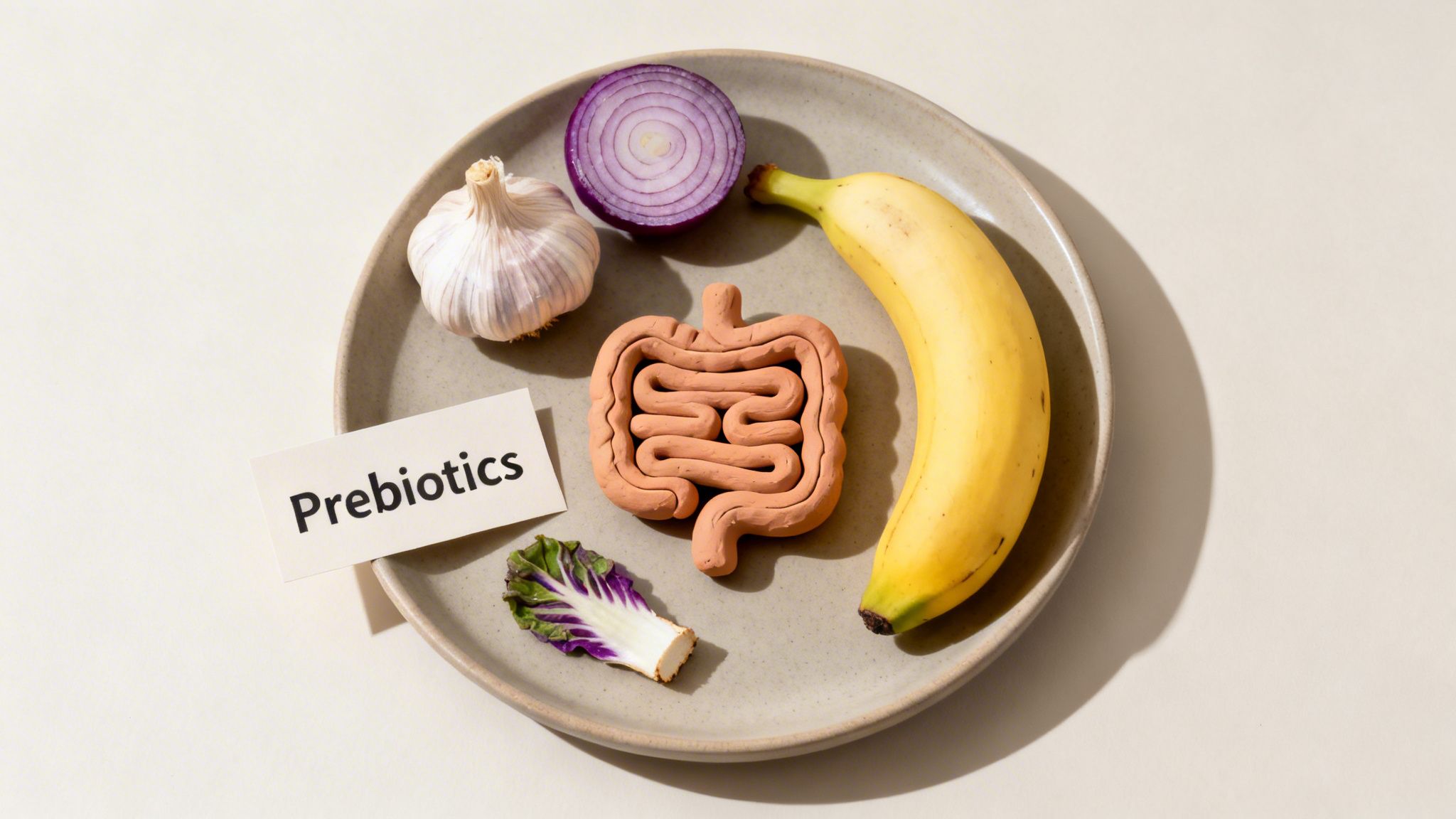
If prebiotics are the fertilizer for your gut’s garden, then probiotics are the actual seeds. These are the live, beneficial bacteria that get so much attention- and for good reason. They are the active allies that travel to your gut to help restore balance and keep things running smoothly.
Think of them as tiny helpers that set up shop in your intestines. Once they arrive, they get to work on a variety of crucial jobs, from assisting in the breakdown of food to making it harder for less helpful bacteria to take over.
Different Strains for Different Jobs
It’s important to know that not all probiotics are created equal. The two most well-known families of these helpful microbes are Lactobacillus and Bifidobacterium, but even within these groups, different strains have different specialties.
- Lactobacillus: You'll often find these strains in the small intestine. They're fantastic at helping your body digest dairy products.
- Bifidobacterium: These strains typically reside in the large intestine and are superstars at breaking down the complex carbohydrates (fiber) that your body can't handle on its own.
This is why a multi-strain probiotic supplement can be so beneficial. You're not just sending in one type of worker; you're sending in a diverse team of specialists to support your overall digestive wellness.
A Founder's Story: From Struggle to Solution
I know firsthand how frustrating it is when your digestion feels completely out of your control. For years, I struggled with bloating and discomfort that seemed to have no rhyme or reason. It felt like I was constantly guessing which foods would trigger a bad day.
From Yuve Founder, Sam: "My journey was filled with trial and error. I tried eliminating different foods, but the inconsistency was maddening. It wasn't until I started researching the gut microbiome that things began to click. Discovering the power of a high-quality, multi-strain vegan probiotic was a complete game-changer. It wasn't an overnight fix, but with consistency, it helped bring my system back into balance and gave me the freedom to enjoy food again without fear."
This personal experience is why we're so passionate about creating effective, clean, and reliable gut health solutions at Yuve. We've been there, and we want to help you find that same relief.
Probiotics are the active warriors- live microbes that, when consumed in adequate amounts (typically 1-10 billion CFUs daily), bring direct benefits by rebalancing your gut. While supplements are a targeted way to get these beneficial microbes, many traditional foods are also packed with them. For example, you can discover how easy it is to make homemade yogurt, a classic source of live cultures, right in your own kitchen.
Why You Get Better Results When Using Both Together
This is where the real magic happens. While prebiotics and probiotics are fantastic on their own, their true power is unleashed when they work as a team. This combination, often called a synbiotic, is a smarter, more complete way to find lasting digestive comfort.
Think about what happens after you take a round of antibiotics. The medicine did its job, but it also wiped out a lot of the friendly bacteria in your gut, leaving the environment a bit barren.
If you only take a probiotic at this point, it’s like scattering seeds onto dry, nutrient-depleted soil. Sure, a few might sprout, but most won't stand a chance.
Now, what if you added prebiotics? Suddenly, you're not just planting seeds- you're also fertilizing the soil. You're creating the perfect environment for those new probiotic seeds to take root, grow strong, and build a flourishing, resilient garden. That’s exactly what the synbiotic approach does for your gut.
The Synbiotic Advantage for Your Gut
When you pair prebiotics and probiotics, they kick off a cycle of positive benefits. The probiotics arrive ready to get to work, and the prebiotics are waiting to serve as their first meal. This helps them multiply and colonize your gut much more effectively.
This synergy is what leads to a more diverse and robust microbiome. Instead of just temporarily adding good bacteria, you’re actively building a self-sustaining ecosystem that’s better equipped to handle digestive challenges.
This combined strategy is precisely why we created Yuve's Vegan Probiotic with Prebiotic blend. We didn't want to just give you the seeds- we wanted to provide the fertilizer, too. By putting both into one simple capsule, we take the guesswork out of building a healthier gut. It's a smart, proactive step to feel great without discomfort. You can learn more in our guide to why a combined probiotic and prebiotic capsule is so effective.
For those looking to truly maximize their digestive wellness, you can even explore high-quality synbiotic supplements that include prebiotics, probiotics, and postbiotics (the helpful byproducts of fermentation). Taking a combined approach is simply the most efficient path to supporting your long-term gut health.
How to Choose a High-Quality Gut Health Supplement
Walking into the supplement aisle can feel like a pop quiz you didn't study for. Row after row of bottles, all promising better health. How do you choose one that actually works? I get it. Making the right choice is the first step toward feeling your best, so let's break down what really matters.
The hard truth is that the supplement industry is full of products that don't live up to their claims. Many are packed with unnecessary fillers, use ineffective strains, or can't even survive the journey to your gut.
To make sure you're getting a safe, potent, and effective product, you need to know what to look for. This isn't just about buying a supplement; it's about investing in your long-term health.
Your Quality Checklist
Here's a straightforward checklist to help you evaluate and choose a high-quality prebiotic or probiotic supplement. These are the details that separate the good stuff from the marketing fluff.
| Quality Factor | What to Look For | Why It Matters |
|---|---|---|
| Clean Ingredients | Vegan, non-GMO, and gluten-free. Check for a short "other ingredients" list that avoids fillers, binders, or artificial colors. | You want to nourish your gut, not irritate it. Unnecessary additives can sometimes cause the very digestive issues you're trying to solve. |
| Targeted Probiotic Strains | Specific, well-researched strains like Lactobacillus and Bifidobacterium. | Different strains do different jobs. A multi-strain formula provides a diverse team of good bacteria to support various aspects of gut health. |
| Smart Encapsulation | Delayed-release capsules or other protective technology mentioned on the label. | Probiotics are living organisms that can be destroyed by stomach acid. Smart encapsulation ensures they arrive in your intestines alive and ready to work. |
| Brand Transparency | Companies that are open about their sourcing, manufacturing processes, and third-party testing. | A trustworthy brand stands behind its product with clarity and confidence. Look for honesty, not just hype. |
Focusing on these key factors helps ensure you're choosing a product designed for results, not just for a quick sale. Beyond the basics, learning how to read supplement labels is your secret weapon.
Choosing a supplement is a personal decision, but it shouldn't be a confusing one. By focusing on clean ingredients, proven strains, and a brand you can trust, you’re finding a reliable partner for your wellness journey.
Quick Wins: Your Action Plan for a Healthier Gut
Alright, you now understand the difference between prebiotics and probiotics. But knowing is one thing; doing is where the real magic happens. Let's break it down into a few small, simple actions you can take today.
-
Start Your Day with Water. Before you do anything else, drink a big glass of water. Hydration is fundamental for good digestion and helps keep everything moving the way it should.
-
Add One Prebiotic Food. This week, give yourself a small challenge: add just one new prebiotic-rich food to your daily lunch. It could be a few slices of onion on a salad, a banana with your breakfast, or a side of steamed asparagus.
-
Build Consistency with the Right Support. Let’s be realistic- life gets busy. The easiest way to make sure you’re getting both your pre- and probiotics daily is to make it a no-brainer. Folding a complete supplement like Yuve's Vegan Probiotic with Prebiotic into your routine is a smart, proactive way to build a resilient gut without any guesswork.
FAQs: Your Prebiotic and Probiotic Questions, Answered
Let's tackle some of the most common questions that pop up. My goal is to clear up any confusion so you can move forward with confidence.
Can I just get these from food?
Ideally, yes. A diet packed with a variety of high-fiber plants and fermented foods lays an amazing groundwork for a healthy gut. But it's tough to consistently get the therapeutic dose you need from diet alone. You’d have to eat a lot of chicory root and sauerkraut every single day. A high-quality supplement is your daily gut health insurance, bridging the gap between your diet and what your microbiome truly needs to thrive.
How quickly will I see results?
Everyone's gut is unique. Some people feel a difference in things like bloating and regularity in just a few days. For others, it might take 2-3 weeks of steady use for the beneficial bacteria to really take hold. The most important factor is consistency.
Should I expect any side effects?
When you first introduce a new prebiotic or probiotic, it's not uncommon to experience a little temporary gas or bloating. Dun, dun, dun- unwelcome gas. Yikes! Don't let this scare you off, though. It’s actually a good sign that things are happening. This initial adjustment period usually fades within a week as your system finds its new balance.
What’s the best time to take them?
Honestly, the best time of day is whenever you'll remember to take it. Consistency trumps timing. That said, many experts recommend taking your supplement about 20-30 minutes before a meal. The food that follows can act as a buffer, helping protect the live bacteria from harsh stomach acid.
At Yuve, we've combined potent prebiotics and probiotics into one simple capsule. It's designed to simplify your routine and deliver the powerful synergistic results your gut deserves.
Take control of your gut health with Yuve's Vegan Probiotic with Prebiotic blend today!