Ever feel like your stomach inflates like a balloon by afternoon? You’re not alone—and it’s not just what you ate. We get how frustrating it is when your gut feels completely unpredictable. One day you’re fine, the next you’re dealing with dun, dun, dun—unwelcome gas. Yikes!
If you’re ready to get off that digestive rollercoaster, you’ve probably heard that probiotics can help. But when you’re standing in the supplement aisle, staring at a wall of bottles, how do you know what to look for when buying probiotics? It can feel overwhelming.
Think of this as your friendly roadmap. We're going to cut through the confusion together and show you exactly how to pick a probiotic that actually works. We’ll break down what really matters on the label so you can feel confident in your choice.
Here's what we’ll walk through together:
- CFU Counts: Why bigger isn't always better.
- Probiotic Strains: How to match the right bacteria to your unique gut goals.
- Label Reading: A crash course in spotting quality ingredients (and red flags).
- A Personal Story: We'll share a bit about how our founder, Sam, navigated his own gut health journey to find solutions that genuinely work.
Decoding Probiotic Potency: What Are CFUs?
Let's dive into one of the biggest terms you'll see on any probiotic label: CFU. This stands for Colony-Forming Units, and it's a key piece of the puzzle.
Think of CFUs as the number of live, active bacteria packed into each dose. It's basically the size of the "good guy" army you're sending into your gut. A higher CFU count generally means more of these beneficial microbes have a better chance of surviving the acidic journey through your stomach to reach your intestines, where they do their best work.
Finding the Right CFU for Your Needs
So, should you just grab the bottle with the most massive number? Not so fast. While a tiny count might not pack enough punch, an astronomical number isn't always the answer. The goal is to find the right CFU count that matches your health goals.
For general, everyday gut maintenance and digestive support, a probiotic with a potency in the 10 to 50 billion CFU range is often the sweet spot. This provides a solid dose, ensuring enough of those microscopic helpers arrive alive and ready to get to work.
There's a reason the probiotics market is booming. Valued at USD 87.70 billion in 2023, it's projected to reach an incredible USD 220.14 billion by 2030. This shows more and more people are realizing that low-potency products just don’t deliver. What this means for you is simple: a quality product matters. Research has found that without a protective delivery system, as little as 10-20% of bacteria can survive stomach acid. This makes any probiotic with under 1 billion CFUs pretty much ineffective.
To give you a better idea of what different CFU counts are for, here’s a quick guide.
CFU Count and What It Means For You
| CFU Range | Best For | Example Use Case |
|---|---|---|
| 1-5 Billion | General wellness & maintaining existing gut balance. | You're new to probiotics and want to start gently. |
| 10-50 Billion | Daily digestive support & addressing mild to moderate gut issues. | Managing occasional bloating, gas, or irregularity. |
| 50-100+ Billion | Targeted, intensive support for specific health concerns. | Recovering gut health after a course of antibiotics. |
Remember, this table is a general guide. The best potency for you depends on your unique body and health goals.
Why Potency Is Only Half the Story
It’s a common myth that a massive CFU number is all that matters. But what good are billions of bacteria if they don't survive the trip to your gut? This is where the delivery system-the capsule itself-becomes just as important.
Think of a high-quality, delayed-release vegan capsule as an armored car. Its job is to shield the delicate probiotics from the harsh acid in your stomach, ensuring they are released safely in the intestines where they can colonize and thrive.
A probiotic’s true power comes from the partnership between its potency (CFU count) and its protection (the capsule). One is simply not as effective without the other.
For example, a product with 50 billion CFUs in a flimsy capsule might actually deliver fewer live bacteria than a well-formulated 10 billion CFU probiotic in a superior, acid-resistant capsule.
Choosing the right probiotic is about making a smart, informed decision. By looking for a solid CFU count paired with a protective delivery system, you’re setting your gut up for real support.
Why Probiotic Strains Are More Important Than You Think
If you thought CFUs were the whole story, let’s talk about the real game-changer: the strains.
Think of it like this: if CFUs are the number of workers on a team, the strains are their specific job titles. You wouldn’t hire a team of plumbers to do electrical work, right? The same logic applies to your gut. You need the right specialists for the job you want done.
A generic label that just says "probiotic blend" is a red flag. It’s vague and doesn't tell you what the product can actually do for you. Different strains of bacteria perform entirely different functions, from helping you digest that big salad to supporting your immune system. If you're trying to tackle specific issues, finding the best probiotic for gas and bloating means knowing exactly what to look for on the label.
Meet the Superstars of the Probiotic World
Getting to know the key players will help you choose a probiotic that truly targets your needs. While there are thousands of strains out there, most of the heavy lifting in supplements is done by two main families: Lactobacillus and Bifidobacterium.
-
Lactobacillus (L.): These are hardworking bacteria often found in your small intestine. They are champions at breaking down lactose (the sugar in milk) and help create an unfriendly environment for harmful pathogens. Strains like L. acidophilus are famous for supporting overall digestive health.
-
Bifidobacterium (B.): These guys prefer to hang out in your large intestine. They are crucial for digesting fiber and producing important B vitamins. Strains such as B. longum are often linked to a strong immune response and gut regularity.
See how specific their jobs are? This is why a targeted approach is so much more effective.
Science Corner: Why Strain Specificity Is Non-Negotiable
Looking for clinically studied strains is your best bet for getting real results. These are strains that have been put to the test in scientific research and have proven benefits.
For instance, a 2017 review published in the Annals of Medicine highlighted that specific strains like Lactobacillus rhamnosus GG and Saccharomyces boulardii are effective in preventing antibiotic-associated diarrhea. What this means for you is that choosing a probiotic with well-researched strains isn't just a good idea-it's an evidence-backed strategy for better health. Generic blends simply can't offer this kind of precision.
A probiotic without a specific strain name (like Lactobacillus acidophilus La-14) is a major red flag. It's a mystery box for your gut, and I do NOT think you should leave your health to chance.
As you learn more, you might be interested in research detailing how specific probiotic strains can help manage sugar cravings. Matching the right "worker" to the right "job" is what turns a hopeful purchase into a reliable wellness tool.
How to Read a Probiotic Label Like an Expert
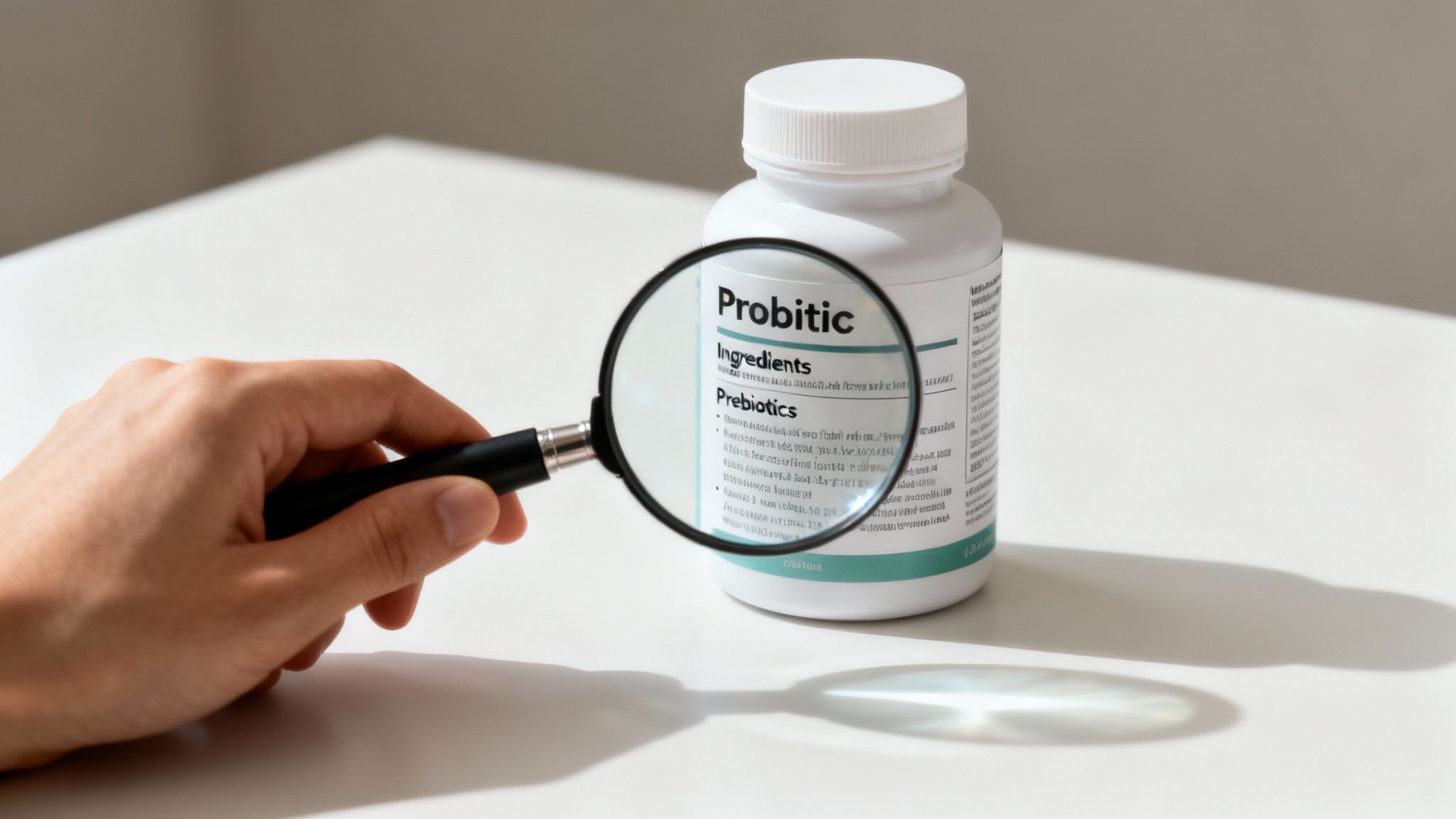
A great probiotic is more than just bacteria in a bottle. The other ingredients on the label play a huge role. This is where we need to get into the details, because knowing what to look for when buying probiotics means looking beyond the CFU count and strains.
Let's put on our supplement detective hats. It’s all about making sure every ingredient aligns with your health goals, leaving no room for junk.
The Power of Prebiotics
First up, one of the most important supporting characters: prebiotics. Think of prebiotics as the packed lunch for your probiotic workers. They are specific types of fiber that your good gut bacteria love to eat.
When probiotics have their favorite food source available, they are better nourished and more likely to thrive once they reach your gut. Adding prebiotics to a formula is a smart move that seriously boosts a probiotic's power.
Common prebiotics to look for on a label include:
- Inulin: A type of soluble fiber found in plants like chicory root.
- Fructooligosaccharides (FOS): Short-chain carbohydrates that feed beneficial bacteria.
Including prebiotics is like planting a garden and providing the fertilizer at the same time. You’re not just introducing good seeds; you’re giving them the perfect environment to grow.
Delivery Systems That Actually Work
Next up is the delivery system. A probiotic’s journey through your stomach is a dangerous one-that stomach acid is no joke. The capsule or gummy must be tough enough to protect its precious cargo.
This is why delayed-release vegan capsules are a game-changer. They are designed to resist stomach acid and dissolve later, in your intestines. This ensures the maximum number of live bacteria arrive safely where they're needed most. Without this protection, even a high-CFU probiotic can fall flat.
Clean Labels and What to Avoid
Finally, a high-quality probiotic should be clean-free from unnecessary fillers, allergens, and artificial junk. When you scan the "Other Ingredients" section, you want to see a short, understandable list. The last thing your gut needs is more irritants.
Here’s a quick checklist for a clean label:
- Non-GMO: Ensures ingredients are not from genetically modified organisms.
- Gluten-Free: Essential for those with celiac disease or gluten sensitivity.
- Allergen-Free: Look for labels that state the product is free from common allergens like soy, dairy, and nuts.
- No Artificial Fillers or Colors: Avoid ingredients like magnesium stearate, titanium dioxide, or artificial dyes.
Learning how to read supplement labels effectively is a skill that empowers you to make the best choices for your health. It helps you see past the flashy marketing and understand what’s actually inside.
Building Trust with Third-Party Certifications
In a market overflowing with options, how can you be sure the probiotic you choose is any good? This is where third-party certifications come in.
Think of these certifications as an unbiased seal of approval. They’re your guarantee that what’s on the label is what’s actually in the bottle. When an independent organization tests a product, it means the brand has gone the extra mile to prove its quality.
What Do These Certifications Mean for You?
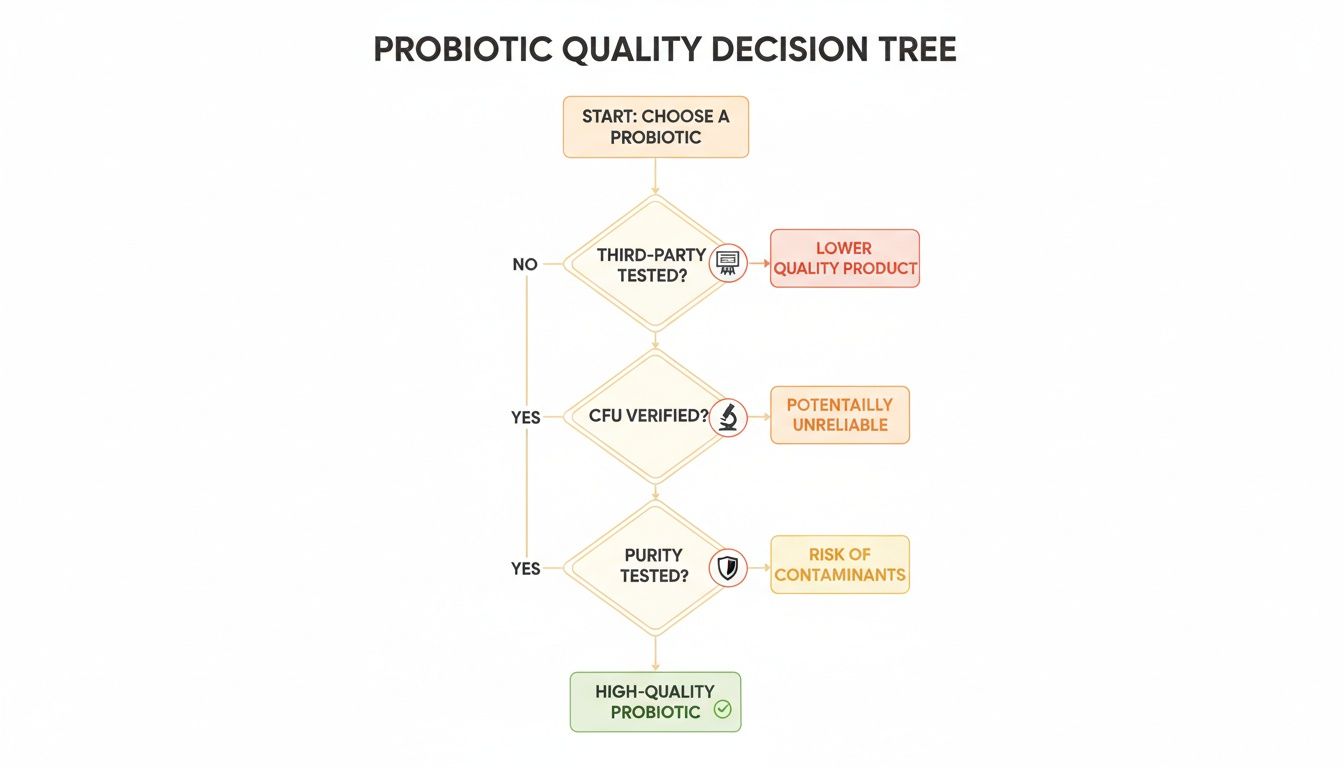
That little seal on a bottle is proof that the product has been tested for three critical things:
- Purity: This confirms the product is free from contaminants like heavy metals or pesticides.
- Potency: This check verifies that the CFU count on the label is accurate and that the bacteria are alive up to the expiration date.
- Safety: This ensures the product contains exactly what it claims to, without any unlisted extras.
For our Yuve community, this transparency is everything. You shouldn't have to second-guess the quality of something you're putting into your body.
A Founder's Story: Why This Matters to Us
Making third-party testing a priority is crucial, especially in a flooded market. This is personal for us. Our founder, Sam, struggled for years with his own digestive issues. He remembers the frustration of trying countless supplements, never knowing which ones he could truly trust. That experience is the bedrock of our commitment to quality and transparency here at Yuve.
A third-party certification tells you that a brand is willing to have its products scrutinized by outside experts. It’s a powerful sign of confidence and a commitment to putting your health first.
We believe that choosing a supplement shouldn't feel like a leap of faith. To dig deeper into this, check out our guide on the best third-party tested supplements and see why this is a cornerstone of our philosophy. By looking for these seals, you’re choosing a brand that values your trust.
Your Probiotic Buying Checklist: Quick Wins
We’ve covered a lot, and we know it can feel like a lot to remember. So, let’s pull it all together into a simple, actionable checklist you can use anytime. Think of this as your cheat sheet to confidently find a probiotic that will actually work for you.
Your Quick-Reference Guide
- Check the CFU Count: Is it in the 5–50 billion CFU sweet spot for daily support?
- Identify the Strains: Does the label list specific, clinically studied strains like Lactobacillus acidophilus? Avoid vague "proprietary blends."
- Look for Prebiotics: Does the formula include prebiotic fiber, such as inulin or FOS, to feed the good bacteria?
- Verify the Delivery System: Is it in a delayed-release capsule or another format designed to survive stomach acid? This is non-negotiable.
- Scan for Clean Ingredients: Is the "Other Ingredients" list short and free from artificial fillers, colors, and common allergens?
- Confirm Third-Party Testing: Can you spot a seal from a reputable third-party lab? This is your guarantee of purity and potency.
This decision tree helps visualize the process, guiding you through the essential checks that any high-quality probiotic should pass.
Putting It All Into Practice
When our founder, Sam, was on his gut health journey, this is the exact checklist he wished he had. It’s why he created a product that could confidently tick every single one of these boxes.
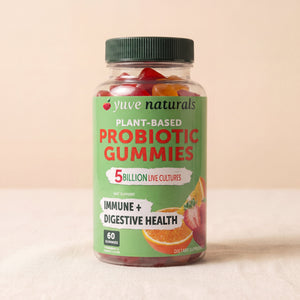
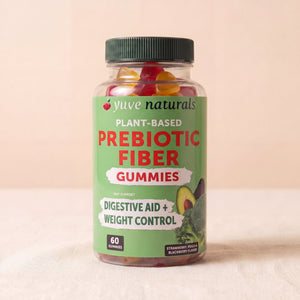
Our Vegan Probiotic Gummies with Prebiotics are a core solution designed with this framework in mind. They provide a solid 5 billion CFU dose of well-researched strains, include nourishing prebiotics, and are completely vegan and free of junk. This isn't just a sales pitch; it's about showing you what a trustworthy probiotic looks like in the real world. A great supplement should make your life easier.
Armed with this checklist, you’re now equipped to make an informed choice. You have the knowledge to pick a probiotic that can become a real ally on your journey to feeling your best.
Got Questions About Probiotics? We've Got Answers
We love getting your questions! It means you're taking charge of your health. Here are a few of the most common ones we hear, with straightforward answers to help you on your journey.
Do I Really Need to Take Probiotics Every Single Day?
Absolutely. When it comes to probiotics, consistency is everything. Think of your gut microbiome as a garden. Daily care helps the good stuff grow and flourish. Taking your probiotic every day ensures a steady supply of beneficial bacteria, which helps them maintain a strong presence and deliver those great benefits.
Can't I Just Get Enough Probiotics From Food?
Fermented foods like yogurt, kefir, and kimchi are fantastic. But relying on them alone for a therapeutic dose of probiotics can be a gamble. The type and number of live cultures can vary dramatically from one batch to the next.
A well-formulated probiotic supplement takes the guesswork out of the equation. It delivers a precise, guaranteed number of specific strains every single time. It’s the perfect, proactive way to complement a healthy diet.
How Long Until I Start to See Results?
This is a classic "it depends" situation, because everybody's gut is unique. However, many people report feeling positive digestive changes-like less bloating and more regularity-within the first 1 to 2 weeks of daily use. For other benefits, it might take a bit longer. Be patient and consistent, and pay attention to how you feel. Even small improvements are a great sign you're on the right track!
At Yuve, we created our supplements to be an easy, integral part of your daily wellness routine. Our Vegan Probiotic Gummies with Prebiotics are a smart, proactive step to feel great and enjoy life without discomfort. Give them a try and let us know about your gut-health journey in the comments below