Worried you’re not getting enough calcium without milk, cheese, or yogurt? We get it. It feels like you’re stuck choosing between digestive peace and strong bones, especially when dairy triggers that dreaded bloating or discomfort. It’s frustrating! For years, we’ve been told that dairy is the gold standard for calcium, leaving many of us wondering how we can possibly keep our bones healthy after cutting it out. But what if we told you that you can have both a happy gut and strong bones?
The truth is, nature offers a huge variety of powerful, plant-based, and dairy-free calcium sources that are often easier to digest and packed with other essential nutrients. This isn't about deprivation; it's about discovery. This guide is your complete roadmap to building a bone-strengthening diet that your gut will love.
We’ll break down everything you need to know, from the best fortified milks and leafy greens to powerhouse seeds and legumes. We'll show you exactly how much calcium is in each serving, how to maximize absorption, and when to consider targeted support. To truly support strong bones, especially when going dairy-free, it's important to consider comprehensive bone density formulas that provide a range of essential nutrients beyond just calcium.
Forget the myth that you need dairy for strong bones. Let’s dive into the delicious and diverse world of dairy-free calcium and get you feeling strong, energized, and confident in your food choices.
1. Fortified Plant-Based Milk (Soy, Almond, Oat)
Fortified plant-based milks are one of the most convenient and powerful dairy free calcium sources out there. For many of us navigating a dairy-free lifestyle, they're the go-to for cereals, smoothies, and coffee. Manufacturers intentionally enrich these milks with calcium carbonate or tricalcium phosphate to match, and often exceed, the calcium levels found in cow's milk.
You can easily find options from brands like Silk, Oatly, and Ripple that offer a substantial 300 to 450 mg of calcium per 8-ounce serving. This makes hitting your daily calcium targets much simpler. Think of it as a seamless, one-to-one swap in almost any recipe or meal that calls for milk.
How to Maximize Your Calcium Intake
To get the most out of every glass, it’s important to remember a few key things. Calcium can settle at the bottom of the carton over time, so always give it a vigorous shake before you pour. This simple step ensures you're getting the full dose of minerals in your serving.
Also, look for plant milks fortified with both calcium and vitamin D. This powerhouse vitamin is crucial for helping your body absorb and use calcium effectively. If you're curious about the synergy between these two nutrients, it's worth taking a moment to understand why vitamin D is so important for bone health. When you're choosing your milk, check the label for these two key ingredients to make sure you're getting the best nutritional bang for your buck.
2. Leafy Greens (Collard Greens, Bok Choy, Kale)
Dark leafy greens are true nutritional powerhouses and stand out as some of the best whole-food dairy free calcium sources. Unlike fortified products, greens deliver calcium naturally, packaged with a host of other bone-supporting nutrients like magnesium, potassium, and vitamin K. They are a foundational food for anyone building a robust, plant-centered diet.
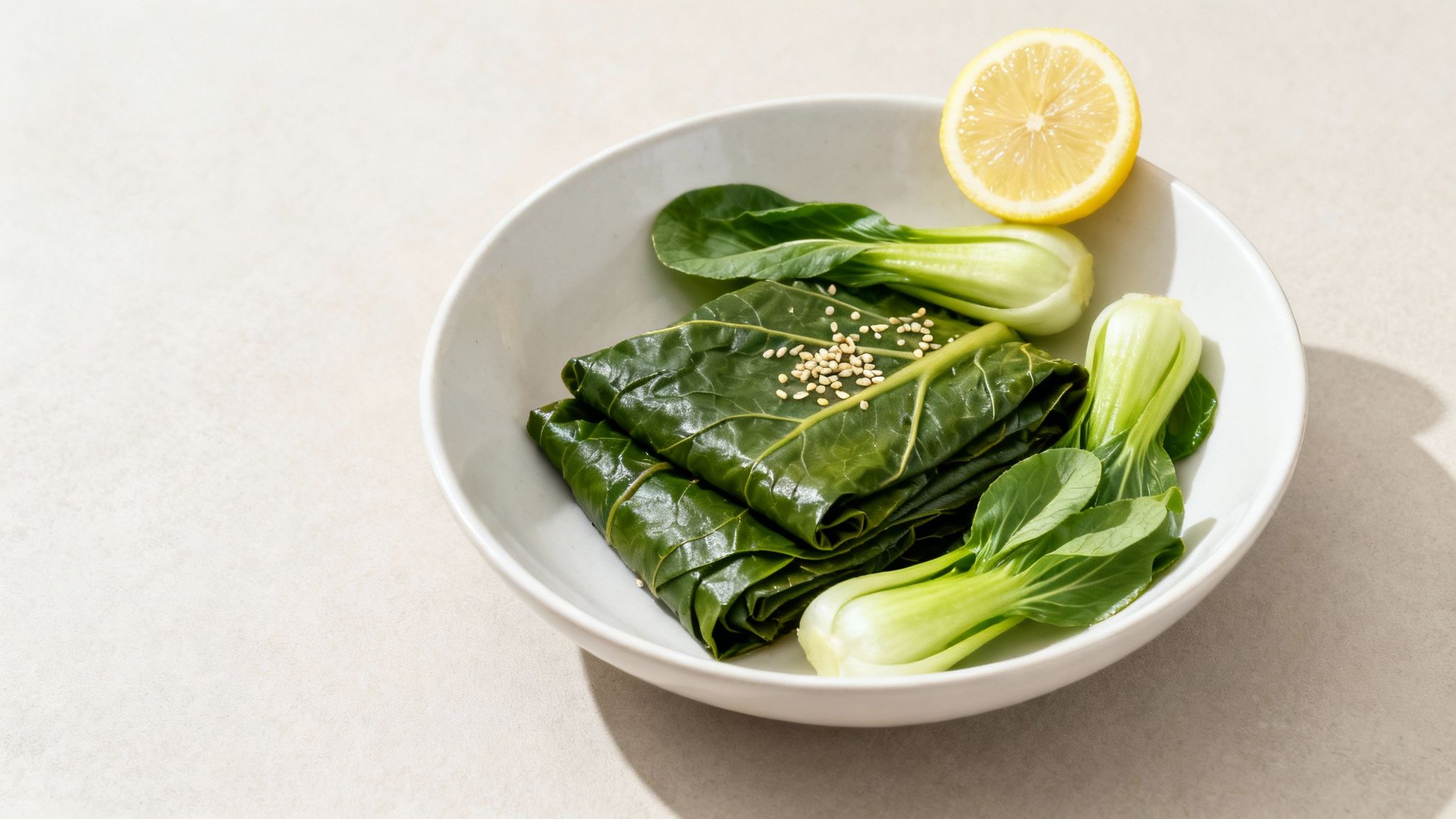
Certain greens are particularly rich in this vital mineral. For example, a single cooked cup of collard greens can provide around 266 mg of calcium, while the same amount of turnip greens offers about 200 mg. Even popular choices like kale and bok choy contribute significantly, making it easy to boost your daily intake through salads, sautés, and soups.
How to Maximize Your Calcium Intake
To get the most calcium from your greens, how you prepare them matters. Lightly cooking greens like kale and collards helps break down compounds called oxalates, which can otherwise interfere with calcium absorption. Simply steaming or sautéeing them until they are tender-crisp makes the calcium more bioavailable than eating them raw.
You can also enhance absorption by pairing your greens with a source of vitamin C. A squeeze of lemon juice over sautéed kale or adding bell peppers to a collard green stir-fry not only boosts flavor but also helps your body utilize the calcium more effectively. Integrating these foods is a key part of any successful plant-based eating plan, as explained in this helpful plant-based nutrition guide. Aim for at least two to three cups of cooked greens daily to make a meaningful impact on your calcium goals.
3. Tahini (Sesame Seed Paste)
Often celebrated as the heart of hummus, tahini is a creamy, nutty paste made from ground sesame seeds and a surprisingly potent dairy free calcium source. Originating in Mediterranean and Middle Eastern cuisines, this versatile ingredient is becoming a plant-based staple for good reason. It delivers a significant calcium boost while adding rich flavor and texture to both savory and sweet dishes.
Just three tablespoons of tahini can provide approximately 280 mg of calcium, making it a fantastic addition to your daily routine. Unlike some plant foods, the calcium in sesame seeds is highly bioavailable, meaning your body can absorb and utilize it effectively. It's a simple, delicious way to support bone health without a second thought.

How to Maximize Your Calcium Intake
To get the most out of your tahini, a few simple strategies can make a big difference. First, whenever possible, opt for unhulled tahini. This type is made from whole sesame seeds with the outer hull intact, which contains the majority of the calcium. The flavor is a bit more robust and earthy, but the nutritional payoff is well worth it.
Additionally, you can enhance calcium absorption by pairing tahini with vitamin C-rich ingredients. Think of a classic tahini dressing made with fresh lemon juice or drizzling tahini over a salad with bell peppers and tomatoes. This combination not only tastes incredible but also helps your body make the most of the available calcium, turning a simple meal into a bone-building powerhouse.
4. Fortified Orange Juice and Citrus Juices
Fortified orange juice offers a surprisingly potent and refreshing way to get your daily calcium. While not a natural source, many popular brands enrich their juices to provide another excellent option for dairy free calcium sources. This is a fantastic choice for anyone who already enjoys a glass of OJ with their breakfast, turning a simple morning habit into a bone-strengthening ritual.
You can typically find fortified orange and citrus juices offering a significant 300 to 350 mg of calcium per 8-ounce glass. What makes this source particularly effective is the presence of citric acid in the juice, which has been shown to naturally enhance the body's ability to absorb calcium. This synergy makes fortified juice a smart and efficient addition to a dairy-free diet.
How to Maximize Your Calcium Intake
To make the most of your fortified juice, a few simple tips can go a long way. Similar to plant milks, the added calcium can settle at the bottom of the container. Be sure to shake the carton well before each pour to ensure the minerals are evenly distributed, so you get the full nutritional benefit in every serving.
To protect your tooth enamel from the natural acidity of citrus, consider drinking your juice through a straw. Also, pairing it with a meal can help minimize its impact on your blood sugar levels. For an even greater boost, look for varieties that are fortified with both calcium and vitamin D, as vitamin D is essential for your body to effectively use the calcium you consume. Always check the nutrition label to confirm the fortification levels and ingredients.
5. Tofu (Calcium-Set Varieties)
Tofu, a cornerstone of Asian cuisine for centuries, is also one of the most versatile and protein-packed dairy free calcium sources you can find. When you're browsing the grocery aisle, the key is to look for varieties made with calcium sulfate as a coagulant. This specific ingredient is what transforms soy milk into a firm block of tofu and simultaneously infuses it with a significant amount of bone-supporting calcium.
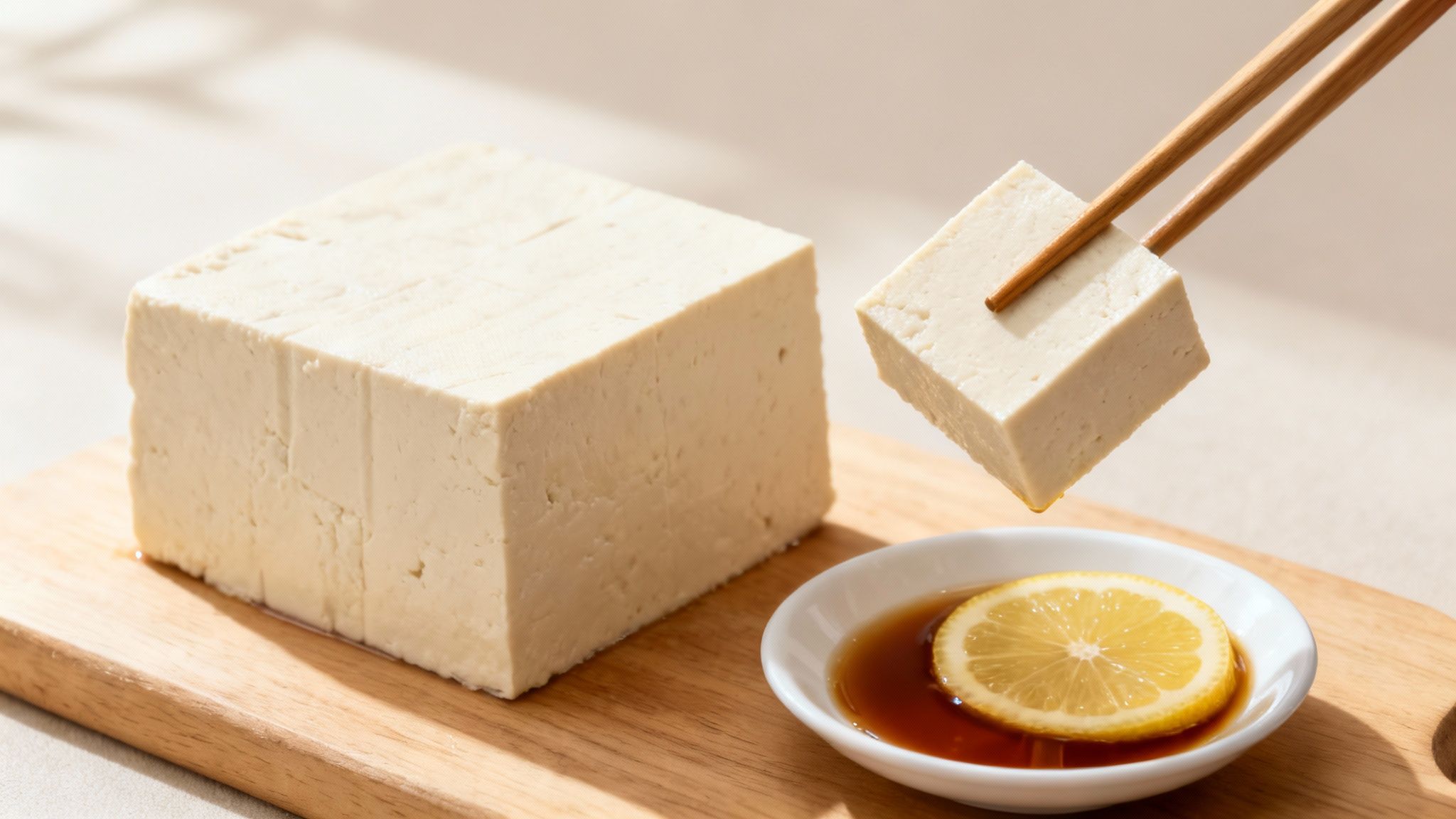
You can expect a 4-ounce serving of calcium-set tofu to provide around 250 to 350 mg of calcium, which covers a substantial portion of your daily needs. This makes it a fantastic addition to your diet, offering both a complete protein and a rich source of minerals. From savory stir-fries and breakfast scrambles to creamy desserts, tofu’s chameleon-like ability to absorb flavors makes it a true culinary hero.
How to Maximize Your Calcium Intake
To ensure you’re choosing a calcium-rich option, always check the ingredient list on the package for "calcium sulfate." This little detail makes all the difference. Tofu coagulated with other agents, like nigari (magnesium chloride), won't offer the same calcium benefits.
For the best culinary results, press firm or extra-firm tofu before cooking. This removes excess water, allowing it to soak up marinades and achieve a better texture, whether you're baking, frying, or grilling it. A simple tofu press or a DIY setup with heavy books works wonders. Incorporating just one 4-ounce serving into your daily meals-like a tofu scramble for breakfast or cubed into a veggie stir-fry-is an easy and delicious strategy to support your bone health.
6. Almonds and Almond Butter
Almonds are a true nutritional powerhouse and a fantastic whole-food option when you're looking for dairy free calcium sources. Not just for snacking, these versatile nuts deliver a significant calcium boost along with other bone-supporting minerals like magnesium and phosphorus. They offer a natural, unprocessed way to increase your daily mineral intake.
Just one ounce of almonds (about 23 whole nuts) provides a surprising 265 mg of calcium. Almond butter packs a similar punch in a creamy, spreadable form, making it a simple addition to toast, smoothies, or fruit slices. Choosing almonds means you're not just getting calcium; you're also getting healthy fats, fiber, and protein for sustained energy.
How to Maximize Your Calcium Intake
To get the most benefit from almonds, consistency is key. Try to incorporate a one-ounce serving into your daily routine, whether as a mid-afternoon snack or sprinkled over your morning oatmeal. For an extra boost, pair them with a food rich in vitamin C, like strawberries or oranges, to enhance mineral absorption.
When selecting almonds, opt for raw or lightly roasted varieties to retain the most nutrients. You can also improve their digestibility and unlock more minerals by soaking them in water overnight. This simple step helps reduce phytic acid, a natural compound that can slightly inhibit calcium absorption. For a quick and easy calcium-rich snack, blend two tablespoons of almond butter into your favorite smoothie or stir it into a bowl of yogurt alternative.
7. Calcium Supplements (Citrate and Carbonate Forms)
When dietary intake falls short, supplements serve as a reliable and potent method to ensure you meet your daily needs, making them one of the most direct dairy free calcium sources. These are particularly useful for individuals with higher calcium requirements, such as postmenopausal women, or those with absorption issues. Supplements provide a concentrated dose, often ranging from 500-1000 mg per serving, effectively bridging any nutritional gaps.
Popular forms include calcium carbonate and calcium citrate. Choosing the right one depends on your individual needs and digestive tolerance. Supplements offer a safety net, ensuring your bones get the consistent support they need, especially when relying solely on food-based sources is challenging.
How to Maximize Your Calcium Intake
To use supplements safely and effectively, timing and dosage are everything. Calcium is best absorbed in smaller amounts, so split your doses throughout the day, never taking more than 500 mg at one time. This simple strategy significantly boosts how much your body can actually use from each pill.
Also, the type of supplement matters. Calcium citrate can be taken with or without food, making it a flexible option, while calcium carbonate should be taken with a meal to enhance absorption. Always pair your calcium supplement with vitamin D, which is essential for absorption. While supplements are a fantastic tool, it's wise to consider them as part of a holistic wellness plan. For a broader perspective on nutritional support, exploring a guide to supplements for healthy aging can provide valuable context. For those on a plant-based diet, understanding which nutrients to prioritize is key; you can learn more about the best supplements for a vegan diet to ensure all your bases are covered.
8. Fortified Non-Dairy Yogurts and Fermented Products
Fortified non-dairy yogurts offer a creamy, delicious, and gut-friendly way to boost your daily calcium. These products, made from bases like almond, soy, coconut, or cashew milk, are intentionally fortified with calcium to serve as excellent dairy free calcium sources. For anyone who misses the tangy taste and thick texture of yogurt, these plant-based alternatives are a game-changer for breakfast or a satisfying snack.
You can find numerous options from brands like So Delicious, Kite Hill, and Silk that are enriched to provide a significant amount of calcium, often ranging from 300 to 450 mg per 5.3-ounce serving. Beyond calcium, these fermented products deliver a dose of beneficial probiotics, which support a healthy gut microbiome. It’s a fantastic two-for-one benefit: you get the minerals needed for strong bones and the live cultures needed for happy digestion.
How to Maximize Your Calcium Intake
To ensure you’re getting the most from your plant-based yogurt, a few simple habits can make a big difference. First, always stir the yogurt well before you eat it. Fortified minerals can sometimes settle at the bottom, and a good stir distributes them evenly throughout every spoonful.
Additionally, be a savvy label reader. Choose varieties that are fortified with both calcium and vitamin D to enhance absorption. When possible, opt for unsweetened versions to avoid unnecessary added sugars, which can detract from the overall health benefits. Using it as a base for a smoothie bowl with calcium-rich toppings like chia seeds or almonds can further elevate your mineral intake and create a powerhouse meal.
9. Seeds (Sesame, Poppy, Hemp, Sunflower)
Seeds are tiny nutritional powerhouses and some of the most concentrated dairy free calcium sources you can find in the plant kingdom. Far from being just a garnish, they deliver a serious calcium punch along with healthy fats, fiber, and protein. Adding just a few tablespoons to your daily meals can significantly boost your mineral intake without any major dietary changes.
Poppy and sesame seeds are particularly impressive, with just one ounce of poppy seeds containing around 408 mg of calcium, while an ounce of sesame seeds provides about 277 mg. Hemp and sunflower seeds are also excellent contributors. This makes them a fantastic whole-food option for strengthening bones and supporting overall health, especially for those navigating a dairy-free lifestyle. Think of them as nature’s mineral-rich sprinkles.
How to Maximize Your Calcium Intake
To unlock the full potential of these tiny titans, a little preparation goes a long way. Many seeds contain compounds like phytates and oxalates that can slightly hinder mineral absorption. Grinding seeds into a meal or soaking them overnight helps break down these compounds, making the calcium more available for your body to use.
Try to incorporate two to three tablespoons of mixed seeds into your diet daily. You can easily sprinkle them over salads, oatmeal, and smoothie bowls, or blend them into dressings. For an even easier approach, make your own seed butter by blending toasted sunflower or sesame seeds (tahini) until smooth. This is a delicious way to add a creamy, calcium-rich spread to toast or use as a dip for apple slices. Storing your seeds in a cool, dark place or the refrigerator will also help preserve their delicate nutrients.
10. Legumes (Beans, Lentils, Chickpeas)
Legumes are a nutritional cornerstone of many global diets and serve as one of the most versatile dairy free calcium sources. From the humble chickpea to the hearty white bean, this food group offers a significant mineral boost alongside plant-based protein and fiber. They are the backbone of countless comforting dishes, making them an easy and affordable addition to your routine.
You can get a surprising amount of calcium from these pantry staples. A single cooked cup of white beans contains around 191 mg of calcium, while chickpeas offer up to 80 mg per cup. Even lentils contribute a respectable 38 mg per cup. Integrating these into your meals a few times a week can make a real difference in reaching your daily calcium goals while supporting overall health.
How to Maximize Your Calcium Intake
To get the most out of your legumes, a little prep work goes a long way. Soaking dried beans overnight and discarding the water before cooking helps reduce antinutrients like phytates, which can interfere with mineral absorption. This simple step makes the calcium and other nutrients more available to your body.
For an extra boost, pair your legumes with foods rich in vitamin C, like bell peppers, tomatoes, or a squeeze of lemon juice. Vitamin C is known to enhance the absorption of plant-based calcium. Think of a black bean salad with a lime vinaigrette or a lentil soup finished with fresh tomatoes-these delicious combinations are also smart nutritional strategies. When choosing canned options for convenience, look for low-sodium varieties and give them a good rinse.
10 Dairy-Free Calcium Sources Compared
| Item | 🔄 Implementation Complexity | ⚡ Resource & Convenience | 📊 Expected Outcomes | Ideal Use Cases | ⭐ Key Advantages (💡 tips) |
|---|---|---|---|---|---|
| Fortified Plant-Based Milk (Soy, Almond, Oat) | Low - ready-to-use | High availability; shelf-stable (UHT); moderate cost | 300–450 mg Ca per 8oz; good absorption when D-fortified | Daily beverage, cereals, smoothies, cooking | Standardized calcium; easy dairy swap; 💡 shake carton, choose vitamin D-fortified |
| Leafy Greens (Collard, Bok Choy, Kale) | Medium - cooking recommended | Widely available; low cost; needs prep | 160–260 mg Ca per cooked cup; high bioavailability (low oxalate) | Sides, soups, sautés, salads | Whole-food nutrients (Mg, K); sustainable; 💡 lightly cook and pair with vitamin C |
| Tahini (Sesame Seed Paste) | Low - ready-to-use | Long shelf life; calorie-dense; portion control needed | ~280 mg Ca per 3 tbsp; highly bioavailable | Dressings, spreads, smoothies, Middle Eastern dishes | Nutrient-dense fat source; versatile; 💡 use unhulled for more Ca, watch portions |
| Fortified Orange & Citrus Juices | Low - ready-to-drink | Widely available; refrigerate after opening; high sugar | 300–350 mg Ca per 8oz; citric acid + vitamin C enhance absorption | Breakfast, quick calcium boost | Palatable absorption combo; convenient; 💡 drink with meals, use straw to protect enamel |
| Tofu (Calcium-set varieties) | Medium - selection & prep (press/marinate) | Refrigerated, versatile textures; affordable | ~253 mg Ca per 4oz (calcium-set); complete protein | Stir-fries, scrambles, smoothies, baking | Complete protein + Ca; versatile; 💡 check for calcium sulfate on label, press before cooking |
| Almonds & Almond Butter | Low - ready-to-eat | Portable, shelf-stable; calorie-dense; can be costly | ~265 mg Ca per 1 oz (23 almonds) | Snacks, spreads, smoothies, baking | Whole-food nutrient density; satiating; 💡 control portions, soak to improve digestibility |
| Calcium Supplements (Citrate, Carbonate) | Low–Medium - dosing regimen | Highly concentrated; precise dosing; cost varies | 500–1000 mg per dose possible; effective for deficiencies | When dietary intake insufficient, malabsorption, postmenopause | Precise dosing; convenient; 💡 prefer citrate if absorption issues, split doses, consult clinician |
| Fortified Non-Dairy Yogurts & Fermented Products | Low - ready-to-eat | Convenient; probiotic benefit; higher cost; shorter shelf life | 300–450 mg Ca per 5.3oz; probiotics may aid digestion | Breakfast, snacks, smoothies, probiotic support | Familiar yogurt format with probiotics; 💡 choose unsweetened, check live-culture strains |
| Seeds (Sesame, Poppy, Hemp, Sunflower) | Low - minimal prep (grind/soak improves) | Very concentrated; small servings; long shelf life if stored cool | Very high concentration (e.g., sesame/poppy ~1000–1400 mg/3.5oz) - 1–3 tbsp yields meaningful Ca | Toppings, butters, smoothies, baking | Most concentrated whole-food Ca; versatile; 💡 grind/soak for absorption, 2–3 tbsp daily often sufficient |
| Legumes (Beans, Lentils, Chickpeas) | Medium - soaking/cooking advised | Affordable; shelf-stable (dried/canned); time to prepare | 38–238 mg Ca per cooked cup (varies by type); high fiber & minerals | Soups, stews, salads, hummus, staples | Protein + Ca + fiber; filling and economical; 💡 soak to reduce antinutrients, combine with grains for complete protein |
Your Dairy-Free Calcium Action Plan
Navigating nutrition without dairy can feel like a huge challenge, especially when it comes to a powerhouse mineral like calcium. We've just walked through a comprehensive list of incredible, plant-powered, and fortified dairy free calcium sources, and hopefully, you're feeling less overwhelmed and more empowered. It's clear now that building strong bones isn't exclusive to those who drink milk. It’s about building a diverse, nutrient-dense plate, and you absolutely have the tools to do it.
Let's quickly recap the core message: variety is your best friend. Relying on just one or two sources can leave you falling short. Instead, think of your daily meals as a mosaic. A little fortified plant milk in your morning smoothie, some leafy greens in your lunch salad, a snack of almonds in the afternoon, and calcium-set tofu for dinner-it all adds up to a strong foundation.
The Most Important Takeaways to Remember
Building a dairy-free, calcium-rich diet isn't just about what you eat; it's about how you eat. Let's crystallize the most critical strategies we've covered:
- Pair Calcium with Its Partners: Remember that calcium doesn't work in a vacuum. Vitamin D is non-negotiable for absorption. Getting adequate sunlight is great, but for many of us, especially in certain climates or during winter, a supplement is the most reliable strategy.
- Mind the Absorption Blockers: We talked about oxalates in spinach and phytates in beans. This doesn't mean you should avoid these healthy foods! Simply cook your greens, soak your beans, and don't rely on a single source for your daily needs. This ensures you're actually getting the calcium you consume.
- Read the Labels-Always: "Fortified" is your keyword. Not all plant milks, yogurts, or juices are created equal. Make it a habit to scan the nutrition panel to confirm you're choosing a product that actively contributes to your calcium goals.
- Embrace Whole Foods First: While fortified foods are fantastic, whole food sources like tahini, almonds, collard greens, and beans offer a symphony of other nutrients-fiber, protein, and healthy fats-that support your overall well-being.
Your Actionable Next Steps
Feeling motivated? Great! Here’s how to turn that motivation into a sustainable habit. Don't try to overhaul everything at once. Start small and build momentum.
- Pick Two New Sources: Choose two new dairy free calcium sources from our list that you haven't tried or don't eat regularly. Maybe it's adding tahini to a salad dressing or trying fortified non-dairy yogurt for a snack.
- Plan One Calcium-Rich Meal: Look at your week ahead and consciously plan one meal-just one to start-that is intentionally packed with calcium. For example, a "Bone-Builder Bowl" with calcium-set tofu, steamed bok choy, and a sprinkle of sesame seeds.
- Audit Your Sunlight & Vitamin D: Honestly assess your sun exposure. If it's inconsistent, it's time to make a plan. This is where a high-quality supplement becomes a game-changer for ensuring your body can actually use the calcium you're eating.
A Quick Personal Note: Sam, our founder at Yuve, struggled for years with the bloating and discomfort that came with dairy. The journey to find powerful, plant-based alternatives wasn't just about avoiding pain-it was about thriving. He discovered that a combination of a diverse plant-based diet and smart, clean supplementation was the key to feeling strong and energetic. Your journey can be just as empowering.
Mastering these concepts is about more than just bone health. It’s about taking control of your well-being, feeling confident in your food choices, and nourishing your body in a way that aligns with your values and digestive needs. You are building a resilient, vibrant you, from the inside out.
Ready to ensure your hard work pays off? A calcium-rich diet is the first step, but making that calcium work for you is the mission. Yuve Vegan Vitamin D3 is the perfect partner for your dairy-free lifestyle, providing the essential "key" your body needs to unlock and absorb calcium effectively from all the wonderful plant-based foods you're eating.
[Explore Yuve's Vegan Vitamin D3 and support your bone health today!]