Ever feel like you’re running on empty, even after a full night’s sleep? That nagging fatigue or brain fog could be your body’s quiet signal that it needs more iron. We get it - it’s a common frustration, especially if you’re rocking a plant-based diet. Navigating the world of plant based iron rich foods can feel like a puzzle, with confusing advice on what to eat and how to actually absorb the nutrients. It’s not just about eating spinach and hoping for the best; it’s about making smart, intentional choices that truly fuel your body.
In this guide, we're cutting through the noise to show you exactly how to build an iron-strong plate, packed with delicious and accessible options. You’ll learn:
- The top plant-based foods loaded with iron, from lentils to seeds.
- Actionable tips to maximize your body's iron absorption (hello, vitamin C!).
- Simple ways to pair foods to get the most out of every single meal.
Beyond the well-known staples, there are other powerful plant-based foods that can significantly boost your iron intake. Moringa, for example, is a plant increasingly recognized for its incredible health benefits, including being a good source of iron. Our goal is to empower you to ditch the fatigue and feel vibrant and energized, using the power of plants. Let's dive in.
1. Lentils
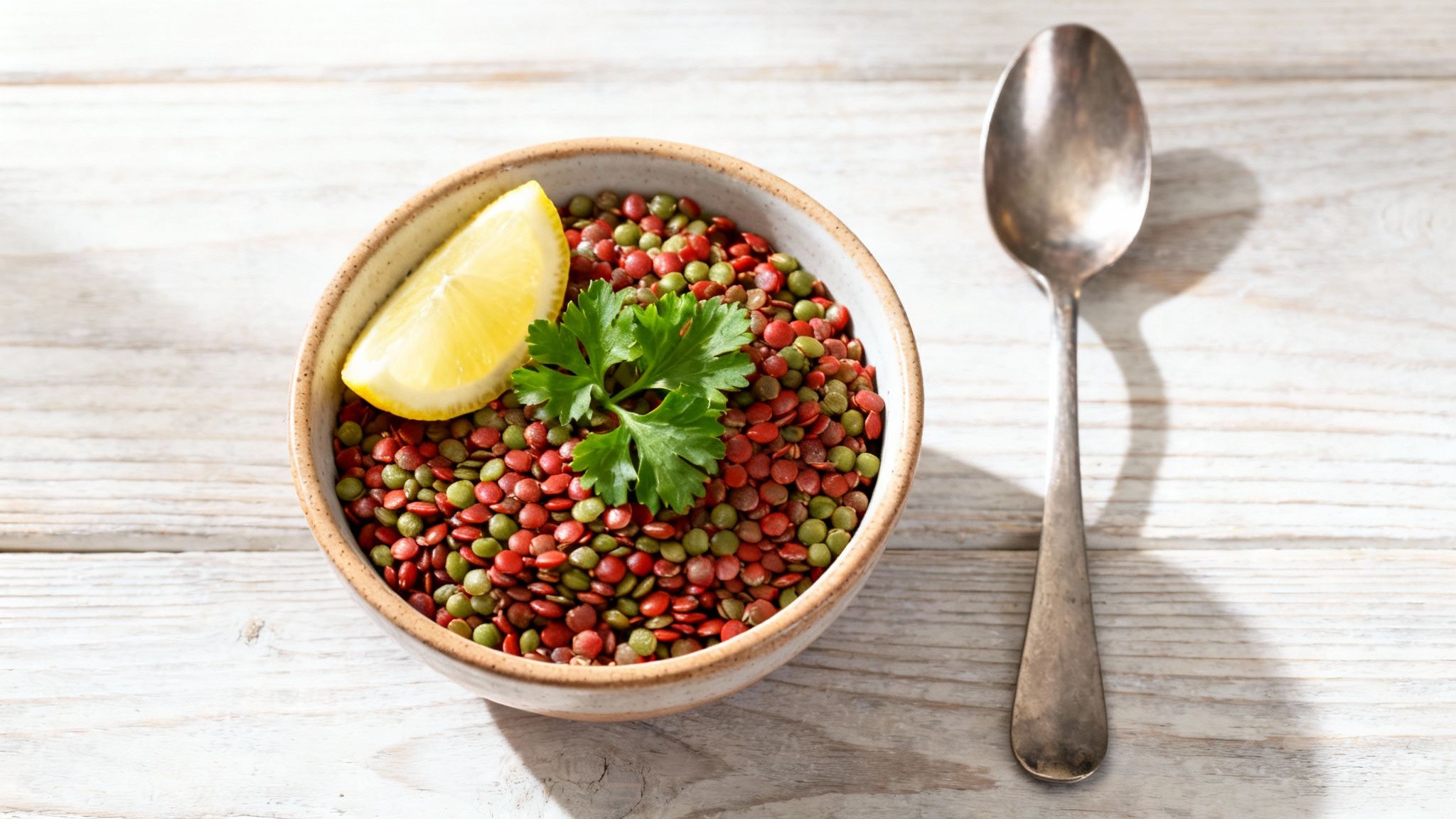
When you're searching for powerhouse plant based iron rich foods, lentils absolutely deserve a top spot on your list. These tiny but mighty legumes are a staple in many cuisines worldwide for a reason. They're affordable, incredibly versatile, and packed with essential nutrients.
A single cooked cup of lentils delivers approximately 6.6 mg of iron, which is a significant step toward meeting your daily needs. Whether you prefer the earthy flavor of green and brown lentils or the softer, quicker-cooking red variety, you're getting a fantastic nutritional return.
Why We Love Lentils for Iron
Lentils offer non-heme iron, the type found in plant foods. Now, its absorption rate is a bit lower than the heme iron you’d find in animal sources, but a few simple tricks can dramatically increase how much your body utilizes. Think of it as teamwork between your foods.
For instance, pairing lentils with a food high in vitamin C - like squeezing fresh lemon juice over a lentil soup - can boost iron absorption significantly. This simple habit turns a good iron source into a great one.
Practical Tips for Lentil Lovers
Ready to make lentils a regular part of your routine? Here’s how to get the most out of them:
- Boost Absorption with Vitamin C: Serve lentil dishes with a side of bell peppers, broccoli, or tomatoes. A classic Indian dal paired with a tomato-based curry is a perfect example of this nutritional synergy.
- Reduce Phytic Acid: Soak dried lentils for a few hours before cooking. This helps reduce phytic acid, a natural compound that can slightly inhibit iron absorption.
- Sprout for Success: For an even bigger nutritional punch, try sprouted lentils. The sprouting process increases the bioavailability of many nutrients, including iron. Add them raw to salads for a delightful crunch.
2. Chickpeas
Another fantastic contender in the world of plant based iron rich foods is the humble chickpea, also known as the garbanzo bean. Celebrated globally in cuisines from the Mediterranean to the Middle East, these versatile legumes are more than just the star of hummus; they are a nutritional goldmine.
A single cooked cup of chickpeas provides around 4.7 mg of iron, making a substantial contribution to your daily iron intake. Whether you're blending them into a creamy dip, tossing them into a salad, or roasting them for a crunchy snack, you are fueling your body with a quality source of plant-based iron and protein.

Why We Love Chickpeas for Iron
Just like other legumes, chickpeas contain non-heme iron. While this type is less readily absorbed on its own, its bioavailability gets a huge lift when paired with the right ingredients. This is why traditional chickpea preparations are often nutritional powerhouses without even trying.
Take hummus, for example. It combines chickpeas with tahini (made from sesame seeds) and lemon juice. The vitamin C in the lemon juice significantly enhances iron absorption, turning a delicious snack into an efficient way to boost your iron levels. This synergy is a perfect illustration of how to make your food work smarter for you.
Practical Tips for Chickpea Champions
Ready to incorporate more chickpeas into your diet? Here are some simple and effective ways to maximize their benefits:
- Boost Absorption with Vitamin C: Pair chickpeas with vitamin C-rich foods. Think a chickpea salad with bell peppers and a lemon vinaigrette, or serving chana masala with a side of steamed broccoli.
- Soak for Better Digestion: If using dried chickpeas, soak them overnight. This simple step not only cuts down cooking time but also helps reduce phytic acid, an anti-nutrient that can hinder iron absorption. Plus, it can help prevent that dreaded…dun, dun, dun…unwelcome gas. Yikes!
- Embrace Roasting: For a satisfying, iron-rich snack, toss cooked chickpeas with olive oil and spices, then roast until crispy. They are a fantastic, nutrient-dense alternative to chips.
- Use the Aquafaba: Don't discard the liquid from a can of chickpeas! Known as aquafaba, this starchy water is a brilliant egg white substitute for vegan baking in meringues and mousses.
3. Tofu
Tofu is a fantastic and versatile choice when you're looking for reliable plant based iron rich foods. Made from soybeans, this culinary chameleon is celebrated in cuisines across the globe, from Japanese miso soup to hearty Western scrambles. It's not just popular for its ability to absorb flavors; it's a nutritional workhorse.
A single half-cup serving of firm tofu provides approximately 3.4 mg of iron, making it a valuable contributor to your daily intake. Beyond iron, it's also one of the few plant foods that is a complete protein, meaning it contains all nine essential amino acids your body needs.
Why We Love Tofu for Iron
Tofu offers a steady supply of non-heme iron in a form that's easy to digest for many people. Its neutral flavor profile makes it an incredibly adaptable ingredient, allowing you to seamlessly incorporate it into countless dishes. This makes it simple to pair with other foods that enhance iron absorption.
The secret to maximizing tofu's iron potential lies in what you serve it with. Like lentils, pairing it with vitamin C-rich ingredients is a game-changer. A stir-fry with broccoli and bell peppers or a tofu scramble with a side of orange slices can significantly increase the amount of iron your body absorbs.
Practical Tips for Tofu Lovers
Ready to make this soy superstar a regular on your plate? Here’s how to prepare it for maximum benefit and flavor:
- Press It First: For firm or extra-firm varieties, press out excess water before cooking. This creates a firmer, less spongy texture and helps it absorb marinades and crisp up beautifully. I do NOT think you should ever skip this step!
- Boost Absorption with Vitamin C: Marinate tofu in a mixture of soy sauce, ginger, and a generous squeeze of lime or orange juice. You can also serve it in a tomato-based curry or alongside a fresh citrusy salad.
- Choose the Right Type: Use firm or extra-firm tofu for stir-fries, baking, and grilling. Silken tofu is perfect for creamy smoothies, sauces, and desserts, offering a hidden iron boost. Learn more about how to incorporate Tofu into a balanced diet for optimal nutrition.
- Select Organic: When possible, opt for organic, non-GMO tofu to ensure you're getting a high-quality product without unwanted additives.
4. Dark Leafy Greens (Spinach, Kale, Swiss Chard)
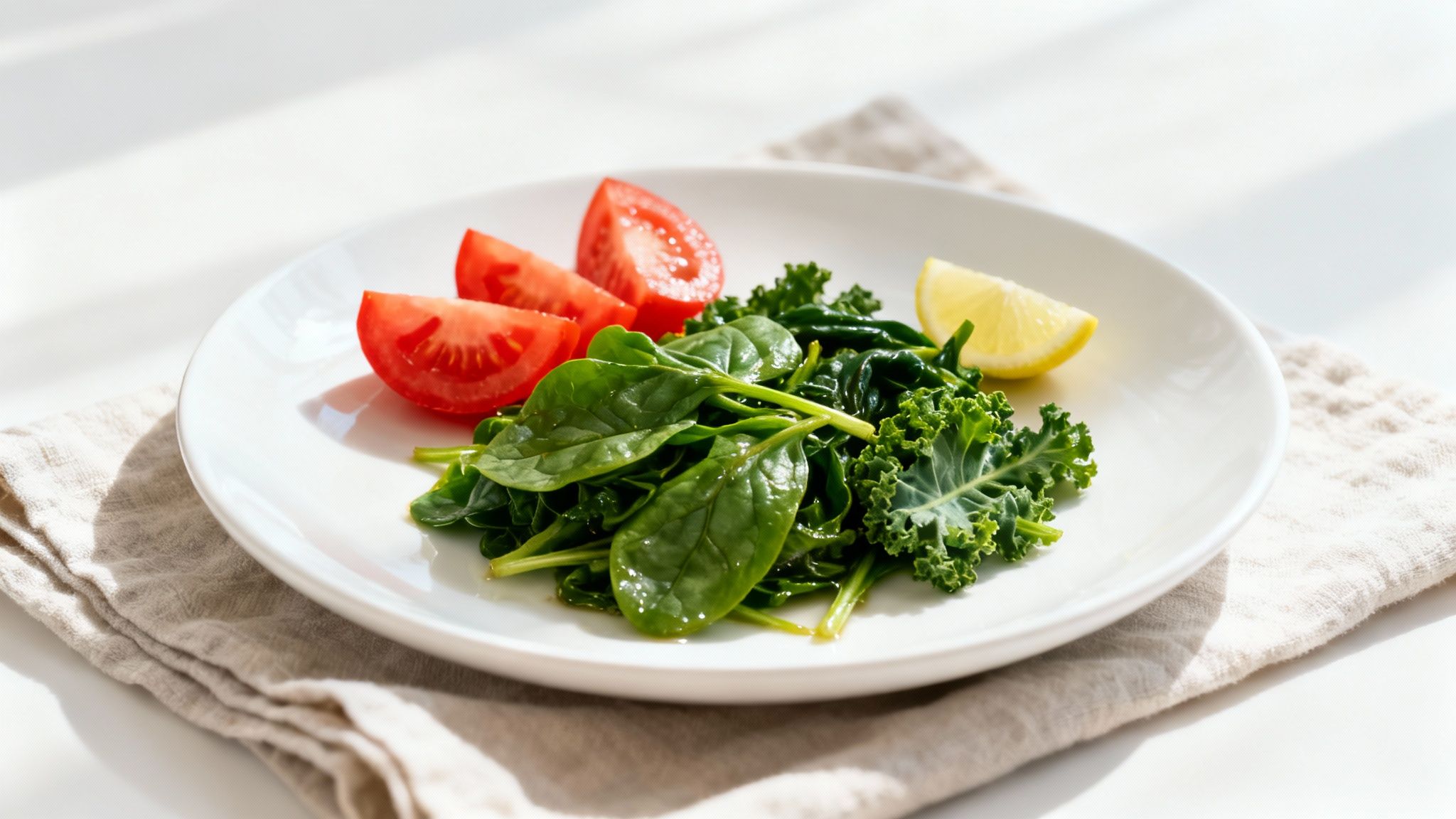
When building a diet rich in plant based iron rich foods, dark leafy greens like spinach, kale, and Swiss chard are absolute non-negotiables. These vibrant vegetables are nutritional cornerstones, celebrated for being low in calories yet incredibly high in essential vitamins and minerals, including iron. They are the versatile workhorses of a healthy kitchen.
A single cooked cup of spinach can offer over 6 mg of iron, while kale and Swiss chard provide a respectable amount as well. This makes them an easy and effective way to boost your daily iron intake, whether they’re the star of a salad or a simple side dish.
Why We Love Dark Leafy Greens for Iron
Dark leafy greens contain non-heme iron and also compounds called oxalates, which can slightly hinder iron absorption. But don't let that discourage you. Simple preparation techniques can easily overcome this, making these greens one of the most accessible iron sources available.
The key is pairing and preparation. Adding a source of vitamin C or lightly cooking the greens can significantly reduce the impact of oxalates and enhance your body's ability to absorb the available iron. This is a perfect example of how small kitchen habits can lead to big nutritional wins.
Practical Tips for Green Eaters
Ready to get more greens onto your plate? Here are some simple strategies to maximize their iron benefits:
- Boost with Vitamin C: Always add a squeeze of lemon or lime juice to your salads and cooked greens. Serving them alongside tomatoes, bell peppers, or strawberries also works wonders.
- Cook to Reduce Oxalates: Lightly steaming, sautéing, or blanching greens like spinach and Swiss chard helps break down the oxalic acid, improving iron availability.
- Massage Your Kale: For raw kale salads, massage the leaves with a bit of lemon juice and olive oil. This not only softens their texture and reduces bitterness but also adds that crucial vitamin C.
- Don't Rely on Greens Alone: Combine them with other iron-rich foods. For instance, add wilted spinach to a lentil curry or toss kale into a tofu scramble to create a truly iron-packed meal.
5. Hemp Seeds
If you're looking for an iron source that doubles as a complete protein, hemp seeds are an unparalleled choice among plant based iron rich foods. These small, nutty-flavored seeds are nutritional dynamos, bringing a lot more to the table than just minerals. They are as versatile as they are beneficial, making them an easy addition to almost any meal.
A serving of just three tablespoons of hemp seeds provides approximately 4.7 mg of iron, making a serious contribution to your daily intake. Beyond iron, they are one of the few plant sources containing all nine essential amino acids, along with a healthy dose of omega-3 fatty acids, making them a well-rounded superfood.
Why We Love Hemp Seeds for Iron
Hemp seeds offer a fantastic package of nutrition. The iron they contain is non-heme, just like in other plants, but their impressive nutrient profile makes them a standout. Their high protein and healthy fat content helps promote satiety, keeping you full and energized while you fuel your body with essential minerals.
You can easily boost the absorption of the iron from hemp seeds by pairing them with vitamin C. A smoothie that blends hemp seeds with strawberries or a salad topped with hemp and a lemon-based dressing is a perfect way to maximize your body's uptake.
Practical Tips for Hemp Seed Lovers
Incorporating hemp seeds into your diet is simple and delicious. Here are a few ways to get started:
- Boost Absorption with Vitamin C: Sprinkle hemp seeds over a bowl of sliced oranges or add them to a smoothie with mango and spinach. The synergy between the iron and vitamin C is a game-changer.
- Enhance Digestibility: To get the most from the seeds, you can grind them slightly before use. This breaks down the outer shell and makes the nutrients inside more accessible to your body.
- Simple Serving Ideas: Stir them into oatmeal or yogurt, blend them into creamy salad dressings, or use them to coat proteins for a crunchy, nutrient-dense crust.
6. Pumpkin Seeds (Pepitas)
Don't overlook the humble pumpkin seed when boosting your intake of plant based iron rich foods. Often called pepitas, these small green seeds are more than just a seasonal treat; they are a year-round nutritional gem. They're incredibly easy to incorporate into your diet and offer a satisfying crunch along with a host of health benefits.
A quarter-cup serving of pumpkin seeds provides approximately 4.2 mg of iron, making them a convenient and potent source for hitting your daily targets. Plus, their rich, nutty flavor makes them a delicious addition to countless sweet and savory dishes.
Why We Love Pumpkin Seeds for Iron
Pumpkin seeds are a fantastic source of non-heme iron and come packaged with other essential minerals like magnesium and zinc, which are crucial for energy and immune function. We love them because they make getting these vital nutrients incredibly simple - just a sprinkle goes a long way.
To get the most out of their iron content, remember the power of pairing. Combining pumpkin seeds with vitamin C-rich foods significantly enhances your body's ability to absorb the non-heme iron. Think of it as unlocking the full potential of these mighty seeds.
Practical Tips for Pumpkin Seed Lovers
Ready to make pepitas a staple in your pantry? Here are some simple ways to maximize their iron benefits:
- Boost Absorption with Vitamin C: Sprinkle pumpkin seeds over a fruit salad containing oranges or kiwis, or add them to a smoothie with strawberries and spinach for a powerful iron-and-vitamin-C combo.
- Reduce Phytic Acid: Soaking raw pumpkin seeds for a few hours before eating or roasting them can help reduce phytic acid levels, making their iron more accessible to your body.
- Get Creative in the Kitchen: Add them to your morning oatmeal, blend them into homemade granola, or use them as a crunchy topping for soups and salads. You can also grind them into a powder to add to baked goods for a hidden nutritional boost.
7. Fortified Cereals and Plant-Based Milks
In a busy world, sometimes the most reliable plant based iron rich foods are the ones designed for convenience and nutrition. Fortified foods, like many breakfast cereals and plant-based milks, are intentionally enriched with essential vitamins and minerals, including a substantial amount of iron. This makes them a straightforward and accessible way to boost your intake.
A single serving of a highly fortified breakfast cereal can provide up to 18 mg of iron, which can meet or even exceed the daily recommended intake for many adults. Similarly, fortified plant-based milks offer an easy way to add iron to your morning coffee, smoothie, or cereal bowl.
Why We Love Fortified Foods for Iron
Fortified foods offer a predictable and potent dose of non-heme iron. They serve as a practical safety net, especially for those with busy lifestyles, picky eaters, or anyone transitioning to a plant-based diet who might be concerned about nutrient gaps. Think of them as a reliable backup to your whole-foods-based iron sources.
The iron in fortified products is often in a form that is readily available, but just like with other plant sources, pairing it with vitamin C can significantly enhance absorption. A glass of orange juice with your fortified cereal is a classic, effective combination for this very reason.
Practical Tips for Fortified Food Fans
Want to make fortified foods a smart part of your iron strategy? Here’s how to do it right:
- Read the Label Carefully: Check the nutrition facts panel for the amount of iron per serving and look at the ingredients list. Opt for cereals with lower added sugar and higher fiber content for a more balanced choice.
- Create a Vitamin C Combo: Pour fortified plant-based milk over a bowl of cereal and top it with vitamin C-rich strawberries or kiwi to maximize iron uptake.
- Balance with Whole Foods: Use fortified products to supplement, not replace, a diet rich in whole foods. For instance, add a sprinkle of fortified nutritional yeast to a tofu scramble that already contains spinach and bell peppers.
- Understand Your Needs: While fortified foods are great, they are just one piece of the puzzle. If you consistently struggle to meet your iron needs, it might be worth exploring the best supplements for a vegan diet on getyuve.com with guidance from your healthcare provider.
8. Dried Apricots and Other Dried Fruits
If you have a sweet tooth, dried fruits are one of the most delicious plant based iron rich foods you can find. These naturally sweet and chewy snacks, like apricots, figs, and raisins, offer a concentrated source of nutrients, including a helpful dose of iron, making them a fantastic addition to a balanced plant-based diet.
A half-cup serving of dried apricots provides around 1.5-2 mg of iron. While this might seem lower than some legumes, their convenience and versatility make them an easy way to sneak more iron into your day. Think of them as a sweet nutritional boost you can grab on the go.
Why We Love Dried Fruits for Iron
Dried fruits pack a powerful punch of non-heme iron and other essential minerals in a small, portable package. The dehydration process concentrates their nutrients and natural sugars, making them an excellent source of quick energy and a satisfying way to curb sugar cravings while still getting valuable micronutrients.
Their natural sweetness makes them incredibly appealing, especially for kids or anyone new to a plant-based lifestyle. Blending them into a smoothie or chopping them into oatmeal feels more like a treat than a health-conscious choice, which makes sticking to your nutritional goals so much easier.
Practical Tips for Dried Fruit Fans
Ready to incorporate these sweet gems into your meals? Here are a few tips to maximize their benefits:
- Boost Absorption with Vitamin C: Squeeze some fresh orange or lemon juice into your trail mix, or add dried figs to a salad with a citrus vinaigrette. The vitamin C is a game-changer for iron absorption.
- Be Mindful of Portions: Because they are concentrated in sugar and calories, a little goes a long way. Stick to a small handful (about a quarter cup) as a serving size.
- Choose Sulfite-Free: Whenever possible, opt for unsulfured dried fruits. They may be darker in color, but they lack the preservatives that can cause sensitivities for some people.
- Soften for Digestion: If you find dried fruits tough to chew or digest, try soaking them in warm water for about 15-20 minutes. This softens them up and can make them gentler on your stomach.
9. Sesame Seeds and Tahini
When exploring the world of plant based iron rich foods, don't overlook the humble sesame seed. Whether whole or ground into a creamy paste known as tahini, these tiny seeds offer a surprisingly potent dose of nutrients. They are a cornerstone of Middle Eastern, African, and Asian cuisines, valued for both their rich, nutty flavor and impressive nutritional profile.
A quarter-cup serving of sesame seeds provides approximately 4.2 mg of iron, while a generous 2-tablespoon serving of tahini offers even more at 4.8 mg. This makes them a simple yet effective way to boost your daily iron intake.
Why We Love Sesame Seeds & Tahini for Iron
Sesame seeds and tahini are fantastic sources of non-heme iron. Their real power lies in their versatility-it's incredibly easy to add them to meals you already enjoy. From drizzling tahini on roasted vegetables to sprinkling seeds over a stir-fry, they seamlessly integrate into your diet.
Pairing these foods with vitamin C is the key to unlocking their full iron potential. For example, a classic hummus dip combines tahini with lemon juice, a natural pairing that significantly enhances iron absorption. This synergy turns a delicious snack into a smart nutritional choice.
Practical Tips for Sesame & Tahini Lovers
Ready to make these iron-rich seeds a staple? Here are some simple ways to get the most out of them:
- Boost Absorption with Vitamin C: Create a simple tahini dressing by mixing it with lemon juice, garlic, and water. Drizzle it over an iron-rich spinach salad or a bowl of roasted broccoli and bell peppers.
- Dry Roast for Flavor and Benefits: Gently toasting sesame seeds in a dry pan for a few minutes not only enhances their nutty flavor but may also help reduce some of the phytic acid, improving nutrient availability.
- Choose Unhulled for More Nutrients: While hulled seeds are common, unhulled sesame seeds contain significantly more calcium and other minerals. Look for them in health food stores for a bigger nutritional impact.
10. Blackstrap Molasses
While often associated with old-fashioned baking, blackstrap molasses is a surprisingly potent source when it comes to plant based iron rich foods. This thick, dark syrup is the nutrient-dense byproduct of the sugar refining process. Unlike refined sugar, it retains many of the sugarcane's original vitamins and minerals.
A single tablespoon of blackstrap molasses provides approximately 3.5 mg of iron, making it an incredibly easy and concentrated way to boost your daily intake. Its rich, slightly bitter flavor adds a unique depth to both sweet and savory dishes, moving it beyond a simple sweetener.
Why We Love Blackstrap Molasses for Iron
Blackstrap molasses offers a convenient spoonful of non-heme iron along with other valuable minerals like calcium, magnesium, and potassium. Because it’s a syrup, its iron is readily available and easy for the body to access, especially when paired correctly.
The key, as with other plant sources, is pairing it with vitamin C. Adding a spoonful of molasses to a smoothie that contains strawberries or orange juice, for example, significantly enhances your body's ability to absorb the iron. This simple trick turns a good source into an exceptional one.
Practical Tips for Molasses Mavens
Ready to incorporate this dark nutritional treasure into your diet? Here are some simple and effective ways to use it:
- Boost Absorption with Vitamin C: Blend a tablespoon into a smoothie with citrus fruits or berries. You can also mix it into a homemade BBQ sauce that has a tomato (another vitamin C source) base.
- Create a Warming Tonic: For a traditional iron-boosting drink, stir a tablespoon of blackstrap molasses into a mug of warm plant-based milk with a dash of cinnamon. It’s a comforting and nourishing alternative to tea or coffee.
- Swap Your Sweetener: Use blackstrap molasses in place of refined sugar or maple syrup in recipes for baked beans, gingerbread cookies, or oatmeal for a nutrient-rich flavor boost.
- Choose Unsulphured: Whenever possible, opt for unsulphured blackstrap molasses. It has a cleaner taste and is made from mature sugarcane, which doesn't require sulfur dioxide as a preservative.
Comparison of 10 Plant-Based Iron-Rich Foods
| Item | Preparation & Complexity 🔄 | Cost & Convenience ⚡ | Iron & Expected Impact 📊⭐ | Ideal Use Cases 💡 | Key Advantages ⭐ |
|---|---|---|---|---|---|
| Lentils | Low - 20–30 min cooking; soaking optional | Very affordable; shelf-stable | 6.6 mg/cooked cup; high non‑heme iron; absorption ↑ with vitamin C | Soups, dals, lentil patties, grain bowls | High iron & protein; sustainable; low GI |
| Chickpeas | Moderate - soak + 1–2 hr cook (canned = low) | Low cost; long shelf life; canned options | 4.7 mg/cooked cup; good fiber/protein; non‑heme iron | Hummus, curries, falafel, roasted snacks | Versatile; resistant starch; widely available |
| Tofu | Low - minimal prep; press/marinade for best texture | Moderate cost; widely available; many forms | ~3.4 mg/½ cup firm; complete protein; often fortified | Stir‑fries, soups, scrambles, desserts | Complete protein; very versatile; quick to prepare |
| Dark Leafy Greens (spinach/kale) | Low - eat raw or lightly cook to reduce oxalates | Low cost (seasonal/frozen); perishable | 1.3–6.4 mg (varies); oxalates reduce bioavailability | Salads, smoothies, saag, side dishes | Extremely nutrient‑dense; vitamin C aids absorption |
| Hemp Seeds | None - ready to eat; can grind for absorption | Higher cost; store cool to avoid rancidity | 4.7 mg/3 tbsp; complete protein; good bioavailability | Smoothies, bowls, salads, seed toppers | Complete protein; omega-3s; minimal prep |
| Pumpkin Seeds (pepitas) | Low - ready to eat; soak/roast to reduce phytic acid | Affordable; long shelf life | 4.2 mg/¼ cup; also rich in Mg, Zn | Snacks, granola, seed butter, salads | Nutrient‑dense; versatile; inexpensive |
| Fortified Cereals & Plant Milks | Very low - ready to consume | Convenient; variable cost; processed | 4–18 mg/serving (product dependent); consistent fortification | Quick breakfasts; B12/iron boost for vegans | Reliable iron & B12 fortification; convenient |
| Dried Apricots & Dried Fruits | None - ready; soak to soften | Affordable; portable; high sugar content | 1.5–3.3 mg/serving; lower bioavailability; high sugars | Trail mix, snacks, baking, energy balls | Shelf‑stable sweet snack; portable source of iron |
| Sesame Seeds & Tahini | Low - ready; light roast/grind improves uptake | Moderate cost; long shelf life | 4.2–4.8 mg (seed/tahini); good mineral density | Dressings, spreads, hummus, sauces | High in minerals (Ca, Fe); versatile; traditional uses |
| Blackstrap Molasses | Very low - used as ingredient or tonic | Very affordable; concentrated sugar source | 3.5 mg/tbsp; concentrated minerals but high sugar | Baking, smoothies, warm drinks, energy bars | Highly concentrated iron & minerals; small serving effective |
Your Action Plan for an Iron-Rich Plant-Based Life
Navigating plant-based nutrition can feel like a puzzle, especially with a crucial mineral like iron. But as we’ve explored, your kitchen can be a powerhouse of energy, stocked with an incredible variety of delicious, iron-rich foods. You now have the knowledge to build vibrant meals that not only taste good but also work hard to keep you energized.
Let’s recap the most important takeaways. We've seen how legumes like lentils and chickpeas, seeds such as hemp and pumpkin, and dark leafy greens like spinach are foundational plant based iron rich foods. But the real magic happens when you understand how to use them effectively.
The key isn't just what you eat, but how you eat it. Remember these core principles to maximize your iron absorption and feel your absolute best:
- Pair with Vitamin C: This is your non-negotiable rule. Squeeze lemon over your lentil soup, add bell peppers to your tofu stir-fry, or enjoy a side of strawberries with your fortified cereal. As a 2000 review in the American Journal of Clinical Nutrition found, vitamin C can increase non-heme iron absorption significantly, turning a good meal into a great one for your energy levels.
- Be Mindful of Inhibitors: You don’t need to avoid them entirely, but timing matters. Try to separate your iron-rich meals from your coffee or black tea by at least an hour. Soaking and sprouting nuts, grains, and legumes can also reduce phytates, making the iron more available to your body.
- Embrace Variety and Consistency: Don't rely on just one or two sources. A varied diet ensures you get a wide spectrum of nutrients. Aim to include several different iron-rich foods in your meals throughout the day and week for a steady supply. Think tahini on toast for breakfast, a chickpea salad for lunch, and a lentil curry for dinner.
Putting It All Into Practice
So, what are your next steps? Start small. Pick one or two new foods from our list to incorporate this week. Maybe it's adding a tablespoon of blackstrap molasses to your morning oatmeal or swapping your usual snack for a handful of dried apricots and pumpkin seeds.
For those of you leading an active lifestyle, consistently getting enough iron is paramount for energy and endurance. For athletes or active individuals, it's essential to understand how to optimize your workout performance with proper nutrition. Ensuring your iron stores are topped up is a critical piece of that puzzle.
We get it, life is busy. Sometimes, despite our best efforts with food, our bodies need a little extra backup. This was a huge part of our founder Sam's journey. She struggled with fatigue and low energy for years, thinking her plant-based diet was the issue. It wasn't until she focused on absorption and filled the nutritional gaps that things truly changed.
This is why a high-quality daily multivitamin is such a smart, proactive step. It acts as your nutritional insurance policy, ensuring you're covering all your bases, especially on days when your diet isn't perfect. It provides that extra support to help you get the most from the powerful plant based iron rich foods you’re eating. Building a truly iron-rich life is about combining smart food choices with strategic support. You’ve got this.
Ready to give your body the well-rounded support it deserves? Yuve’s Vegan Multivitamin is expertly formulated to complement your plant-based diet, providing essential nutrients that support energy and overall wellness. Visit Yuve to see how our clean, plant-derived supplements can help you thrive.