
A Parent's Guide to Fiber for Kids: The Secret to a Happy Tummy
Feeling like you're doing everything right but still dealing with your child's tummy troubles, constipation, or those wild energy swings? You're not alone, and we get it- it's frustrating. The culprit is often hiding in plain sight: a lack of sufficient fiber. For kids, getting enough fiber is one of the foundations for a happy gut and a healthy childhood.
In this guide, we'll walk you through exactly why fiber is a big deal, how much your child really needs, and simple, parent-approved ways to get more of it into their diet- without the mealtime meltdowns.
Why Is Fiber for Kids a Big Deal?
"Fiber" can sound a bit... well, boring. But let's reframe it. Think of fiber as your child's internal traffic controller. It’s the tough part of plant foods- fruits, veggies, beans, and grains- that their body can't digest. Instead of being absorbed, it works behind the scenes to keep their digestive system moving smoothly.
This means more predictable and comfortable trips to the potty, less straining, and a healthier gut environment. But here's the reality check: most kids aren't getting anywhere near enough. This isn't just a small oversight; it’s what experts call the "fiber gap." It’s the massive difference between the fiber they need to thrive and what they're actually eating, especially with diets full of easy, processed foods.
The Widespread Fiber Gap
We're not talking about a small shortfall here- it's a chasm. In most Western countries, children face a staggering 50% fiber gap, meaning they’re only getting about half of what their growing bodies require for good digestion, a strong immune system, and steady energy.
When you dig into the numbers, it's even more eye-opening. A UK study, for example, found that a jaw-dropping 2% of girls and 6% of boys aged 11–18 were hitting their national fiber targets. You can learn more about the research behind the children's fiber gap.
This lack of fiber has real-world consequences you might be seeing every day. Without enough of it, you’ll likely notice:
- Constipation and Discomfort: This is the number one sign. Fiber adds bulk and holds onto water, which makes stool softer and much easier to pass.
- Blood Sugar Rollercoasters: Fiber slows down how quickly sugar enters the bloodstream. This helps prevent those sharp energy spikes followed by cranky crashes.
- An Unhappy Gut: The good bacteria in your child’s gut literally feed on fiber. Without it, the gut microbiome can get out of balance, which can affect everything from their immunity to their mood.
The hard truth is that while we tend to focus on protein or vitamins, fiber is one of the most crucial yet underconsumed nutrients for children. Over 95% of kids and adults don't meet their daily recommended intake.
Closing this gap isn't about forcing your child to eat a plate of steamed broccoli or completely changing your family's diet overnight. It's about smart, simple additions that make a huge difference in their long-term health. It’s about knowing what fiber does and how to easily work it into the foods they already enjoy. That’s exactly what this guide will walk you through, step by step.
How Much Fiber Does My Child Actually Need?
Figuring out how much fiber your child needs can feel a bit like a guessing game. We're always told to add more fiber to their diet, but what does that look like for a toddler versus a teenager? Let's break it down and take the mystery out of the numbers.
The good news? It’s probably simpler than you think. The goal isn't hitting a perfect number every single day, but rather making consistent progress. By focusing on small, steady additions of fiber-rich foods, we're building a healthy foundation that will last a lifetime.
A Quick Guide to Daily Fiber Goals
One of the easiest tricks in the book, often shared by pediatricians, is the "age plus five" rule. Just take your child's age and add five to get a rough daily gram target. So, a four-year-old would aim for around 9 grams of fiber a day (4 + 5 = 9). It’s a simple, memorable benchmark for busy parents.
While that's a great starting point, the official 2020-2025 Dietary Guidelines for Americans give us a more precise picture. The reality is, most kids aren't even close to hitting these targets. In the U.S., the recommendations range from 14 grams per day for toddlers all the way up to 25 grams for teens.
Yet, the average child between 2 and 5 years old only gets about 10-12 grams daily. This gap between what's recommended and what kids actually eat is a well-known issue.
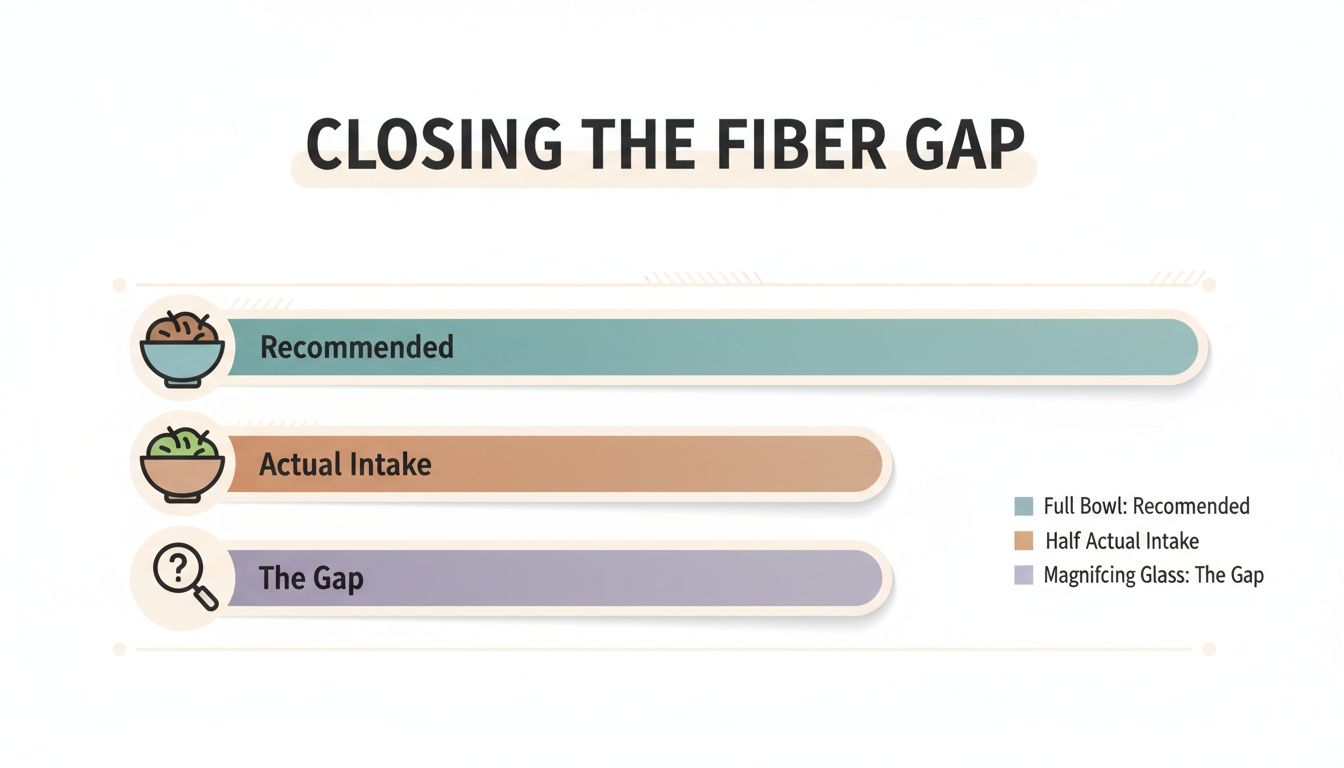
This "fiber gap" isn't just a statistic; it's a real challenge for families trying to build healthy eating habits. To make things a little clearer, here's a handy table with the daily targets.
Daily Fiber Recommendations for Children by Age
This quick reference guide helps you see the recommended daily fiber intake for your child based on the latest dietary guidelines.
| Age Group | Recommended Daily Fiber (grams) | Easy 'Plus 5' Rule of Thumb (grams) |
|---|---|---|
| Toddlers (1-3) | 14 grams | 6-8 grams (age + 5) |
| Children (4-8) | 16-19 grams | 9-13 grams (age + 5) |
| Pre-Teens (9-13) | 22-25 grams | 14-18 grams (age + 5) |
| Teens (14-18) | 25 grams | 19-23 grams (age + 5) |
Remember, as your child grows and their little body changes, so do their nutritional needs. You can find more great age-by-age feeding tips to support them at every stage.
The Two Types of Fiber: Soluble and Insoluble
Did you know there are two main types of fiber? Both are crucial for your child's health, and they work together like a digestive dream team.
-
Soluble Fiber: The Gel Maker. This type of fiber dissolves in water and creates a thick, gel-like substance in the stomach. Think of it like a sponge- it slows digestion down, which helps your child feel full and satisfied longer. This is a huge win for keeping blood sugar stable and avoiding those "hangry" meltdowns. You'll find it in foods like oatmeal, apples, beans, and carrots.
-
Insoluble Fiber: The Intestinal "Broom." This fiber doesn't dissolve. Instead, it acts like a gentle broom, sweeping through the digestive tract. It adds bulk to stool, making it softer and much easier to pass. This is the stuff that's famous for preventing constipation and keeping everything moving right on schedule. It's packed into foods like whole-wheat bread, brown rice, nuts, and leafy greens.
Most whole plant foods conveniently contain a mix of both soluble and insoluble fiber. By simply offering a colorful variety of fruits, veggies, and whole grains, you’re giving your child the complete fiber toolkit their gut needs to thrive.
High-Fiber Foods Your Kids Will Actually Eat
Let's be real- knowing your child needs more fiber is one thing. Actually getting them to eat high-fiber foods without a mealtime meltdown is a whole different ballgame. We’ve all been there, pleading with a toddler to just try one bite of broccoli. It’s exhausting.
But boosting their fiber intake doesn't have to be a battle. The secret is knowing which foods pack a punch and how to serve them in ways that are delicious and, dare we say, even a little sneaky. We're talking about turning powerful nutrients into foods they already love.
A Founder's Story: Small Wins at Snack Time
Our founder, Sam, knows this struggle well. He remembers the early days of trying to improve his family's gut health, especially for his kids who were champion picky eaters. "I read all the lists of 'superfoods' and felt completely overwhelmed," Sam recalls. "My pantry was full of things my kids wouldn't touch. The turning point came when I stopped trying to force 'healthy food' and started making their favorite foods healthier."
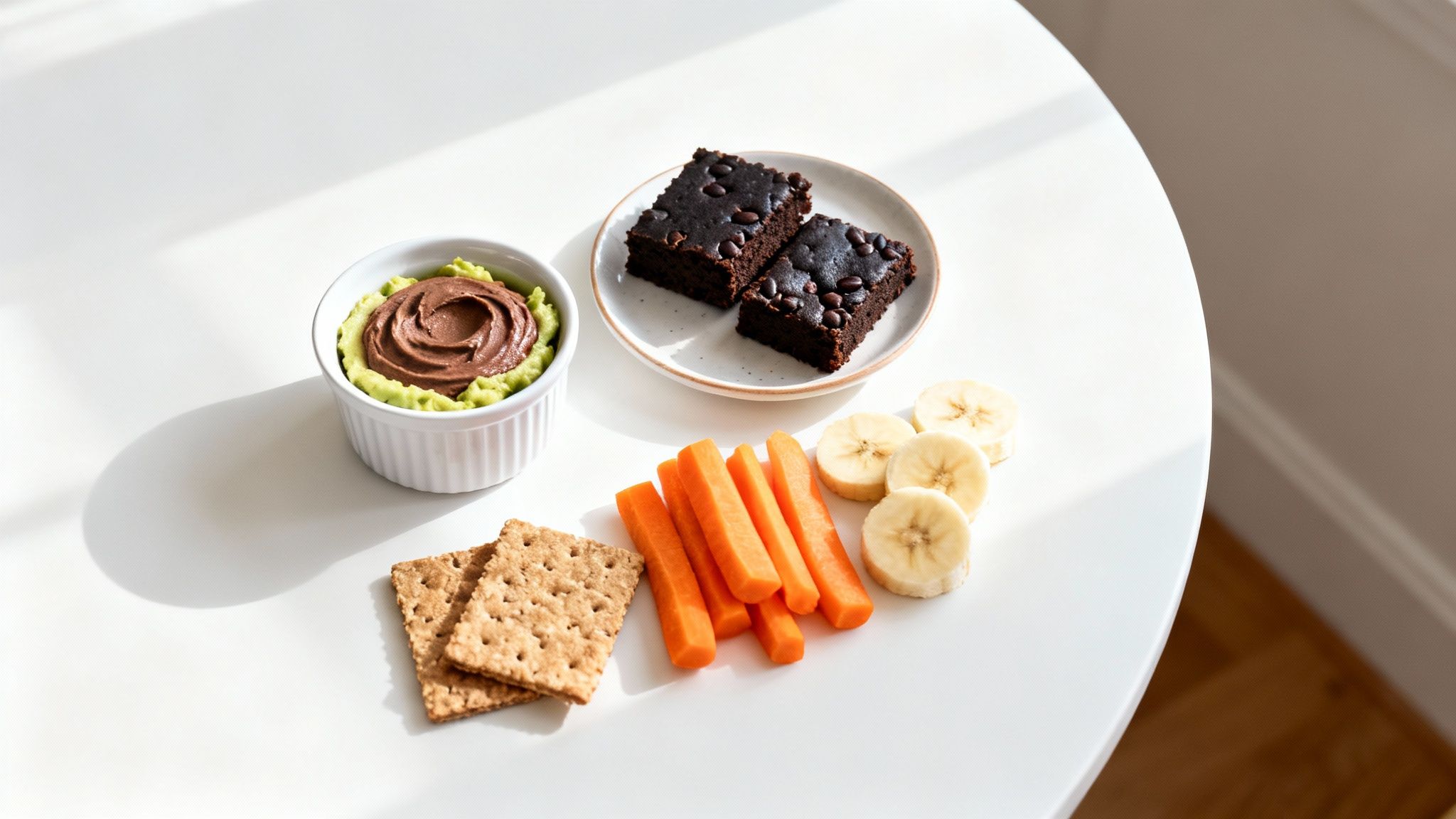
This shift was a game-changer. Black bean brownies that tasted just like the real thing became a weekly treat. Smoothies were packed with avocado for creaminess and a fiber boost they never suspected. It was about meeting them where they were, and these small, consistent wins built the foundation for a lifetime of healthier habits.
Kid-Approved Fiber-Rich Fruits
Fruits are often the easiest entry point for adding more fiber. They're naturally sweet and come in a rainbow of colors that appeal to kids. Here are some top picks:
-
Raspberries: A true fiber superstar, one cup of raspberries packs a whopping 8 grams of fiber.
- Creative Idea: Freeze them and blend with a frozen banana into a "nice cream" for a sweet, dairy-free treat.
-
Pears (with skin): A medium-sized pear with the skin on delivers around 5.5 grams of fiber.
- Creative Idea: Slice them thinly and bake them into "pear chips" with a sprinkle of cinnamon for a crunchy snack.
-
Apples (with skin): Just like pears, the skin is where the magic happens. A medium apple offers about 4.4 grams of fiber.
- Creative Idea: Core the apple, stuff it with oats and cinnamon, and bake until soft for a warm, comforting dessert.
Sneaky Veggies and Legumes
This is where we get creative. Legumes and veggies can be a tougher sell, but when hidden in plain sight, they become nutritional powerhouses.
-
Avocado: Technically a fruit, but we use it like a veggie! Half an avocado contains nearly 7 grams of fiber.
- Creative Idea: Blend avocado with cocoa powder, a little maple syrup, and a splash of plant-based milk to make a rich, creamy chocolate pudding. They'll never guess the secret ingredient.
-
Black Beans: These are incredibly versatile. One cup of cooked black beans has an impressive 15 grams of fiber.
- Creative Idea: Puree a can of rinsed black beans and mix them into brownie or muffin batter. They add moisture and a huge fiber boost without affecting the taste.
-
Edamame (shelled): Fun to pop and eat, edamame is a great snack. A cup provides 8 grams of fiber.
- Creative Idea: Lightly steam and toss with a tiny bit of sea salt. It’s a perfect hands-on snack for little fingers.
When considering how to introduce a variety of high-fiber foods, exploring approaches like baby-led weaning can be a great way to encourage healthy eating habits from an early age.
Wholesome Grains and Seeds
Swapping out refined grains for whole grains is one of the simplest and most effective ways to increase the fiber for kids in their diet.
-
Oats: A classic for a reason. One cup of cooked oatmeal has 4 grams of fiber.
- Creative Idea: Make "overnight oats" by soaking rolled oats in milk or yogurt with chia seeds and fruit. It’s a grab-and-go breakfast that feels like a treat.
-
Chia Seeds: These tiny seeds are mighty. Just two tablespoons contain 10 grams of fiber.
- Creative Idea: Mix them into yogurt, smoothies, or pancake batter. They absorb liquid and create a fun, pudding-like texture.
-
Popcorn: Yes, popcorn! Three cups of air-popped popcorn deliver about 3.5 grams of fiber, making it a fantastic whole-grain snack.
- Creative Idea: Drizzle with a little melted coconut oil and nutritional yeast for a cheesy, savory flavor that kids love.
The key is to start small and stay consistent. Celebrate the wins, don't stress the picky days, and remember that every little bit of fiber adds up to a healthier, happier tummy.
Smart Ways to Boost Their Fiber Intake
Knowing your child needs more fiber is one thing. Actually getting them to eat it without sparking a full-blown mealtime rebellion? That's the real challenge. We’ve all been there, watching a lovingly prepared, nutrient-dense meal get pushed around the plate. Don't worry- we're not going to suggest a total diet overhaul.
Instead, let's focus on small, almost invisible swaps that can deliver big results. It’s all about working smarter, not harder, and weaving fiber-rich foods into the meals your family already enjoys. The key is to introduce these changes slowly and celebrate every small win along the way.
Small Swaps with Big Wins
Remember, consistency trumps perfection every time. You don't need to change everything at once. In fact, taking it slow is much kinder to their developing digestive system.
Here are some simple, low-effort swaps you can start making today:
- Grain Exchange: Swap white bread, pasta, and rice for their whole-wheat or brown rice versions. If you get some pushback, try mixing them half-and-half at first.
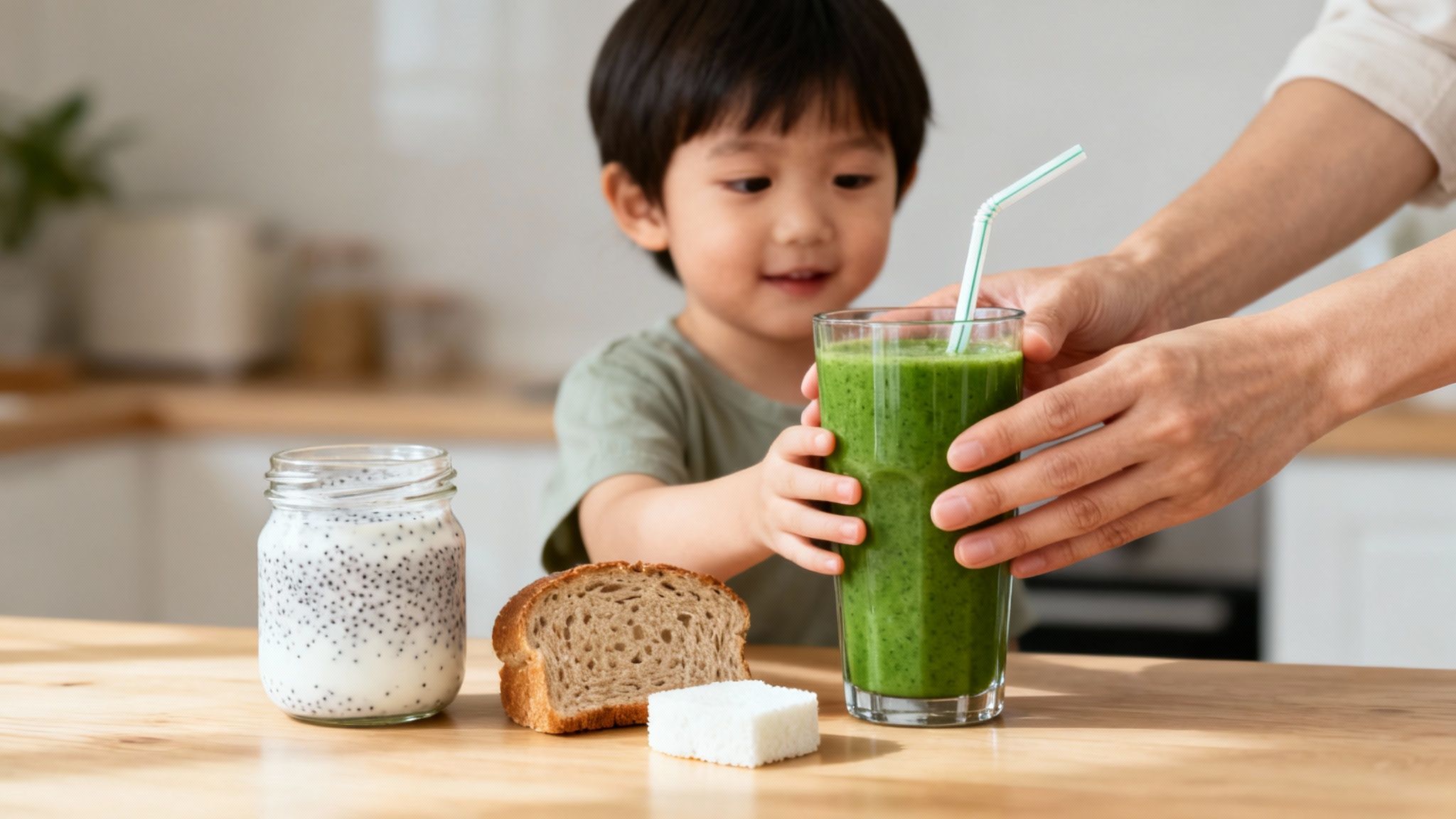
- Sneaky Seeds: A tablespoon of chia seeds or ground flaxseeds can be stirred into smoothies, yogurt, oatmeal, or even pancake batter. They’re virtually tasteless but pack a serious fiber punch.
- Blend It In: Mild-tasting veggies like a handful of spinach or a few pieces of frozen cauliflower can disappear into a fruit smoothie without changing the flavor much. It's a fantastic way to add both fiber and vitamins.
- Rethink Your Dips: Trade creamy ranch for hummus or a black bean dip to serve with veggie sticks or whole-grain crackers.
- Baking Boost: When you're baking muffins or cookies, try substituting about a quarter of the all-purpose flour with whole-wheat flour or oat flour.
The Most Important Rule: Increase Water
This one is non-negotiable. As you increase your child's fiber, you must also increase their fluid intake. Think of fiber like a sponge; it needs water to do its job of softening stool and keeping things moving smoothly through the digestive tract.
Without enough water, adding more fiber can backfire and actually make constipation worse. So, keep that water bottle handy and encourage sips throughout the day, especially as you start incorporating more fiber-rich foods.
Science Corner: Why "Slow and Steady" Wins the Race
Ever wonder why nutritionists always advise a gradual approach? It's all about giving your child's gut microbiome- that bustling community of trillions of tiny organisms in their digestive tract- time to adjust.
When you introduce more fiber, you're essentially throwing a feast for the beneficial bacteria in their gut. These good bugs ferment the fiber, a process that creates incredible health benefits. But a sudden, massive increase can overwhelm them, leading to dun, dun, dun- unwelcome gas. Yikes!
A gradual increase allows the beneficial bacteria populations to grow and adapt. This helps their gut learn to process the extra fiber efficiently, minimizing discomfort and maximizing the benefits for their long-term digestive health.
Fill the Gaps with Gentle Support
Let’s be honest, some days are just plain chaotic. Between hectic schedules and picky eating phases, hitting those daily fiber goals with food alone can feel downright impossible. This is where a gentle, supportive supplement can be a parent's best friend. It’s not about replacing whole foods, but about having a reliable safety net.
This is exactly why we created Yuve Happy Tummy. It’s a clean, plant-based fiber powder designed specifically for little ones. It provides a gentle yet effective boost from natural sources like chicory root inulin- a prebiotic that actively nourishes good gut bacteria.
Because it's an easy-to-mix powder, you can stir it into water, juice, a smoothie, or applesauce without a fuss. It's the perfect way to ensure they’re getting consistent fiber support to keep their digestion regular and their tummies happy, even on the not-so-perfect eating days.
Finding Your Child's Fiber Balance
When it comes to fiber, think like Goldilocks- you’re looking for the amount that’s “just right.” Too little, and you’re often dealing with a constipated, uncomfortable kid. But go too far, too fast, and you can end up with a gassy, bloated little one. The key is to become a bit of a detective, learning to read the unique signals your child's body is sending.
Finding this sweet spot is incredibly empowering. It gives you the confidence to make small dietary tweaks that keep your child comfortable, regular, and full of energy. It’s not about hitting a perfect number every single day, but about paying attention and responding gently.
Signs of Too Little Fiber
Recognizing the signs of low fiber intake is the first and most important step. If any of these sound familiar, you’re in the right place.
- Constipation is the Big One: This is usually the most obvious clue. If your child has hard, dry stools, strains on the toilet, or has fewer than three bowel movements a week, a lack of fiber is a very likely culprit. We know how hard it is to watch your child struggle with this.
- Low Energy and Cranky Moods: Fiber is a superstar at stabilizing blood sugar. Without enough of it, kids can ride a rollercoaster of energy spikes and crashes, which often leads to that all-too-familiar irritability and fatigue.
- They're Always Hungry: High-fiber foods help kids feel full and satisfied. When their diet is lacking, they might feel hungry again shortly after a meal, which explains the constant requests for snacks.
Signs of Too Much Fiber Too Soon
On the other hand, jumping into a high-fiber diet too quickly can cause its own brand of tummy troubles. Think of it like a traffic jam in their digestive system- too much at once just creates a backup.
- Gas and Bloating: This is the classic sign of overdoing it. When the good bacteria in the gut are suddenly flooded with more fiber than they're used to, they go into overdrive and produce a lot of excess gas.
- Cramping or Stomach Aches: A sudden fiber overload can make the digestive system work much harder than usual, leading to uncomfortable cramping and pain.
- Loose Stools or Diarrhea: While it seems counterintuitive, flooding the system with fiber- especially without enough water to help it do its job- can sometimes have the opposite effect and lead to diarrhea.
A Customer's Story: Finding the Right Balance
We recently heard from Jessica, a mom who was at her wit's end with her five-year-old son, Leo. "Leo was either constipated for days or gassy and uncomfortable," she told us. "I felt like I was failing him. I tried adding tons of beans and broccoli to his diet overnight, and things only got worse."
Feeling defeated, Jessica decided to take a step back and simplify. She started with just one small change: swapping his white bread for whole wheat. A week later, she added a daily snack of a pear with the skin on. At the same time, she made sure his water bottle was always full and nearby.
"It was the slow, steady approach that finally worked," Jessica shared. "Within a few weeks, Leo was going to the bathroom regularly without any fuss. He was happier, had more energy, and his tummy troubles disappeared. It was a huge win for us."
Jessica’s story is a perfect reminder that making gradual, thoughtful adjustments is the key. You know your child best. By observing their cues and responding gently, you can fine-tune their diet and find that happy medium that works just for them. You’ve got this.
When to Consider a Fiber Supplement
Let's be honest. Even on our best days, with a fridge full of fresh produce and the best intentions, getting enough fiber into a picky eater can feel like an uphill battle. We’ve all been there- one day they love broccoli, the next it’s their mortal enemy. You’re not failing if your child’s diet isn’t perfect every single day.
Sometimes, despite our best efforts with food, a little extra support is needed. This is especially true for children dealing with extreme picky eating phases, sensory challenges around food textures, or chronic constipation that just won’t quit. In these moments, thinking about a fiber supplement for kids isn't a last resort- it's a smart, proactive step to ensure their little bodies get what they need to feel good.
Choosing the Right Support
When you start looking at supplements, the options can be overwhelming. Gummy vitamins often seem like the easiest choice, but many are loaded with sugar, gelatin, and artificial ingredients that can defeat the purpose. It’s so important to find a supplement that is as clean and gentle as the whole foods you’re already trying to serve.
This is exactly why we created Yuve Happy Tummy. We wanted a solution that parents could feel truly good about. It's a vegan, plant-based fiber powder designed to be both gentle and incredibly effective for sensitive little tummies.
Our formula features key ingredients that work together beautifully:
- Chicory Root Inulin: This is a fantastic source of prebiotic fiber. Think of it as fertilizer for the good bacteria in your child’s gut, helping create a balanced and happy microbiome.
- Gluten-Free Oat Fiber: A gentle, natural source of fiber that helps add bulk for smooth, regular bowel movements without being harsh.
- Clean and Simple: It’s free from common allergens, non-GMO, and contains no added sugar, gelatin, or artificial junk. Just pure, plant-powered goodness.
Because Happy Tummy is an easy-to-mix powder, it disappears seamlessly into juice, a smoothie, yogurt, or even applesauce. There's no texture battle, no weird taste- just a reliable fiber boost to fill in the nutritional gaps on those tough days.
Safety First: Always Consult Your Pediatrician
While a high-quality supplement can be a game-changer, it’s not a decision to be made alone. Every child is unique, and their health needs are specific. We strongly encourage you to talk with your pediatrician before starting any new supplement, including one for fiber.
Your doctor can help you figure out the right starting dose for your child's age and specific situation, making sure the supplement works as a helpful tool within their overall health plan. They can also rule out any underlying medical issues if constipation is a persistent problem.
This partnership between you and your pediatrician is the best way to ensure your child’s digestive health is on the right track, giving you peace of mind and giving them happy tummy days ahead.
Common Questions About Fiber for Kids
Let's be honest, figuring out kids' nutrition can feel like a full-time job. It’s totally normal to have questions! Here are some of the most common things parents ask about fiber, answered simply.
Are Fiber Gummies a Good Choice for Kids?
I know how tempting fiber gummies can be- they seem like such an easy win. The reality, though, is that many are loaded with added sugars, gelatin, and artificial stuff that can actually work against the very gut-health goals you're aiming for. I do NOT think they are a good long-term solution.
Real, whole foods will always be your best bet. If you find you do need a supplement to bridge the gap, a clean powder like Yuve’s Happy Tummy is a much better option. It stirs right into drinks or soft foods without all the sugar, making it a simple and healthier way to top up their intake.
Can a High-Fiber Diet Help My Child's Behavior?
Yes, absolutely! The gut-brain connection is incredibly real and powerful. A diet rich in fiber helps stabilize blood sugar levels, which means you can sidestep those dramatic energy spikes and the cranky crashes that often follow. That alone can make a huge difference in mood and focus.
Beyond that, fiber is the preferred food for the good bacteria in the gut. These tiny helpers are essential for producing mood-regulating neurotransmitters like serotonin. You can learn more about how prebiotics for kids play a role in this amazing process.
A happy gut really does lead to a happier kid. When you feed their microbiome with plenty of fiber, you're not just supporting their digestion- you're supporting their emotional well-being, too.
How Quickly Will We See Results After Increasing Fiber?
Every child is unique, but if you increase fiber slowly and make sure they're drinking plenty of water, you could start to see more regular, comfortable bowel movements within one to two weeks.
The key here is consistency, not perfection. Be patient as their little system adjusts, and don't forget to celebrate the small victories. You're building a foundation for lifelong health, and that's something to feel great about.