Do you ever feel like you’re doing everything right—eating your veggies, taking your supplements—but still feel completely drained? You’re not alone. It’s an incredibly frustrating feeling when you put in all this effort, but the needle just isn't moving on your energy or overall health.
It’s a common problem, and often, the issue isn't what you're consuming, but what your body is actually absorbing. Think of your gut as a gatekeeper. If that gate isn't working right, even the highest-quality nutrients can't get through to do their job. This is where we need to get smarter with our approach, and I promise, it's easier than you think.
Fat-Soluble vs. Water-Soluble: The First Big Clue
Here's a simple concept that can completely change the game: not all vitamins are created equal. They fall into two distinct teams, and knowing the difference is crucial for absorption.
-
Fat-Soluble Vitamins (A, D, E, and K): These nutrients need fat to be absorbed. They dissolve in fats and oils and are stored in your body's fatty tissues and liver. Taking them on an empty stomach is like trying to unlock a door without a key-it just won't work.
-
Water-Soluble Vitamins (All B Vitamins and Vitamin C): This group, as the name suggests, dissolves in water. Your body doesn't store them for long, so whatever isn't used fairly quickly gets flushed out. This means you need a consistent daily intake to keep your levels topped up.
This fundamental difference is the foundation for getting the most out of your food and supplements. If you're concerned you might be falling short, it helps to know the common indicators. You can explore these 10 signs of vitamin deficiency to get a better sense of where you stand.
The Bottom Line: Our goal isn't just to eat healthy food. It's to create the perfect conditions inside your body for those nutrients to be absorbed and put to work. This is how you turn effort into real energy and wellness, not just wasted potential.
Mastering The Art Of Smart Nutrient Pairings
Ever wonder if you're actually getting the full benefit from the healthy food you eat? The secret isn't just about what you eat, but how you eat it. Think of nutrients as a team-some players just have a natural chemistry that makes the whole team better.
This concept is called food synergy, and it's one of the most practical and powerful ways to boost how well your body absorbs essential vitamins and minerals. It's not about complicated rules; it's about simple, smart combinations.
For instance, that squeeze of lemon you put on your spinach salad does more than just add a zesty flavor. The vitamin C in the lemon juice essentially grabs onto the plant-based iron in the spinach, transforming it into a form your body can easily absorb. It’s a simple kitchen trick that can make a world of difference, especially for those of us on plant-forward diets.
To really get the hang of these pairings, you first need to know the two basic teams of vitamins we're dealing with. This chart breaks it down nicely.
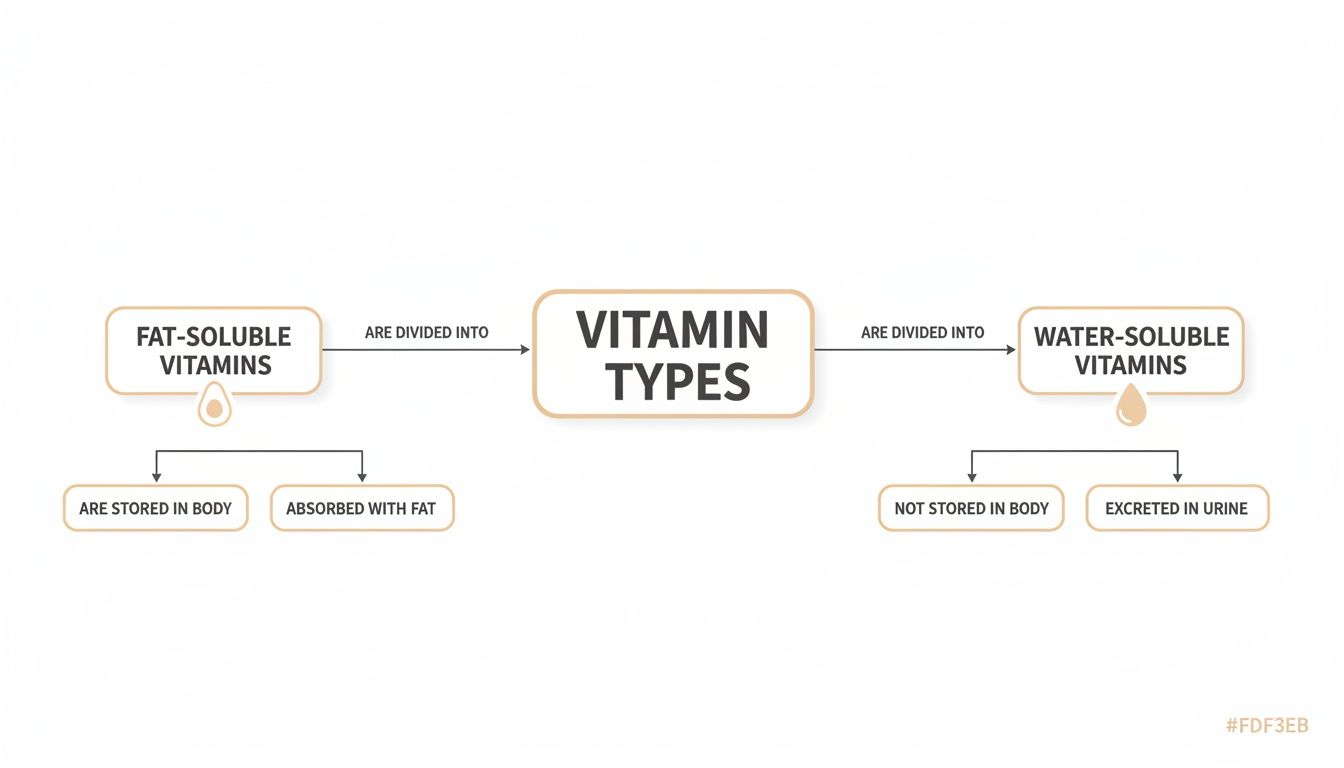
As you can see, the fat-soluble crew (Vitamins A, D, E, K) needs a little fat to get the party started. The water-soluble ones (B vitamins and C) just need water. This fundamental difference is key to building the perfect plate.
Dynamic Duos For Better Absorption
So, what are some of these all-star combinations you can start using today? Here are a few of my favorite, evidence-backed pairings that deliver real results.
-
Iron + Vitamin C: This is the absolute classic. Vitamin C is a game-changer for absorbing non-heme iron-the type you find in plant sources like lentils, beans, and dark leafy greens. Just how much of a difference does it make? Some studies suggest it can increase absorption by up to six times. That’s a massive return on investment from adding some bell peppers or citrus to your meal. For a deeper dive, check out this insightful Harvard article on how micronutrients work together.
-
Calcium + Vitamin D: These two are the inseparable partners for strong bones. Think of Vitamin D as the gatekeeper; it helps usher calcium from your digestive system into your bloodstream where it can be put to work. Without enough Vitamin D, most of the calcium you consume just passes right through.
-
Turmeric (Curcumin) + Black Pepper (Piperine): Turmeric's active compound, curcumin, is a potent anti-inflammatory, but on its own, our bodies struggle to absorb it. Here's where a little black pepper comes to the rescue. The piperine in the pepper can increase curcumin's bioavailability by a staggering 2,000%. That's not a typo! Just a tiny pinch makes all the difference.
Powerful Nutrient Pairings for Better Absorption
To make this even easier, here’s a quick-reference table for building a more synergistic plate.
| Nutrient | Best Partner | Why It Works | Easy Meal Idea |
|---|---|---|---|
| Iron (plant-based) | Vitamin C | Vitamin C converts iron into a more absorbable form. | Lentil soup with a squeeze of fresh lemon juice. |
| Calcium | Vitamin D | Vitamin D is essential for regulating calcium absorption in the gut. | Salmon (rich in Vitamin D) with a side of steamed broccoli (calcium). |
| Vitamin D | Healthy Fats | As a fat-soluble vitamin, it needs fat for transport and absorption. | Avocado toast sprinkled with a Vitamin D-fortified seasoning. |
| Vitamin A | Healthy Fats | Carotenoids (precursors to Vitamin A) are fat-soluble. | Roasted sweet potatoes (Vitamin A) tossed in olive oil (healthy fat). |
| Curcumin | Piperine | Piperine (from black pepper) enhances curcumin's bioavailability. | A golden milk latte with turmeric and a pinch of black pepper. |
By thinking about these simple pairings, you ensure the healthy choices you're making are truly paying off. You’re maximizing the nutritional value of every single bite.
Of course, none of this works without a healthy gut to do the absorbing. The foundation of nutrient uptake is a balanced microbiome. To learn more about how good bacteria can help, check out our guide on taking probiotics with vitamins.
Why Healthy Fats Are Your Best Friend
Let's get one thing straight right away: fat is not the enemy. At least, not the healthy kind. For some of the most important nutrients out there, healthy fats are essential partners, making all the difference in whether your body can actually use them. If you’ve been avoiding fats, you might be missing a massive piece of the wellness puzzle.
Vitamins A, D, E, and K are what we call fat-soluble vitamins. That’s just a technical way of saying they need to hitch a ride with fat to get absorbed and put to work in your body. Taking them on an empty stomach or with a fat-free meal is like sending them out to do a job without any tools-they just can’t get it done.
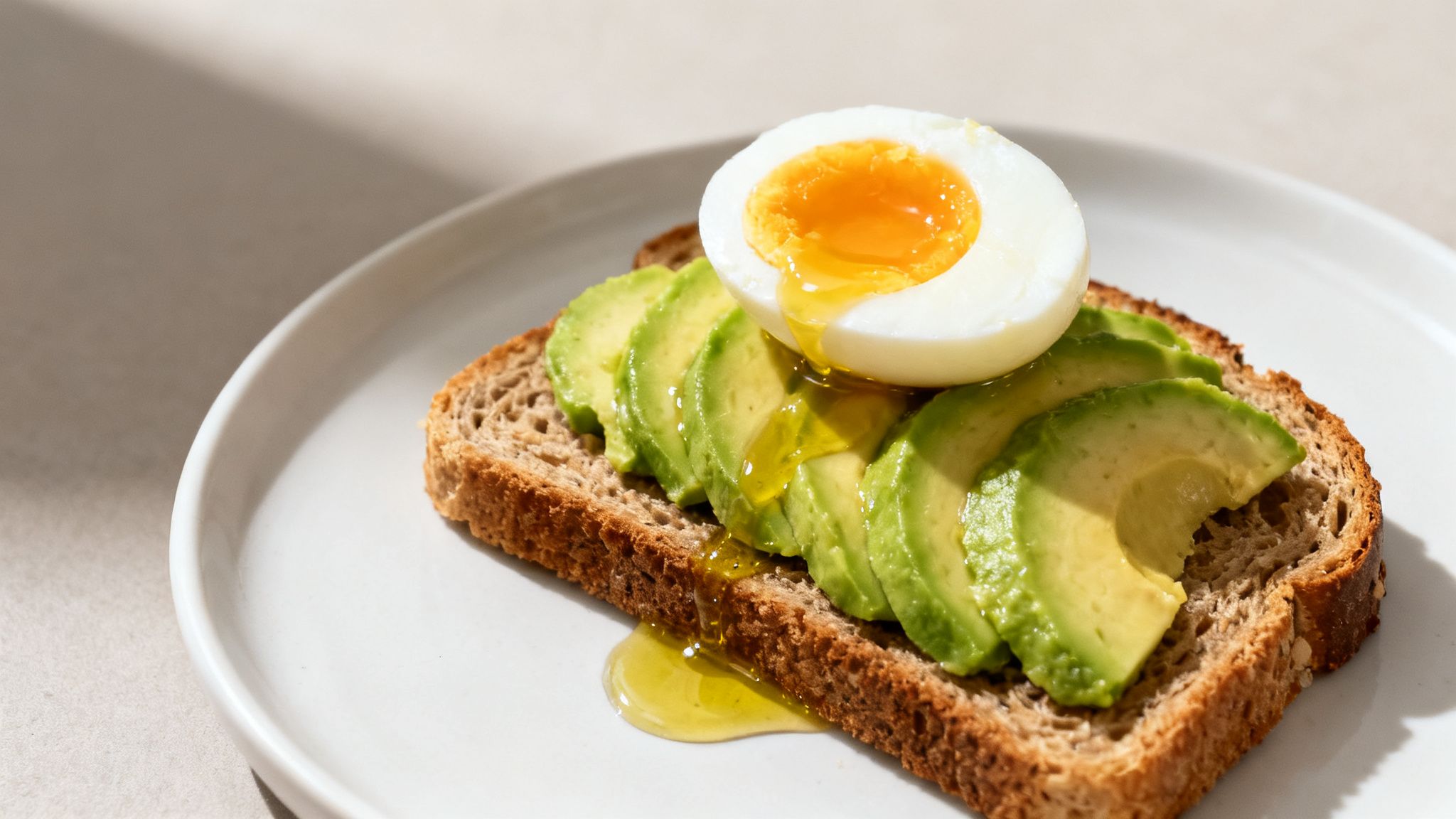
This is something our founder, Sam, discovered the hard way. For months, he couldn't shake a feeling of constant fatigue, even though he was diligently taking a high-quality vitamin D supplement every single morning. The problem? He was just washing it down with coffee. It was a simple, yet frustrating, oversight.
The Simple Switch That Changed Everything
Sam's "aha!" moment came when he shifted his routine, taking his vitamin D with his breakfast of avocado toast instead. The difference was almost immediate. His energy shot up, and he finally felt like all his efforts were actually making an impact. That tiny tweak unlocked the nutrient's full potential.
And this isn't just a personal anecdote; the science is solid. Research consistently shows that vitamin D absorption skyrockets when you take it with dietary fats. In fact, studies have found that fat-soluble vitamins are up to 32% better absorbed when you have them with oils or avocados. Considering how little oral vitamin D often gets absorbed on its own, that’s a huge win. You can read the full research about these findings to see the data for yourself.
A Quick Win: Next time you take a fat-soluble vitamin (A, D, E, or K), make sure it's with a meal that contains healthy fats. Think avocado, nuts, seeds, or a good drizzle of olive oil.
Easy Ways to Add Healthy Fats
Bringing more healthy fats into your diet doesn’t need to be a chore. It’s really about making small, delicious additions that have a big impact on how to increase vitamin absorption.
Here are a few ideas:
- Boost Your Smoothies: Toss a tablespoon of almond butter, chia seeds, or half an avocado into your morning blend. It makes it creamier and more nutritious.
- Upgrade Your Salads: Don't just settle for greens. Drizzle them with extra virgin olive oil or top them with a handful of walnuts or pumpkin seeds for crunch and healthy fats.
- Snack Smarter: Instead of grabbing plain crackers, pair them with some fresh guacamole or enjoy a handful of mixed nuts.
These simple swaps give your body the tools it needs to fully absorb those key nutrients vital for your immune system, bone health, and overall energy. For more plant-based ideas, check out our guide on the best vegan sources of omega-3 fatty acids. It's packed with delicious and effective options.
The Gut Health And Absorption Connection
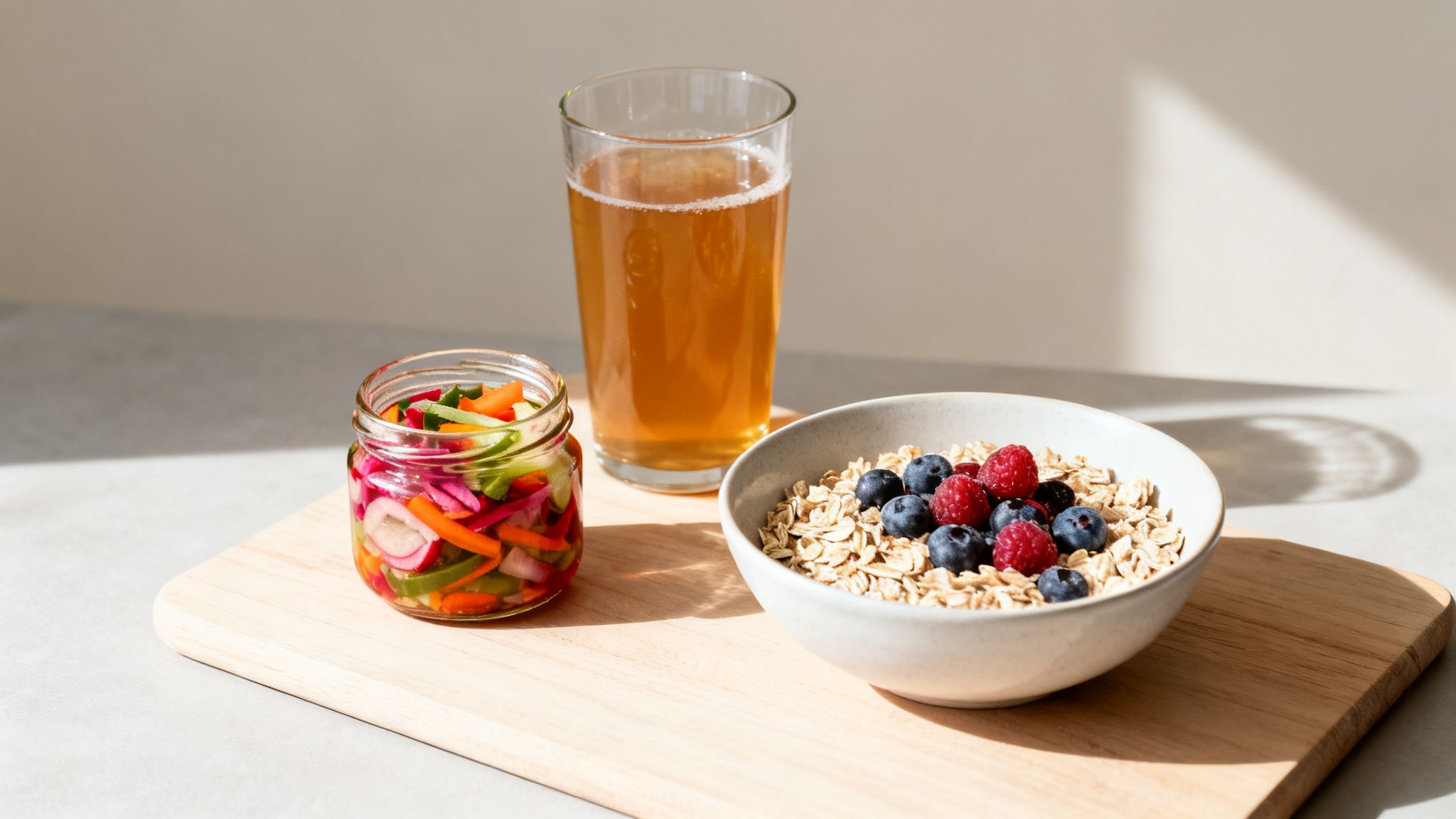
Think of your gut as the bouncer for your entire body. It’s a smart, sophisticated system that decides which nutrients get a VIP pass into your bloodstream and which get shown the door. This is where so many of us get stuck, struggling with frustrating bloating and discomfort even when we're eating all the right things. Yikes!
If your gut microbiome-that bustling city of trillions of bacteria in your digestive tract-is out of balance, even the most nutrient-packed diet won't deliver. It's like having a world-class delivery service trying to drop off packages at a locked and barred warehouse.
Why Your Gut Microbiome Is The Real MVP
A healthy gut lining and a diverse community of good bacteria are absolutely essential for getting the most out of your food. These tiny microbes do more than just help break down meals; they actively produce certain vitamins (like some B vitamins) and create the perfect environment for your body to absorb minerals like magnesium and calcium.
When this delicate ecosystem gets thrown off by stress, a less-than-ideal diet, or a round of antibiotics, it can lead to what’s often called "leaky gut." This is where the gut lining becomes more permeable, which not only lets unwanted particles into your bloodstream but also severely messes with your ability to absorb the good stuff. For a deeper dive, check out our guide on how to heal a compromised gut: https://www.getyuve.com/blogs/news/how-to-heal-leaky-gut.
To really get your absorption on track, a thriving gut flora is non-negotiable. Supporting your digestive system is key, and it can be helpful to explore resources on the best probiotics for gut health to learn more about which strains can make a real difference.
It's easy to overlook subtle signs that your gut isn't functioning at its best. Here’s a quick checklist of common symptoms that might indicate your gut health is interfering with how well you absorb nutrients.
Signs Your Gut May Be Hindering Absorption
| Symptom | What It Could Mean for Absorption |
|---|---|
| Bloating & Gas | A sign of fermentation by "bad" bacteria, which can inflame the gut lining and block nutrient uptake. |
| Irregular Bowel Movements | Whether too fast or too slow, this disrupts the time nutrients have to be properly absorbed. |
| Food Sensitivities | Can signal an immune response and inflammation in the gut, making absorption less efficient. |
| Fatigue | Often a direct result of poor absorption of key energy-producing nutrients like B vitamins and iron. |
| Skin Issues (Eczema, Acne) | Can be an external sign of internal inflammation and a "leaky" gut. |
If you're ticking off a few of these boxes, it’s a strong signal that focusing on your gut health could be a game-changer for your overall nutrient status.
Probiotics: The Unsung Heroes Of Absorption
This is where the power of probiotics really shines. They are the unsung heroes of vitamin absorption, working behind the scenes to make sure you get everything you can from your meals. For example, specific probiotic strains have been shown to significantly boost B-vitamin production right inside your gut.
In fact, for people with deficiencies, a healthy gut supported by probiotics could increase B12 uptake by a staggering 40-50%. One detailed scientific review found that certain Lactobacillus strains boosted B-vitamin production and absorption in the colon by 35%. For anyone dealing with digestive woes, that's a massive win.
A Note from Sam, Yuve's Founder: "I used to think my bloating was just something I had to live with. It wasn't until I focused on healing my gut with a powerful probiotic that I realized how connected it was to my energy levels. Suddenly, the healthy food I was eating started to feel like it was actually fueling me, not just sitting in my stomach."
This is precisely why a foundational tool like Yuve's Vegan Probiotic + Prebiotic formula is so important. It isn’t just another supplement; it’s a proactive step to ensure your gut is primed and ready to absorb all the goodness from your food.
The prebiotic fiber in our formula acts as food for the good bacteria, helping them thrive and create a healthy, balanced environment. This synergy makes every other healthy choice you make-from eating your greens to taking your other vitamins-far more effective. By starting with your gut, you're building a solid foundation for total body wellness.
Common Absorption Blockers Hiding In Your Diet
It turns out that getting more nutrients isn't just about what you add to your plate. Sometimes, it's about understanding what's already there. It can be a real "aha!" moment when you discover that some of the healthiest foods we eat-like beans, grains, and leafy greens-contain compounds that can actually get in the way of nutrient absorption.
These are often called "anti-nutrients," but I think that name is a bit too dramatic. We’re talking about phytates and oxalates.
Let's get one thing straight: This is absolutely not a reason to start fearing spinach or cutting out your favorite bean chili. The goal is to understand how these compounds work so you can make simple tweaks to unlock even more nutrition from your meals. It's about being strategic, not restrictive.
What Are Phytates and Oxalates, Really?
Phytates, or phytic acid, are found in the husks and hulls of plant seeds-think whole grains, nuts, and beans. They're a kind of natural defense system for the plant. The tricky part is that they can bind to essential minerals like iron, zinc, and calcium in your gut, which makes it harder for your body to absorb them. This is one of the reasons nutrition experts pay close attention to mineral intake in diets heavy on unprocessed grains and legumes.
Oxalates are similar, found in foods like spinach, chard, beets, and even tea. They have a particular knack for binding to calcium, which can sometimes form tiny crystals. For most of us, this is a non-issue. But if you're actively trying to increase your calcium levels, it's definitely something to be aware of.
My Two Cents: Don't get caught up in banning these foods. Simple, age-old preparation methods can make a massive difference in reducing these compounds and letting the good stuff shine through.
Simple Kitchen Tricks To Boost Absorption
Here's the great part-you're in the driver's seat. A few easy kitchen habits can dramatically minimize the effects of these absorption blockers.
-
Soak Your Legumes and Grains: This is a classic for a reason. Soaking beans, lentils, and grains overnight before cooking helps activate enzymes that break down phytates. Just remember to toss the soaking water and give them a good rinse before cooking.
-
Try Sprouting: If you want to take it a step further, sprouting is a game-changer. It kicks off the germination process, which unleashes enzymes that neutralize phytic acid. Mung beans, lentils, and chickpeas are incredibly easy to sprout right on your kitchen counter.
-
Cook Your Greens: A quick steam or sauté can significantly reduce the oxalate content in greens like spinach and chard. This simple step helps free up the calcium and iron, making them more available for your body to use.
-
Always Add Vitamin C: We talked about this earlier, but it’s worth repeating. Vitamin C is iron's best friend and helps counteract the mineral-blocking effects of phytates. Squeezing lemon juice over your lentil soup or adding bell peppers to a bean salad is an easy, powerful win.
Putting It All Together: Your Game Plan for Better Absorption
Feeling like you just sat through a college-level biology class? Don't worry. Let's boil it all down into a simple, actionable game plan you can start using today.
Think of it less as a strict set of rules and more as a series of smart upgrades. You don't need a total life overhaul. The goal is to consistently make small, strategic choices that add up to a huge difference in how you feel.
Your Nutrient Absorption Checklist
Here are the most impactful strategies we've discussed. Don't try to do them all at once. Just pick one or two that feel manageable and build from there.
-
Create Smart Pairings: Remember your food synergies! Squeeze some lemon juice (hello, vitamin C!) over your plant-based iron sources like lentils and spinach. And never, ever take your fat-soluble vitamins (A, D, E, and K) without a side of healthy fat, like some avocado, a handful of nuts, or a drizzle of olive oil.
-
Get Your Timing Right: It's best to take energizing vitamins, like your B-complex, in the morning. This syncs up with your body's natural energy cycle and helps avoid any potential sleep disruptions later on.
-
Dodge the Nutrient Blockers: Lightly steaming or sautéing leafy greens like spinach is a great way to reduce those pesky oxalates. For beans and grains, a good soak before cooking is your best bet to break down phytates, which frees up more minerals for your body to grab.
If you take away just one thing, let it be this: a healthy gut is the absolute foundation of nutrient absorption. Everything starts there.
This is exactly why a top-tier supplement can be such a game-changer. Yuve's Vegan Probiotic + Prebiotic is specifically formulated to create the perfect gut environment for your body to absorb all the goodness from your food. By nurturing your microbiome, you're making sure every healthy meal you eat actually counts.
Ready to stop letting valuable nutrients go to waste and start truly feeling your best? Putting your gut health first is the most powerful move you can make.
Answering Your Top Questions About Nutrient Absorption
I get asked about this stuff all the time, and it's fantastic because it shows people are thinking beyond just what they eat and starting to focus on what their body actually gets. Let's tackle a few of the most common questions I hear.
Can I Just Take All My Vitamins at Once?
It’s definitely tempting to just knock them all back in one go and be done with it. But for a lot of nutrients, that convenience can seriously backfire on effectiveness. Think of it less like a race and more like a carefully timed relay.
Fat-soluble vitamins-that’s your A, D, E, and K-are a perfect example. They quite literally need fat to be shuttled into your system. If you take them with a dry piece of toast or just a glass of water, you’re missing the boat. They have to be taken with a meal containing some healthy fats.
Then you’ve got the issue of competition. Certain minerals are like rivals, fighting for the same parking spot in your gut. Iron and zinc, for instance, use the same absorption pathways. If you take high doses of both together, one is likely to lose out. It’s much smarter to space them out by a few hours to give each one a clear path.
Does Cooking My Food Destroy All the Vitamins?
This is probably one of the biggest nutrition myths out there! The reality is much more nuanced.
Yes, some very delicate, water-soluble vitamins (like vitamin C) can degrade if you boil them to death. But that's an extreme. Most cooking methods actually help you get more nutrition from your food, not less.
Gentle cooking like steaming, light stir-frying, or roasting preserves most nutrients just fine. Even better, the heat breaks down tough plant cell walls, which can dramatically increase the bioavailability of certain compounds. The antioxidant lycopene in tomatoes is a classic example; your body can absorb so much more of it from cooked tomato sauce than from a raw tomato. Same goes for the beta-carotene in carrots.
How Long Does It Realistically Take to Improve My Nutrient Absorption?
Here’s the great news: you can make an impact immediately. The very next time you eat, you can make a smart pairing-like adding a squeeze of lemon to your spinach salad-and you've just given your body a boost. That’s an instant win.
For the bigger, more foundational shifts, like healing your gut lining or rebalancing your microbiome, you'll need a bit more patience. If you start consistently incorporating probiotics and prebiotics, you can often start to feel a real difference in digestion and energy within a few weeks to a month. It’s all about creating a healthier internal environment.
Consistency is everything. Those small, smart habits you practice every single day are what add up to profound, long-term improvements in your health.
Ready to build that strong foundation for total-body wellness? Yuve makes it easy. Our Vegan Probiotic + Prebiotic formula is the perfect first step to creating a healthy gut environment, ensuring every nutrient you consume can do its job effectively.