So, you’ve decided to go vegan. That’s amazing! But it’s completely normal to have that nagging little question in the back of your mind: “Am I really getting everything my body needs?” You’re not alone-and we’re here to sort it out.
While a well-planned vegan diet is a nutritional powerhouse, a couple of key vitamins are non-negotiable when it comes to supplementing. We’re talking about Vitamin B12 and Vitamin D. These are the two you'll hear about most often because they are either absent from plant foods or just plain hard to get enough of from plants and sunshine alone.
Thriving On Plants: What Every Vegan Needs To Know First
Let's cut right through the confusion. You’re loading your plate with vibrant, incredible plant foods, but maybe you're still wrestling with worries about your energy levels, brain fog, or how well your immune system is holding up. We get it. Feeling confident in your diet is just as important as the food itself.
Think of this guide as your friendly roadmap. We're here to break down the foundational nutrients that will help you not just survive on a vegan diet, but feel absolutely fantastic.
Making sure you have your nutrient bases covered is a huge part of learning how to transition to a vegan diet in a way that sticks. This isn’t about finding flaws in plant-based eating; it’s about making smart, proactive choices for your long-term health.
Why Some Vitamins Are a Bigger Deal For Vegans
When people ask what vitamins vegans need, the conversation almost always starts with Vitamin B12. There’s a simple reason for this: B12 is made by microorganisms, not by plants or animals. It just happens to accumulate in animal tissues.
This means that relying on plant foods alone for B12 is simply not a reliable strategy. It’s the most critical nutrient gap to be aware of, with studies showing deficiency rates ranging from 11% to a staggering 90% among vegans who don't supplement.
It's a similar story for Vitamin D, the "sunshine vitamin." Our bodies can make it when exposed to the sun, but things like where you live, the season, and your skin tone make that a pretty unreliable source for many of us. And when it comes to food, plant-based options are very limited.
This simple diagram helps put it all into perspective.
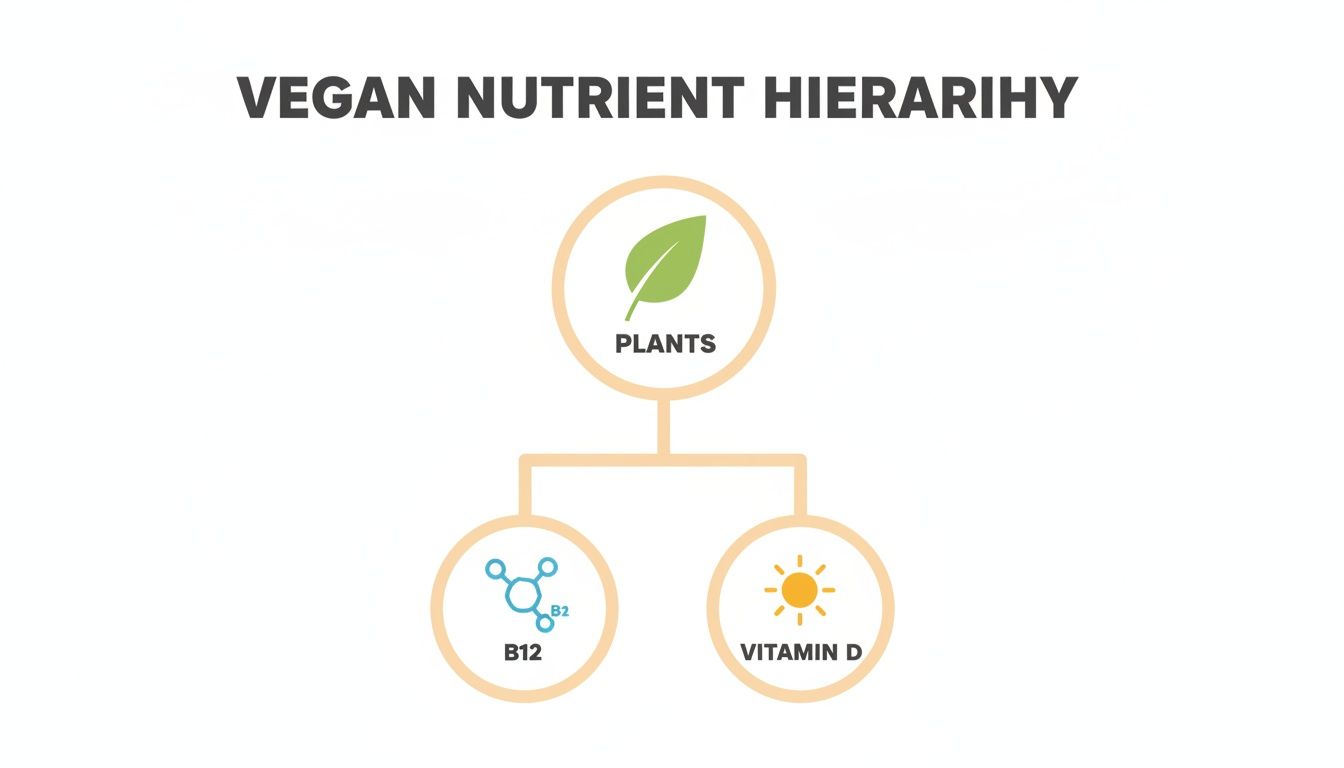
As you can see, a whole-food, plant-based diet is the foundation, but B12 and Vitamin D need some extra, targeted attention.
Key Nutrients for Vegans at a Glance
Feeling a little overwhelmed? Don't be. We've put together a quick-reference table to give you a bird's-eye view of the most important nutrients, what they do for you, and where you can find them. We'll dive much deeper into each of these later, but this is the perfect place to start.
| Nutrient | Why It's Important | Top Plant-Based Sources & Supplement Notes |
|---|---|---|
| Vitamin B12 | Energy production, nerve function, and red blood cell formation. | Found in fortified foods like nutritional yeast and plant milks. Supplementation is considered essential. |
| Vitamin D | Calcium absorption, bone health, and immune support. | Fortified foods and sun exposure. Supplementation is highly recommended, especially in winter. |
| Omega-3s (EPA/DHA) | Brain health, reducing inflammation, and heart function. | Algae oil supplements are the most direct source. Flax, chia, and walnuts provide ALA. |
| Iron | Carries oxygen in the blood, preventing fatigue. | Lentils, chickpeas, tofu, and spinach. Pair with Vitamin C (like citrus) to boost absorption. |
| Calcium | Bone and teeth strength, muscle function. | Fortified plant milks, tofu, and leafy greens like kale. |
| Zinc | Immune function, wound healing, and cell growth. | Legumes, seeds (hemp, pumpkin), nuts, and whole grains. |
| Iodine | Thyroid function and metabolism regulation. | Iodized salt, seaweed (nori, dulse), and some fortified breads. |
Think of this table as your nutritional cheat sheet-a starting point for building a strong, healthy, and thriving vegan lifestyle.
The Unmissable Duo: Vitamin B12 and Vitamin D
Alright, let's get straight to the two absolute non-negotiables for anyone eating a plant-based diet: Vitamin B12 and Vitamin D. If you only pay attention to two nutrients, make it these.
Think of them as the foundational pillars of your vegan health strategy. Without them holding things up, even the most beautifully crafted diet can start to feel shaky, leaving you wondering why you don't have the energy you expected.
The Truth About Vitamin B12
First up is B12, often called the "energy vitamin." Its job is mission-critical: it helps your body make energy, protects your nerves, and is essential for producing healthy red blood cells. Here’s the catch for vegans: B12 is made by microorganisms in the soil and water, not by plants. In our modern, sanitized world, that means getting enough from food alone is nearly impossible.
Relying on fortified foods like nutritional yeast or plant milks is a decent starting point, but it's often not enough to keep your levels in the optimal range. When your B12 starts to dip, the signs can be frustratingly subtle at first.
You might notice things like:
- A deep-seated fatigue that no amount of coffee seems to touch.
- That classic "brain fog" that makes it hard to focus on tasks.
- A strange tingling or numbness in your hands and feet.
- Feeling unusually weak or even a bit lightheaded.
Yuve’s founder, Sam, knows this from personal experience. For years, he battled low energy he just couldn't shake, despite eating a very healthy plant-based diet. It was a huge turning point when he finally discovered his B12 levels were practically on the floor. Getting those levels back up was a complete game-changer and a major reason he was inspired to create Yuve's targeted vegan formulas.
Sam's story is a powerful reminder: supplementing with B12 isn't a sign that a vegan diet is flawed. It's simply a smart, proactive strategy to give your body what it needs to thrive.
Don't Forget the Sunshine Vitamin: D
Next on our must-have list is Vitamin D, famously known as the "sunshine vitamin." This nutrient is vital for a robust immune system, strong bones, and a stable mood. Our bodies can make it when our skin gets direct sun exposure, but let's be realistic-for most of us, that's not a reliable source all year long.
Many people, vegan or not, are running low on Vitamin D. The risk can be even higher when you're not consuming fortified dairy products, which is where a significant gap can appear for plant-based eaters.
In fact, Vitamin D deficiency is a widespread issue, with some studies showing prevalence rates as high as 67% among vegans. One analysis even found that vegans had 40% lower total vitamin D levels than non-vegetarians, despite many already taking supplements. This really highlights how intentional we need to be about getting enough.
When your levels are low, you might find yourself getting sick more often or just feeling down, especially during the darker winter months. For a much deeper look into this crucial nutrient, check out our guide on everything you should know about Vitamin D.
Your Action Plan for B12 and D
So, what's the simple takeaway here? Don't leave these two critical vitamins up to chance.
- Supplement B12 Daily: This is non-negotiable. A reliable supplement is the only surefire way to know you're getting what you need.
- Prioritize Vitamin D: A daily Vitamin D supplement is your best bet for keeping your immune system and mood strong, especially if you live in a less sunny climate or during the fall and winter months.
Taking a high-quality, plant-based supplement that combines both, like Yuve Vegan Multivitamin with B12 and D3, completely takes the guesswork out of it. Consider it your daily nutritional insurance-a simple step that ensures these two critical needs are met so you can focus on enjoying all the incredible benefits of your lifestyle.
Supporting Brain and Heart Health with Omega-3 and Iodine
When you hear "omega-3s," your mind probably jumps straight to fish oil. So, where does that leave you on a plant-based diet? Let’s clear up the confusion and talk about what your brain and heart really need to feel their best.
These incredible fatty acids are famous for keeping our brains sharp, taming inflammation, and protecting our hearts. But here's the catch: not all omega-3s are created equal, and this is a huge deal for vegans.
The A-B-Cs of Omega-3s: ALA vs. DHA and EPA
The plant world is loaded with an omega-3 called ALA (alpha-linolenic acid). You’ll find it in superstar foods like flaxseeds, chia seeds, hemp seeds, and walnuts. Your body is pretty smart-it can take this ALA and convert it into the two most important forms of omega-3s: DHA (docosahexaenoic acid) and EPA (eicosapentaenoic acid).
These two are the real power players. DHA is a major building block for your brain and retina, while EPA has powerful anti-inflammatory effects. The problem? The conversion process from ALA to DHA and EPA is notoriously inefficient. Think of it like trying to fill a swimming pool with a leaky bucket-you get some water in, but a whole lot is lost along the way.
This inefficiency is why many vegans have much lower levels of these critical fats. Research from GrassrootsHealth showed vegans can have 73% lower EPA and 62% lower DHA levels than non-vegetarians. That’s a significant gap that diet alone often can't fill. You can learn more about these vegan nutrient deficiency findings directly from the study.
So, while you should absolutely keep sprinkling those chia seeds on everything, relying on them alone for your DHA and EPA is a risky bet for your long-term brain and heart health.
The Algae Advantage: A Game Changer for Vegans
This is where algae comes in to save the day. Here’s a cool fact: fish don't actually make their own DHA and EPA. They get it from eating microalgae. By going straight to the source with an algae-based omega-3 supplement, we can get these crucial fatty acids without the fishy middleman.
Taking a high-quality algae oil supplement is one of the most proactive steps you can take for your cognitive function and cardiovascular health. It’s not just a nice-to-have; it’s a game-changer for bridging a common and critical nutritional gap.
If you want to dive deeper into plant-based sources, be sure to check out our complete guide on the best vegan sources of omega-3 fatty acids.
Iodine: The Unsung Hero for Your Metabolism
Now, let's talk about another nutrient that works closely with omega-3s to keep you feeling sharp: iodine. This mineral is absolutely essential for a healthy thyroid. Think of your thyroid as your body's metabolic thermostat-it regulates your energy, temperature, and even your heart rate.
Without enough iodine, your thyroid function can sputter, leaving you feeling sluggish, cold, and mentally foggy. Unfortunately, iodine deficiency is surprisingly common among vegans, especially those who avoid iodized salt and don't regularly eat seaweed.
Plant-based foods are generally low in iodine because the content depends entirely on the soil they're grown in, which can vary wildly. For those seeking plant-based sources of essential minerals like iodine, exploring options such as sea moss gummies can be a useful addition to a vegan diet. This helps ensure you're covering all your bases for optimal thyroid support.
When your thyroid is working properly and your omega-3 levels are optimal, your brain and body can function in harmony. You'll notice better focus, more consistent energy, and an overall sense of well-being. This powerful duo is a cornerstone of a truly thriving vegan lifestyle.
Essential Minerals for Strength: Iron, Calcium, and Zinc
Vitamins tend to grab all the headlines, but we absolutely cannot forget about minerals. Think of them as the unsung heroes-the nuts and bolts that hold your body together, giving you strength, structure, and resilience from the inside out.
When you're eating a plant-based diet, three minerals in particular deserve a little extra attention: iron, calcium, and zinc. Getting enough of these is fundamental to feeling strong, energized, and ready to take on whatever your day throws at you. Let's break down what you need to know about each one.
Demystifying Plant-Based Iron
Ever feel that bone-deep weariness that just won’t lift, no matter how much you rest? It might be a sign that your iron levels are running low. Iron is crucial for making hemoglobin, the protein in your red blood cells that ferries oxygen from your lungs to literally every other part of your body. Without enough of it, you’re left feeling drained and weak.
Plants are packed with a type of iron called non-heme iron. It's a fantastic source, but there's a small catch: our bodies don't absorb it quite as easily as the heme iron found in animal products. Don’t worry, though-there’s a simple and powerful trick to overcome this.
Vitamin C is non-heme iron’s best friend! Pairing iron-rich foods with a source of Vitamin C can dramatically boost how much iron your body actually absorbs.
Here’s how to put this into practice:
- Add bell peppers (loaded with Vitamin C) to a hearty lentil soup.
- Squeeze fresh lemon juice over a big spinach salad.
- Enjoy a small glass of orange juice with your fortified oatmeal.
This simple food-pairing strategy makes a world of difference. To dive deeper, check out our guide to delicious and effective plant-based iron-rich foods.
Building Strong Bones Without Dairy
"But where do you get your calcium?" It’s a classic question, and the answer is refreshingly simple: from tons of amazing plant sources! Calcium is the superstar mineral for building and maintaining strong bones and teeth, of course, but it also plays a vital role in muscle function and nerve signaling.
You absolutely do not need dairy to meet your calcium needs. The key is just being intentional about including calcium-rich plant foods in your diet every single day.
Fortified plant milks (like soy, almond, or oat) and calcium-set tofu are some of the most reliable and easiest ways to get a significant dose. Leafy greens like kale and collard greens are also fantastic contributors.
Zinc: The Unsung Immune Hero
Zinc might not be as famous as iron or calcium, but it’s a true powerhouse mineral that you don’t want to overlook. It’s absolutely vital for a healthy immune system, proper wound healing, and even helping to keep your skin clear.
Like iron, the zinc from plant foods can sometimes be a bit harder for the body to absorb due to compounds called phytates, which are found in whole grains and legumes. But simple food prep techniques like soaking, sprouting, or fermenting your beans and grains can help reduce these phytates and unlock more zinc.
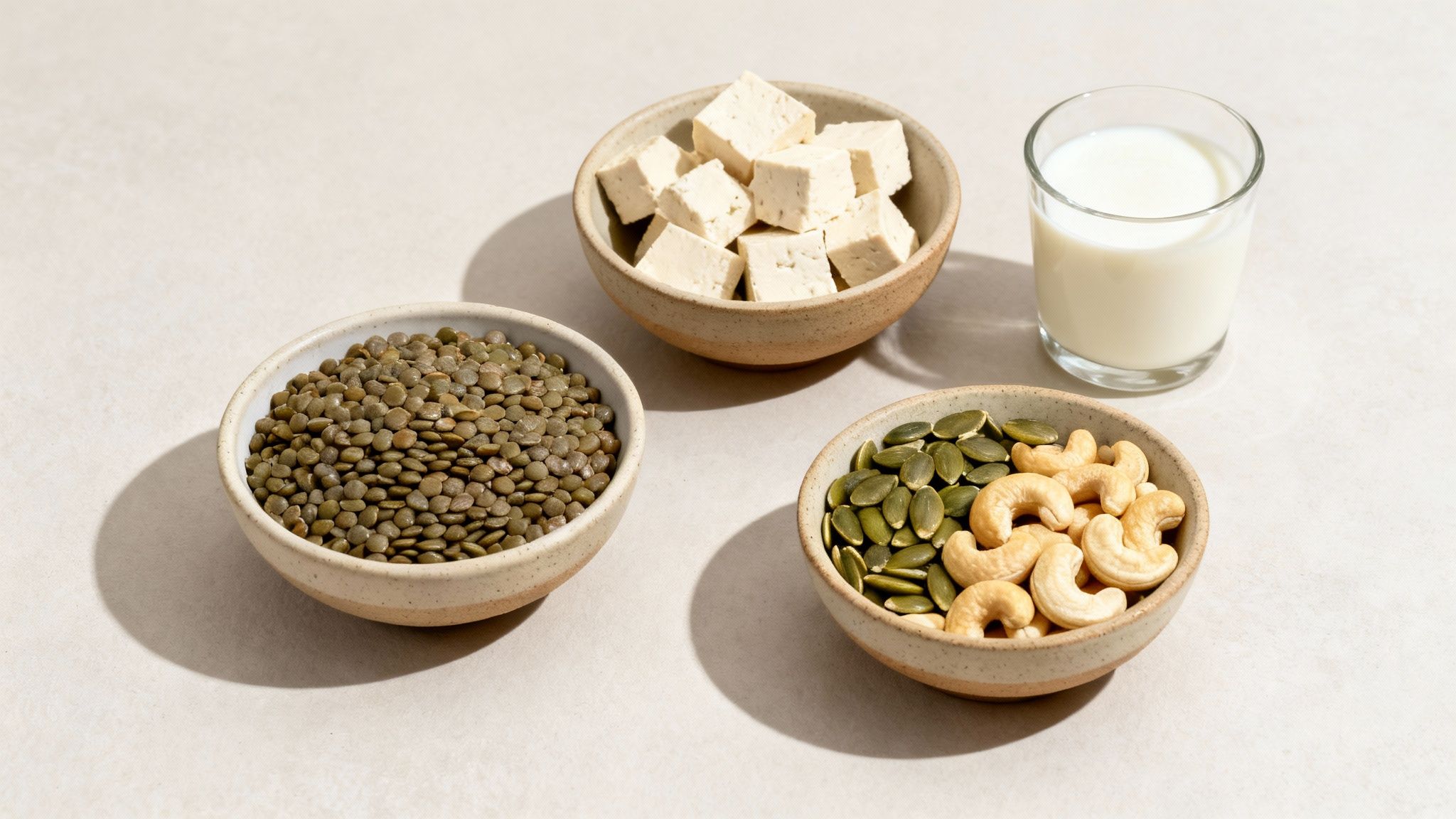
Your Action Plan: Make it a daily habit to include zinc-rich foods like lentils, chickpeas, tofu, pumpkin seeds, and cashews in your meals. A sprinkle of pumpkin seeds on your salad or a snack of roasted cashews is an easy win for your immune system.
To help you put all this information together, I've created a simple table to guide your meal planning and ensure you're hitting your mineral targets with ease.
Top Plant-Based Mineral Sources
This table is a practical guide to help you hit your daily iron, calcium, and zinc targets with common, delicious plant-based foods.
| Mineral | Excellent Vegan Sources | Serving Size Example | Absorption Tip |
|---|---|---|---|
| Iron | Lentils, spinach, tofu, fortified cereals, chickpeas | 1 cup cooked lentils | Pair with Vitamin C sources like bell peppers, broccoli, or citrus fruits. |
| Calcium | Fortified plant milks, calcium-set tofu, kale, collard greens | 1 cup fortified almond milk | Look for "calcium carbonate" on the label of fortified foods for best absorption. |
| Zinc | Pumpkin seeds, lentils, chickpeas, cashews, tofu | 1/4 cup pumpkin seeds | Soaking or sprouting beans and seeds before cooking can enhance zinc availability. |
It’s all about making smart, consistent choices that build a foundation of strength and vitality.
Building Your Practical Supplement Strategy
Knowing what vitamins vegans need is one thing, but turning that knowledge into a simple, effective plan is where the real magic happens. Let's be honest-walking down the supplement aisle can feel incredibly overwhelming. We're here to cut through the noise and help you build a routine that feels easy, not like a chore.
We'll break this down into two simple categories: the Vegan Essentials (the ones almost every vegan should take) and the Smart Additions (the ones to consider based on your personal diet and lifestyle).
Starting with Your Vegan Essentials
Think of these as your non-negotiables-the absolute foundation for a thriving, long-term vegan lifestyle. Without them, you’re basically leaving your energy, mood, and overall health up to chance.
- Vitamin B12: As we've covered, this is the big one. Since B12 isn't reliably found in plant foods, a daily supplement is the only guaranteed way to get enough. Seriously, don't skip this.
- Vitamin D: The "sunshine vitamin" is a powerhouse for your immune system and bone health. Unless you live somewhere sunny year-round and spend a good chunk of your day outside, a supplement is the smartest choice.
These two are so critical that they form the core of any solid vegan supplement plan. Taking them daily is a simple act of self-care that pays you back in energy and resilience.
A great supplement strategy isn't about fixing a broken diet; it's about providing a reliable nutritional safety net. It allows you to relax and enjoy your food, knowing your foundational needs are consistently met.
Making Smart Additions to Your Routine
Once your essentials are covered, you can start thinking about other nutrients that offer powerful benefits, especially for those of us eating plant-based. These are the "smart additions" that can take your health from good to great.
The top contenders here are:
- Omega-3s (EPA & DHA): The body's conversion of plant-based ALA to these crucial fatty acids is notoriously inefficient. An algae-based omega-3 supplement can be a game-changer for brain health and keeping inflammation in check.
- Iodine: If you don't use iodized salt or regularly eat seaweed, your thyroid might be missing out on this crucial mineral.
- Iron, Calcium, and Zinc: While you can absolutely get these from food, a multivitamin can help fill in any gaps on those days when your diet isn't quite perfect.
Juggling all of these can feel like a full-time job. You have to track down a quality B12, a separate Vitamin D, maybe an algae oil, and then worry about minerals. It’s a lot to manage.
Your All-in-One Solution for Daily Confidence
This is precisely why we created the Yuve Vegan Multivitamin with B12 and D3. We wanted to take all the guesswork out of building your foundational routine. Think of it as your daily nutritional insurance policy, all in one easy step.
Our formula provides the essentials-bioavailable Vitamin B12 (as methylcobalamin) and plant-based Vitamin D3 from lichen-at levels designed to keep you thriving. But we didn't stop there. We also included key minerals like Zinc and Iodine to support your immune system and metabolism.
What really sets Yuve apart is our focus on absorption. Our supplements are designed to be gut-friendly, ensuring your body can actually use the amazing nutrients you're giving it. A healthy gut helps you better absorb not only your supplements but also all the vitamins and minerals from the delicious plant foods on your plate.
By making Yuve a core part of your daily routine, you can stop worrying about potential gaps. You get the peace of mind that comes from knowing your essential needs are covered, freeing you up to focus on what matters most-enjoying your vibrant, compassionate, and energetic life. This is what building a practical and powerful supplement strategy is all about.
Common Questions About Vegan Nutrition Answered
Switching to a vegan diet often feels like an adventure, but it's natural for questions to pop up along the way. We hear them all the time, and we're here to give you straightforward, supportive answers so you can feel completely confident about your plant-based journey.
Let's clear up some of the most common concerns we see, from supplements to deficiency signs, and put those worries to rest for good.
Can I get everything from a vegan diet without supplements?
This is the big one, and the honest answer is: almost, but not quite. While a well-planned vegan diet is an absolute powerhouse of nutrients, there are a few key players that are either impossible or just impractical to get from plants alone.
Vitamin B12 is the perfect example. It's made by microorganisms in the soil, not by plants. So, you simply won't find it in your kale salad or lentil soup. While some foods are fortified, relying on them can be risky since the amounts aren't always consistent. A dedicated B12 supplement is the only foolproof way to go.
Then there's Vitamin D. Most of us don't get enough sun, especially depending on the season, where we live, and our skin tone. And while your body can convert the plant-based omega-3 ALA into DHA and EPA, the conversion rate is notoriously low.
Think of supplements not as a crutch, but as your nutritional insurance policy. Taking B12, Vitamin D, and an algae-based omega-3 is just a smart, proactive way to protect your long-term health.
How do I know if I have a vitamin deficiency?
The early signs of a deficiency can be frustratingly vague. You might just feel a bit "off" and not be able to put your finger on why.
Some of the first clues are often things like:
- Persistent fatigue that a good night's sleep just doesn't seem to touch.
- Brain fog that makes it hard to focus or feel sharp.
- Unexplained weakness or strange tingling in your hands and feet.
- Noticing that you’re catching every cold that goes around.
But the only way to know for sure what's happening inside your body is to get a blood test. We can't stress this enough: chat with your doctor about getting a comprehensive panel done at least once a year. Be sure to specifically ask for Vitamin B12, Vitamin D, and iron (ferritin) levels.
Testing lets you catch any dips before they become real problems, so you can make quick adjustments and keep feeling fantastic. It’s an empowering step in taking charge of your own health.
Are all vegan supplements created equal?
That’s a hard no. The supplement industry can feel a bit like the Wild West. The quality, dosage, and form of a nutrient can vary wildly from one brand to another, and it's not just about what's in the bottle-it's about what your body can actually use.
It's critical to look for supplements that contain bioavailable forms of vitamins. This just means they're in a form your body can easily absorb and put to work. For example, look for methylcobalamin for B12 instead of the less effective cyanocobalamin, or a plant-based Vitamin D3 made from lichen.
Choosing a brand that’s transparent about sourcing and doesn't load its products with unnecessary fillers, binders, or artificial junk is also key. A high-quality supplement is a direct investment in your health, ensuring you get every bit of the benefit you're paying for.
Do I need to worry about protein on a vegan diet?
This is another classic question, but thankfully, the "protein panic" is mostly a myth. Getting plenty of protein on a vegan diet is incredibly easy with a little bit of planning. The secret? Variety.
You can find excellent sources of plant-based protein everywhere. Just a few include:
- Lentils
- Chickpeas
- Beans
- Tofu
- Tempeh
- Quinoa
- Nuts and seeds
By simply eating a wide range of these foods throughout the day, you’ll have no problem getting all the essential amino acids your body needs to thrive. While this guide focuses on micronutrients, a balanced plate with plenty of protein is a cornerstone of a healthy vegan lifestyle.
At Yuve, our mission is to make your wellness journey simpler and more effective. We craft our plant-based supplements with the highest quality, most bioavailable ingredients to ensure your body gets the support it needs to feel vibrant every single day.
Explore our collection of vegan-friendly supplements and find your perfect daily routine.