Ever feel like your stomach inflates like a balloon by afternoon? You’re not alone- and it’s not just what you ate. We’ve all been there. It’s that disheartening feeling when your digestion is a total guessing game, and you’re hit with frustrating, uncomfortable bloat that seems to come out of nowhere.
This is exactly where understanding your gut’s two best friends can make a real difference. We're going to break down what prebiotics and probiotics really are, how they work together, and why getting this dynamic duo on your team is the key to finally feeling in control of your digestive health.
Your Gut Health Dream Team: Probiotics And Prebiotics
Let's cut right through the confusing science talk. The easiest way to think about the difference between prebiotics and probiotics is that probiotics are the live, beneficial bacteria, and prebiotics are the specialized plant fibers that feed them. Think of your gut like a garden: probiotics are the good "seeds" you plant, and prebiotics are the "fertilizer" that helps them grow and thrive.
The Dynamic Duo Explained
Probiotics and prebiotics are a powerful team, but they play very different- and equally important- roles in your gut. One introduces beneficial organisms, while the other nourishes the good guys that are already living there.
This chart gives a great visual breakdown of their unique functions.
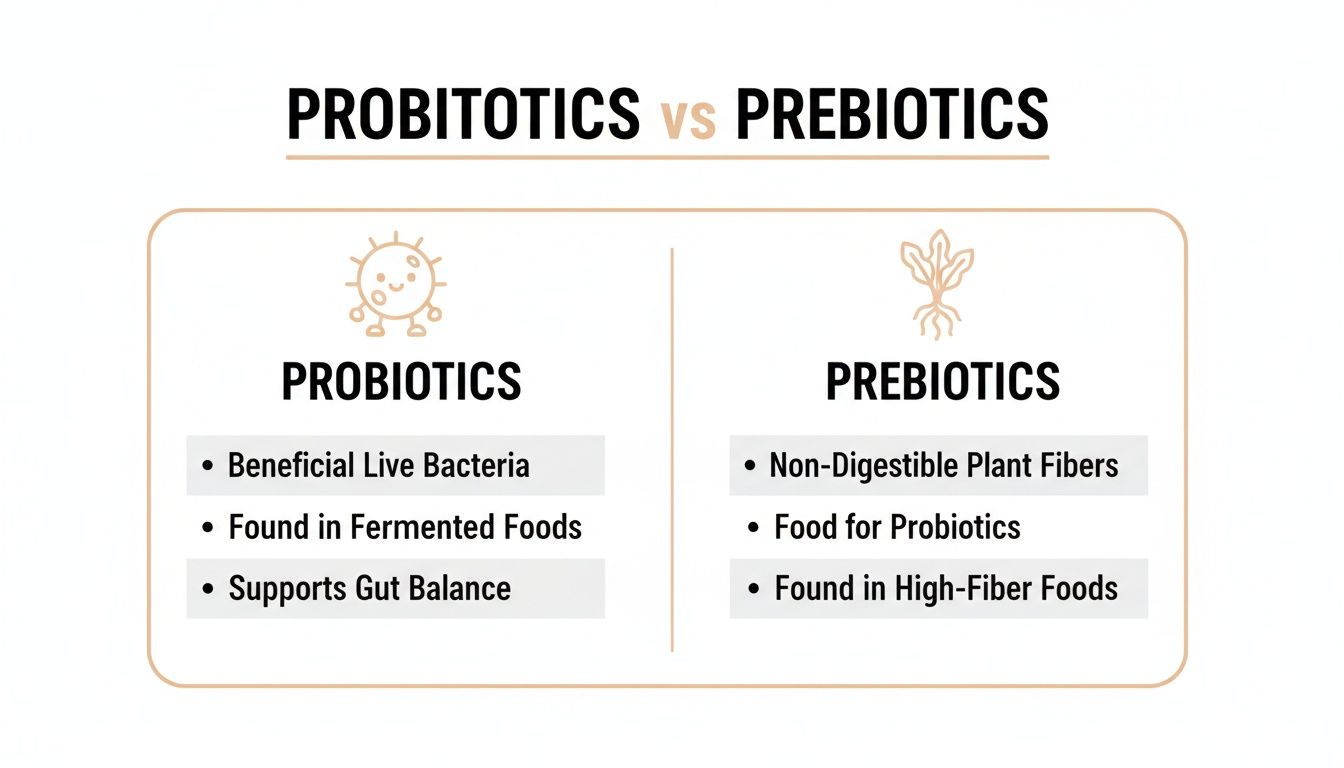
As you can see, probiotics are the living bacteria we get from fermented foods, whereas prebiotics are non-living fibers found in plant-based foods.
The bottom line is, you can't have a truly healthy gut ecosystem with just one of them. Probiotics need prebiotics to survive and do their job effectively. It's a classic synergistic relationship where the combination is far more powerful than either one alone.
Prebiotics Vs Probiotics At A Glance
To make it even clearer, here’s a quick summary of the core differences between prebiotics and probiotics. Remember, this isn't about choosing a "winner." It's about understanding how to use both to your advantage for a happier gut.
| Feature | Probiotics | Prebiotics |
|---|---|---|
| What They Are | Live beneficial bacteria and yeasts. | Specialized plant fibers that are non-digestible by humans. |
| Primary Role | To add good microorganisms to your gut microbiome. | To feed and nourish the good bacteria already in your gut. |
| Common Sources | Fermented foods like yogurt, kimchi, kefir, and kombucha. | High-fiber foods like onions, garlic, bananas, and asparagus. |
| Key Benefit | Directly support digestion, immunity, and overall gut balance. | Promote the growth and activity of beneficial bacteria. |
Ultimately, the smartest strategy for long-term digestive peace is to incorporate both into your routine. When you do, you're not just adding helpful soldiers to your gut's army- you're also making sure they’re well-fed and ready to fight off bloating and discomfort.
Understanding Probiotics: The Good Guys In Your Gut
Let's talk about probiotics, arguably the most famous players in the gut health game. When you hear the term, think of live, beneficial microorganisms- mostly bacteria and some helpful yeasts- that set up camp in your gut to support your health from the inside out.
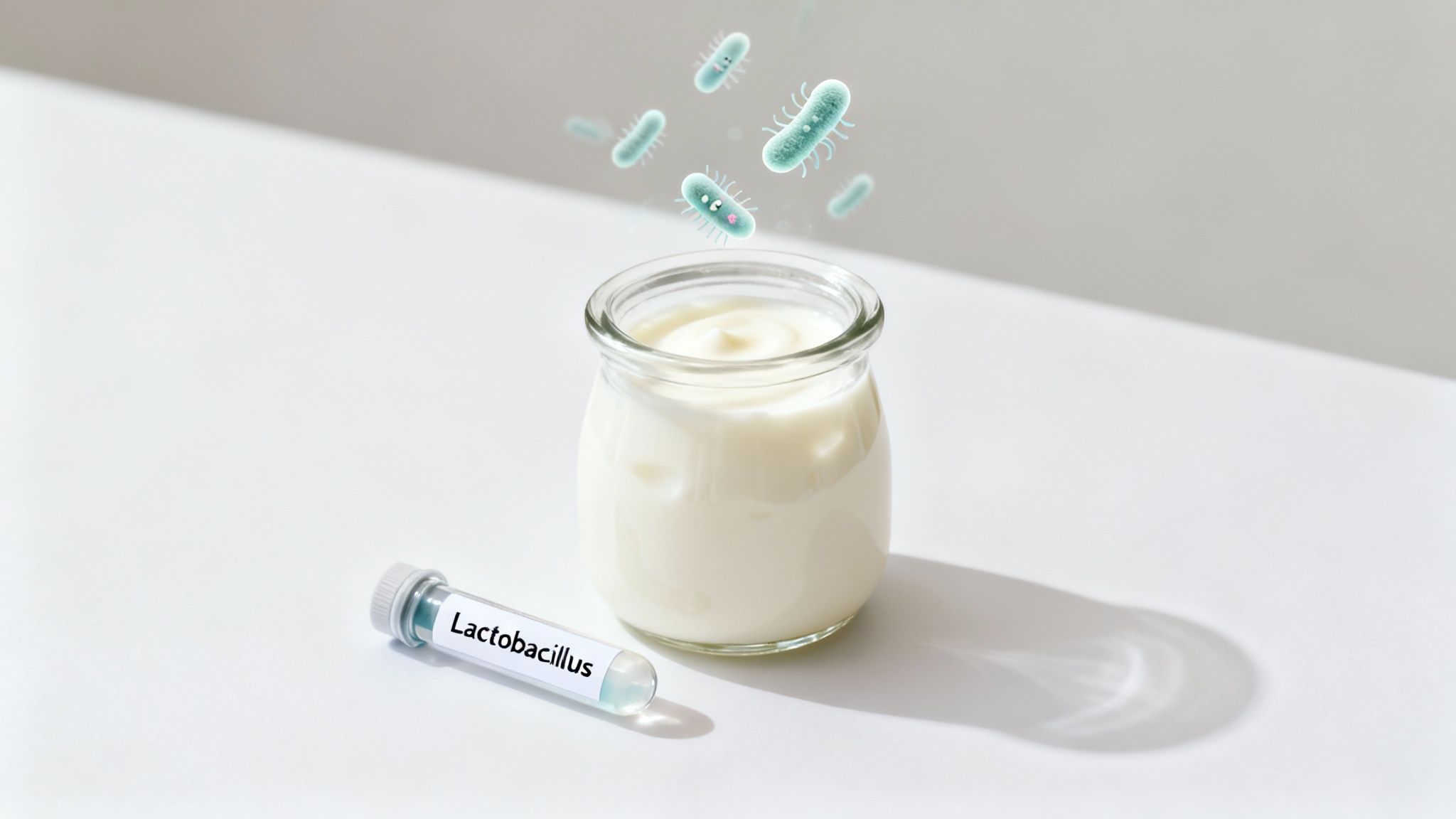
We like to think of them as the friendly gatekeepers of your digestive system. Their primary role is to maintain harmony in your gut microbiome, which is the complex community of trillions of microbes living in your intestines. Keeping this community in balance is absolutely essential for good digestion and overall wellness.
What Do Probiotics Actually Do?
So, what's on the daily to-do list for these microbes? It’s a surprisingly long and critical job description. They are fundamental to breaking down the food you eat, particularly the components your body struggles to process on its own. But their work doesn't stop at digestion.
Probiotics also handle several other vital tasks:
- Producing Vitamins: They synthesize important vitamins right inside your gut, including several B vitamins and vitamin K, making them readily available for your body.
- Supporting Immunity: A massive part of your immune system resides in your gut. Probiotics help regulate immune responses and can crowd out harmful pathogens, acting as a first line of defense.
- Keeping Things Balanced: By competing for space and nutrients, they prevent less desirable microbes from gaining a foothold. What this means for you? Less chance for dun, dun, dun- unwelcome gas. Yikes!
The sheer value of these tiny organisms is reflected in their market size. The global probiotics market is on track to hit USD 114.10 billion by 2025, a clear indicator of how many people are recognizing their importance. This isn't just a fleeting trend; it’s a shift toward understanding the deep connection between gut health and vitality. If you're interested in the numbers, you can explore the full market research.
The Most Common Probiotic Families
You’ve probably seen names like Lactobacillus and Bifidobacterium on yogurt containers or supplement bottles. These are two of the most researched and well-known families of probiotics, and for good reason- they’re heavy lifters.
- Lactobacillus: This is the family commonly found in yogurt and other fermented foods. They primarily colonize your small intestine and are well-known for producing lactase, the enzyme that helps digest lactose. If dairy products give you trouble, these are the bacteria you want on your team.
- Bifidobacterium: These microbes are the main residents of your large intestine, or colon. They are experts at breaking down tough fibers and complex carbohydrates that your body can't handle, a process crucial for preventing constipation and supporting a healthy gut lining.
Key Takeaway: It’s not just about having probiotics- it’s about having a diverse team of them. Different strains perform different jobs, so a variety of beneficial bacteria is the goal for a truly resilient and balanced gut ecosystem.
For example, some strains are more effective at fighting off bad bacteria, while others are better at reducing inflammation. This diversity is what gives your gut the flexibility to adapt to different foods, stressors, and potential threats. When you feel "off," it's often because this internal team is out of balance, and reinforcing it with the right probiotics can make a significant difference.
The Essential Role of Prebiotics: Fuel for Your Flora
So, we've talked about probiotics, the beneficial bacteria that work hard to keep your gut balanced. But what keeps them going? Think of it this way: if probiotics are the tiny workers in your gut, prebiotics are their power lunch- the specific fuel they need to not just survive, but thrive.
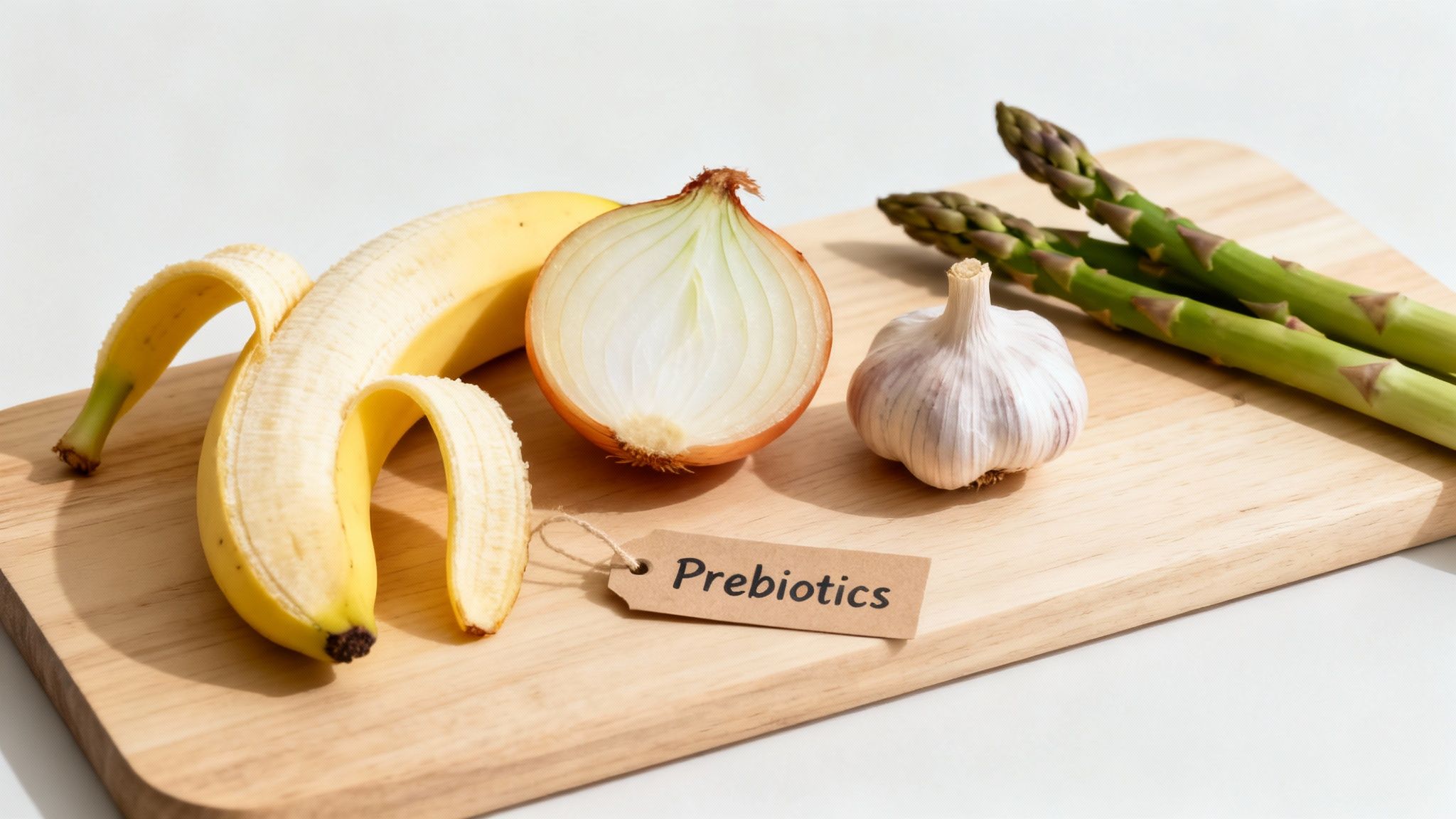
Simply put, prebiotics are unique plant fibers that your body can't digest. They pass right through your upper digestive system and make their way to your lower gut, where they become the perfect meal for your resident friendly bacteria. This is a critical point: probiotics are living organisms, while prebiotics are their food source.
What Exactly Do Prebiotics Do?
When you eat foods rich in prebiotics, you're not just feeding yourself. You are directly nourishing the trillions of good microbes that call your gut home. This selective feeding encourages them to multiply, reinforcing their numbers and helping to crowd out the less helpful bacteria.
But the magic doesn't stop there. As your good bacteria feast on these prebiotic fibers, they produce powerful compounds known as short-chain fatty acids (SCFAs). These molecules, like butyrate, are absolute rockstars for gut health. They nourish the cells that line your colon, strengthen your gut barrier, and help regulate your immune system. It’s a remarkable chain reaction that all starts with a little bit of fiber.
Common Types of Prebiotic Fibers
You don't need a background in biochemistry to get a handle on prebiotics. They have scientific names like inulin and fructooligosaccharides (FOS), but it’s easier to just think of them as the special stuff found in foods like onions, garlic, asparagus, and bananas that your good gut bacteria love.
Luckily, these fibers are present in a wide variety of delicious, everyday plant foods. Making a conscious effort to include them in your diet is one of the most direct ways to support your gut health from the inside out.
You’re not just eating for one; you're eating for trillions. By adding prebiotic foods to your plate, you’re actively cultivating a healthier, more balanced internal ecosystem that can lead to better digestion and less discomfort.
The Benefits of Fueling Your Flora
Consistently feeding your gut bacteria has some fantastic payoffs that you can actually feel. When your beneficial flora are well-nourished, they can do their jobs much more effectively.
This often leads to:
- Improved Digestion: A well-fed microbiome helps keep you regular and can reduce common issues like uncomfortable gas and bloating.
- Enhanced Nutrient Absorption: A healthy gut environment is better at absorbing key minerals from your food, including calcium and magnesium.
- A More Balanced Microbiome: By promoting the growth of good bacteria, you're building a more resilient gut that can better handle dietary curveballs or periods of stress.
The great thing about prebiotics is that you're working with your body’s existing ecosystem. You’re simply giving your unique community of gut microbes the resources they need to flourish. If you're looking for ideas, explore our list of foods that are high in prebiotics to easily add more of these powerhouse fibers to your meals.
Synbiotics: How Probiotics And Prebiotics Work Together
We've covered probiotics as the good bacteria and prebiotics as their food. They're great on their own, but the real magic for your gut health happens when you bring them together. This powerhouse combination is called a synbiotic.
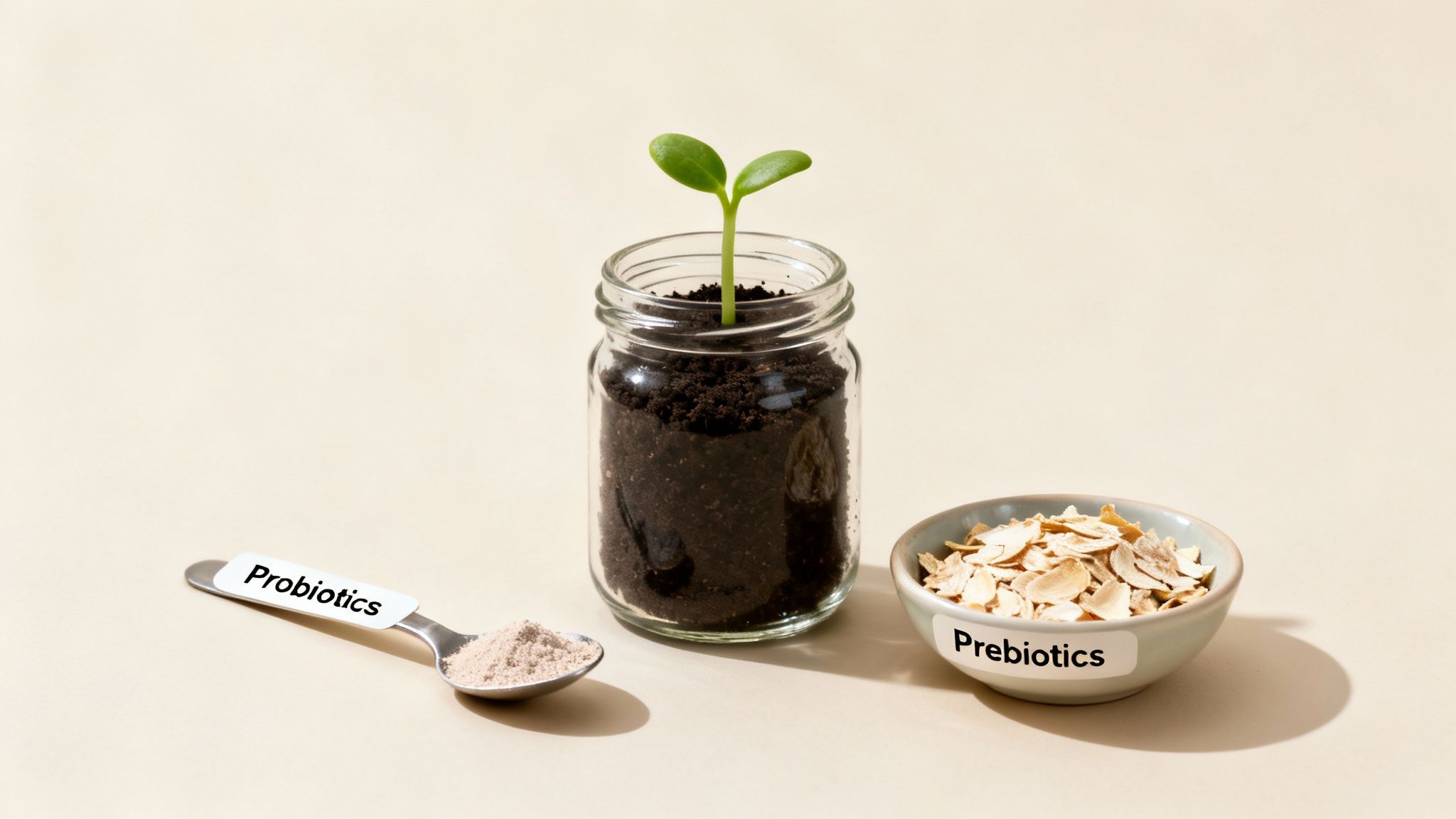
Think of it like planting a garden. The probiotics are your seeds, and the prebiotics are the nutrient-rich soil. You can toss seeds onto dry, barren ground and hope for the best, but they won’t have much of a chance. Plant those same seeds in soil that’s perfectly prepared to feed them, though, and you’ll get a thriving garden.
That’s what a synbiotic does for your gut. It ensures that when you introduce beneficial bacteria, they don't just pass through. They arrive in a welcoming environment with a ready-made food supply, which helps them settle in, multiply, and start balancing your microbiome.
The Power of Teamwork
It’s interesting to look at how far we've come. People have been eating probiotic-rich fermented foods since at least 2,000 BCE, but the term "prebiotic" wasn't even coined until 1995. Today, this duo is at the center of a massive wellness movement, with studies showing that combining them can boost probiotic survival by up to 30%. To see how this trend has grown, you can explore more insights on the probiotics market.
This synergistic effect is why we're so passionate about synbiotics here at Yuve. It's not just about adding good bacteria; it's about giving them the fuel they need to flourish.
Why This Matters for You: A synbiotic strategy means you're not just crossing your fingers for digestive relief. You are actively creating the ideal conditions for a balanced gut, which can lead to more consistent, noticeable benefits like less bloating and smoother digestion.
This approach turns supplementation from a guessing game into a targeted, effective strategy for long-term gut wellness. To get a better sense of how this works in practice, you can read more about the benefits of a combined prebiotic and probiotic capsule.
Science Corner: The Magic of Short-Chain Fatty Acids
Let's dive into the science for a moment, but we'll keep it simple. When your good gut bacteria (the probiotics) feast on their favorite prebiotic fibers, they produce some incredibly beneficial compounds called short-chain fatty acids (SCFAs).
A landmark review from Nutrients highlighted how crucial these SCFAs are for gut health. The most famous of these is butyrate, and it’s a true hero for your colon. Think of it as the main energy source for the cells lining your intestines.
Here’s what that means for your daily comfort and long-term health:
- A Stronger Gut Barrier: SCFAs help tighten the junctions between the cells in your gut lining. This is crucial for preventing unwanted particles from leaking into your bloodstream, which can trigger inflammation and food sensitivities.
- Reduced Inflammation: These powerful compounds have natural anti-inflammatory properties, helping to calm irritation in the gut. For anyone who deals with that all-too-familiar feeling of an agitated stomach, this is a huge win.
- Better Overall Gut Function: By nourishing your colon cells, SCFAs support everything from regular bowel movements to how well you absorb essential nutrients from your food.
This beautiful biological process is the direct result of probiotics and prebiotics working in harmony. It’s a clear example of how feeding your gut flora properly translates into tangible benefits you can actually feel. When you choose a synbiotic, you’re not just taking a supplement; you are kickstarting a powerful, health-promoting cycle inside your own body.
Choosing The Right Vegan Probiotic And Prebiotic Supplement
Ready to take the next step toward better gut health? That’s fantastic. But let's be real- standing in the supplement aisle or scrolling online can feel like navigating a minefield. With so many labels and promises, how do you actually choose the right one, especially when you’re committed to a vegan lifestyle?
We get it. It’s frustrating when you’re trying to do something good for your body, only to be met with confusing terms and hidden animal-derived ingredients. That’s why we put together this practical guide to help you choose a high-quality supplement with total confidence.
Decoding The Supplement Label
When you pick up a bottle, a few key details tell you almost everything you need to know about its quality and effectiveness. Don't worry about the scientific jargon; we’ll break it down into simple, scannable points.
Here’s what to look for:
- CFUs (Colony Forming Units): This number tells you how many live, active bacteria are in each dose. While bigger isn't always better, you want a product with a meaningful amount- typically in the billions- to ensure enough of the good guys actually survive the journey to your gut.
- Specific Probiotic Strains: A quality supplement will list the exact strains it contains, not just the family name. For example, instead of just "Lactobacillus," it should specify "Lactobacillus acidophilus." Different strains have different jobs, so that level of detail really matters.
- Prebiotic Fiber Source: The label should also identify the prebiotic ingredients. Keep an eye out for names like inulin, chicory root fiber, or FOS (fructooligosaccharides). This confirms you’re getting a true synbiotic formula that feeds the probiotics.
- "Free From" Guarantees: For a vegan lifestyle, this is non-negotiable. The label must explicitly state it is gelatin-free, dairy-free, and non-GMO. This ensures the capsule (if it's not a gummy) and its contents align with your values.
To ensure your chosen supplements align with a plant-based lifestyle, gaining a clear understanding what makes products truly vegan is essential. It helps you spot hidden animal ingredients beyond just the obvious ones like dairy or gelatin.
The Yuve Story: A Solution Born From Experience
This whole journey is deeply personal for us. Our founder, Sam, struggled with his own digestive issues for years. He knew the constant frustration of bloating and discomfort and searched everywhere for a clean, effective, plant-based solution he could trust.
When he couldn't find one that met his high standards, he decided to create it himself. That’s how Yuve was born- out of a real need for a supplement that was not only powerful but also aligned with a compassionate, vegan lifestyle.
We believe you shouldn't have to compromise on your values to achieve your health goals. That’s why we set out to make gut health simple, delicious, and completely plant-based.
This personal mission is why we’re so meticulous about our ingredients. We knew that for a supplement to truly work, it needed to be a synbiotic. Just adding probiotics wasn’t enough; they needed the right fuel to do their job properly.
The Power Of A Thoughtfully Formulated Gummy
We specifically formulated our Yuve Vegan Probiotic Gummies to be the all-in-one solution Sam was searching for. It’s more than just a probiotic; it's a complete gut support system in a delicious, easy-to-take form. It's a smart, proactive step to feel great without discomfort.
Here’s what makes our formula stand out:
- A Robust Probiotic Strain: We chose Bacillus Coagulans, a resilient, spore-forming probiotic. This tough strain is excellent at surviving the journey through the stomach to reach your intestines, where it can get to work balancing your flora.
- Built-in Prebiotic Fuel: Each gummy includes prebiotic fiber to ensure the Bacillus Coagulans has the nourishment it needs to thrive and multiply. This synbiotic approach is key to its effectiveness.
- Clean, Vegan Ingredients: Of course, our gummies are 100% vegan, gelatin-free, gluten-free, and non-GMO. No compromises, ever.
For anyone navigating the world of plant-based gut health, finding the right supplement can be a game-changer. You can explore more about what makes a great plant-based option in our guide to the best probiotics for vegans. Choosing Yuve means you're not just adding good bacteria- you’re providing them with the support they need to deliver real results.
Quick Wins: Your Action Plan for a Healthier Gut
Alright, we've covered a lot of ground on prebiotics and probiotics. But knowledge is one thing; putting it into practice is another. Let's turn what we've learned into simple, practical steps you can start taking today to finally get some relief.
Feeling better doesn't mean you need to overhaul your entire life. Often, the biggest shifts come from small, consistent choices. Think of this as your "quick wins" checklist for a happier gut.
1. Start With Small, Smart Food Swaps
The simplest place to begin is right on your plate. Focus on adding more gut-friendly foods to the meals you already enjoy.
- Boost Your Prebiotic Intake: Toss extra onion or garlic into your sauces and stir-fries. Slice a banana into your morning oats or smoothie. These small additions feed the good bacteria you already have.
- Introduce Probiotic-Rich Foods: Try adding a spoonful of kimchi to your rice bowl or sipping on some kombucha. If you eat dairy, a good-quality yogurt is a great source. These foods directly introduce beneficial bacteria into your system.
2. Add in Gut-Friendly Habits
Your gut is deeply connected to your overall lifestyle. It’s not just what you eat but how you live that influences your digestive comfort.
- Stay Hydrated: Water is essential for helping prebiotic fibers work effectively and for keeping your entire digestive tract running smoothly.
- Manage Stress: Even just five minutes of deep breathing or a short walk can help calm your nervous system, which has a direct calming effect on your gut.
- Move Your Body: Gentle exercise like walking or yoga is fantastic for stimulating digestion and can help ease bloating and gas.
3. Simplify Your Routine With a Smart Supplement
Adding these foods is a fantastic start, but let's be real- life gets busy. It’s not always easy to track whether you’re getting enough prebiotics and probiotics every single day. That’s where a high-quality supplement is a total game-changer, taking the guesswork out of it.
The global probiotics market was valued at USD 72.1 billion in 2024 and is still climbing. The prebiotics market is growing even faster, which shows that more people are understanding the importance of feeding their flora. You can discover more insights about the probiotics market to see the full scope of this trend.
This is exactly why we created Yuve’s Vegan Probiotic Gummies. They offer a simple, reliable way to get a clinically effective synbiotic dose- that's both prebiotics and probiotics- every single day. You get the beneficial bacteria and their fuel in one delicious step. It’s the easiest way to consistently support your gut and feel your best, without the stress of constant meal planning.
Give your gut the dream team it deserves and start your journey with confidence. We'd love to hear about your small wins- share them in the comments below!
FAQ: Your Prebiotic & Probiotic Questions Answered
We've explored a lot, but you might still have a few things on your mind. Let's clear up some of the most common questions so you can move forward with confidence.
Can I take probiotics and prebiotics every day?
Yes, you absolutely can. In fact, for the best results, you should. Consistency is key here. A daily routine helps keep your gut microbiome balanced and well-fed, which is the secret to sustained digestive comfort. Think of it less like a treatment and more like a daily investment in your inner ecosystem.
What are the side effects of starting prebiotics and probiotics?
When you first bring these new helpers into your system, it’s not uncommon to experience some temporary changes like mild gas or bloating. Don't be alarmed- this is usually a sign that things are shifting for the better and the good bacteria are settling in. A good strategy is to start with a smaller dose and slowly work your way up. This gives your gut time to adapt.
Should I take prebiotics and probiotics with food?
It's a good idea. Taking your supplements with a meal can act as a buffer against stomach acid, improving the probiotics' survival rate. This helps ensure more of the good guys make it to your intestines, where they're needed most.
How long does it take for prebiotics and probiotics to work?
Patience is a virtue when it comes to gut health. Every person's microbiome is unique, so the timeline varies. Some people report feeling better- less bloating, smoother digestion- in just a few days. For others, it might take a few weeks to really notice the difference. You're supporting a living community inside you, and that kind of positive change takes time.
Ready to simplify your gut health routine? The Yuve Vegan Probiotic Gummies combine powerful probiotics with the prebiotic fuel they need to thrive. Take the guesswork out of supporting your digestion and start your journey to a happier gut today. Learn more about our synbiotic formula here.