Ever feel like your stomach inflates like a balloon by afternoon? You’re not alone—and it’s not just what you ate for lunch. The simple answer to "why is my stomach so bloated" is often trapped gas, but the story behind that gas can be a bit more complex, pointing to anything from sneaky food intolerances to a gut that’s a little out of balance.
The good news? You absolutely don’t have to just "live with" the discomfort. We're here to walk you through the causes and give you a real, actionable plan to find lasting relief.
Finally Understanding That Bloated Feeling
That tight, full, and sometimes painful feeling is more than just frustrating—it can completely derail your day. We get it. It’s that unwelcome pressure that makes your favorite jeans feel two sizes too small and has you second-guessing your dinner plans. It's a feeling I struggled with for years.
But bloating isn’t a random inconvenience. Think of it as a signal your body is sending you. It's a message from your digestive system letting you know that something isn't quite right. Our mission is to help you decode that message so you can feel light, comfortable, and in control again.

What You'll Learn in This Guide
Together, we’re going to walk through everything you need to know to take back control of your gut health. You’ll leave this guide feeling empowered and ready to make a change, not overwhelmed.
Here’s a quick look at what we'll cover:
- The Top 5 Causes: We’ll break down the most common culprits behind bloating, from sneaky food intolerances to the air you might be swallowing without even realizing it.
- Your Gut's Ecosystem: You'll get to know your gut microbiome and understand why keeping it balanced is an absolute game-changer for smooth digestion.
- An Action Plan for Relief: We’ll give you simple, daily habits you can start implementing today to beat the bloat for good.
- When to See a Doctor: Learn to recognize the red flags that mean your bloating might need a professional's attention, so you can advocate for your health with confidence.
Let’s start this journey toward a happier gut. You deserve to feel amazing.
Unpacking the Top 5 Causes of Stomach Bloating
So, we've established that bloating is more than a minor annoyance—it's your body trying to tell you something. But what exactly is it saying? Let’s play detective and investigate the five most common culprits behind that frustratingly full feeling.
Figuring out why your stomach is so bloated is the first step toward finding a real, lasting solution. And trust us, once you connect the dots between a specific cause and your symptoms, you'll feel so much more in control.
1. Trapped Gas From Swallowed Air
This one sounds almost too simple to be true, but it's a huge factor. Every time you chew gum, drink through a straw, or eat your lunch in a hurry, you’re likely swallowing excess air.
This air, known as aerophagia, gets trapped in your digestive tract. It has nowhere to go but out, and dun, dun, dun—unwelcome gas. Yikes! Think of it like blowing up a balloon; a little air isn't a problem, but too much, too fast, and things get uncomfortably tight.
2. High-FODMAP Foods
"FODMAP" is a mouthful of an acronym that stands for Fermentable Oligosaccharides, Disaccharides, Monosaccharides, and Polyols. In plain English, these are short-chain carbohydrates that your small intestine can have a tough time absorbing.
When these undigested carbs reach your gut bacteria, a fermentation party begins. The result? Gas, bloating, and discomfort.
Common high-FODMAP foods include:
- Legumes: Think beans, lentils, and chickpeas.
- Certain Vegetables: Onions, garlic, broccoli, and cabbage are classic offenders.
- Wheat and Rye: Found in many breads, pastas, and cereals.
- Some Fruits: Apples, pears, and mangoes are high on the list.
It's important to remember that these foods aren't "bad"—they're just harder for some people to digest. We have a complete guide covering more foods that can cause bloating if you want to dig deeper.
3. Hidden Food Intolerances
This is a big one. Unlike a food allergy, which involves an immune system reaction, an intolerance means your body simply lacks the tools to properly break down a certain food.
Two of the most common are lactose intolerance (difficulty digesting the sugar in dairy) and non-celiac gluten sensitivity. When your body can't digest these components, they travel to the colon where—you guessed it—they ferment and create gas, pain, and bloating. For millions, a hidden intolerance is the primary answer to "why is my stomach so bloated?"
4. Sluggish Digestion and Constipation
Imagine a major traffic jam on a highway. When things aren't moving, everything gets backed up, right? The same thing happens in your digestive system.
When you're constipated, stool sits in your colon for too long, giving gut bacteria extra time to ferment it. This process releases more and more gas, leading to persistent bloating and discomfort. A slow digestive system means food and waste hang around longer than they should, creating a perfect storm for that swollen, heavy feeling.
Science Corner: Bloating is incredibly common, but that doesn't make it "normal." Research published in Neurogastroenterology & Motility found that bloating affects up to 31% of healthy individuals worldwide, with women being almost twice as likely to experience it. What this means for you: It’s not just "something you ate"—it’s a complex signal from your gut that deserves attention. Read the full research about these findings here.
5. Hormonal Fluctuations
Ever notice that you feel particularly bloated around your menstrual cycle? You're not imagining it. Fluctuations in the hormones estrogen and progesterone can have a major impact on your gut.
Higher estrogen levels can lead to water retention, making you feel puffy and swollen all over. At the same time, changes in progesterone can slow down how food moves through your stomach and intestines, leading to that familiar traffic jam of constipation and gas.
Many causes of bloating are tied to diet, and it's essential to differentiate between facts and fiction. To learn more about common nutrition misconceptions that might be contributing to your bloating, you can find a helpful guide on the topic.
Meet Your Gut Microbiome: The Hidden Player in Digestion
Beyond the obvious culprits, there's a powerful, hidden force at play when it comes to bloating. It’s a bustling city of trillions of bacteria, fungi, and other microbes living in your gut. This is your gut microbiome, and it’s a massive influence on your digestive health.
Think of it like a rainforest ecosystem. When it’s balanced, everything just works. The "good" bacteria help you break down food, produce vitamins, and keep your immune system in check. But when that delicate balance gets thrown off—a state called dysbiosis—things can start to go sideways.
When Good Gut Bacteria Go Bad
Dysbiosis is what happens when the less helpful, "bad," bacteria start to outnumber the beneficial ones. This imbalance is a common trigger for a whole host of digestive problems, and bloating is one of the most frequent tell-tale signs.
Here’s what’s happening: when undigested food makes its way to your colon, these unhelpful microbes have a feast. The byproduct of their feeding frenzy is gas. Lots of it. This creates painful pressure, distension, and that awful feeling of being uncomfortably full.
This graphic gives a great overview of the different factors that can lead to that bloated feeling.
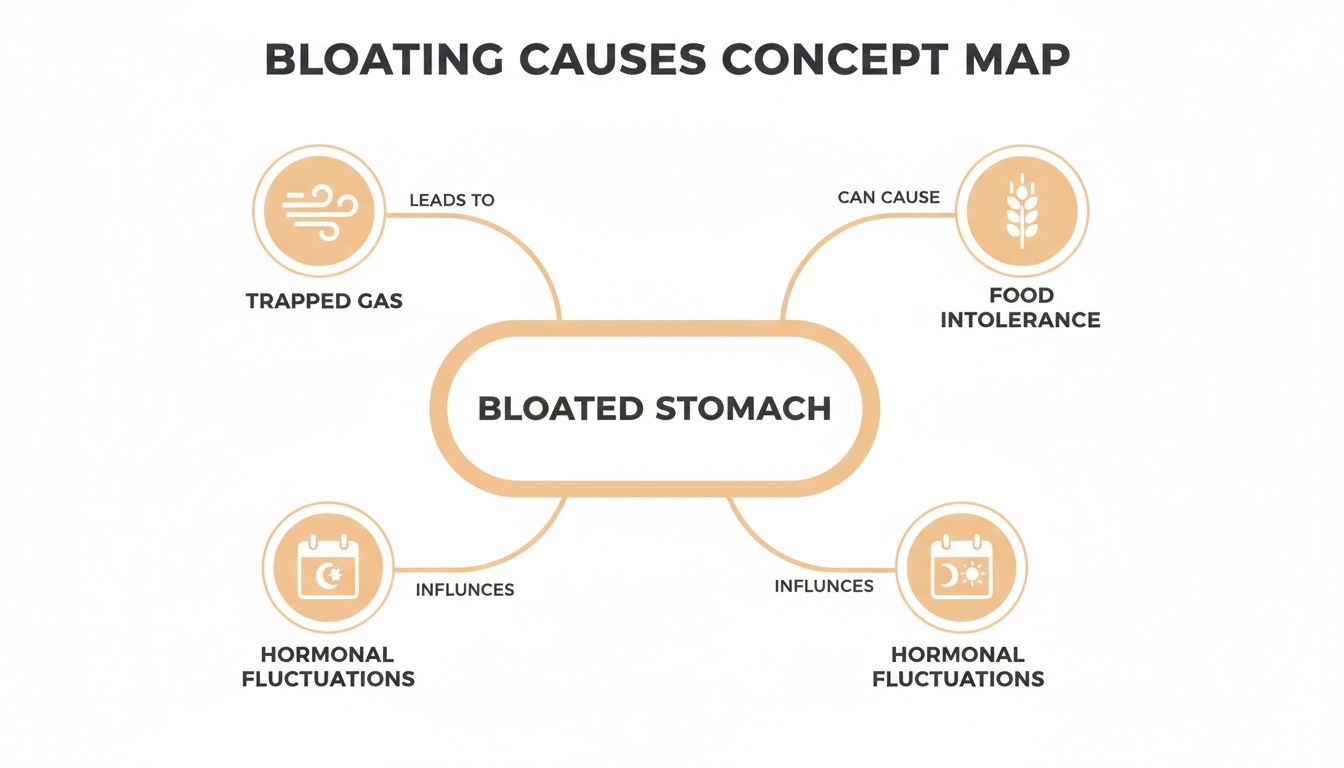
As you can see, bloating rarely stems from a single issue. It's often a mix of things, including the gas produced by your gut’s microbial activity.
What Causes This Gut Imbalance?
So, what knocks this delicate ecosystem out of whack in the first place? Several common factors in our modern lives can disrupt the gut microbiome, paving the way for dysbiosis and the bloating that follows.
Some of the most frequent culprits include:
- A Diet Low in Fiber: Your good gut bugs thrive on fiber from plant foods. A diet high in processed foods essentially starves them, allowing less desirable microbes to take over.
- Chronic Stress: We often forget just how strong the gut-brain connection is. Persistent stress can directly alter the composition of your gut bacteria, making your digestive system more reactive.
- Certain Medications: While life-saving, antibiotics can act like a bomb in your gut. They don't discriminate, wiping out both the bad and good bacteria, leaving your microbiome vulnerable.
- Lack of Sleep: It might be surprising, but poor sleep has been linked to lower microbial diversity, which is a key marker of an unhealthy gut.
What this all means is that if you're constantly bloated, the solution might be bigger than just avoiding certain foods. It’s about actively nurturing the "good guys" in your gut to build a resilient, balanced internal ecosystem.
If you're ready to learn more, our guide on how to restore your gut microbiome is a great place to start. Taking care of this hidden world inside you is foundational to finding lasting digestive comfort.
How a Personal Struggle with Bloating Became a Mission
We've covered a lot of the science, but let's be honest—sometimes the most relatable lessons come from real-life experience. This is the story of Yuve’s founder, Sam.
For years, Sam was in a constant battle with his own digestive system. He was dealing with frustrating, persistent bloating that left him feeling sluggish and uncomfortable nearly every day. He’d start the morning with what he thought was a healthy diet, but by the afternoon, that familiar tightness and painful swelling would return. He was just plain tired of the guessing games and letting his gut issues run his life.
The Search for a Truly Clean Solution
Fed up, Sam dove into the world of supplements, hunting for something clean, plant-based, and genuinely effective. What he found was a huge letdown. The market was saturated with products packed with unnecessary fillers, artificial junk, and animal-based ingredients like gelatin.
He kept thinking, "There has to be a better way." He didn’t want a quick fix; he wanted to get to the root of the problem with high-quality, plant-powered ingredients he could trust. It quickly became clear that the supplement he was looking for didn't seem to exist.
That realization wasn't just a business idea—it became a personal mission. Sam figured that if he was having this much trouble finding a clean, vegan-friendly digestive aid, there had to be thousands of others in the same boat.
This personal frustration was the spark that ignited Yuve. It was about creating the very solutions he had been searching for himself.
The "Aha!" Moment That Changed Everything
Sam's research eventually led him to a breakthrough: the powerful synergy between targeted digestive enzymes and probiotics. He learned that enzymes could help his body break down troublesome foods more efficiently, stopping the bloating cycle before it even started. At the same time, probiotics could help rebalance his gut microbiome, tackling the underlying issues causing so much of his discomfort.
This was the comprehensive strategy for building a healthier gut from the inside out. That personal victory became the blueprint for every product we make at Yuve—solutions born from a real need, designed to help you feel your absolute best.
Your Action Plan for Beating the Bloat for Good

Okay, we’ve covered the why. Now for the best part: turning all that knowledge into a real, actionable game plan to find lasting relief.
This isn't about a massive, overnight life overhaul. Instead, let's focus on small, sustainable habits you can start building today to get your digestive system humming along smoothly.
Master Mindful Eating Habits
Believe it or not, how you eat is often just as important as what you eat. For anyone trying to beat the bloat, that’s a huge deal.
Digestion starts in your mouth. When you chew your food properly, you're mechanically breaking it down and sending a crucial heads-up to your stomach that food is coming.
Here are a few simple ways to start eating more mindfully:
- Put your fork down between bites. It’s a simple trick, but it forces you to slow down.
- Ditch the distractions. Step away from your desk, turn off the TV, and put your phone away. Focus on your meal.
- Chew until your food is almost liquid. Aim for 20-30 chews per bite. It takes a massive load off your stomach.
Rethink Your Hydration Strategy
Staying hydrated is non-negotiable for healthy digestion. The catch? When you drink can make a huge difference.
Chugging a big glass of water right before or during a meal can dilute your stomach acid, making it tougher for your body to break down food. Instead, try to drink most of your water between meals. Get the bulk of your hydration in at least 30 minutes before or after you eat.
Embrace Gentle Post-Meal Movement
I know the feeling—after a good meal, the couch just calls your name. But fighting that urge with a little bit of gentle movement can work wonders for bloating.
A short, 10-15 minute walk after eating helps stimulate the wave-like muscle contractions that push food through your digestive tract. Think of it as giving everything a gentle nudge to keep it from getting stuck in traffic.
A massive global study found that nearly 18% of people experience bloating weekly. It's often linked to other issues, with abdominal pain increasing the odds of bloating by almost three times. This shows just how interconnected gut symptoms are. Discover more insights from this large-scale global study.
Manage Your Stress Levels
The connection between your brain and your gut is incredibly powerful. When you're stressed out, your body flips into "fight or flight" mode, slowing down digestion. This is a recipe for gas and bloating.
Weaving simple stress-management techniques into your day can have a direct, positive impact on your stomach.
- Deep Belly Breathing: Take five minutes for deep, diaphragmatic breathing.
- Mindful Moments: Find small pockets of calm in your day, like sipping tea without your phone.
Give Your Digestion a Daily Assist
Even with the best habits, sometimes our digestive systems need backup. To help your body break down meals effortlessly, a daily helper can be a total game-changer.
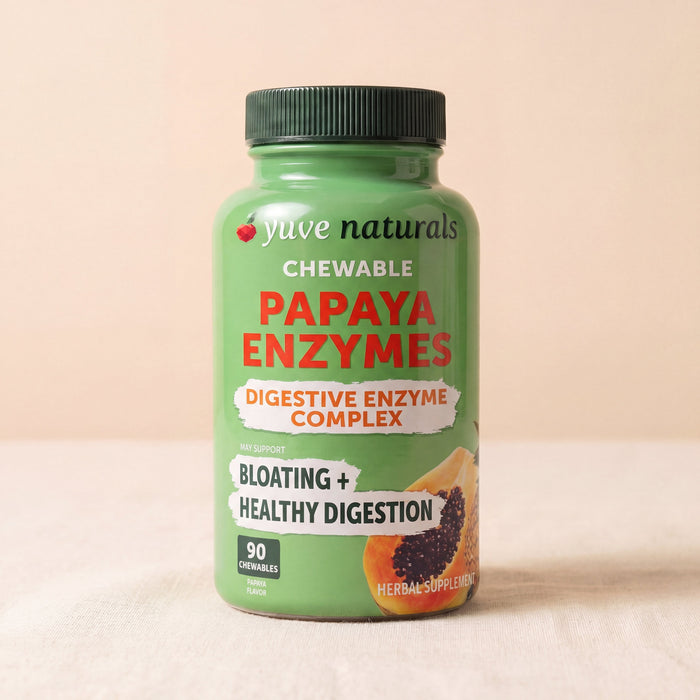
Yuve Papaya Enzymes are a smart, proactive step to support your body’s natural digestive power. Taken with meals, they provide that extra oomph needed to break down proteins, carbs, and fats. This can make every meal easier on your stomach and help stop that post-meal bloat before it even starts.
When you pair these mindful habits with the right support, you're building a solid foundation for long-term digestive wellness. For more ideas, check out our guide to other natural remedies for bloating.
When Bloating Might Mean It's Time to See a Doctor
We've covered a lot of the common, everyday reasons for bloating. For most of us, it’s just a temporary nuisance. But it’s crucial to know when that bloated feeling is more than an inconvenience. Sometimes, persistent bloating is your body’s way of sending up a flare, signaling an underlying health issue.
Recognizing the Red Flags
Let's get serious for a moment. If your bloating shows up with any of the following, it’s time to call your doctor. These go far beyond typical post-meal discomfort.
- Severe or Persistent Abdominal Pain: This isn't just mild cramping. We're talking about sharp, lasting pain that gets in the way of your day-to-day life.
- Unexplained Weight Loss: Dropping pounds without trying could be a sign your body is struggling to absorb nutrients.
- Sudden Changes in Bowel Habits: This could look like new or ongoing diarrhea, constipation that just won’t let up, or finding blood in your stool. These are never symptoms to brush aside.
- Fever or Nausea: When bloating is paired with a fever, persistent nausea, or vomiting, it calls for a medical check-up.
- Extreme Fatigue: If you feel completely wiped out all the time, it could be connected to an underlying gut condition.
You know your body better than anyone else. If your intuition is screaming that something just feels wrong, please listen to it. Getting it checked out is always the right call.
Your health is what matters most. A doctor can help rule out more serious conditions like Celiac disease, Crohn’s disease, or Irritable Bowel Syndrome (IBS). Being proactive is one of the best forms of self-care there is.
Your Top Questions About Bloating, Answered
We’ve covered a lot, but you might still have a few questions. That’s completely normal. Let's walk through some of the most common things people ask about bloating.
Can Probiotics Actually Make Bloating Worse at First?
Great question! Surprisingly, the answer can be yes. Think of it like a new manager starting in an office—things can get a little shuffled around before a new, better rhythm is established. When you introduce new beneficial bacteria, it can temporarily disrupt the existing environment, sometimes leading to a short-term uptick in gas.
This adjustment phase is usually temporary, lasting just a few days to a couple of weeks. It’s often a good sign the probiotics are doing their job.
How Long Until I See Results from Changing My Diet?
Patience is key, but you might feel relief faster than you expect. Simply cutting back on known trigger foods—like high-FODMAP items or dairy—can ease bloating within 24 to 48 hours.
For deeper, more lasting relief that involves healing the gut, give it more time. Most people start noticing significant, steady improvements within two to four weeks of consistently making mindful food choices.
Is It Normal to Be Bloated Every Single Day?
Let’s set the record straight: while it might be common, it is NOT normal to feel bloated every day. If you're dealing with constant bloating, your body is sending you a clear signal that something is off balance.
This could point to:
- An undiagnosed food sensitivity.
- An underlying gut issue like SIBO (Small Intestinal Bacterial Overgrowth).
- Chronic constipation that needs to be addressed.
- A need for more digestive support, like enzymes, to break down your food properly.
If this sounds like you, it’s a compelling reason to start tracking your symptoms and think about talking with a healthcare provider.
What’s the Difference Between Bloating and Water Retention?
This is a common mix-up! Both can make you feel puffy, but they come from different places.
- Bloating is all about excess gas trapped in your digestive system. This gives you that tight, full feeling specifically in your abdomen.
- Water Retention, on the other hand, is caused by excess fluid trapped in your body's tissues. You’ll often notice it beyond your belly—in your hands, feet, and ankles.
People often wonder how bloating differs from other types of abdominal changes. For more on that topic, you might find this resource on exercises for menopause belly fat helpful. Figuring out the "why" is always the first step.
At Yuve, we believe everyone deserves to feel light, comfortable, and at ease. Adding a high-quality digestive enzyme supplement to your routine is a simple, effective way to support your body's own processes and finally put frustrating bloat behind you.
Ready to make mealtime more comfortable? Try Yuve Papaya Enzymes today and start your journey toward lasting digestive harmony.