Compare probiotic baby drops by the exact strain, age-specific evidence, viable count through expiry, dose instructions, carrier ingredients, and storage requirements. A shorter ingredient list or higher CFU count does not establish better quality. Ask the pediatrician whether a probiotic is appropriate before choosing one, especially for premature or medically vulnerable infants.
How did we evaluate probiotic baby-drop quality?
We prioritized Food and Drug Administration safety communications, National Center for Complementary and Integrative Health summaries, and the European Society for Paediatric Gastroenterology, Hepatology and Nutrition position paper, rather than customer reviews, brand popularity, or generic claims about balancing a baby's microbiome. We compared label information with the questions a caregiver and pediatrician need to resolve: the organism's complete identity, the relevant age and feeding population, the intended reason for use, the measured serving, and the conditions required to preserve product quality after opening. We excluded rankings based solely on CFU totals, assumptions that every strain within a species has identical effects, and any implication that an adult supplement becomes suitable for an infant when the portion is reduced. This framework assesses the usefulness and transparency of available information, not the suitability of a particular bottle for a particular baby; no product sampling, laboratory testing, or individualized medical assessment was performed.
Why does the exact probiotic strain matter?
A probiotic label should identify more than a broad category such as “good bacteria.” The NCCIH overview of probiotics explains that effects can differ between probiotic types and that evidence for one organism does not automatically establish benefits for another. A strain code helps connect a commercial ingredient with the organism actually investigated.
For example, the 2023 ESPGHAN position paper discusses Limosilactobacillus reuteri DSM 17938 in a specific infant-colic context, with a weak recommendation for breastfed infants. That does not make every L. reuteri product equivalent, establish suitability for every feeding situation, or justify treating unexplained crying without evaluation.
Write the full species and strain beside the reason the pediatrician is considering it. Then ask whether the evidence concerns babies of the same age and feeding pattern. A multi-strain blend without complete identifiers is harder to evaluate, even when its front label emphasizes a large organism count.
Which label details make two drop formulas meaningfully different?
Some links below are commercial storefront links. They do not establish infant suitability or influence these quality criteria.
Best for traceable evaluation: a formula that discloses its exact strain, serving size, expiry information, and storage instructions. Best for a simpler comparison: products that let the pediatrician assess the same intended use and age group, not a contest between the largest CFU numbers.
| Detail | More useful disclosure | Unresolved question |
|---|---|---|
| Organism | Species and strain code | Species alone |
| Viable count | CFU through stated expiry | Manufacture-only count |
| Serving | Measured drops and directions | Unclear concentration |
| Carrier | Complete ingredient list | Undisclosed blend |
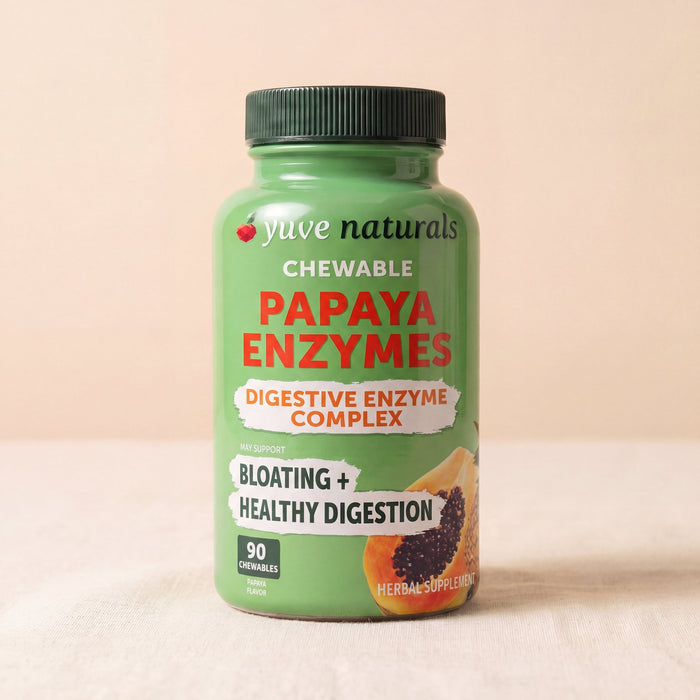
Check whether vitamin D or another nutrient is included before combining products. Yuve's probiotic gummies are not infant drops; products in the digestion collection should not be treated as an infant formulary. Ask the pediatrician about the actual bottle, including its label and carrier, rather than substituting formats or calculating a baby serving from an adult product.
What safety and handling questions come before a purchase?
The FDA warning about probiotics in hospitalized preterm infants identifies a risk of invasive, potentially fatal infection from organisms in probiotic products. This is a specific, important population warning, not proof that all infant products have identical risks or that retail availability demonstrates medical suitability. Prematurity, serious illness, and other vulnerabilities require the clinical team's judgment.
For a clinician-approved product, read the storage and after-opening directions before buying. Ask the manufacturer about lot identification, contamination controls, strain verification, and how the stated viable count is supported. A certificate or testing statement should identify what was tested; it does not by itself demonstrate a health benefit.
Keep the original packaging and instructions so another caregiver can follow the same measured serving and handling rules. If the dropper instructions are ambiguous, obtain clarification rather than improvising. New symptoms or concerns about a baby's feeding or health belong with the pediatrician, not a product-ranking exercise.
FAQ: What should parents clarify about probiotic baby drops?

Is a larger CFU count automatically better?
No; CFU measures viable organisms, not proven benefit. The relevant strain, population, and intended use matter more than a bigger number. Match the complete strain code, not just the species.
Does a short ingredient list prove purity?
No; it makes the formula easier to inspect. It does not replace manufacturing controls or appropriate testing. Ask what the manufacturer actually verified for the product.
Should every baby take probiotics?
Routine need should not be assumed from marketing. Ask the pediatrician whether there is a relevant reason for your baby.
Can drops contain vitamin D too?
Some formulas combine ingredients in one measured serving. Check the actual label and discuss overlapping nutrients with the pediatrician before combining bottles.
Are premature infants a special case?
Yes; FDA has warned about invasive infection in hospitalized preterm infants. Their clinical team should direct any consideration of probiotics.
Can a gummy replace infant drops?
No; an adult or older-child format is not an infant substitute. Do not improvise a baby dose from a gummy or capsule.