Ever feel like your stomach inflates like a balloon by afternoon? You're not alone- and it's not always just what you ate. We've all been there: that uncomfortable bloating, gas, and general heaviness that turns a delicious meal into a source of dread. It's frustrating when food starts to feel like the enemy.
But here's the good news: learning how to take digestive enzymes correctly is a powerful first step toward making peace with your plate. It’s not about some complicated biological hack; it’s about giving your body the right support at precisely the right time.
Think of it like this: digestive enzymes are your mealtime backup crew. By taking them just as you start eating, you're sending in reinforcements to help break down fats, proteins, and carbs before they can cause trouble. This guide will show you exactly how to make this simple habit work for you, so you can get back to loving food again.
Your Quick Start Guide to Digestive Enzymes
The Golden Rule: Timing is Everything
When it comes to digestive enzymes, timing is everything. Your goal is to have the supplemental enzymes ready and waiting in your stomach the moment food arrives.
The ideal window is to take them up to 30 minutes before you eat or with your very first bite. This ensures the enzymes are perfectly positioned to mix with your food and get to work immediately, supplementing your body’s own digestive juices.
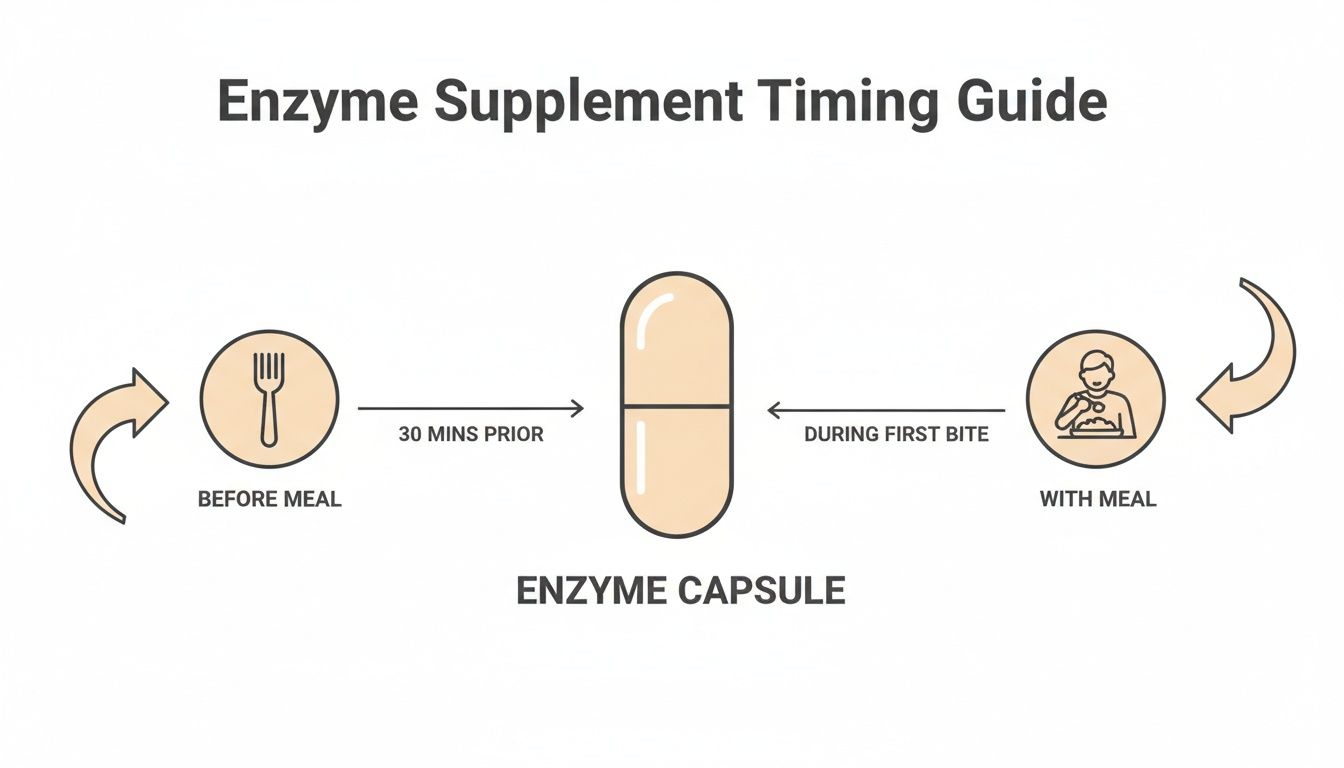
This proactive approach is what makes them so effective. If you forget and take them halfway through or after your meal, you’ve missed that critical window. The food has already started its journey through your stomach without that extra help, which means you won't get the full benefit.
My Pro Tip: Try "habit stacking." Place your enzyme bottle right next to your plate before you sit down to eat. This little visual cue makes it almost impossible to forget.
What Are These Enzymes, Anyway?
Different enzymes target different macronutrients. This is why you'll often see blends containing a variety of enzymes- they're designed to provide comprehensive support for a mixed meal. You don't just eat protein or just carbs, right? Your supplement should reflect that.
Understanding what each one does can help you appreciate what's happening behind the scenes.
A Quick Look at Key Digestive Enzymes
| Enzyme Type | What It Helps Break Down | Common in Foods Like... | Why This Matters for You |
|---|---|---|---|
| Protease | Proteins | Meat, tofu, beans, dairy, nuts | Helps ease that heavy, "brick in the stomach" feeling after a protein-rich meal. |
| Amylase | Carbohydrates & Starches | Bread, pasta, potatoes, rice | Crucial for preventing the gas and bloating often associated with starchy foods. |
| Lipase | Fats & Oils | Avocados, nuts, seeds, cheese, oils | Supports the digestion of fatty foods, which can otherwise feel slow and sluggish. |
| Cellulase | Cellulose (plant fiber) | Broccoli, kale, leafy greens, beans | Breaks down tough plant fibers that our bodies can't digest alone, reducing gas. |
A quality, broad-spectrum blend covers all your bases, making sure you have the right tools for whatever is on your plate. It's about giving your digestive system a complete support team for every meal.
The Best Time to Take Digestive Enzymes for Maximum Effect
When it comes to supplements, timing can be everything. It's often the difference between feeling fantastic and feeling... well, no different than before. Just casually popping a digestive enzyme whenever you happen to remember isn't going to give you those bloat-busting results you're after. I learned this the hard way, and it's a common frustration I hear from people all the time.
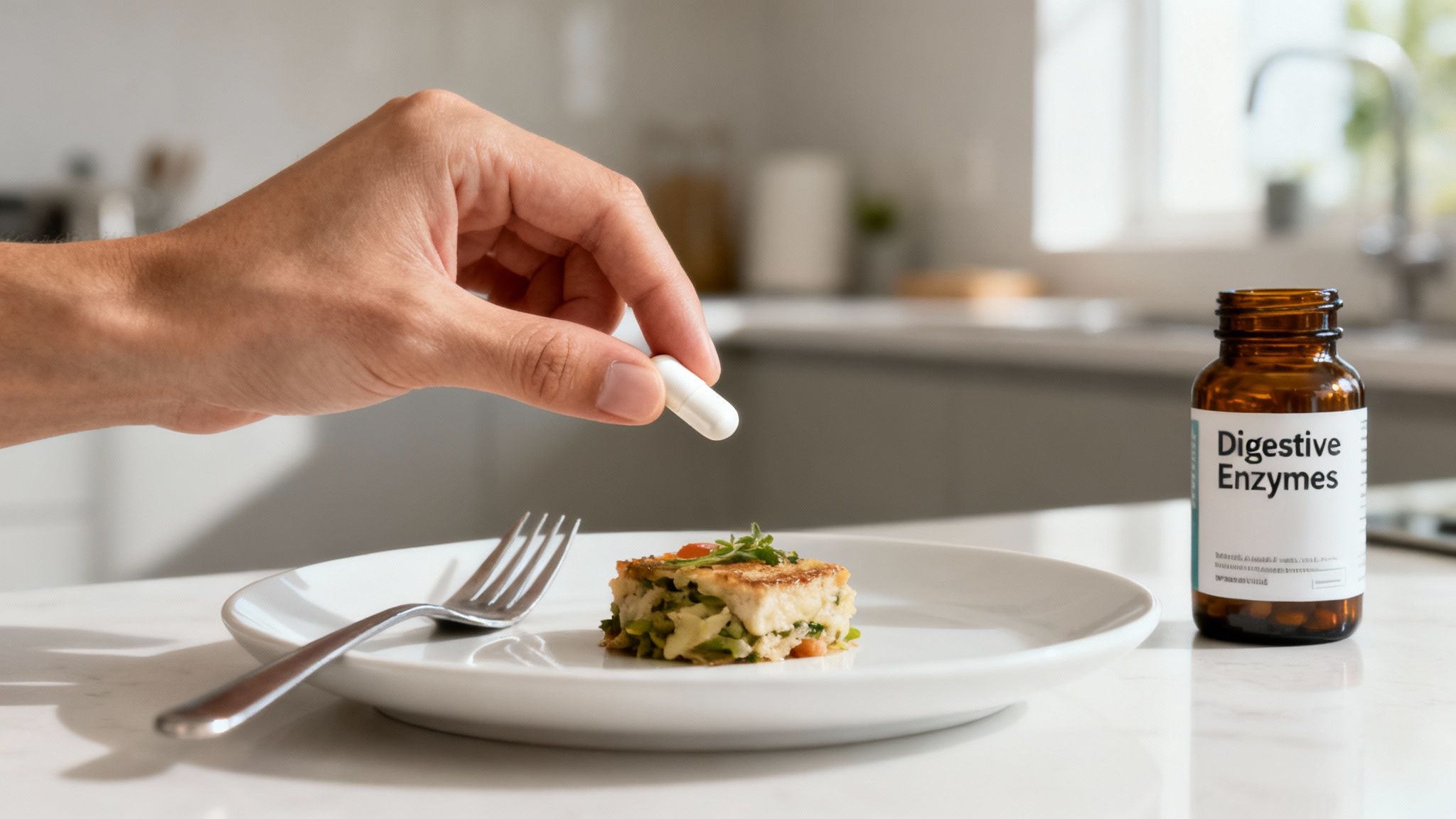
Here's the one rule you can't ignore: take your enzymes just before or at the very start of your meal. Think of it as giving your digestive system a much-needed head start. The enzymes need to be in your stomach, ready and waiting for the moment food arrives. That way, they can mix with your meal from the get-go and start breaking things down immediately.
Real-World Scenarios and Timing
Your exact timing might shift a little depending on the meal, but that core principle always holds true. Let's walk through a few common situations.
- For a Big, Heavy Meal: Got a celebratory dinner or a holiday feast on the calendar? Taking your enzyme about 15 minutes before you sit down can be a total game-changer. This primes your system for the complex mix of fats, proteins, and carbs that are about to come its way.
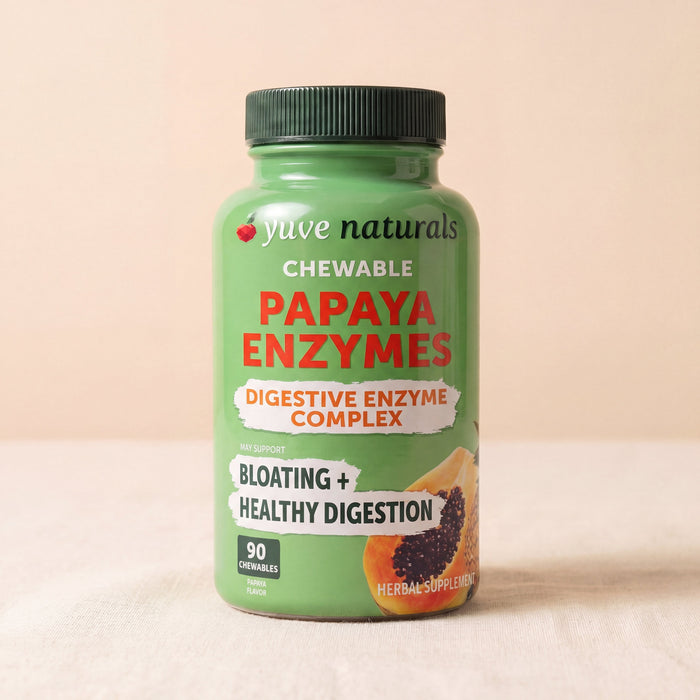
- For a Standard Lunch or Dinner: For your typical day-to-day meals, taking the capsule with your first one or two bites works perfectly. This is my personal go-to habit. I keep my Yuve Papaya Enzymes right on the table, so I can take it as soon as I start eating.
- For a Quick Snack: Even if you're just grabbing a handful of nuts or a piece of fruit, if you're sensitive, taking an enzyme right as you eat is still the best move. You might not even need a full dose, but the timing is just as important.
It's really no surprise that the digestive enzyme market is booming. A 2021 report valued it as a $1.4 billion industry globally, and it's only growing. With so many people looking for digestive relief, getting the "how-to" right is critical. In fact, some expert protocols suggest that taking your supplement 15-30 minutes before a meal can boost its effectiveness by up to 50% compared to taking it after you've already finished. If you're curious, you can discover more about digestive enzyme market trends to see just how many people rely on this support.
What If You Forget and Take Them Late?
It happens to all of us. You’re halfway through your meal, enjoying every bite, and then it hits you: the enzyme bottle is still on the counter. Don't stress.
Is it a lost cause? Absolutely not. Taking your enzyme mid-meal or even right after is still much better than skipping it entirely. While you won't get the maximum proactive benefit, the enzymes can still get to work on the food that's still in your stomach.
Think of it as damage control. You might not prevent all the discomfort, but you can certainly reduce it. The real goal here is consistency over perfection. Every supportive step you take for your gut is a win. Building this habit takes a little time, so just be gentle with yourself and aim to remember next time.
Finding Your Perfect Dose of Digestive Enzymes
Figuring out the right amount of any supplement can feel like a guessing game. We’ve all been there, staring at a bottle and wondering, “Is one enough? Is two too much?” I get it. The goal is to find that sweet spot where you feel great without overdoing it.
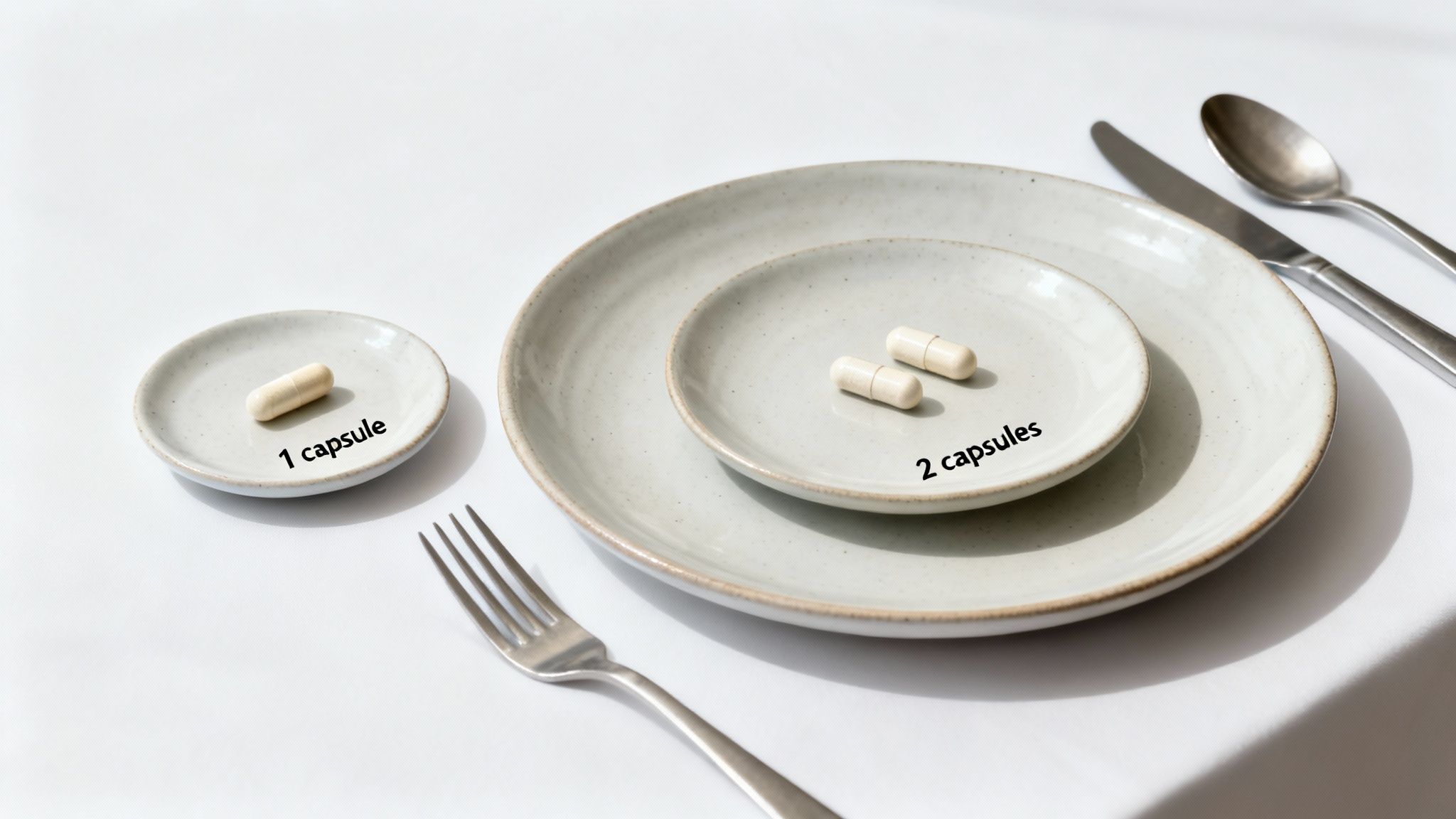
When it comes to digestive enzymes, the best approach is both simple and personal. Most labels suggest taking one to two capsules with a main meal, and that’s a fantastic starting point. It’s the standard for a reason- it usually provides enough enzymatic support for an average meal without overwhelming your system.
But let's be real, your body and your meals aren't always "average." This is where you get to become your own gut health detective.
Adjusting Your Dose Based on Your Meal
Not every meal is created equal, so your enzyme dose doesn't have to be, either. The size and makeup of your food are the biggest clues for deciding if you should stick with one capsule or reach for a second.
Here are a couple of real-world scenarios to think about:
- For a light lunch or snack: If you’re just having a smoothie or a simple bowl of soup, one capsule is likely all you need to keep things running smoothly.
- For a rich or heavy meal: Think about that holiday feast, a big pasta dinner, or a loaded veggie burger with all the fixings. These meals are often higher in fats, proteins, and complex carbs. This is the perfect time to consider taking two capsules to give your system some extra backup.
By tailoring your dose to your meal, you’re not just taking a supplement; you’re actively responding to your body’s needs in real-time. This is a huge step in building a better relationship with your digestive system.
A Gentle Approach for Sensitive Systems
If you know you have a sensitive stomach or are just trying enzymes for the first time, my best advice is to start low and go slow. Begin with just one capsule with your largest meal of the day. Then, just see how you feel. This gentle introduction lets your body adjust without any surprises.
After a few days, if you're feeling good but think you might need more support with those heavier meals, you can try adding a second capsule. The key is to pay close attention. Are you feeling less bloated? Is that heavy, post-meal feeling gone? Let your body's feedback be your guide.
This mindful approach ensures you're getting the benefits you're looking for while also learning more about your own unique digestive patterns. Remember, proper dosing is just as crucial as timing for helping your body get the most out of every bite. You can learn more about how to improve nutrient absorption in our related article.
Choosing the Right Supplement: Plant-Based vs. Animal-Based
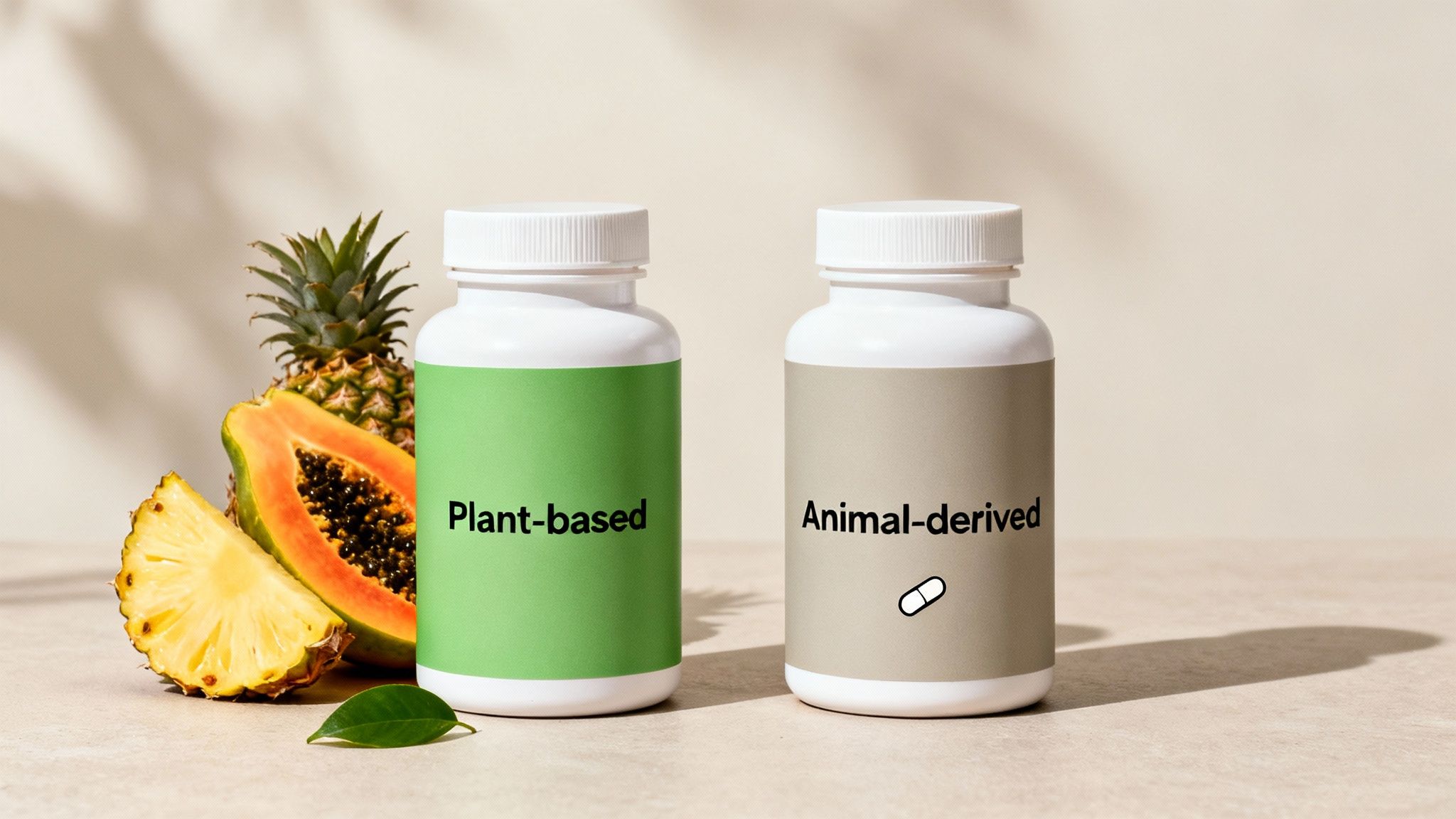
Walking down the supplement aisle can feel overwhelming, can't it? When it comes to taking digestive enzymes, picking the right one is just as important as when you take it. Not all enzymes are created equal, and for those of us committed to a compassionate, plant-based lifestyle, the source really matters.
You'll generally find two main camps: plant-based and animal-based enzymes. Making an informed choice isn't just about ethics- it can also impact how well the supplement works for you. Let's dig in so you can feel confident about what you’re buying.
The Power of Plant-Based Enzymes
Plant-based enzymes are true superstars, and for good reason. They're typically sourced from fruits and fungi, making them a natural fit for a conscious lifestyle.
- Bromelain: Derived from pineapple stems, this enzyme is a powerhouse for breaking down protein. When you're looking around, you might even see a standalone bromelain supplement, which is highly regarded for its proteolytic (protein-digesting) activity.
- Papain: Sourced from papaya, this is another fantastic protein-digesting enzyme. It’s a key ingredient in our Yuve Papaya Enzymes because of its gentle yet effective support.
- Fungal Enzymes: Many other crucial enzymes like amylase, lipase, and cellulase are often derived from beneficial fungal sources such as Aspergillus oryzae.
One of the biggest advantages of plant- and fungal-derived enzymes is their resilience. They work across a wide range of pH levels, meaning they get started in the acidic environment of your stomach and keep going in the more alkaline small intestine. This ensures you get consistent support throughout the entire digestive journey.
Understanding Animal-Based Enzymes
On the other side of the aisle are animal-derived enzymes. The most common one is pancreatin, which is usually sourced from the pancreas of pigs or cows. While it contains a mix of proteases, amylases, and lipases, it’s worth thinking about a few things.
First off, for anyone living a vegan or plant-forward lifestyle, this is an obvious non-starter. Second, these enzymes often need a very specific pH to become active, sometimes only kicking in once they reach the small intestine. This can make them less effective compared to their more versatile plant-based cousins.
Key Takeaway: Choosing plant-based enzymes isn't just an ethical decision. Their ability to work in various pH environments often means you get broader, more reliable digestive support from start to finish.
It's no wonder so many people are turning to these supplements. The global digestive enzyme market was valued at USD 857.3 million in 2025 and is projected to skyrocket to USD 1.6 billion by 2032. This incredible growth is fueled by people just like us who are looking for effective, natural ways to boost nutrient absorption and feel their best.
Here at Yuve, we are passionately committed to clean, plant-powered formulas. It’s why our founder, Sam, created them in the first place- he wanted a source he could trust for his own wellness journey. Knowing what to look for on a label is key, and our guide on how to read supplement labels can help you spot hidden animal ingredients and make choices that align with your health and your values.
Common Mistakes to Avoid With Digestive Enzymes
So, you're ready to get the most out of your digestive enzymes? That's fantastic. To make sure you get all the benefits and avoid common pitfalls, let's walk through a few things that can trip people up.
Think of this as your inside scoop to becoming a digestive enzyme pro. Sometimes, the smallest tweaks to your routine can make the biggest difference, and you want to make sure every capsule is working hard for you.
Skipping Doses or Being Inconsistent
We've all been there. You start a new supplement, you're diligent for a few days, and then life happens and the bottle gets pushed to the back of the cabinet. But with digestive enzymes, consistency is your secret weapon. Taking them hit-or-miss with only some meals just won’t give your gut the steady support it needs.
Your digestive system thrives on routine. When you take your enzymes with every main meal, you create a predictable, supportive environment that can help head off discomfort before it starts. Try to make it a non-negotiable part of your mealtime ritual, just like sitting down to eat.
Taking Them With Hot Drinks
Here’s a pro-tip many people miss: enzymes are incredibly sensitive to heat. They are proteins with very specific, delicate structures that allow them to break down food. If you wash down your capsule with a steaming hot cup of coffee or tea, you can essentially "cook" them, destroying that structure and making them useless.
To keep your enzymes effective, always take them with a room-temperature or cool beverage. A simple glass of water is perfect. This little step ensures they arrive in your stomach intact and ready to get to work.
Not Drinking Enough Water
This one sounds almost too simple, but it's a big deal. Swallowing your enzyme capsule with just a tiny sip of water isn't going to cut it. Water is what helps the capsule dissolve and essentially "activates" the enzymes, allowing them to mix thoroughly with the food in your stomach.
Make it a habit to drink a full glass of water when you take your supplement. This not only helps the enzymes do their job but also supports your overall digestion and hydration. It's a true win-win for your gut health.
The market for digestive enzymes is booming- it's expected to hit USD 2.19 billion by 2025 because so many people are feeling the benefits. When you invest in a quality supplement like Yuve’s Papaya Enzymes, you want to protect that investment. Proper storage is key. Keep the bottle in a cool, dry place like a pantry or cabinet- not the steamy bathroom- to preserve up to 95% of its potency.
If you're curious about the growing trend, you can read the full research about the digestive enzyme market to see why these smart habits really matter.
Putting It All Into Practice
We’ve gone through a lot of information, and I know it can feel like a lot to take in at once. The real magic, though, happens when you put this knowledge into practice. So, let's distill everything down into a simple, actionable game plan you can start using today to beat the bloat and get back to enjoying your food.
Think of these as the foundational habits for digestive success. You don't have to get it right every single time, but consistency is what really creates those profound, positive changes.
Your Daily Digestive Checklist
Here are the key habits to focus on for the best results.
-
Nail the Timing: This is the most critical piece of the puzzle. Always aim to take your enzymes right before you eat or with your first couple of bites. This positions them to get to work exactly when the food arrives.
-
Find Your Starting Dose: A great place to begin is with one to two capsules with your main meals. This is a solid starting point for most people and most types of meals.
-
Adjust as Needed: For a particularly large, heavy, or rich meal, you might find an extra capsule makes all the difference. The best tool you have is your own body- pay attention to how you feel after eating, and you'll quickly learn what works for you.
-
Pick a High-Quality Vegan Formula: Look for a broad-spectrum, plant-based blend like Yuve Papaya Enzymes. This ensures you’re getting a clean, compassionate product that’s effective across a wide range of pH levels in your digestive tract.
-
Consistency Is Key: Make taking your enzymes a non-negotiable part of your meal routine, just like grabbing a napkin. It's the daily habit that builds momentum and leads to long-term digestive comfort.
A note from our founder, Sam: "My own journey with digestive challenges was filled with frustration. I felt like food was the enemy. Discovering plant-based enzymes was a turning point- it was the first time I felt in control. They became a cornerstone of my wellness, and that’s why I was so passionate about creating a clean, effective formula for Yuve. Small steps truly can change everything."
Your Top Questions About Digestive Enzymes, Answered
It's smart to ask questions when you're thinking about a new supplement. We get a lot of them about digestive enzymes, which is great- it shows you’re invested in your gut health. To help you out, I’ve put together some straightforward answers to the most common queries we see.
How Quickly Do Digestive Enzymes Start Working?
This is one of the best parts- they get to work right away. Since you take them just before or with your food, the enzymes are released in your stomach and start breaking down fats, carbs, and proteins almost immediately.
Most people tell us they feel a difference within the first few meals. You might notice less of that heavy, bloated feeling after eating, or maybe less gas. For some, this happens on day one. The key to getting the most relief, though, is taking them consistently with your meals.
Can I Take Digestive Enzymes on an Empty Stomach?
I see this question a lot, and it's an important one. The simple answer is no, you really shouldn't. I do NOT think this is a good idea. Digestive enzymes are designed specifically to break down food. If there's no food in your stomach for them to work on, they don't have a job to do.
Taking them without a meal is basically a waste of a capsule. In some cases, it might even cause a bit of stomach irritation since the enzymes have nothing else to interact with. For them to be effective, always take them with a meal or at least a substantial snack. To get a better handle on how they function differently from other gut supplements, check out our guide on probiotics and digestive enzymes.
Are There Any Side Effects to Know About?
For the vast majority of people, a good plant-based enzyme formula is incredibly gentle. These supplements are meant to support your body's natural digestive process, not take it over.
When side effects do pop up, they’re usually very minor and temporary while your system gets used to the extra help. You might notice a little bit of gas or a slightly upset stomach at first. If that happens, it’s often a sign to dial back the dose. Try starting with just one capsule with your biggest meal of the day and see how you feel. Your body will tell you what it needs.
Is It Safe to Take Them Every Day?
Yes, for most people, taking digestive enzymes with meals every day is perfectly safe. This is especially true if you know you have an enzyme insufficiency or if you regularly struggle with digestive issues after eating. A high-quality, plant-based supplement like Yuve Papaya Enzymes is crafted for consistent, daily use.
That said, not everyone needs them forever. Some people use them for a short period to give their digestive system a helping hand. If you have any concerns about long-term use, it's always a great idea to have a conversation with your healthcare provider.
Ready to feel the difference a happy gut can make? Yuve offers clean, plant-powered formulas to make digestive support simple and effective.
Try Yuve Papaya Enzymes today and get back to enjoying your favorite foods without the worry.