Ever feel like your stomach inflates like a balloon by afternoon? Or maybe you're dealing with stubborn aches and a fatigue that coffee just can't seem to touch. We get it. That feeling isn’t just in your head- it’s often your body sending up a flare signal that it's dealing with chronic inflammation.
This guide is your roadmap to putting out that fire. We’ll show you how a plant based anti inflammatory diet, packed with delicious whole foods, can help you feel lighter, more energetic, and back in control. It's not about restriction; it's about flooding your body with the good stuff. Let's get started.
Why You Might Feel Puffy, Achy, and Tired
Picture chronic inflammation like a tiny, low-grade fire that’s always smoldering in the background. This constant internal stress can show up in all sorts of ways, from nagging joint pain and brain fog to that frustrating belly bloat that appears out of nowhere. Yikes!
But before we go any further, it's important to know that not all inflammation is a villain.
The Good, The Bad, and The Puffy
Inflammation actually comes in two very different forms. One is an essential part of your body's defense team, while the other is more like a guest who has seriously overstayed their welcome.
To make sense of it all, let's break down the two main players.
Inflammation Showdown: Acute vs. Chronic
A quick look at the two types of inflammation and what they mean for your body.
| Feature | Acute Inflammation (The Helper) | Chronic Inflammation (The Troublemaker) |
|---|---|---|
| Duration | Short-term (days) | Long-term (months or years) |
| Trigger | Injury, infection (like a cut or the flu) | Persistent irritants, lifestyle factors, autoimmune issues |
| Symptoms | Obvious: redness, swelling, heat, pain | Subtle: fatigue, body aches, digestive issues, brain fog |
| Purpose | Heals the body and fights off invaders | Silently damages healthy cells and tissues |
| Outcome | The body repairs itself and returns to normal | Linked to conditions like arthritis and heart disease |
As you can see, one is a hero and the other is a hidden saboteur.
A plant-based anti-inflammatory diet is your secret weapon against the troublemaker- chronic inflammation. By choosing foods that nourish and soothe your body, you can start to cool that internal fire, feel lighter, and get your spark back.
Science Corner: A study highlighted by MD Anderson Cancer Center explains that antioxidants in plants act like a cleanup crew, neutralizing toxins and free radicals that can throw your body off balance and fuel inflammation. What this means for you: Eating a rainbow of plants gives your body the tools it needs to fight back against daily stressors.
This isn't about some miserable, complicated diet. It's about making smart, delicious choices that work with your body instead of against it. Together, we'll walk through a clear, simple plan to help you feel like your best self again.
How Plants Work to Calm Inflammation
So, how does a plant-based diet actually cool down inflammation? It’s not magic; it’s all about the powerful biochemistry packed into every leaf, berry, and bean. Think of your body as an intricate ecosystem- what you put into it directly influences whether it thrives or struggles.
Plants aren’t just sources of basic vitamins. They come armed with a whole arsenal of unique compounds that act like your body's personal peacekeeping force, gently dialing down the signals that lead to chronic inflammation.
The Cellular Firefighters: Antioxidants and Polyphenols
Imagine your cells are constantly being bombarded by tiny, unstable sparks called free radicals. These are a natural byproduct of your body’s daily functions- like turning food into energy- but they also come from things like pollution and stress. When too many of these sparks fly, they damage your cells, and your body sounds the alarm, triggering inflammation.
This is where plants come to the rescue. They are absolutely loaded with antioxidants and polyphenols, which you can think of as your cellular fire department.
- Antioxidants are the first responders. They neutralize free radicals on the spot, extinguishing those sparks before they can ever start a fire. Berries, dark leafy greens, and brightly colored vegetables are packed with them.
- Polyphenols are a special class of antioxidants that often give plants their vibrant colors, like the deep purple in blueberries. But they do more than just look good- they actively interfere with the body's inflammatory pathways, helping to calm things down at the source.
When you "eat the rainbow," you're essentially ensuring your internal fire department is fully staffed and equipped to handle any flare-ups.
This visual guide shows the two main types of inflammation we’re trying to manage.
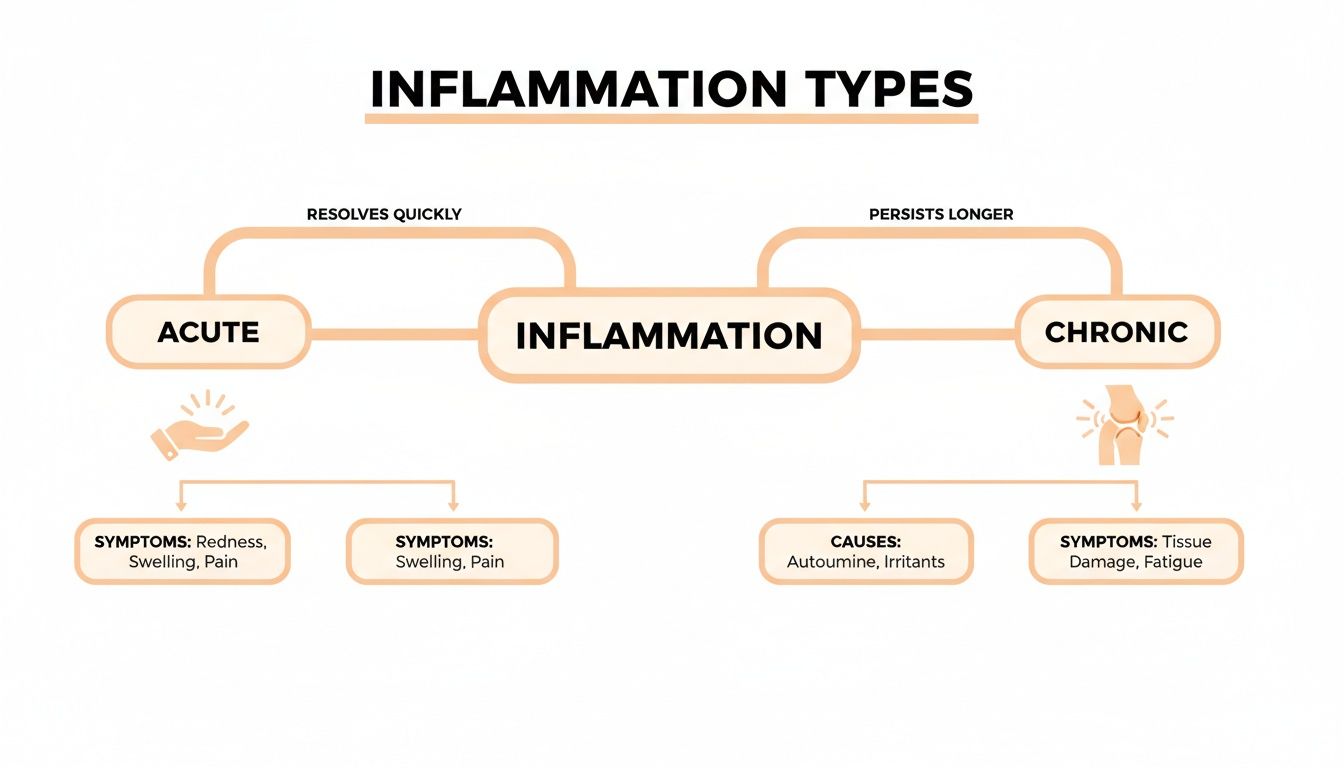
The crucial difference is that acute inflammation is a necessary part of healing, like the swelling from a sprained ankle. It’s the low-grade, simmering chronic inflammation that a plant-based diet is so effective at addressing.
Crowding Out the Triggers
As you fill your plate with all this plant goodness, you naturally start pushing out the things that fuel inflammation in the first place. Many of the staples in a standard Western diet- processed foods, red meat, dairy- are known to promote it. One of the main culprits here are compounds called advanced glycation end-products (AGEs).
AGEs are nasty little molecules formed when protein or fat combines with sugar. They’re notorious for fanning the flames of inflammation and are often found in animal products cooked at high temperatures. I do NOT think they belong in a healthy diet.
The fantastic news? Switching to a plant-based diet sends them packing.
Research has shown that people adopting a plant-based diet see their levels of these inflammatory compounds plummet. One study found an incredible 79% reduction in AGEs among plant-based eaters, compared to just a 15% drop for those on a diet including meat. That’s a game-changing difference.
This isn’t about restriction. It's about swapping out the fuels that stoke the fire for the ingredients that put it out. To get hands-on with some of nature's most powerful anti-inflammatory agents, you could even try growing your own. A great guide on Myoga Ginger cultivation can get you started with this potent, inflammation-fighting plant right in your own backyard.
Building Your Anti-Inflammatory Plate
Alright, let's get to the fun part- actually building your plate! This is where all the science we've talked about becomes a delicious reality.
Shifting to a plant-based, anti-inflammatory way of eating isn't about restriction; it's about making deliberate, powerful choices. Think of it less like a diet and more like upgrading the fuel you give your body. You're choosing vibrant, powerful foods that help you feel amazing from the inside out.
Foods to Fall in Love With
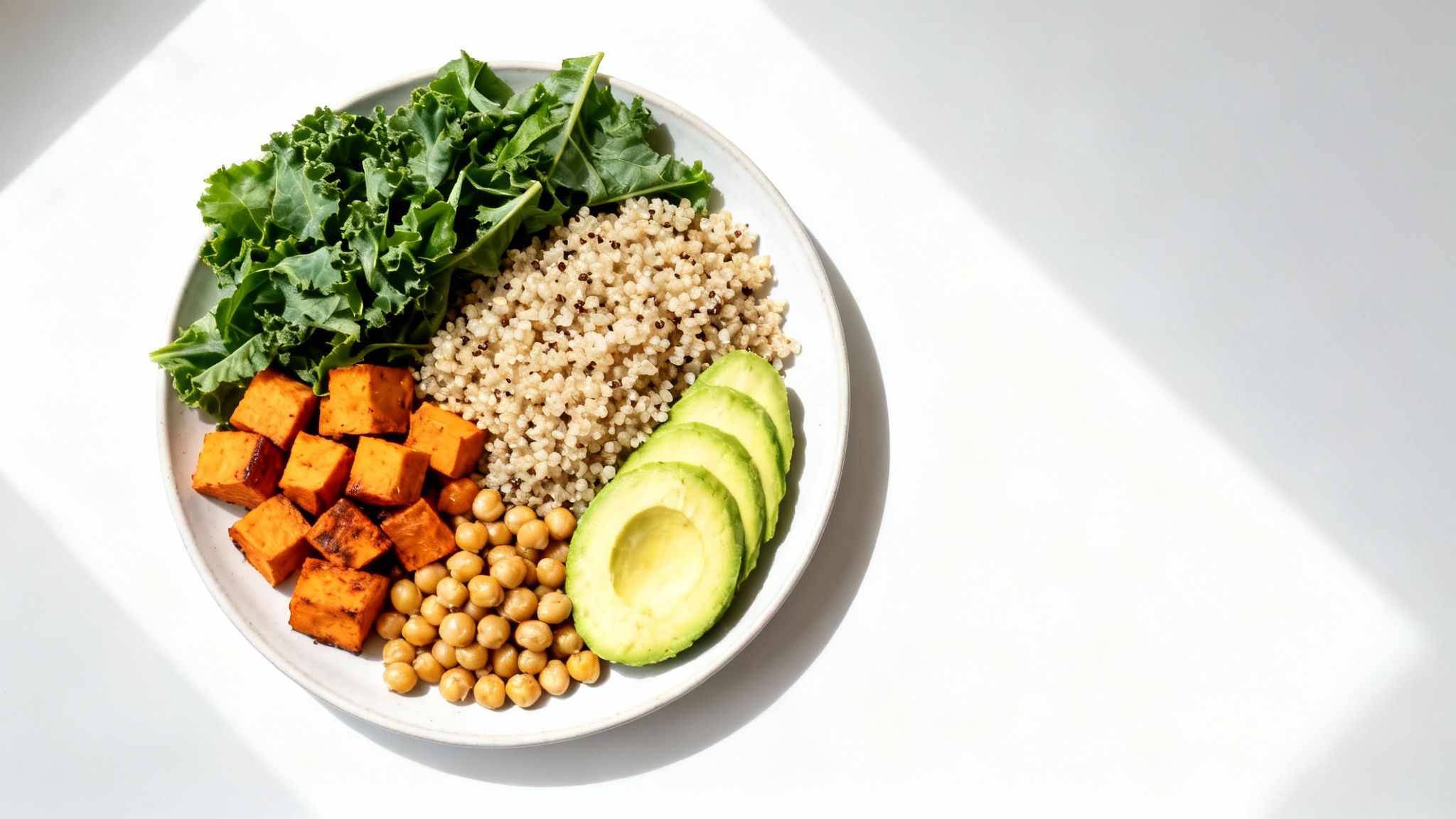
These are the superstars, the foods you want to load up on every single day. They’re absolutely packed with the antioxidants, fiber, and healthy fats your body uses to calm inflammation and build resilience. Your goal is simple: fill your plate with a beautiful variety of these.
- Leafy Greens: Think spinach, kale, arugula, and Swiss chard. These are true nutritional powerhouses, loaded with vitamins and antioxidants that act like your body’s personal cleanup crew.
- Colorful Fruits: Berries, oranges, cherries, and plums are your best friends. Their deep, rich colors are a telltale sign of the potent anti-inflammatory compounds, called polyphenols, they contain.
- Vibrant Veggies: Make broccoli, bell peppers, carrots, and sweet potatoes staples. The more colors you can get on your plate, the wider the range of protective nutrients you’re giving your body.
- Whole Grains: Oats, quinoa, brown rice, and whole-wheat bread provide that slow-releasing energy and crucial fiber that feeds your good gut bacteria- a key ally in managing inflammation.
- Legumes: Lentils, chickpeas, black beans, and kidney beans are fantastic. They offer a one-two punch of fiber and plant-based protein to keep you feeling full and satisfied.
- Nuts and Seeds: Walnuts, almonds, chia seeds, and flaxseeds are rich in omega-3 fatty acids, which are famous for their powerful anti-inflammatory effects.
- Healthy Fats: Don't fear the fat! Avocado, olives, and extra virgin olive oil provide the monounsaturated fats that support heart health and help cool down inflammation.
Foods to Limit for a Calmer Body
Now, let's talk about the other side of the coin. It’s all about reducing how often you eat certain foods and understanding that they can sometimes stir the pot of inflammation. When we eat less of these, we naturally create more space for all the good stuff.
The goal isn't perfection, it's progress. Instead of thinking "I can't have that," try reframing it as "I'm choosing to have more of what makes me feel incredible."
- Processed Foods: This is a big category, including things like packaged snacks, most frozen dinners, and fast food. They’re often loaded with additives, unhealthy fats, and refined ingredients that can trigger an inflammatory response.
- Refined Sugars: You'll find these in sodas, candy, pastries, and many sweetened drinks. Excess sugar can quickly put your body into a pro-inflammatory state.
- Certain Fats: Be mindful of trans fats (often listed on labels as "partially hydrogenated oils") and an overabundance of omega-6 fatty acids, which are common in vegetable oils like corn and soybean oil. They can disrupt your body's delicate inflammatory balance.
Your Anti Inflammatory Food Guide
To make it even simpler, here's a quick-reference chart. Think of it as your go-to guide for stocking your kitchen and building your meals. The goal is to consistently choose more from the "Cool the Fire" column.
| Food Category | Foods to Emphasize (Cool the Fire) | Foods to Limit (Fuel the Fire) |
|---|---|---|
| Fruits & Veggies | Berries, leafy greens, broccoli, avocado, cherries, oranges | Fruit juices with added sugar, heavily processed vegetable products |
| Grains | Quinoa, oats, brown rice, whole-wheat bread & pasta | White bread, pastries, sugary cereals, white rice |
| Proteins | Lentils, chickpeas, beans, tofu, tempeh, nuts, seeds | Processed meats (bacon, sausage), red meat, fried foods |
| Fats | Extra virgin olive oil, avocados, walnuts, flaxseeds, chia seeds | Margarine, corn oil, soybean oil, trans fats |
| Beverages | Water, green tea, herbal teas | Soda, sweetened fruit drinks, excessive alcohol |
| Sweets & Snacks | Dark chocolate (70% cocoa or higher), fruit, dates | Candy, cookies, cakes, potato chips, packaged snack foods |
This isn't about being restrictive; it's about being intentional. Every meal is a fresh opportunity to nourish your body and fight inflammation from your plate.
Ready to dive even deeper? You can explore our comprehensive anti inflammatory foods list for more delicious ideas. And if you're curious about protein, it's worth understanding different protein sources like plant-based protein to see how they fit into your plan.
A Sample Anti-Inflammatory Meal Plan
Okay, we’ve covered the science behind why and the foods that make up the what. Now for the fun part: putting it all together on your plate.
Embarking on a new way of eating can feel a little daunting, but I promise this is much simpler- and way more delicious- than you might be imagining. We're not talking about a life of bland salads. This is all about enjoying vibrant, satisfying food that actually makes you feel fantastic.
To give you a running start, I've mapped out a simple 3-day sample meal plan. Think of this as your launching pad, a little taste test to show you just how good an anti-inflammatory lifestyle can be.
A 3-Day Kickstart Plan
This plan is built around easy-to-find ingredients and simple meals you can whip up even on the busiest of days. Remember, this is just a guide to get you started. Feel free to swap things around and get creative!
Day 1
- Breakfast: Overnight oats. Just mix rolled oats with unsweetened almond milk, a tablespoon of chia seeds, and let it sit overnight. In the morning, top it with fresh blueberries and a sprinkle of walnuts.
- Lunch: A big, colorful quinoa salad. Toss cooked quinoa with chopped cucumber, cherry tomatoes, bell peppers, and chickpeas. Drizzle with a simple lemon-tahini dressing.
- Dinner: A cozy bowl of lentil soup. Make it with vegetable broth, carrots, celery, onions, and a dash of turmeric. It’s perfect with a slice of whole-grain toast on the side.
- Snack: An apple with a small handful of almonds.
Day 2
- Breakfast: My "Sunshine Turmeric Smoothie" (you'll find the recipe below!). It's a fantastic way to kickstart your day with a powerful anti-inflammatory boost.
- Lunch: Leftovers are your friend! Enjoy the lentil soup from last night's dinner. No cooking required.
- Dinner: Black bean burgers on a whole-wheat bun with all the fixings- lettuce, tomato, and onion. Serve them with a side of baked sweet potato wedges.
- Snack: Some crunchy carrot and celery sticks dipped in hummus.
Day 3
- Breakfast: Tofu scramble. Sauté crumbled tofu with spinach, mushrooms, and a sprinkle of nutritional yeast for a surprisingly cheesy, savory flavor.
- Lunch: Repurpose last night's dinner by crumbling a leftover black bean burger patty over a bed of mixed greens. Top it with avocado and a spoonful of salsa.
- Dinner: Time for another one-pot wonder: my "Hearty Chickpea and Spinach Curry" (recipe below!).
- Snack: A juicy pear and a small square of dark chocolate- make sure it’s 70% cocoa or higher!
A Quick Tip on Healthy Fats: Did you notice all the nuts, seeds, and avocado in this plan? They’re loaded with healthy fats like omega-3s, which are your body's best friends for cooling inflammation. To learn more about this, check out our guide on the best plant-based omega-3 sources.
Our Favorite Easy Recipes
Ready to get into the kitchen? Here are the two simple, go-to recipes I mentioned. They're proof that eating to fight inflammation is anything but boring.
Sunshine Turmeric Smoothie
This smoothie is exactly what it sounds like: a burst of sunshine in a glass. It's my favorite way to shake off morning grogginess while getting a serious dose of anti-inflammatory goodness.
-
Ingredients:
- 1 cup unsweetened almond milk
- 1/2 cup frozen mango chunks
- 1/2 frozen banana
- 1/2 teaspoon ground turmeric
- 1/4 teaspoon ground ginger
- 1 tablespoon chia seeds
- A pinch of black pepper (this is key- it helps your body absorb the turmeric!)
-
Instructions:
- Toss everything into your blender.
- Blend on high until it's perfectly smooth and creamy.
- Pour it into a glass and enjoy right away!
Hearty Chickpea and Spinach Curry
This one-pot meal is a weeknight lifesaver. It’s quick, incredibly filling, and has that warm, comforting flavor that makes you feel good from the inside out.
-
Ingredients:
- 1 tablespoon olive oil
- 1 onion, chopped
- 2 cloves garlic, minced
- 1 can (15 oz) chickpeas, rinsed and drained
- 1 can (14.5 oz) diced tomatoes, undrained
- 1 can (13.5 oz) full-fat coconut milk
- 1 tablespoon curry powder
- 1 teaspoon turmeric
- 4-5 cups fresh spinach
- Salt and pepper to taste
- Cooked brown rice or quinoa for serving
-
Instructions:
- In a large pot, heat the olive oil over medium heat. Add the onion and cook until it’s soft.
- Stir in the garlic and cook for about another minute, just until it smells amazing.
- Add the chickpeas, diced tomatoes, coconut milk, curry powder, and turmeric. Give it all a good stir.
- Bring it to a simmer and let it bubble away for about 10 minutes so the flavors can really meld together.
- Stir in the fresh spinach and cook just until it wilts, which only takes 2-3 minutes.
- Season it with salt and pepper until it tastes just right.
- Serve it hot over a bed of fluffy brown rice or quinoa.
Why a Healthy Gut Is Key to Taming Inflammation
If you want to cool down inflammation in your body, the journey surprisingly starts in your gut. It's so much more than just how food moves through your stomach and intestines; think of it as the central headquarters for your entire immune system. In fact, a staggering 70-80% of your immune cells are located right there.
When your gut is balanced and thriving, your immune system tends to be calm. But if things get thrown off balance, it can trigger your body’s inflammatory response to go into overdrive.
Feeding Your Gut Allies
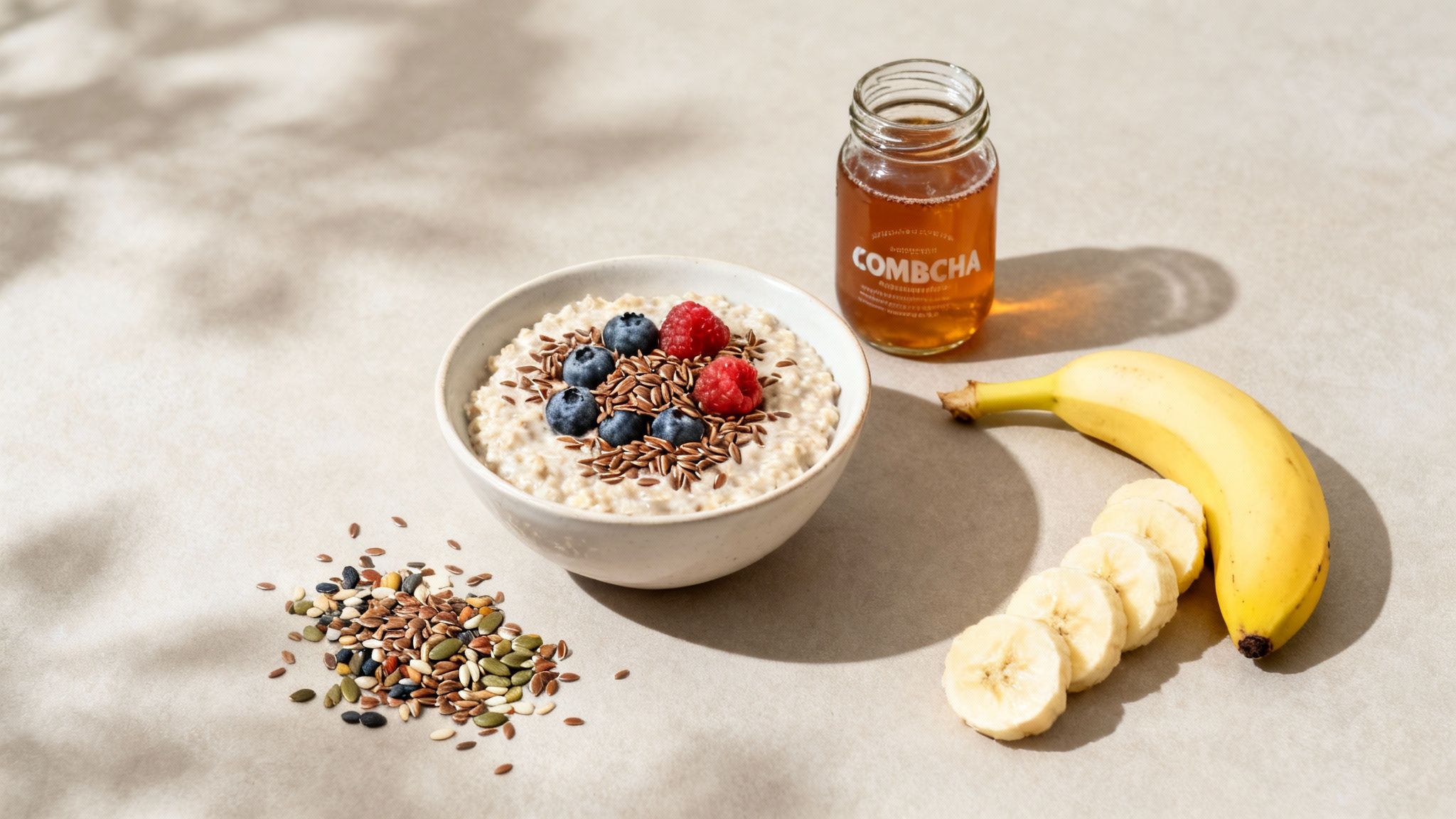
Inside your gut live trillions of tiny bacteria, and this bustling community is known as your microbiome. These microbes are powerful partners in keeping you healthy, and their favorite food is fiber.
A plant based anti inflammatory diet is basically the ultimate buffet for these beneficial gut bacteria. The fiber you get from fruits, veggies, whole grains, and legumes acts as a prebiotic- essentially, it’s fertilizer for your good gut bugs.
As your gut bacteria feast on all that fiber, they produce incredible compounds called short-chain fatty acids (SCFAs). These SCFAs are absolute superstars for your health. Here’s why:
- They strengthen the lining of your gut, keeping it sealed and secure.
- They send signals to your immune system, telling it to stay calm and not overreact.
- They can even travel throughout your body, helping to reduce inflammation far beyond the gut itself.
Basically, filling your plate with fiber-rich plants creates a thriving internal ecosystem that actively works to keep inflammation in check.
The Problem With a "Leaky Gut"
On the other hand, a diet heavy in processed foods, sugar, and unhealthy fats can really damage your gut lining. Over time, this can lead to a condition many people call "leaky gut," or more technically, increased intestinal permeability.
Picture your gut lining as a tightly-woven security fence. When it gets damaged, unwanted things like undigested food particles and toxins can "leak" through into your bloodstream. Your immune system spots these intruders and launches an inflammatory attack, which can lead to the exact kind of low-grade, chronic inflammation we're trying to prevent.
This is why focusing on gut health is so fundamental. Study after study confirms that a plant based anti inflammatory diet is one of the most powerful ways to cultivate a diverse and healthy microbiome. Research has even shown that people eating pro-inflammatory diets had a 38% higher risk of cardiovascular disease compared to those eating anti-inflammatory diets, largely because of how food impacts the gut.
Giving Your Digestion a Helping Hand
We get it. Sometimes, even when you're eating all the right things, your digestion can feel a little overwhelmed, leading to dun, dun, dun- unwelcome gas. This is especially true when you first start adding more fiber to your diet. That initial bloating can be frustrating, but it doesn't mean you're on the wrong track.
This is where a little extra support can make a huge difference. Think of it as giving your digestive system a smart, proactive boost to help it do its job even better.
For those days when your system needs a bit of backup, Yuve Vegan Digestive Enzymes can be a true game-changer. They help your body break down fats, proteins, and carbohydrates more efficiently. This means you can absorb all those amazing nutrients from your food without the uncomfortable side effects. It’s a simple, proactive step to make sure your transition to a plant-based lifestyle is smooth and comfortable.
For a complete overview, check out our in-depth plant-based nutrition guide.
Lifestyle Habits That Reduce Inflammation
While a plant based anti inflammatory diet is a cornerstone, true, lasting relief comes from looking at the bigger picture. Food is a huge piece of the puzzle, but it’s not the only one. How you sleep, manage stress, and move your body all work in concert with your diet to either calm inflammation or fuel it.
Think of it this way: you wouldn't fill a high-performance car with premium fuel and then drive around on a flat tire, right? The same logic applies to your body. To feel your absolute best, we need to address the other factors that can keep that internal fire smoldering.
Unlocking the Power of Quality Sleep
We’ve all been there- a restless night that leads to a groggy, achy morning. That's not a coincidence. When you sleep, your body goes into full-on repair mode, and a critical part of that process is getting inflammation under control.
Chronic sleep deprivation, even just a few rough nights in a row, can trigger your body to pump out more inflammatory molecules. It essentially puts your entire system on high alert when it should be resting and resetting.
To improve your sleep hygiene, try these simple tips:
- Create a Routine: Try to go to bed and wake up around the same time each day, even on weekends. Consistency is key.
- Power Down: Turn off screens at least an hour before bed. The blue light from phones and TVs can seriously mess with your body's natural sleep signals.
- Set the Scene: Make your bedroom a cool, dark, and quiet sanctuary dedicated to rest.
Taming the Stress Response
Ever notice how a stressful week can leave you feeling physically drained or even trigger a digestive flare-up? That’s the stress-inflammation connection in action. When you're stressed, your body releases hormones like cortisol, which are helpful in short bursts.
But when stress becomes a chronic, everyday reality, those same hormones can contribute to a constant state of low-grade inflammation. Finding simple, sustainable ways to manage your stress is non-negotiable for a calmer body. This doesn't have to be complicated- it could be as simple as five minutes of deep breathing, listening to calming music, or a short mindfulness practice.
The Gentle Magic of Movement
The final piece of this lifestyle puzzle is consistent, gentle movement. You don't need to run a marathon to see the benefits. In fact, moderate exercise is one of the most effective ways to help regulate your body’s inflammatory response.
Movement gets your blood circulating, delivers fresh oxygen to your tissues, and has been shown to reduce inflammatory markers over time.
For our founder, Sam, this was a game-changer. He struggled for years with low energy and digestive discomfort. While changing his diet helped immensely, it was the combination of that and a simple 20-minute walk every single day that truly transformed how he felt. It wasn't about intensity; it was all about consistency. That small daily habit gave him more energy and less achiness than he'd felt in years, proving that small changes can lead to monumental wins.
Your Questions, Answered
Starting a new way of eating often brings up a lot of questions. It's completely normal to feel a bit uncertain, and getting clear answers is the best way to build confidence for the journey ahead.
We've put together some of the most common questions we hear to help you get started on your plant-based anti-inflammatory diet with clarity and peace of mind.
How Quickly Will I See Results?
This is probably the number one question on everyone's mind. While it's not an overnight fix, many people report feeling subtle shifts within the first couple of weeks. Maybe you'll notice a little more pep in your step or that the usual afternoon bloating doesn't show up.
More significant changes, like less joint stiffness or improvements in skin clarity, tend to take a bit longer. You're looking at a month or more of consistent eating for those deeper benefits to kick in. Your body is doing some serious repair work, so patience is key. Think of it as a long-term investment in your well-being, not a quick fix.
But What About Protein? Will I Get Enough?
Ah, the classic protein question. Let's clear this one up right away: you can absolutely get all the protein you need from plants. The idea that meat is the only real source of protein is one of the most persistent myths out there.
Plants are loaded with high-quality protein. Here are just a few powerhouses to focus on:
- Lentils: One cooked cup gives you about 18 grams of protein.
- Chickpeas: A go-to for a reason, offering around 15 grams per cup.
- Tofu & Tempeh: These soy foods are complete proteins, meaning they have all the essential amino acids.
- Quinoa: This "super-grain" is also a complete protein.
- Nuts & Seeds: Almonds, chia seeds, and hemp seeds are fantastic for a protein boost.
By simply eating a wide variety of these foods throughout the day, you'll have no trouble meeting your body's needs.
What if I Feel Bloated When I Start?
Let's be honest- ramping up your fiber intake this much can cause a little digestive traffic jam at first. It’s very common to feel some gas or bloating as your gut bacteria adjust to the new menu. Think of it as your internal ecosystem getting a major (and very healthy) upgrade.
Don't let it discourage you; this phase is almost always temporary. The best way to ease into it is by increasing your fiber intake slowly over a week or two. And drink lots of water! Water is crucial for helping all that wonderful fiber move smoothly through your system.
Even with a gradual approach, sometimes our digestive system needs a helping hand. To make your transition as comfortable as possible, a high-quality digestive enzyme supplement can make a huge difference. Yuve Vegan Digestive Enzymes are designed to help your body efficiently break down fiber, fats, and proteins, letting you reap the rewards of your new diet without the discomfort.
Explore Yuve Vegan Digestive Enzymes and support your gut health today!