Purity Products uses third-party quality oversight, but the scope is narrower than “every product is independently certified.” The company says its facilities hold NPA and NSF GMP certifications and that random samples go to independent laboratories as a double-check. Its public pages do not establish independent finished-product testing or certification for every current SKU and lot.
How did we evaluate Purity Products’ testing claims?
We reviewed Purity Products’ current quality page, FAQ, representative product pages, and a publicly indexed certificate of analysis on September 3, 2026, separating internal laboratory testing, random independent laboratory checks, facility GMP certification, finished-product certification, and lot-specific reports because each signal supports a different conclusion. FDA regulatory guidance, NSF explanations, and the Natural Products Association program received more weight than retailer listings, customer reviews, or an unverified badge, and we recorded whether each statement named the product, lot, laboratory, analytes, method, specification, certification program, or public directory. We did not treat testing as proof that a supplement creates a health result. The principal limitation is access: Purity Products may hold current reports that are not publicly indexed, so this article assesses visible documentation and the company’s own stated program rather than auditing confidential laboratory or manufacturing records.
Are Purity Products supplements third-party tested?
The precise answer is qualified yes. Purity Products says raw ingredients and finished products undergo laboratory testing, each lot receives microbial testing, and random samples are sent to independent laboratories as a double-check. The company also says its manufacturing facilities are certified by NPA and NSF International for compliance with dietary-supplement current good manufacturing practices. Those statements support third-party involvement at the facility level and selective independent sample testing. They do not support the broader claim that every finished-product batch is tested by an outside laboratory or that every SKU carries product-level NSF certification. Purity Products’ representative product pages describe extensive laboratory testing for each finished batch, but they do not consistently identify whether that work is internal or external. A shopper should therefore ask a product-level question: which laboratory tested this exact lot, what attributes were measured, and can the result be independently verified?
What does Purity Products publicly document?
The company’s Purity Difference page provides its clearest public description. It says ingredients are quarantined in the United States and tested for safety, purity, and potency before use. It names high-performance liquid chromatography, gas chromatography, and inductively coupled plasma optical-emission spectrometry as analytical techniques and says every lot receives microbial testing. The page then distinguishes routine testing from outside confirmation by stating that random samples go to independent laboratories as a double-check. It also names NPA and NSF International as third-party certifiers of manufacturing facilities. A publicly indexed 2021 certificate of analysis for Ultimate Eye Formula shows a product number, lot, manufacture date, specifications, methods, and results. The report covers weight variation, disintegration, and selected dietary ingredients for one identified sample. That document demonstrates one traceable report, not current proof for every product or future lot, and shoppers should request newer product-specific evidence.
How do Purity Products’ quality signals compare?
Some links below are affiliate links. This does not influence our evaluation criteria or recommendations. Purity Products publishes meaningful manufacturing and testing details, but its strongest independent signal applies to facility systems and randomly selected samples. Yuve’s current FAQ states that every batch receives independent identity, potency, heavy-metal, microbial, and pesticide testing and that a certificate of analysis is available by product name and lot number. An NSF/ANSI 173 product certification supplies a different route: the exact certified product appears under a defined program. Each route still requires an exact product and current record.
| Option | Public quality signal | Main limitation | Best for |
|---|---|---|---|
| Purity Products | NPA/NSF facility certification; random independent sample checks | Not every SKU or lot shown as independently tested | Detailed manufacturing disclosures |
| Yuve | Every-batch independent-testing statement; COA on request | Requested report must match product, lot, and scope | Lot-specific document requests |
| NSF-certified product | Defined product program and directory listing | Only listed products carry certification | Public product-level verification |
What is each verification route best for?
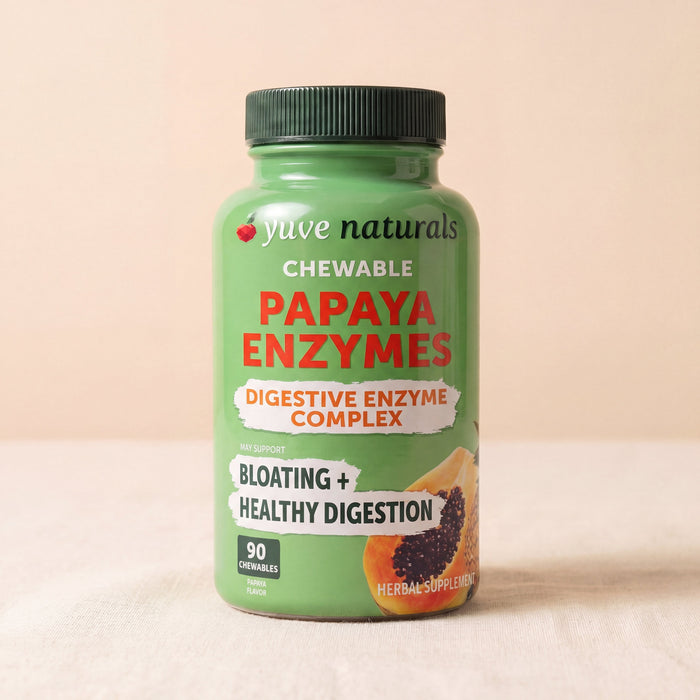
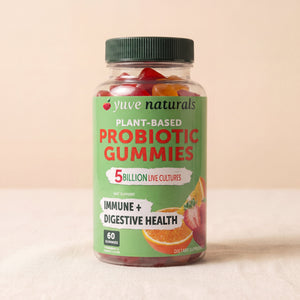
Best for checking Purity Products’ manufacturing systems: verify the current NPA or NSF facility record and confirm which legal entity and location the certification covers. Best for assessing one Purity Products bottle: request a certificate of analysis that matches the product name, item number, lot, strength, and expiration date. Best for public product-level confirmation: search the exact supplement in an NSF/ANSI 173, NSF Certified for Sport, USP Verified, or other relevant certification directory. Best for a plant-based batch-document request: Yuve says customers can request an independent report by product name and lot number; the Yuve FAQ identifies the stated test categories. Best for evaluating a probiotic example: inspect the current Yuve Probiotic Gummies label for organism identity, CFU, serving size, storage, and inactive ingredients, then match the lot to supporting documentation. No single route proves clinical usefulness.
Why is GMP certification different from product testing?
GMP certification evaluates manufacturing quality systems, records, sanitation, specifications, controls, and related processes. It does not automatically mean an auditor tested every retail bottle. NSF’s consumer guidance explicitly explains that GMP registration applies to a production facility rather than an individual product and that product testing belongs to a separate certification route. The NPA GMP program likewise describes third-party certification of supplement and ingredient manufacturing systems. Product testing asks whether a laboratory measured specified attributes in a particular sample. Product certification may add a standard, technical review, repeated testing, surveillance, and a searchable listing. A facility audit can be valuable without answering whether the potency, heavy metals, microbes, pesticides, oxidation, or banned substances in one specific lot were independently measured. These records complement one another; they are not interchangeable. Treat the logo, scope, location, product, and batch as separate fields.
What should a useful certificate of analysis contain?
A useful certificate of analysis identifies the brand, exact product, dosage form, item number, lot or batch, manufacture or test date, expiration date when applicable, and laboratory. It lists each analyte, analytical method, specification limit, numerical result, unit, pass-or-fail interpretation, and authorized reviewer. A statement such as “passed quality testing” is weaker because it hides what was measured and against which limit. Botanical products may need identity, marker-compound potency, pesticides, microbes, heavy metals, and residual-solvent checks. Fish-oil products may require fatty-acid potency and oxidation measures. Probiotics require organism identity and viable-count specifications through the relevant shelf-life period. Athletes need a recognized banned-substance program rather than assuming ordinary contaminant testing covers sport eligibility. Ask Purity Products for the document tied to the bottle in hand, then save it because formulas, lots, laboratories, methods, and certification status can change.
Does FDA oversight prove that a supplement was independently tested?
No. The FDA dietary-supplement Q&A states that FDA does not test supplements before sale and does not approve them before marketing. Manufacturers remain responsible for safety, labeling, and current good manufacturing practice under 21 CFR Part 111. FDA inspections and enforcement provide regulatory oversight, but an FDA-registered facility is not an FDA-approved supplement and is not proof of third-party product certification. Purity Products’ statement that finished batches meet FDA-mandated requirements describes compliance with applicable standards; it does not mean FDA personally tested or approved each bottle. Independent laboratory testing, facility certification, and FDA regulation can coexist while answering different questions. A strong quality assessment names the regulator or certifier, exact scope, product, lot, date, methods, and accessible evidence. The supporting record should match the claim being made. Avoid compressing all of those signals into one “FDA approved” or “third-party certified” badge.
What questions do shoppers ask about Purity Products testing?
Does Purity Products test every batch?
Purity Products says each finished batch receives laboratory testing and every lot receives microbial testing. Its public quality page says random samples, not every sample, go to independent laboratories as a double-check.
Are all Purity Products formulas NSF certified?
The public language describes NSF certification of manufacturing facilities. Do not treat that as product-level NSF certification unless the exact formula appears in the relevant NSF directory.
Does Purity Products publish certificates of analysis?
At least one historical lot-specific certificate is publicly indexed. A single 2021 report cannot verify every current SKU, so request the document matching your bottle.
Does third-party testing prove a supplement works?
No. Testing can support identity, potency, purity, or contaminant control; usefulness still depends on the ingredient, amount, population, and intended outcome.
Is a random independent check useless?
No. Random outside checks can validate parts of a quality system, but they provide less lot-specific assurance than an independent report for the exact batch being purchased.
How should Yuve be checked?
Apply the same rule to Yuve: request the certificate for the exact product and lot, review analytes and limits, and separate testing evidence from benefit claims. The all-products collection helps identify the current item before requesting records.
What should I ask Purity Products support?
Ask who tested the finished lot, whether the laboratory was independent, which analytes were measured, what methods and limits were used, and whether the report matches the bottle’s code.
What is the bottom line on Purity Products?

Purity Products documents a substantial quality program: ingredient testing, finished-batch laboratory testing, every-lot microbial checks, random independent laboratory verification, and NPA and NSF oversight of manufacturing facilities. That supports a qualified yes to third-party involvement. It does not establish that every current finished-product lot underwent outside testing or that every supplement carries product-level certification. Verify the exact SKU rather than extending one facility certificate or historical report across the catalog. Request a lot-matched certificate of analysis, confirm the laboratory’s independence, and inspect the analytes, methods, specifications, numerical results, and dates. Use an official certification directory when a product displays an NSF, USP, or sport-testing mark. Apply the same evidence standard to Yuve or any competitor. The useful answer is not a blanket badge; it is a traceable chain from the bottle to the relevant facility record, laboratory report, and certification scope.