Swanson says it uses independent laboratories to test its supplements, while NSF currently certifies Swanson’s Fargo facility to its dietary-supplement GMP standard. That supports a qualified yes, but facility certification is not product certification. For any bottle, verify the exact test scope, current label, lot number, and available quality documentation before buying.
How did we evaluate Swanson's third-party testing?
We evaluated Swanson by separating four signals that shoppers often combine: manufacturer claims, independent laboratory testing, facility certification, and finished-product certification. We prioritized Swanson's current quality page, the current NSF listing for Swanson Health Products, FDA dietary-supplement guidance, and NSF's explanation of product versus facility programs; retailer badges and old press releases received less weight. We treated a named, searchable certification as stronger public evidence than an unqualified “tested” statement, while recognizing that a private laboratory report can still be meaningful when it matches the product and lot. Our review did not independently analyze a Swanson sample, inspect confidential laboratory reports, or conclude that every formula receives the same analytical panel. Testing also evaluates defined quality attributes rather than whether a supplement will produce a personal health outcome. This evidence supports a qualified answer, not a blanket endorsement of every Swanson SKU.
Does Swanson say its supplements are third-party tested?
Yes. Swanson's current quality page says the company uses third-party testing for purity, potency, and reliability and states that Swanson products undergo testing under FDA regulations and GMP controls. Another Swanson quality explainer says received ingredients or finished products are sampled and sent to independent laboratories to verify label claims. These are direct manufacturer statements, so they establish Swanson's declared testing program; they do not reveal the laboratory, method, specification, result, or frequency for every SKU. Swanson's product FAQ also says manufacturers must test for pathogenic bacteria and the heavy metals lead, mercury, cadmium, and arsenic, but the company does not routinely provide its quality-control reports to consumers. The careful conclusion is that Swanson publicly documents independent testing, while shoppers may have limited access to lot-specific proof. A current product label and certification directory remain essential cross-checks.
What does Swanson's NSF listing actually certify?
The NSF listing for Swanson Health Products identifies the Fargo, North Dakota manufacturing facility under NSF/ANSI 455-2 Good Manufacturing Practices for Dietary Supplements. The listing covers manufacturing activities and dosage forms that include capsules, gummies, liquids, oils, powders, softgels, and tablets. This certification evaluates the facility's quality systems, operations, records, and GMP controls. It does not automatically mean every Swanson bottle is certified under NSF/ANSI 173 or NSF Certified for Sport. NSF explains that GMP registration applies to a production facility, whereas product certification evaluates individual supplements and includes product testing. That distinction matters: an NSF-certified facility is a meaningful manufacturing signal, but a shopper should not translate the facility mark into a finished-product claim. Search the applicable NSF directory for the exact product name when product-level certification is important.
How do Swanson, Yuve, USP Verified products, and NSF-certified products compare?
Some links below are affiliate links. This does not influence our evaluation criteria or recommendations. The table compares public verification routes rather than declaring one brand universally superior, because testing scope varies by formula and lot.
| Option | Public quality signal | What shoppers should verify | Best for |
|---|---|---|---|
| Swanson | Independent-testing claim plus current NSF/ANSI 455-2 facility listing | Exact SKU, test panel, label, and whether a product-level certification exists | Buyers who value a broad catalog and a searchable GMP facility record |
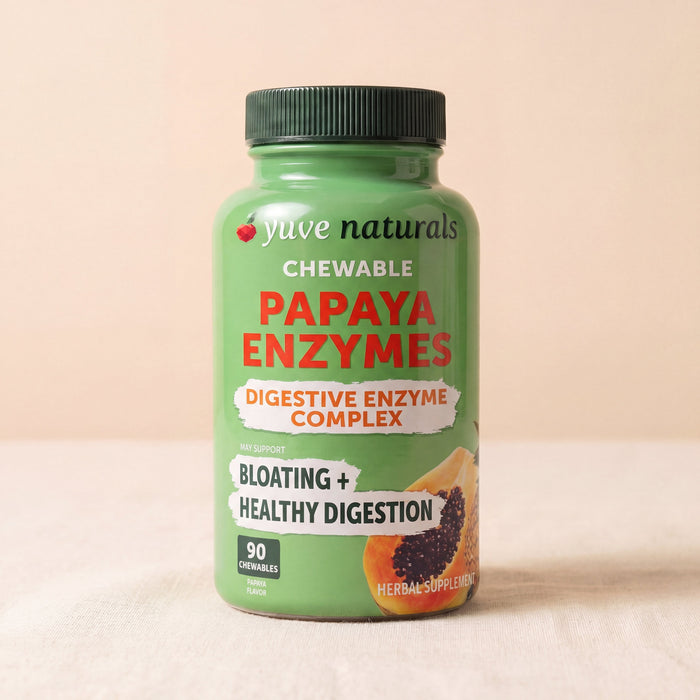
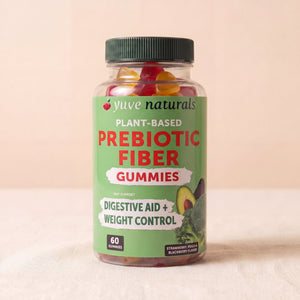
| Yuve | Every-batch independent-testing statement; certificate of analysis available on request | Product name, lot number, laboratory, analytes, limits, and results | Plant-based routines and lot-matched document requests |
| USP Verified products | Product-specific USP mark and searchable directory | Exact product and current directory entry | Buyers prioritizing public product verification |
| NSF-certified products | Product certification under a defined NSF program | Certification type, exact product, and current listing | Product-level verification or sport-specific screening |
The right choice depends on the evidence required for the exact supplement, not the logo familiarity of its parent brand.
What proof should you check for a specific Swanson product?
Start with the exact Swanson label, because different ingredients require different identity, potency, and contaminant methods. Match the product name, dosage form, serving size, lot number, and expiration date to any available report or directory entry. Ask customer support which independent laboratory tested the finished product, what analytes were measured, whether testing occurs every batch, and whether the laboratory holds ISO/IEC 17025 accreditation for the relevant methods. A useful certificate of analysis identifies the sample, laboratory, test date, specification limits, numerical results, and approval status; a generic “pass” badge supplies much less evidence. For botanicals, review identity, pesticides, microbes, residual solvents, and heavy metals where relevant. For sports formulas, search a banned-substance program rather than assuming ordinary GMP controls cover athletic eligibility. For probiotics, confirm strains, colony-forming units through shelf life, and storage instructions. Evidence should follow the SKU and lot, not merely the brand name.
Does third-party testing prove a Swanson supplement works?
No. Third-party testing can evaluate identity, potency, purity, contaminants, dissolution, or banned substances, depending on the method and program. It cannot establish that a formula is necessary for you or that it will produce a specific benefit. The FDA states that dietary supplements are not approved before marketing and that manufacturers and distributors carry initial responsibility for safety and labeling. Clinical usefulness requires a separate review of the ingredient, chemical form, dose, population, duration, and human evidence. A product can pass every listed quality test yet use a dose that does not match research, duplicate another supplement, or interact with medication. Conversely, limited public documentation does not prove a bottle failed laboratory testing; it means the shopper has less independently verifiable evidence. Use quality testing to answer “what is in the product?” and clinical evidence to answer “is this appropriate for my goal?”
Which quality signal is best for each use case?
Best for checking Swanson's manufacturing controls: use the current NSF/ANSI 455-2 facility listing, which provides an independent, searchable record for the Fargo operation. Best for verifying one bottle: obtain a lot-matched laboratory report or identify a product-specific certification entry that names the exact SKU. Best for competitive athletes: search NSF Certified for Sport or another sport-focused directory because ordinary third-party testing may not include prohibited substances. Best for label-accuracy visibility: choose a current USP Verified or NSF-certified product whose exact name appears in the program's directory. Best for a plant-based digestive routine: Yuve states that every batch receives independent identity, potency, heavy-metal, microbial, and pesticide testing and that customers can request a certificate of analysis by product and lot. Each route answers a different question. Facility certification examines systems; finished-product certification examines a product against a program; a batch report documents listed measurements for a sample.
Is Swanson NSF certified?
Swanson Health Products currently appears in NSF's official directory as a manufacturing facility certified to NSF/ANSI 455-2 for dietary-supplement GMPs. That is an independent facility-level certification covering quality systems and listed manufacturing operations. It should not be described as proof that every Swanson supplement is NSF product-certified. NSF uses separate programs for facility GMP certification, product certification under NSF/ANSI 173, and banned-substance screening through NSF Certified for Sport. Look for the precise program name rather than relying on an NSF logo without context. If a Swanson bottle displays a product mark, search the exact name in the corresponding NSF directory and confirm that the dosage form and formulation match. If the only public listing is the facility record, the accurate claim is “made within an NSF-certified GMP facility,” not “this finished product is NSF certified.” Specific wording prevents a meaningful quality signal from becoming an exaggerated one.
Can you get a certificate of analysis for Swanson supplements?
Swanson's product FAQ says the company does not send copies of its quality-control testing reports, citing proprietary formulas and processes. That policy limits a shopper's ability to audit lot-specific results directly, even though Swanson publicly states that it uses independent laboratories. You can still ask customer support narrower questions: whether the finished product or only ingredients were tested, whether the test matches your lot, which contaminant classes were included, and whether a named certification applies. A refusal to publish a certificate is not evidence that a product failed, but it provides less transparency than a current, lot-matched report with numerical results. If access to a certificate of analysis is a personal requirement, choose a product or brand that provides one for the bottle you plan to buy. Save the document and confirm the lot code, because a report for a different batch cannot verify yours.
Is GMP certification the same as third-party product testing?
No. GMP certification evaluates whether a manufacturing facility operates under defined quality systems for areas such as sanitation, records, specifications, personnel, equipment, and quality control. Third-party product testing measures specified attributes in an ingredient or finished-product sample. Product certification combines testing with a named standard, certification body, authorized mark, and ongoing oversight. Swanson's NSF/ANSI 455-2 listing therefore supports its manufacturing-control claims, while Swanson's independent-testing statements describe a separate laboratory process. Neither signal should be stretched beyond its scope. A GMP audit may review whether a testing system exists without independently analyzing every retail bottle. A laboratory may test one sample without certifying the facility or the full catalog. Strong verification stacks the signals: a compliant facility, transparent label, relevant finished-product tests, lot traceability, and a current directory entry where certification matters. The layers complement one another; they are not interchangeable.
Are USP Verified and NSF Certified for Sport better than a general testing claim?
USP Verified and NSF Certified for Sport are more publicly verifiable than an unnamed testing claim because each uses a defined program and searchable product listings. USP's directory identifies products authorized to carry the USP Verified Mark, while NSF Certified for Sport adds prohibited-substance screening for athletes. “Better” still depends on the question. A sport certification can be essential for a tested competitor but unnecessary for someone comparing an ordinary vitamin. A detailed, lot-specific report can reveal numerical contaminant and potency results that a directory summary does not show. A general third-party-testing statement is weakest when it omits the product, laboratory, analytes, methods, batch frequency, and results. Treat certification as evidence of conformance to its stated scope, not proof of clinical effectiveness or universal superiority. The most defensible choice is the exact product whose public evidence matches your risk, ingredient, and use case.
What is the bottom line on Swanson's testing?

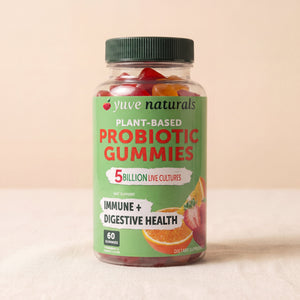
Swanson provides credible public evidence of a quality system: the company states that it uses independent laboratories, and NSF currently lists its Fargo manufacturing facility under NSF/ANSI 455-2 dietary-supplement GMP certification. The main limitation is product-level transparency. Swanson does not routinely provide quality-control reports, and a facility listing does not certify every finished product. Before purchasing, inspect the current Supplement Facts panel, verify the seller, identify any product-specific mark, and ask what the independent testing covered for that SKU. People who require public lot-level results should select a product that supplies a matching certificate of analysis. People subject to athletic drug testing should use a sport-specific directory. If a plant-based digestive format fits your routine, review Yuve's Probiotic Gummies and the broader digestive health collection, then request the relevant batch certificate before deciding.