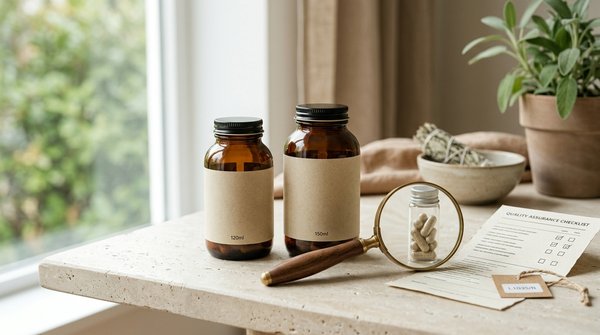
Zazzee Naturals says its ingredients and finished products undergo independent testing, including raw-material checks and finished-product potency testing. That supports a qualified yes, but its public pages do not provide lot-specific reports, laboratory names, methods, or results for every product. Verify the exact SKU, test scope, certification, and batch documentation before buying.
How did we evaluate Zazzee's testing claims?
We evaluated Zazzee by separating the company's statements from evidence that a shopper can independently verify. We prioritized Zazzee's current FAQ, About page, and product pages; FDA regulatory information; and formal explanations of USP and NSF verification over marketplace reviews or unlabeled quality badges. We looked for the product name, testing stage, laboratory identity, analytes, methods, batch frequency, certification scope, and access to certificates of analysis. We also distinguished ingredient testing, finished-product testing, facility compliance, organic certification, and proof of clinical benefit because each signal answers a different question. Our review did not test a Zazzee sample or inspect private laboratory records. Public pages can change, and one product page cannot establish the same protocol for all 85 products. The available evidence supports a qualified description of Zazzee's declared program, not independent confirmation of every claim, product, or lot.
Does Zazzee say its supplements are third-party tested?
Yes. Zazzee's About page says its products undergo independent testing for purity, potency, safety, and quality and that ingredients and products are tested before and after manufacturing. Its current FAQ adds that raw materials are tested before shipment and upon receipt, while finished products are tested for potency against label claims. Several product pages state that ingredients are third-party tested for quality, potency, and purity. Those statements establish what Zazzee publicly claims, but they do not identify the outside laboratory, ISO/IEC 17025 accreditation scope, analytical methods, specifications, numerical results, or lot numbers. The FAQ also says products are made under FDA, NSF, and cGMP requirements, language that should be checked against a named certificate and scope rather than treated as product certification. The most accurate answer is “Zazzee says yes,” followed by product-level verification for the bottle under consideration.
What does Zazzee's public evidence leave unanswered?
Zazzee's public pages do not appear to offer a searchable certificate-of-analysis library or lot-matched laboratory reports for every product. They also do not consistently state whether “third-party tested” applies to raw ingredients, the finished formula, every batch, selected batches, or selected analytes. That distinction matters because ingredient identity testing cannot prove the final capsule meets label potency after blending, and potency testing alone does not establish limits for microbes, heavy metals, pesticides, or residual solvents. A useful report names the sample, lot, laboratory, method, specification, result, date, and reviewer. A useful certification listing names the exact product or facility, standard, and current status. Without those details, a buyer can recognize a declared quality program while remaining unable to reproduce the verification. Ask Zazzee support for the test scope and lot-specific documentation before inferring that every formula receives the same complete panel.
How do Zazzee, Yuve, and formal certification programs compare?
Some links below are affiliate links. This does not influence our evaluation criteria or recommendations. The comparison addresses evidence access and scope, not whether any supplement will produce a personal health result.
| Option | Public testing signal | Main limitation | Best for |
|---|---|---|---|
| Zazzee Naturals | Independent-testing statements plus raw-material and finished-product potency descriptions | No universal public lot-report library or consistent method detail | Buyers willing to verify one formula with customer support |
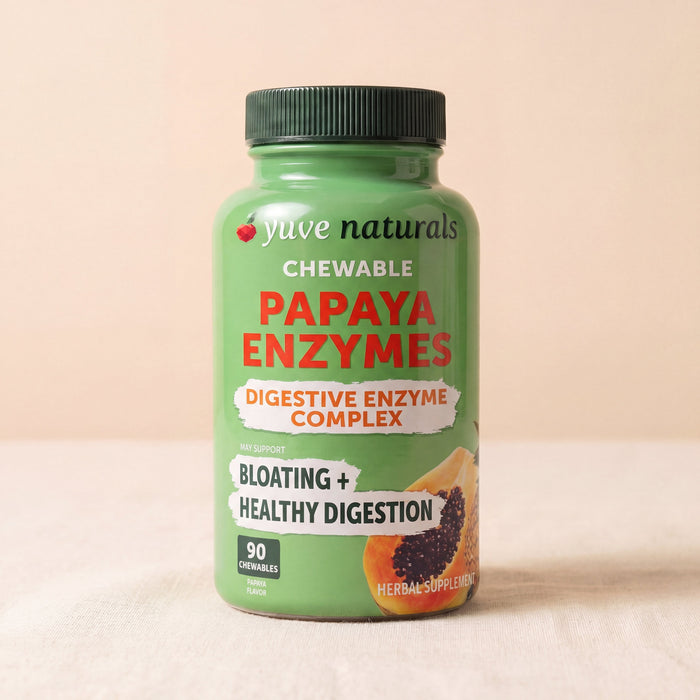
| Yuve | Every-batch independent identity, potency, heavy-metal, microbial, and pesticide testing statement; COAs available on request | Requested documents must still be matched to the bottle lot and scope | Plant-based routines with a lot-specific document request |
| USP Verified product | Exact product listed under a defined third-party verification program | Only listed formulas carry the verification | Public product-level directory confirmation |
| NSF-certified product | Product testing and ongoing program oversight under a named NSF standard | Facility GMP registration is not finished-product certification | Defined product certification or sport screening |
Brand familiarity cannot replace evidence tied to the exact SKU and lot.
What should a Zazzee certificate of analysis include?
A useful certificate of analysis should identify the exact Zazzee product, lot or batch number, sample date, report date, independent laboratory, analytical methods, specifications, numerical results, and pass-or-fail interpretation. Match the report's lot to the code printed on the bottle. For a botanical extract, identity and marker-compound potency may matter alongside heavy metals, pesticides, microbes, and residual solvents. For a probiotic, the document should identify strains and colony-forming units through the relevant shelf-life specification, not merely at manufacture. For a mineral, elemental identity and contaminant limits require different methods. Ask whether the laboratory is accredited to ISO/IEC 17025 for the assays used; accreditation is method-specific, not a universal endorsement. A statement that a product “passed” has limited value when the report omits specifications or measured results. Save the document because formulations, suppliers, test panels, and certification status can change between lots.
Does manufacturing in a cGMP facility prove product testing?
No. Current Good Manufacturing Practice governs systems for manufacturing, packaging, labeling, holding, specifications, records, sanitation, and quality control. Facility compliance can support consistency, but it does not automatically create an independent finished-product certification for every bottle. Zazzee says its products are manufactured in the United States under cGMP requirements and uses FDA- and NSF-related facility language on its pages. Verify the exact facility certificate, issuing organization, standard, address, scope, and expiration date before repeating that language as a certification claim. NSF explains that GMP registration applies to manufacturing facilities, while NSF/ANSI 173 and Certified for Sport address products through separate programs. A facility may follow strong systems while one product still needs its own identity, potency, and contaminant evidence. Treat GMP oversight and product testing as complementary layers, not synonyms. Both records should be current and scope-specific.
Does USDA Organic certification prove purity or potency?
No. USDA Organic certification addresses agricultural production and handling requirements within its scope; it does not replace a finished-product potency assay or a full contaminant panel. Zazzee says many products are USDA Certified Organic and directs shoppers to the USDA Organic logo on qualifying labels. That claim can be meaningful for a specific organic ingredient or product, but it should not be extended to non-organic formulas or treated as proof that every listed active amount is correct. A certified-organic botanical can still require identity testing, marker-compound measurement, microbial limits, and heavy-metal evaluation. Likewise, a product can pass potency testing without qualifying as organic. Search the certifier and operation when organic status matters, then review the current label and laboratory evidence separately. Strong verification keeps the categories distinct: organic certification addresses production rules, GMP addresses manufacturing systems, and analytical testing measures the attributes named in the report.
Does third-party testing prove a Zazzee product works?
No. Laboratory testing can evaluate what a sample contains and whether listed quality specifications were met. It does not establish that an ingredient is appropriate, necessary, effective at the labeled dose, or safe with a person's medicines. The FDA explains that dietary supplements are not approved before marketing and that manufacturers and distributors hold initial responsibility for product safety and labeling. Clinical evidence requires separate questions about ingredient form, dose, study population, duration, comparator, and outcome. Zazzee also sells diverse botanicals and concentrated extracts, so one testing statement cannot answer the risk profile of every formula. Review interactions and contraindications with a qualified clinician or pharmacist when using prescriptions, preparing for surgery, pregnant, breastfeeding, or managing a medical condition. Quality evidence answers “does the sample meet specified criteria?” rather than “will this product help me?”
Why should shoppers review Zazzee's claim language separately?
Testing quality and advertising compliance are related trust signals, but they are not the same. In 2023, the FDA sent Zazzee Naturals a warning letter concerning disease-related marketing for a Liquid MSM product offered through Amazon. The letter addressed drug claims, not a laboratory finding that all Zazzee products were contaminated or mislabeled. It therefore should not be misrepresented as a failed third-party test. It does show why buyers should evaluate claim language independently of purity and potency statements. Promises to treat, prevent, cure, or rapidly relieve a disease require regulatory scrutiny beyond ordinary supplement structure/function claims. Review the current product page rather than assuming an old warning describes every present formula. A strong buying decision checks four separate areas: label transparency, test documentation, certification scope, and compliant, realistic benefit language. Passing one area does not erase weakness in another.
Can you verify every Zazzee product through NSF or USP?
Not from a brand-level statement alone. USP's verified-products directory lists exact products authorized to carry the USP Verified Mark, and NSF maintains separate directories for facilities, dietary supplements, and Certified for Sport products. Search the exact product name, manufacturer, dosage form, and certification type. If only a manufacturing-facility record appears, describe it as facility certification rather than product verification. If no listing appears, that does not prove the product failed; it means that particular public program does not supply confirmation under the searched name. Zazzee's statement that products comply with NSF requirements needs a named standard and listing to become independently checkable. Screenshots of logos, marketplace bullets, and phrases such as “FDA certified” are not substitutes for an official directory. FDA registers and inspects certain facilities but does not preapprove dietary supplements for safety or effectiveness. Precision prevents quality terminology from becoming marketing fog.
How should you verify a Zazzee supplement before buying?
Start with the current Zazzee product page and save images of the Supplement Facts and other-ingredients panels. Confirm the serving size, chemical or botanical form, standardized marker, extraction ratio, capsule material, allergens, and expiration information. Next, ask customer support whether independent testing covers raw material, finished product, or both; whether it occurs every batch; and which analytes, methods, limits, and laboratory apply to your lot. Request a certificate of analysis or other quality document and match the lot code. Search any USDA Organic, NSF, or USP claim in the appropriate official directory. Then evaluate clinical evidence and interaction risk separately. Avoid interpreting “FDA registered,” “cGMP compliant,” “third-party tested,” and “certified organic” as interchangeable. Each phrase carries a different scope. When a brand cannot supply the level of evidence you require, choose an exact product with clearer public documentation rather than relying on a category-wide reputation.
Is Zazzee a good option for someone who wants public batch results?
Zazzee may fit shoppers who accept detailed manufacturer statements and are comfortable requesting clarification, but its public site does not present a universal lot-by-lot result library. Someone who requires immediate access to numerical batch results should look for an exact product that publishes or supplies a matching certificate of analysis. Yuve states that customers can request certificates by product and lot, while USP and NSF directories provide different forms of product-level verification for listed formulas. None of these routes is complete by itself. A certificate may show measured results without ongoing certification surveillance; a certification directory may summarize conformance without publishing every number. Define the evidence threshold before comparing prices or capsule counts. Best for public program confirmation: a current USP or NSF product listing. Best for lot-level detail: a matching laboratory report. Best for Zazzee evaluation: a product-specific request that defines who tested what, when, and against which limit.
What is the bottom line on Zazzee's testing?

Zazzee Naturals publicly says its ingredients and products undergo independent testing before and after manufacturing, including raw-material checks and finished-product potency testing. That supports a qualified yes to the testing question. The public evidence remains incomplete for shoppers who want to audit every lot because laboratory names, methods, specifications, numerical results, and batch reports are not consistently displayed across the catalog. Treat cGMP, organic certification, third-party testing, and product certification as separate signals. Verify the exact formula and lot, search any named certification in an official directory, and assess benefit claims independently from composition testing. For a plant-based digestive option, review Yuve's Probiotic Gummies and digestive health collection, then request the relevant batch certificate. Choose the product whose evidence scope matches the quality question you actually need answered, and recheck that evidence whenever the formulation or lot changes.