You're standing in front of a few tiny bottles, trying to remember which oil helps you settle down, which one wakes you up, and whether any of them are safe to use around kids. That mix of curiosity and hesitation is so normal.
A good aromatherapy oils chart fixes that. It turns scattered advice into something you can use, without second-guessing every drop.
Meta title: Your Aromatherapy Oils Chart for Safe Blending
Meta description: Learn how to read an aromatherapy oils chart, blend oils safely, understand notes and dilution, and choose better oils for your needs and family.
Your Guide to Confident Aromatherapy
Aromatherapy can feel simple until you try to do it well. Then the questions pile up fast. Which oil is a top note? What's a safe dilution? Is lemon fine on skin? What about pregnancy, children, or sensitive skin?
That's exactly why charts matter. The idea of organizing essential oil use into a reference system goes back a long way. French chemist René-Maurice Gattefossé coined the term aromathérapie in the 1920s, and that early work helped shape the standardized references that over 70% of professional aromatherapists rely on today according to this essential oils history reference.
If you're still learning the basics, this overview of the benefits of essential oils is a helpful companion because it explains why people turn to scent for everyday rituals like rest, focus, and relaxation.
Practical rule: A chart isn't there to make aromatherapy complicated. It's there to help you make fewer mistakes.
The biggest shift happens when you stop asking, “What oil should I buy?” and start asking, “What oil fits my goal, my body, and my situation?” That's where confidence begins.
The Ultimate Aromatherapy Oils Chart
A useful chart does more than list oil names. It helps you connect aroma profile, wellness goal, dilution guidance, and safety notes in one place so you don't have to bounce between ten browser tabs.
Here's the kind of quick-reference format that makes daily use easier.

A strong aromatherapy oils chart usually includes:
- Oil identity - The common name, and ideally the botanical name too.
- Aroma role - Whether the oil behaves like a top, middle, or base note.
- Typical use - Everyday purposes like calming, grounding, freshening, or supporting focus.
- Safety flags - Phototoxicity, child cautions, pregnancy cautions, or skin sensitivity concerns.
- Application type - Whether the oil is better suited to diffusion, roller blends, or occasional topical use.
Seeing oils side by side helps you make smarter pairings. Lavender and cedarwood make sense together for evening use. Lemon and peppermint often feel brighter and more energizing. Tea tree belongs in a very different category than sweet orange.
If you prefer learning visually, this short video gives a nice overview before you start blending.
Decoding Aroma Profiles and Blending Notes
Many people think blending means choosing oils with similar benefits. That helps, but scent structure matters just as much. Without it, a blend can smell sharp at first, then flatten out fast.
What top, middle, and base notes actually mean
Think of notes like layers in a song.
- Top notes are the first thing you notice. They feel bright and quick. Common examples include bergamot, lemon, grapefruit, and basil.
- Middle notes form the heart of the blend. They give it body and balance. Lavender, rosemary, and clary sage often sit here.
- Base notes linger the longest. They add depth and staying power. Frankincense, vetiver, patchouli, and cedarwood are classic examples.
An expert-level chart often also groups oils by families like citrus, floral, herbaceous, woody, resinous, and spicy. That makes it easier to build blends that feel coherent instead of chaotic.

A simple ratio that works
When you're new, formulas are comforting. One of the most practical starting points is the 30-50-20 rule. Aromatherapy practitioners often use 30% top note, 50% middle note, and 20% base note to create a stable, balanced blend, as explained in this guide to essential oil notes and blending ratios.
Here's what that means in real life:
| Blend size | Top notes | Middle notes | Base notes |
|---|---|---|---|
| 10 drops total | 3 | 5 | 2 |
| 20 drops total | 6 | 10 | 4 |
That ratio doesn't trap your creativity. It gives it shape.
A blend that's all top notes often smells exciting for a minute, then disappears. A blend that leans too hard on base notes can feel muddy.
A quick example
For an evening diffuser blend, you might use:
- 3 drops orange
- 5 drops lavender
- 2 drops frankincense
That's balanced, approachable, and usually much prettier than randomly adding “a few extra drops” of everything you like.
Matching Oils to Your Wellness Goals
The aromatherapy oils chart becomes personal. You're no longer just reading labels. You're matching oils to moments in your day.
When you need calm
Lavender is the classic example for a reason. It fits beautifully into evening routines, rest rituals, or any moment when you want the room to feel softer and less busy.
Chamomile and frankincense often support the same mood in a different way. Chamomile tends to feel gentle. Frankincense usually adds depth and stillness.
When you need clarity
Peppermint and rosemary are common picks when you want a sharper, brighter atmosphere. They're often chosen for desks, study spaces, or that sluggish mid-afternoon stretch when your brain feels foggy.
If you want more ideas for using mint thoughtfully, Yuve has a focused read on pure peppermint oil that pairs well with chart-based blending.
When you want the room to feel clean and lifted
Lemon often brings that fresh, bright effect people associate with reset energy. Tea tree fits a different lane. It's less about cheerful scent and more about a purifying profile.
A good chart helps because it lets you compare these oils side by side. “Uplifting” and “clean-smelling” aren't the same thing. “Calming” and “grounding” aren't identical either. Once you start noticing those differences, your blends get much better.
The Science of Safe Dilution Ratios
If I could put one sentence in giant letters on every essential oil bottle, it would be this. Always dilute before topical use.
Essential oils are highly concentrated. That's why they smell powerful. It's also why careless use can irritate skin or create problems that didn't need to happen.

The adult baseline
Professional bodies like the International Federation of Aromatherapists recommend a 2-3% maximum dilution for adults, and the Tisserand Institute notes that following standardized dilution guidance can reduce adverse skin reactions by up to 70% compared with undiluted use, as shown in this essential oil dilution chart.
That matters because “natural” doesn't mean “risk-free.”
An easy way to think about dilution
You do not need to become a math person overnight. Start with simple ranges:
- For most adults - stay in the low dilution range for everyday topical use.
- For sensitive skin - go lower.
- For children - use much more conservative dilution.
- For diffusers - follow the diffuser directions rather than treating diffusion like topical use.
A modern chart may also include per-oil limits because not every oil behaves the same way. Clove bud is much more restrictive than lavender. Lemon needs phototoxicity awareness. Grapefruit has a different profile again.
The carrier oil part
A carrier oil is your buffer. Jojoba, sweet almond, and coconut oil are common choices.
Key takeaway: Essential oils are the concentrate. Carrier oils are what make topical use safer and more practical.
Before using a new blend widely, patch test a small area first. It's a small step that saves a lot of regret.
Important Safety for Your Whole Family
Many online guides fall short. They tell you an oil is “great for relaxation” and toss in a vague warning like “avoid during pregnancy.” That's not enough.
A major gap in most charts is practical advice by user group. Many fail to answer the core question people ask. Which oils are safe, at what dilution, and for whom?
Why one-size-fits-all advice doesn't work
An oil that works well for a healthy adult may not be suitable for:
- Young children
- Pregnant users
- People with asthma
- People with epilepsy
- Anyone with very reactive skin
That doesn't mean you need to fear essential oils. It means you need to respect context.
The safety flags that matter most
Here are the chart columns I care about most when helping someone blend safely:
- Child cautions - Some oils are too strong for younger users or need much lower dilution.
- Pregnancy cautions - Broad “safe” claims can be misleading. More nuance is better.
- Phototoxicity warnings - Some citrus oils can increase the risk of a skin reaction after sun exposure.
- Sensitization risk - Repeated use of poorly stored or overly concentrated oils can create problems over time.
For readers who want a gentler place to start, Yuve's guide to pure lavender oil is one of the easier entry points because lavender is often the oil people use first while learning.
Empowered is better than brave
You do not need to be adventurous with essential oils. You need to be informed.
The safest aromatherapy practice usually looks boring on paper. Small amounts, careful choices, and attention to who's using what.
That's also the practice that tends to last.
A Personal Story on Calm and Gut Health
Sam's path to better gut health wasn't just about food. Stress kept showing up too. If you've ever had your stomach act worse when life gets loud, you already know that connection is real.
In the evenings, a simple ritual helped. A diffuser blend with lavender and frankincense became a signal that the day was winding down. It didn't “fix” digestive issues by itself, and I do NOT think aromatherapy should be sold like a cure-all. But it helped create a calmer environment, and that mattered.
Why the ritual helped
When your body stays keyed up, rest can feel far away. A calming scent routine can support the transition into a quieter state, which many people find useful when they're trying to settle both mind and body.
Sam's story also shaped a bigger belief. Wellness usually works better when it's layered. Better routines, better food choices, better sleep habits, less chaos.
If you care for the whole household, that same layered approach can apply to pets too. For readers exploring broader digestive wellness support at home, this collection of top-rated pet gut support may be useful.
A small win still counts
Some nights, the win is not perfection. It's creating a gentler landing for the evening.
That's often how sustainable routines begin.
Pair External Calm with Internal Balance
Aromatherapy changes the feel of a room. It can cue rest, focus, or comfort in a way that's immediate and sensory. But many people also want a routine that supports internal balance, especially when stress shows up physically.
That's where layered wellness makes sense. You might use a calming evening blend outside the body and pair it with a supportive nutrition routine inside the body.

Why pairing routines works
A diffuser blend asks very little of you. Add the drops, breathe, and let the space shift.
An internal routine is different. It asks for consistency. That's why many people do best when they connect the two habits. Evening oil blend. Water on the nightstand. Supplement taken at the same time. Repeat.
Keep the goal simple
You don't need a complicated wellness stack. You need a routine you'll keep.
Try this kind of pairing:
- For a tense evening - a calming blend with lavender and a woody base note.
- For a work session - a brighter blend with a crisp top note.
- For transitions - one scent ritual tied to the same daily anchor, like reading, stretching, or winding down lights.
That kind of structure makes your chart more than educational. It makes it usable.
Quick Blending Recipes to Get You Started
The best chart is the one you use. Simple recipes help bridge the gap between learning and doing.
NOW Foods includes named blends with clear intended effects, and one example is Peaceful Sleep, made with orange, tangerine, lavender, chamomile, ylang ylang, and sandalwood in this essential oil blend chart. That kind of specificity is helpful because it turns “benefits” into something concrete.
Three beginner-friendly blends
Morning focus diffuser
Use:
- 3 drops lemon
- 2 drops rosemary
This works well when you want the room to feel alert but not aggressive. Lemon lifts. Rosemary adds structure.
Unwind roller blend
In a roller bottle, combine:
- 5 drops lavender
- 3 drops frankincense
- 2 drops orange
Fill the rest with a carrier oil. This kind of blend usually feels balanced because it includes brightness, softness, and depth.
Bedtime pillow mist
In a spray bottle, add:
- 10 drops lavender
- 5 drops cedarwood
Fill the rest with distilled water and a small amount of dispersing support if you use one, then shake before each use. Mist lightly onto bedding, not directly onto skin.
For more ideas that build on chart-style thinking, Yuve also shares practical formulas in this guide to an essential oil recipe.
How to choose the right first recipe
Pick based on your actual life, not your fantasy routine.
- If your mornings feel foggy - start with the focus blend.
- If your evenings feel wired - start with the unwind roller.
- If sleep is your weak spot - begin with the pillow mist.
That's enough. You don't need twelve blends on day one.
Sourcing Quality Oils and Final Takeaways
A beautiful blend can still be a poor choice if the oil itself is old, oxidized, or poorly sourced. Quality matters.
Emerging research and safety education continue to highlight that an oil's risk profile can change over time. Oxidation can increase sensitization risk, which is one reason a more complete chart should include storage, origin, and chemical profile alongside scent and use, as discussed in this essential oils use chart.
What to look for when buying oils
A trustworthy brand should be transparent about what it sells. I like to see:
- Clear identity - The oil should be named precisely, not vaguely.
- Testing transparency - Brands should be able to explain how they verify purity and composition.
- Storage awareness - Dark bottles and sensible storage advice matter.
- Safety detail - Good sellers don't skip cautions just to make everything sound friendly.
What to remember every time you blend
Here's the short version that keeps people out of trouble:
- Use a chart, not guesswork
- Respect dilution
- Check user-group safety
- Pay attention to storage
- Start simple
You don't need a giant collection or advanced training to use aromatherapy well. You need a reliable reference, careful habits, and a little patience while your nose learns what it likes.
FAQ
What is an aromatherapy oils chart?
It's a reference tool that organizes essential oils by factors like aroma note, common use, dilution guidance, and safety cautions so you can blend more confidently.
What is the 30-50-20 rule in aromatherapy?
It's a blending guideline that uses 30% top notes, 50% middle notes, and 20% base notes to create a balanced scent profile.
What dilution is considered safe for adults?
Professional guidance commonly places adult topical blends at a maximum of 2-3% dilution for general use, with lower dilution for sensitive users.
Why do some citrus oils need extra caution?
Some citrus oils can be phototoxic, which means they may raise the risk of a skin reaction after sun exposure when used topically.
Can old essential oils become more irritating?
Yes. Oxidation can increase sensitization risk, which is why storage and freshness matter.
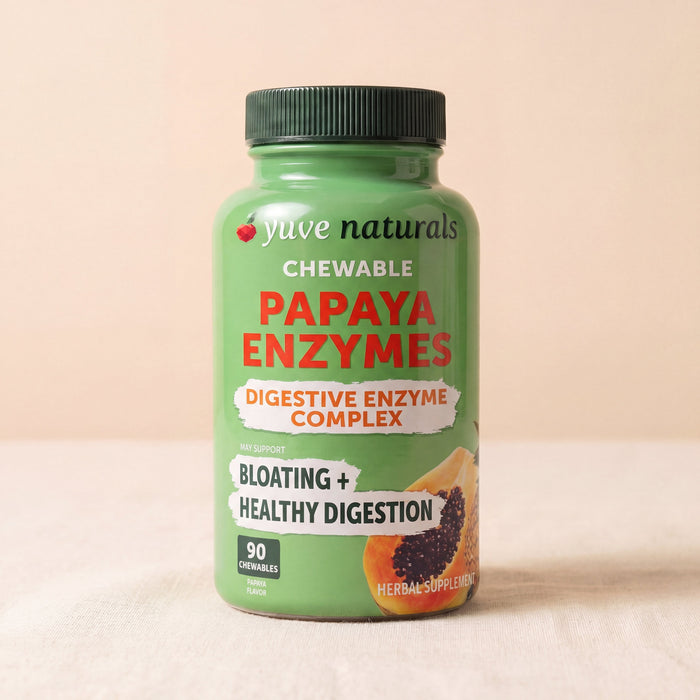
If you're building a calm, supportive routine from the outside in, pair your scent ritual with internal support from Yuve. Their vegan wellness formulas fit naturally into a thoughtful daily routine, especially if you care about gut health, stress balance, and clean ingredients.