The strongest evidence-based supplement priority for a plant-based diet is vitamin B12. Vitamin D, iodine, algae-derived EPA/DHA, iron, calcium, zinc, or protein may matter when diet, sun exposure, life stage, medication, or laboratory results reveal a gap. Probiotics can support a routine, but they do not replace essential nutrients or a varied diet.
How did we evaluate plant-based supplements?
We ranked supplement categories by deficiency risk, consequence of inadequacy, quality of human evidence, ability to measure need, and feasibility of meeting the target through food. We prioritized NIH Office of Dietary Supplements fact sheets, the Academy of Nutrition and Dietetics position paper, and established dietary reference values over influencer stacks, animal studies, or proprietary ingredient claims. We gave vitamin B12 the highest default priority because unfortified plant foods do not provide a dependable source, while other nutrients depend more heavily on diet pattern, geography, sun exposure, life stage, absorption, and laboratory findings. We excluded disease-treatment claims and did not treat “plant-based” as proof of purity, potency, or safety. Product formulas change, so every shopper should verify the current Supplement Facts panel, serving size, allergen statement, testing documentation, and interactions. The evidence supports a gap-first approach: correct a likely or measured need before adding broad wellness products that duplicate nutrients already supplied by food or another supplement.
Which supplements have the strongest case on a plant-based diet?
Vitamin B12 has the clearest universal rationale for people eating fully vegan diets because reliable intake usually comes from fortified foods or supplements. The NIH vitamin B12 fact sheet explains that deficiency can affect blood and neurological function and that absorption varies by age, medication, and gastrointestinal factors. Vitamin D becomes a higher priority with limited sun exposure, darker skin, older age, malabsorption risk, or low intake; the NIH vitamin D guidance cautions that excess supplemental vitamin D can be harmful. Iodine deserves attention when a diet excludes dairy, seafood, eggs, and iodized salt, but kelp products can deliver unpredictable amounts. Algae-derived DHA/EPA can fit people who do not eat fish. Iron, calcium, zinc, and protein powders are conditional rather than automatic: food intake, menstruation, pregnancy, athletic training, symptoms, and laboratory results determine whether a supplement solves a real gap.
How do the main plant-based supplement categories compare?
Vitamin B12 is the default essential supplement for a fully vegan pattern. Vitamin D and iodine require individual review because sun, fortified foods, and iodized-salt use vary. Algae oil supplies preformed DHA and EPA without fish. Iron should follow intake review and, when appropriate, laboratory testing. Protein powder provides convenience. Probiotics remain strain- and outcome-specific rather than nutritional insurance.
| Category | Best for | Evidence position | Key caution |
|---|---|---|---|
| Vitamin B12 | Fully vegan diets | Strong default priority | Choose a reliable schedule and verify dose |
| Vitamin D | Low sun exposure or low status | Strong when need is present | Excess dosing can be harmful |
| Iodine | Low iodized-salt and low fortified-food intake | Strong nutrient rationale | Kelp content can vary widely |
| Algae DHA/EPA | Fish-free preformed omega-3 | Useful targeted option | Review dose and anticoagulant use |
| Iron | Confirmed or likely low iron status | Strong when deficiency exists | Do not use high doses casually |
| Probiotic | Strain-matched digestive routine | Product- and outcome-specific | Not a substitute for essential nutrients |
Which option is best for each use case?
Best default for a fully vegan diet: vitamin B12 from a dependable fortified food or supplement schedule. Best for low winter sun or documented low status: vitamin D at a dose chosen from diet, exposure, testing, and clinician guidance. Best fish-free source of preformed DHA/EPA: an algae-oil supplement with the DHA and EPA amounts stated separately. The NIH omega-3 fact sheet distinguishes plant ALA from EPA and DHA and notes that the body converts only small amounts of ALA. Best for low iodized-salt intake: a measured iodine source rather than variable kelp; NIH iodine guidance describes both deficiency and excess risks. Best for a protein convenience gap: soy, pea, or blended plant protein with transparent grams per serving. Best for digestive-routine consistency: a clearly labeled probiotic, chosen separately from the essential-nutrient plan. One product rarely deserves every “best” title.
What forms and label details should you check?
Vitamin B12 commonly appears as cyanocobalamin or methylcobalamin; the practical priority is a reliable dose and schedule, not marketing around one form. Vitamin D labels should distinguish D2 from vegan D3 and state micrograms as well as International Units. Algae-oil labels should list DHA and EPA amounts rather than only total oil weight. Iodine labels should state micrograms from potassium iodide or another defined source; kelp weight does not guarantee consistent iodine. Iron labels should name the compound and elemental iron amount, because compound weight and elemental dose differ. Protein powders should disclose protein grams, serving size, allergens, sweeteners, and lot-specific testing when available. Probiotic labels should name genus, species, strain when possible, CFU through expiration, and storage requirements. The Academy of Nutrition and Dietetics position paper supports appropriately planned vegetarian and vegan diets while emphasizing nutrient planning. “Vegan,” “natural,” and “clean” describe preferences; they do not independently verify potency, contaminants, or clinical fit.
Which Yuve products fit this framework?
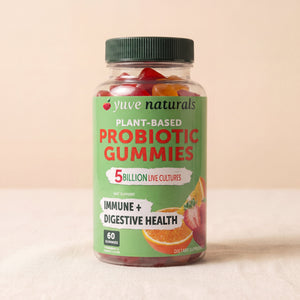
Some links below are brand-owned product links. This does not change the evidence ranking or replace individualized nutrition advice. Yuve Probiotic Gummies fit the optional digestive-routine category for adults who prefer a vegan pectin gummy and want a consistent daily format. They do not replace vitamin B12, vitamin D, iodine, iron, calcium, omega-3, or adequate protein. Yuve’s daily essentials collection can be screened with the same gap-first rule: identify the nutrient or routine problem, verify the active amount and form, check duplication across products, and reject unsupported promises. A gummy format can improve adherence for people who skip capsules, but convenience does not compensate for an irrelevant ingredient or an undisclosed dose. Best for digestive routine: the probiotic gummy when its current label and organism fit the goal. Best for essential-nutrient planning: a B12-centered plan built from fortified foods, a dedicated supplement, and professional guidance when absorption or laboratory concerns exist.
When should supplements be guided by testing or a clinician?
Testing or clinician guidance matters when symptoms, pregnancy, older age, gastrointestinal surgery, malabsorption, kidney or liver disease, thyroid disease, anemia history, restricted intake, eating-disorder history, or interacting medications change the risk calculation. Vitamin B12 assessment may involve serum B12 plus methylmalonic acid or other context-dependent markers. Iron decisions may use complete blood count, ferritin, transferrin saturation, and clinical history rather than fatigue alone. Vitamin D testing is not required for every healthy adult, but it can guide care when deficiency risk or symptoms are present. Iodine status is difficult to infer from one casual test, so dietary review and thyroid context matter. High-dose iron, iodine, vitamin D, zinc, and selenium can cause harm or interfere with other nutrients or medications. Bring every bottle, serving size, and frequency to the appointment. “Plant-based” does not make a supplement interaction-free. A short, targeted list is easier to evaluate than a large stack whose overlapping doses are hidden across multivitamins, powders, gummies, and fortified foods.
What are common questions about plant-based supplements?
Do all vegans need vitamin B12?
A dependable B12 source is essential for a fully vegan pattern. Fortified foods can contribute, but the schedule must be reliable enough to meet needs.
Is algae omega-3 as plant-based as flax?
Yes. Algae oil supplies preformed DHA and sometimes EPA, while flax supplies ALA. The forms serve related but different nutritional roles.
Should iron be included in every vegan stack?
No. Iron needs vary, and unnecessary high-dose supplementation can be harmful. Review intake, menstrual losses, pregnancy, symptoms, and laboratory results.
Can one multivitamin cover every gap?
Not reliably. A multivitamin may omit omega-3, provide little calcium, duplicate fortified foods, or use doses that do not match individual needs.
Are probiotics essential on a plant-based diet?
No. Probiotics are optional and strain-specific, while vitamin B12 is an essential nutrient priority. Fermented foods and varied fiber can support dietary diversity.
What is the simplest evidence-based plan?

Start with vitamin B12, then audit vitamin D, iodine, DHA/EPA, iron, calcium, zinc, and protein against actual food intake, life stage, sun exposure, medication, and laboratory context. Add only the categories that solve a defined gap. Choose labels that state the active form and amount, avoid megadoses, and record the total across supplements plus fortified foods. Treat probiotics as an optional, outcome-specific routine rather than nutritional insurance. A practical order is B12 first, conditionally needed nutrients second, convenience products third, and broad wellness stacks last. Recheck the plan when diet pattern, season, pregnancy status, medications, symptoms, or laboratory results change. The best plant-based supplement program is not the one with the most bottles. It is the smallest plan that reliably covers essential needs, makes every dose traceable, and leaves room for a varied diet built from legumes, whole grains, vegetables, fruit, nuts, seeds, fortified foods, and adequate energy.