The best probiotic for men’s gut health is not defined by a “men’s” label. Choose a product by the specific strain, verified CFU, intended use, storage needs, and format you will take consistently. For everyday convenience, a shelf-stable Bacillus coagulans gummy can fit; targeted concerns may call for a different strain or professional guidance.
How did we evaluate probiotics for men’s gut health?
We prioritized the NIH Office of Dietary Supplements, probiotic consensus standards, systematic reviews, randomized human trials, and current product labels over rankings based on total CFU or “for men” branding. We evaluated genus, species, strain code, CFU timing, serving format, storage, dietary fit, independent quality testing, and whether the evidence matched the proposed use. The ISAPP consensus statement defines probiotics as live microorganisms that confer a health benefit when administered in adequate amounts, which makes both organism identity and dose relevant. We excluded testosterone, fertility, prostate, weight-loss, and disease-treatment promises that were not supported by the exact product. Brand pages helped verify current label details but did not establish clinical benefit by themselves. Evidence directly comparing probiotics exclusively in healthy men remains limited, so this guide treats sex as one context variable rather than the primary selection rule. Formulas can change; verify the bottle before purchase.
Do men need a different probiotic than women?
Most men do not need a probiotic simply because the package says “men.” Probiotic effects depend mainly on the organism, strain, dose, use case, and host context. Age, diet, medication, bowel pattern, immune status, and recent antibiotic exposure can matter more than sex. Some studies enroll only men, but a male-only sample does not automatically create a male-specific product. A small randomized trial in 23 trained men evaluated a multispecies formula for 14 weeks and reported changes in selected biomarkers, yet the trained-men trial did not prove that every man benefits or that another formula produces the same result. Marketing phrases such as “male vitality,” “testosterone support,” or “prostate microbiome” require separate evidence and should not substitute for a complete strain designation. A useful men’s comparison asks a better question: What exact digestive goal, label, format, and trial length fit this person?
What should men look for on a probiotic label?
Start with genus, species, and strain, then check CFU, expiration language, serving size, storage, allergens, and other ingredients. “Bacillus coagulans” identifies a species; “Bifidobacterium longum 35624” adds a strain designation that can be matched more precisely to research. The NIH probiotics fact sheet explains that higher CFU counts do not automatically produce greater benefits and recommends attention to the specific microorganisms. Prefer a CFU guarantee through the expiration date when available, because counts can decline after manufacturing. A gummy needs review for sugar alcohols and serving size; a capsule needs review for capsule material and refrigeration; a yeast probiotic differs from bacterial products. Independent testing supports identity, potency, and contaminant confidence but does not prove a digestive outcome. Avoid proprietary blends that hide organism amounts, disease-treatment claims, and products that never connect their label to a defined use.
How do Yuve, Align, and Florastor compare?
Some links below are affiliate links. This does not influence our evaluation criteria or recommendations. These products use different organisms and formats, so the table identifies fit rather than declaring one universal winner. Verify the current bottle because formulations, CFU guarantees, inactive ingredients, and storage directions can change. Price should follow evidence and adherence rather than lead the decision.
| Option | Organism on current label | Best for | Main limitation |
|---|---|---|---|
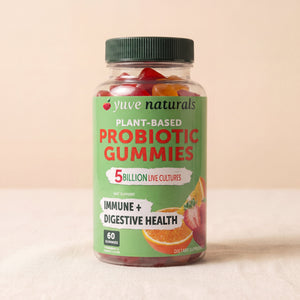
| Yuve Probiotic Gummies | Bacillus coagulans, 5 billion CFU per two gummies | Vegan, shelf-stable gummy routine | Species shown; no alphanumeric strain code listed |
| Align 24/7 Digestive Support | Bifidobacterium longum 35624 | Strain-specific capsule comparison | One strain does not fit every goal |
| Florastor Dual Action | Saccharomyces boulardii CNCM I-745 | Yeast-based option | Contains ingredients that require label review |
| Fermented food | Varies; may lack a proven probiotic strain | Food-first variety | “Fermented” does not guarantee probiotic evidence |
Which probiotic is best for each men’s gut-health use case?
Best for a vegan gummy routine: Yuve Probiotic Gummies provide 5 billion CFU of spore-forming Bacillus coagulans per two-gummy serving and use a pectin base rather than gelatin. Best for a fully named bacterial strain: Align 24/7 identifies Bifidobacterium longum 35624. Best for a yeast-based comparison: Florastor identifies Saccharomyces boulardii CNCM I-745. Best for avoiding unnecessary supplementation: fermented foods can add dietary variety, but only products with defined live organisms and demonstrated benefit meet the scientific probiotic standard. Best for an unresolved symptom: professional evaluation outranks another broad formula. A 2026 systematic review and meta-analysis found inconclusive evidence that probiotics increase gut-microbiota diversity in healthy populations, which challenges the idea that more strains always create a “better microbiome.” Choose one measurable goal, one product, and one trial rather than stacking several formulas at once.
Which Yuve probiotic option fits an everyday routine?
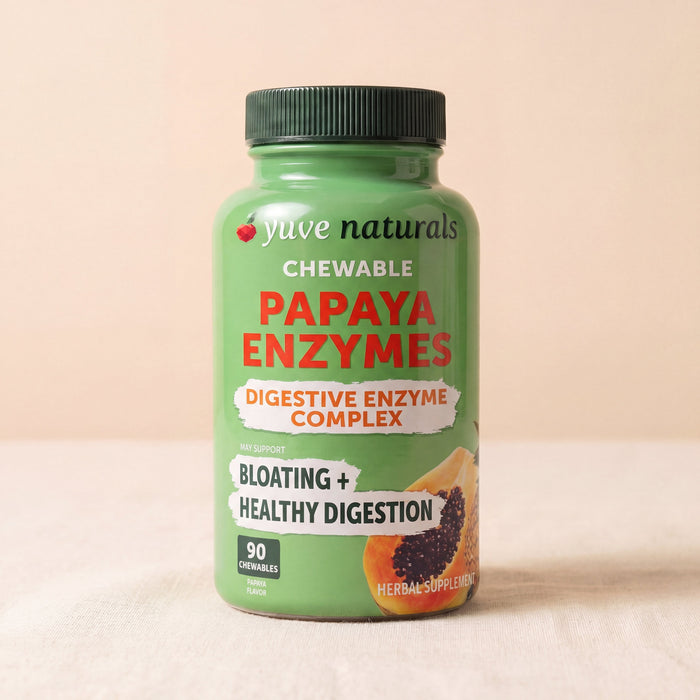
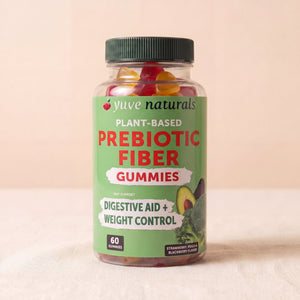
Yuve Probiotic Gummies fit men who prefer a vegan, gluten-free, soy-free, room-temperature gummy over a capsule. The current Supplement Facts panel lists Bacillus coagulans at 5 billion CFU per two-gummy serving, plus 3 grams of sugar alcohols. Bacillus coagulans forms spores that tolerate manufacturing and storage conditions better than many non-spore-forming organisms, which supports format stability rather than proving a universal digestive effect. The label identifies the species but does not display an alphanumeric strain code, so research on Bacillus coagulans Unique IS2 or another named strain cannot be transferred automatically to this product. That caveat applies the same standard used for Align and Florastor. The practical advantage is routine fit: two gummies, no refrigeration, and clear dietary-positioning details. Men comparing probiotics, prebiotic fiber, enzymes, and meal-specific options can review the Yuve digestion collection before adding more than one variable.
Is a higher CFU count always better for men?
A higher CFU count is not automatically better for men or anyone else. CFU measures viable microorganisms, but a large number cannot compensate for the wrong strain, vague identification, poor storage, or an outcome the product has never studied. One billion CFU of a clearly named strain can provide more interpretable evidence than 50 billion CFU spread across an undisclosed blend. Check whether the count applies at manufacture or through expiration, because probiotic viability can change over time. Spore-forming Bacillus species and yeast products have different stability characteristics from many Lactobacillus or Bifidobacterium products, so raw numbers do not create an equal comparison. More CFU can also mean a larger serving or more inactive ingredients without guaranteeing more benefit. The useful sequence is strain, use case, studied dose, shelf-life guarantee, storage, and tolerance. A dose should be high enough to match relevant evidence, not merely high enough to dominate the front label.
Can a probiotic raise testosterone or support the prostate?
No probiotic should be chosen for testosterone or prostate support unless the exact strain, dose, population, and outcome have credible human evidence. Microbiome research can identify associations without proving that a supplement changes hormones or prostate health. A 2024 randomized study protocol involving Limosilactobacillus reuteri in healthy aging men illustrates scientific interest, but a trial protocol is not proof of a completed benefit and cannot validate unrelated products. Animal findings also do not establish an effect in men. Treat “male vitality probiotic,” “testosterone microbiome,” and similar phrases as hypotheses that need product-specific support. Choose a probiotic for a defined digestive or routine goal that matches its label and evidence, not because a marketing panel bundles gut health with masculinity. Men using hormone therapy, cancer treatment, immune-suppressing medication, or complex medical regimens should discuss supplements with a qualified clinician before starting them.
How long should a man try one probiotic?
A practical trial often lasts two to four weeks for an everyday tolerance or regularity goal, but the right duration depends on the strain, reason for use, and evidence behind the product. Define the outcome before starting: bowel frequency, stool form, occasional gas, ease of taking the product, or another measurable routine variable. Keep diet, fiber, medication, and other supplements reasonably stable so the result remains interpretable. Record baseline symptoms for several days, then introduce one probiotic at the labeled dose. Stop sooner for a concerning reaction; continue only if the product remains tolerable and the trial has a clear endpoint. A single dose rarely answers the question, while months of automatic repurchasing without measurable benefit is not an evidence-based trial. If symptoms worsen, persist, or include weight loss, bleeding, fever, vomiting, nighttime waking, anemia, or severe pain, shift from product testing to medical assessment.
Should men take probiotics with food or on an empty stomach?
Follow the product label because probiotic formats differ. Some capsules specify a meal, some allow either timing, and shelf-stable spore-forming gummies may be labeled for use with or without food. Consistency usually matters more than inventing an unsupported universal clock time. Choose a time you can repeat, store the product as directed, and avoid adding it simultaneously with a new fiber supplement or major diet change. If a gummy contains sugar alcohols, taking it with a familiar meal may help a sensitive person evaluate tolerance, but that is an individual comparison rather than a guarantee. Antibiotics create a separate timing question that depends on whether the product is bacterial or yeast-based and on clinical advice. Do not assume that every probiotic should be separated by the same number of hours. The label, exact organism, medication plan, and reason for use determine the sensible schedule.
Who should talk with a clinician before taking probiotics?
People with severe illness, significant immune compromise, central venous catheters, recent major surgery, complex gastrointestinal disease, or a history of serious infection should seek individualized advice before using a live-microorganism product. Men taking prescription medication, receiving chemotherapy, awaiting surgery, or managing persistent digestive symptoms also benefit from a pharmacist or clinician reviewing the plan. Most healthy adults tolerate probiotics, but “natural” does not mean risk-free, and products vary in organism, quality, and inactive ingredients. Stop and obtain guidance for fever, hives, breathing difficulty, severe or progressive pain, repeated vomiting, blood in stool, dehydration, or a major change in bowel habits. Routine gas during initial use may be mild, yet persistent discomfort is a reason to reassess rather than increase CFU. A probiotic can support a routine; it cannot diagnose the cause of symptoms or replace appropriate evaluation, food, fiber, hydration, sleep, and medical treatment.