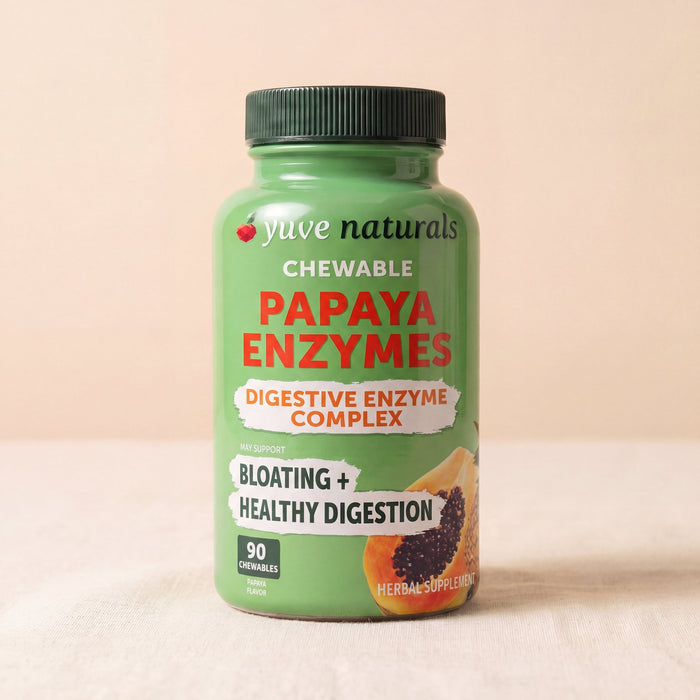
To find hidden fillers, read beyond the Supplement Facts box. Check the Other Ingredients list for binders, coatings, sweeteners, flavors, colors, capsule materials, and processing aids; compare serving size with the front-label claim; review allergen statements; and ask for lot-specific testing when purity or potency matters. “Inactive” does not automatically mean harmful.
How did we evaluate supplement-label fillers?
We evaluated labels by separating dietary ingredients from excipients, then asking what each disclosed substance does, how much context the label provides, and whether independent evidence verifies the finished product. FDA consumer guidance confirms that supplements are not approved for safety and effectiveness before marketing. U.S. Food and Drug Administration labeling guidance, USP and NSF certification standards, current Supplement Facts panels, full Other Ingredients lists, and lot-specific documents received more weight than “clean,” “premium,” “pharmaceutical grade,” or “no junk” slogans. We treated binders, flow agents, capsule shells, flavors, colors, and sweeteners as functional ingredients that require purpose and tolerance review, not automatic hazards. We excluded the false assumption that fewer ingredients always means better quality or that a long botanical blend is more transparent than a short list. The main limitation is that a printed label reports declared composition; it does not independently prove identity, potency, purity, dissolution, microbiological quality, or contaminant results for the bottle in hand.
Where do fillers and excipients appear on the label?
Start with the Supplement Facts panel, which lists serving size, servings per container, dietary ingredients, and declared amounts. Then move immediately below or beside that box to Other Ingredients. The FDA ingredient-labeling guide says binders, colors, excipients, fillers, flavors, and sweeteners belong in the ingredient statement when they are not already identified as sources inside Supplement Facts. Other Ingredients generally appear in descending order by weight, so position provides rough formulation context but not an exact dose. Review the capsule or gummy base, coating, sweeteners, flavor system, color sources, preservatives, anti-caking agents, and processing aids. Check the allergen statement and any “contains” language separately. A listed excipient is not hidden; the practical concern is whether the name, function, source, or amount remains unclear enough to matter for allergies, dietary restrictions, tolerance, or personal preference.
What do common supplement excipients actually do?
Microcrystalline cellulose can add bulk or help a tablet hold its shape. Magnesium stearate can reduce sticking during manufacturing. Silicon dioxide can improve powder flow. Hypromellose or gelatin can form a capsule shell. Pectin can give a gummy structure, while maltitol, isomalt, xylitol, or sorbitol can sweeten or shape texture. Citric acid and sodium citrate can control acidity; natural flavors and color extracts can standardize taste and appearance. These functions do not establish benefit, harm, or product quality by themselves. The relevant question is whether the ingredient conflicts with an allergy, vegan requirement, gluten restriction, medication plan, digestive tolerance, or another defined need. Sugar alcohols, for example, can affect gas or stool patterns in some people, while gelatin conflicts with a vegan preference. “Chemical-sounding” is not a risk category. Dose, route, source, exposure, evidence, and individual context determine whether an ingredient deserves concern.
How can serving size and blends hide useful context?
Compare every front-label number with the serving size before judging potency. “5 billion CFU” may refer to two gummies rather than one, while “1,000 milligrams” may require three capsules. The FDA nutrition-labeling guide requires the Supplement Facts panel to identify serving size and quantitative amounts for dietary ingredients, but proprietary blends may state only the blend’s total weight while listing components in descending order. That format prevents dose-by-dose comparison inside the blend. Also distinguish an ingredient’s source from its active amount: calcium carbonate supplies elemental calcium, and an extract weight does not necessarily equal the amount of a named constituent. For probiotics, inspect organism identity, strain code, colony-forming units, and whether potency is stated at manufacture or through expiration. For enzymes, activity units can be more informative than milligrams. Serving math exposes more practical ambiguity than the word “filler” alone.
What do certifications and certificates of analysis prove?
A certification must be tied to the exact product and verified in the certifier’s directory. NSF explains that NSF/ANSI 173 certification addresses label claims and selected contaminants, while Certified for Sport adds banned-substance testing; GMP registration applies to a manufacturing facility and is not the same as product certification. A USP Verified mark likewise represents a defined voluntary verification program, not a generic use of the letters “USP” in ingredient copy. A certificate of analysis should identify the product, lot, laboratory, test date, methods or specifications, and actual results. A raw-material certificate does not automatically verify the finished bottle, and a “third-party tested” sentence without the tester, scope, or result leaves major questions open. Best for marketplace verification: an active directory listing. Best for the purchased batch: a matching finished-product COA. Best for clinical suitability: a qualified clinician or pharmacist, because purity documentation does not resolve dose or interactions.
How does a Yuve label perform under this rubric?
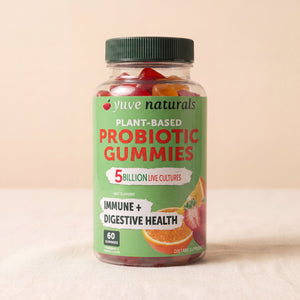
Commercial disclosure: Yuve publishes this article and sells the products linked below. That relationship does not change the label-reading criteria. Yuve Probiotic Gummies currently show a two-gummy serving, 5 billion CFU of Bacillus coagulans at manufacture, 3 grams of sugar alcohol, and a full Other Ingredients list including maltitol, isomalt, water, citrus pectin, acids, flavor extracts, and color extracts. That supports serving, sweetener, and excipient review. The public page does not display an alphanumeric strain code or a lot-specific COA for the purchased batch, so strain-level evidence transfer and batch verification remain limited from the page alone. Yuve states that customers can request a certificate by product and lot. The broader Yuve daily essentials collection contains different formulas, so every SKU still requires its own panel, other-ingredient list, allergen review, directions, and evidence check.
| Evidence layer | What to inspect | What it establishes | What it does not establish |
|---|---|---|---|
| Supplement Facts | Serving, actives, amounts, %DV | Declared dietary ingredients per serving | Independent identity or potency result |
| Other Ingredients | Shell, binders, sweeteners, flavors, colors | Declared excipient composition | Exact amount of each excipient |
| Certification directory | Exact product and active listing | Program-specific independent verification | Suitability for every person |
| Lot-matched COA | Lot, lab, date, tests, specs, results | Documented results for defined attributes | Clinical effectiveness |
Which evidence is best for each buying question?
Best for finding “fillers”: the complete Other Ingredients list, not the front label. Best for checking dose: the serving size and amount per serving in Supplement Facts. Best for a vegan requirement: capsule or gummy material plus every animal-derived source statement. Best for sweetener sensitivity: sugar, sugar alcohol, stevia, and flavor-system disclosures across both label sections. Best for strain-specific probiotic comparison: genus, species, strain code, CFU timing, storage, and expiration. Best for enzyme comparison: named enzymes and activity units rather than milligrams alone. Best for verifying a certification: the exact product’s active listing in the USP or NSF directory. Best for one purchased bottle: a lot-matched finished-product COA. Best for choosing among Yuve formats: inspect each item in the collection separately. “No fillers” is less informative than a complete label plus evidence matched to the attribute you actually care about.
What questions do shoppers ask about hidden fillers?
Are all fillers bad?
No. Many excipients help a tablet hold together, a powder flow, or a capsule remain stable; suitability depends on dose, source, tolerance, and purpose.
Is magnesium stearate a red flag?
Its presence alone does not prove poor quality or harm. Ask why it is used, whether the product fits your restrictions, and what finished-product testing supports quality.
Does “natural flavor” reveal every flavor component?
No. The term is a permitted category declaration, so people with a specific allergy or avoidance need more detail from the manufacturer.
Are proprietary blends automatically unsafe?
No, but they limit dose transparency because individual component amounts may not be shown. That makes evidence matching and interaction review harder.
Does a GMP badge prove the product was tested?
Not necessarily. Facility GMP registration and finished-product certification answer different questions and should not be treated as interchangeable.
Is a COA better than the label?
They serve different roles. The label states declared composition and directions, while a lot-matched COA documents selected test results and specifications.
What is the bottom line for reading a supplement label?
Read a supplement in layers. Start with serving size and declared amounts in Supplement Facts, then inspect Other Ingredients for the capsule or gummy base, binders, coatings, flow agents, sweeteners, flavors, colors, and preservatives. Match each excipient to a real concern such as allergy, vegan status, gluten restriction, digestive tolerance, or medication review instead of treating every unfamiliar name as harmful. Check front-label numbers against the actual serving and avoid proprietary blends when exact doses matter. Verify USP or NSF claims in the official directory, distinguish facility GMP registration from product certification, and request a finished-product COA tied to the purchased lot when purity or potency matters. A transparent label improves comparison, but it cannot prove clinical effectiveness. The strongest buying decision combines complete declared composition, product-specific verification, and a formula that fits one defined need.