Ever feel like your stomach inflates like a balloon by afternoon? You’re not alone. That frustrating, sluggish feeling is often your body's way of telling you it’s struggling to process what you’ve eaten. This is where learning how to start clean eating can be a total game-changer, and I promise, it's not about being perfect.
This guide will walk you through the simple, powerful steps to shift your focus to whole, minimally processed foods that make your body feel good from the inside out. We'll cover what clean eating really means for your gut, how to start today with small, easy changes, and how to build meals that leave you energized, not bloated. You’re essentially giving your gut the high-quality fuel it's been craving. Let's do this together.
What Does Clean Eating Actually Mean For Your Gut?
That frustrating, balloon-like feeling in your stomach that hits mid-afternoon? So many of us have been there. It's your body waving a little white flag. But learning how to start clean eating isn't about some super-strict diet. I do NOT think deprivation is the answer.
Think of it as simply tidying up your diet. You’re just choosing foods that are as close to their natural state as possible. It’s about making simple swaps, like reaching for an apple instead of a bag of chips, or choosing whole-grain bread over the fluffy white stuff.
This isn't just some fleeting trend, either. It’s a genuine movement toward better wellness. The global health market is now valued at over $7.32 trillion, and it's being driven by younger generations—a staggering 90% of Millennials and Gen Z now prioritize spending their money on healthy food.
The All-Important Gut Connection
How does eating cleaner directly tackle that stubborn bloat? It all comes down to your gut. Your digestive system is an amazing ecosystem that thrives on the fiber, vitamins, and minerals found in whole foods. When your diet is heavy on processed items, you're often feeding the less-helpful bacteria in your gut, which can lead to inflammation, gas, and general discomfort. Dun, dun, dun—unwelcome gas. Yikes!
Clean eating helps turn things around by:
- Fueling your good bacteria: Foods like fruits, veggies, and whole grains are packed with prebiotics—the favorite food of your beneficial gut microbes.
- Calming inflammation: Many processed foods contain ingredients that can irritate the gut lining. Whole foods, on the other hand, are often naturally anti-inflammatory.
- Boosting digestion: A diet rich in natural fiber is one of the best ways to keep your digestive system running smoothly, which helps prevent constipation and the bloating that often comes with it.
To make this even clearer, let's break down the philosophy into a simple framework.
The Core Principles of Clean Eating
This table breaks down the simple 'eat more of this' and 'eat less of that' philosophy to make your first steps feel easy and clear.
| Focus On (Eat More) | Limit (Eat Less) |
|---|---|
| Whole fruits and vegetables | Processed snacks (chips, cookies) |
| Lean proteins (chicken, fish, tofu, legumes) | Sugary drinks (soda, sweetened juices) |
| Whole grains (quinoa, brown rice, oats) | Refined grains (white bread, pasta) |
| Healthy fats (avocado, nuts, olive oil) | Packaged meals and fast food |
| Water and herbal teas | Artificial sweeteners and additives |
| Fermented foods (yogurt, kimchi, sauerkraut) | Excessive alcohol |
See? It's not about complex rules. It's about consciously choosing ingredients that will nourish you.
This approach isn't about restriction; it's about abundance. It’s about filling your plate with vibrant, nourishing foods that make you feel fantastic. For a deeper dive into understanding and improving your digestive system, explore this comprehensive beginner’s guide to gut health.
Your First Steps to Start Clean Eating Today
So, you're ready to start eating clean. That's fantastic. But the thought of completely overhauling your diet can feel like you're standing at the bottom of a mountain, looking up. It's easy to get overwhelmed and just... not start.
I get it. But I promise you, learning how to start clean eating isn't about some massive, overnight transformation. It’s all about taking small, powerful steps that feel good and build on each other.
This isn’t a race. There are no rigid rules. Think of it more as a series of gentle nudges in a healthier direction. We're going to focus on simple swaps you can make today—no complicated recipes or weird, expensive ingredients required.
Start With What You're Sipping
One of the easiest yet most impactful changes you can make is to look at what you’re drinking. Sugary drinks like sodas, sweetened iced teas, and those fancy coffee creations are often loaded with empty calories and refined sugars. They can leave you feeling sluggish and bloated.
Here’s your first move: swap one sugary drink a day for a glass of water. That’s it. This tiny habit does two amazing things at once—it cuts your sugar intake and helps you stay hydrated, which is absolutely critical for good digestion. Once that feels like second nature, swap another. Before you know it, water will become your go-to.
This simple switch is a perfect example of how small changes can create big results for your gut health.
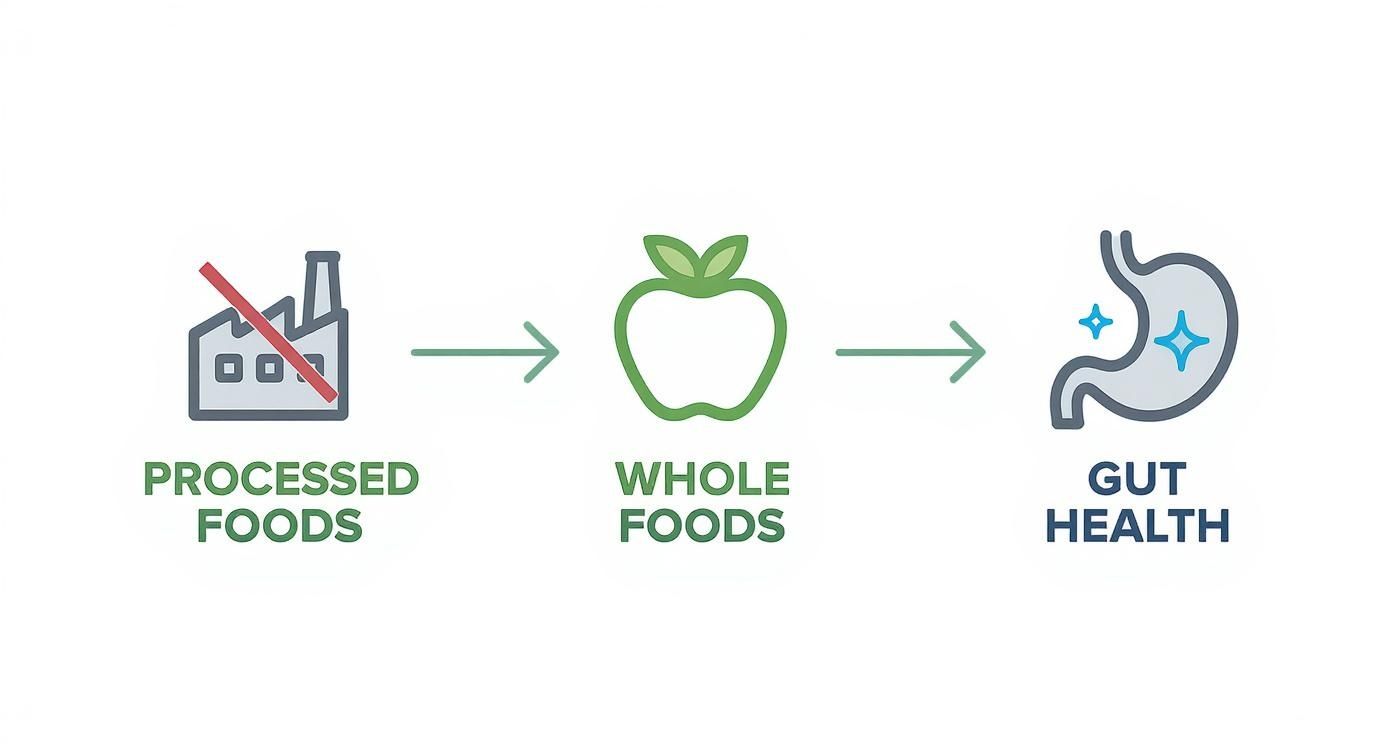
This visual really captures the core idea of clean eating: moving away from processed factory foods and toward whole foods that support a happy, healthy gut.
Become a Label Detective
Alright, next up we're heading to the grocery store aisle. Processed foods are sneaky, hiding sugars and additives in places you’d never expect. Your new mission, should you choose to accept it, is to become a savvy label reader. Don't worry, it's easier than it sounds.
Just start by glancing at the ingredients list on packaged foods. Here's a solid rule of thumb: if the list is a mile long and filled with words you can’t pronounce, it’s probably not the cleanest choice.
Focus on spotting hidden sugars. They go by a ton of different names, including:
- High-fructose corn syrup
- Dextrose
- Sucrose
- Cane juice
- Barley malt
You’ll be surprised where they pop up—everywhere from pasta sauces and salad dressings to crackers and yogurt. Just being aware is a huge step forward. You don’t have to banish these foods forever, but simply choosing the option with fewer, more recognizable ingredients makes a real difference.
Fill Half Your Plate with Veggies
Here’s a simple visual trick that makes clean eating incredibly straightforward: at lunch and dinner, aim to fill half of your plate with vegetables. It’s a powerful guideline that shifts your focus from what you can't have to all the delicious things you can add to your plate.
Veggies are packed with fiber, vitamins, and prebiotics that your gut bacteria absolutely love. They help you feel full and satisfied, naturally crowding out less nutritious options without you even realizing it.
A little tip from my own experience: I used to really struggle with this until I started adding a simple side salad to every dinner. It’s an effortless way to boost your veggie intake. A handful of spinach with a drizzle of olive oil and a squeeze of lemon juice takes literally seconds to prepare! This small win made me feel so much better and more in control.
This strategy isn't just about your personal health; it's part of a much larger global movement. By choosing more plant-based foods, you're not only cleaning up your own diet but also supporting a healthier planet. In the U.S., a recent survey found that 58% of people emphasized the need to reduce chemicals in our food supply, showing a clear demand for cleaner, safer options. You can discover more insights about these global wellness trends and how they're shaping our food systems.
Choose Whole Grains and Healthy Fats
The final pieces of the puzzle for your first week involve choosing better carbs and fats. Again, this is an area where simple swaps are your best friend.
-
Whole Grains: Instead of white bread, white rice, or regular pasta, try their whole-grain counterparts. Think brown rice, quinoa, oats, and 100% whole-wheat bread. These options contain far more fiber, which is essential for stable energy levels and a happy digestive system. A simple swap like having oatmeal with berries for breakfast instead of a sugary cereal can set a positive tone for your entire day.
-
Healthy Fats: Not all fats are created equal. Clean eating encourages you to embrace the healthy fats found in whole foods, which are vital for brain health and keeping you feeling full.
- Avocados: Add slices to your toast, salad, or tacos.
- Nuts and Seeds: A small handful makes a fantastic, satisfying snack.
- Olive Oil: Use it as your primary cooking oil or as the base for salad dressings.
Making these small adjustments consistently is the real secret to success. This journey isn't about perfection; it's about progress. Every clean choice you make is a win for your body and your gut. You’ve got this.
Building Your Clean Eating Shopping List
Any experienced clean eater will tell you: a successful week of healthy meals doesn't start in the kitchen. It starts at the grocery store. I know how overwhelming those aisles can feel when you're just starting out, with flashy packaging and confusing health claims everywhere you look.
But I'll let you in on a little secret—the easiest way to win at the grocery store is to simply shop the perimeter.
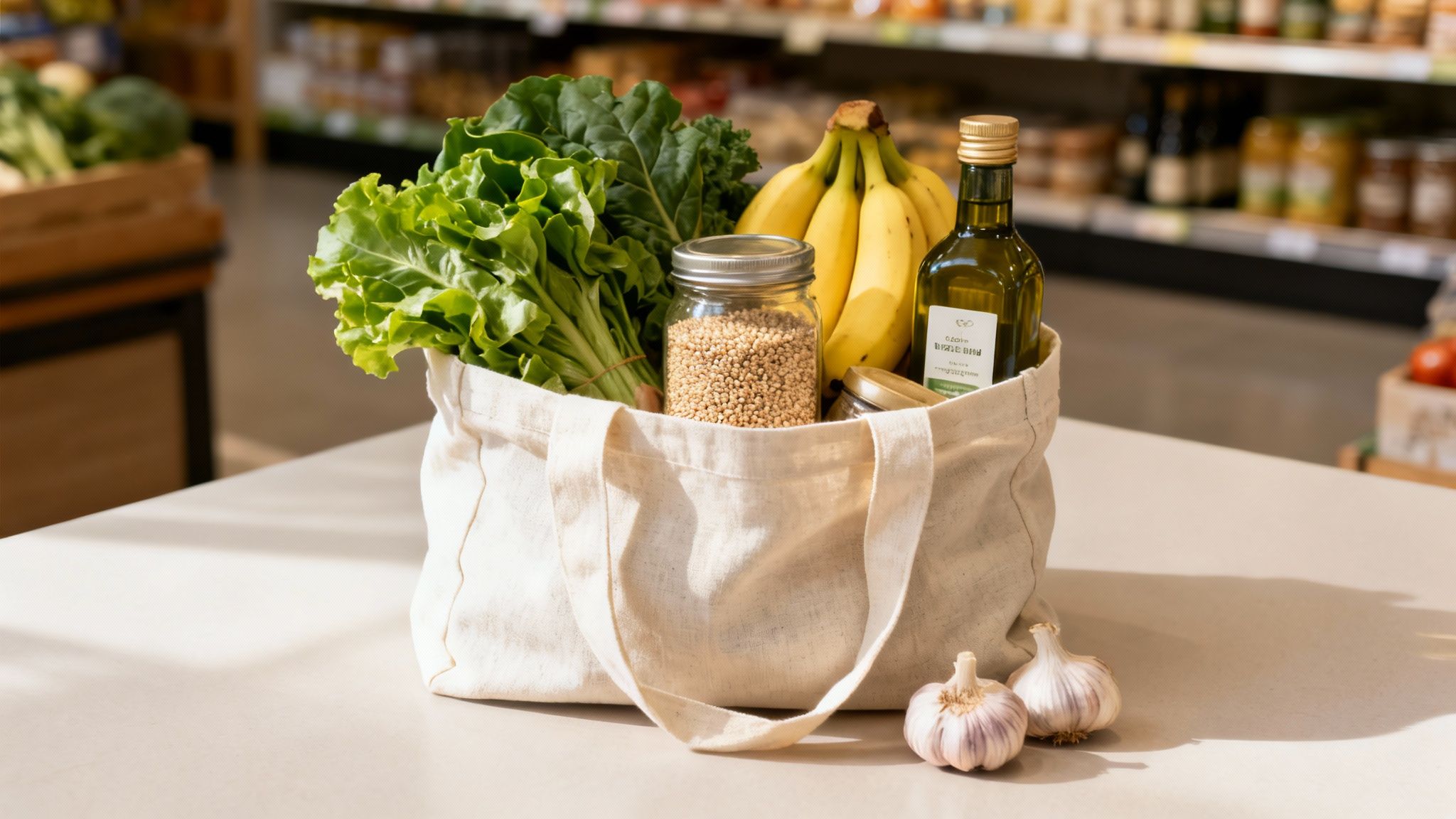
It's a surprisingly simple trick. The outer ring of most stores is where you'll find the fresh, whole foods: produce, meat, fish, and dairy. The middle aisles? That's typically where the highly processed, packaged stuff lives. By making the store's outer loop your main route, you're already setting yourself up for success.
Your Essential Clean Eating Shopping List
To make things even easier, I've put together a sample shopping list you can use as a guide. Think of this as your cheat sheet for filling your cart with vibrant, nutrient-dense foods that will make you feel fantastic.
| Produce | Lean Proteins | Whole Grains | Healthy Fats | Pantry Staples |
|---|---|---|---|---|
| Leafy Greens (kale, spinach) | Skinless Chicken or Turkey | Quinoa | Avocados | Low-sodium Broth |
| Berries & Apples | Wild-Caught Salmon | Brown Rice | Extra Virgin Olive Oil | Canned Beans & Lentils |
| Broccoli & Cauliflower | Eggs | Rolled Oats | Nuts (almonds, walnuts) | Herbs & Spices |
| Onions & Garlic | Tofu or Tempeh | 100% Whole-Wheat Bread | Seeds (chia, flax) | Canned Tomatoes |
| Bananas & Sweet Potatoes | Grass-Fed Beef (in moderation) | Buckwheat | Coconut Oil | Apple Cider Vinegar |
Keep this list handy on your phone or a notepad. It takes the guesswork out of shopping and helps you stay focused on bringing home only the good stuff.
Why Your Gut Loves Garlic, Onions, and Bananas
Ever wonder why certain foods seem to make your digestive system feel so good? A big part of the answer lies in prebiotics.
Think of prebiotics as fertilizer for the good bacteria (probiotics) living in your gut. Foods like garlic, onions, asparagus, and even slightly under-ripe bananas are packed with them. When you eat these foods, you’re not just feeding yourself—you’re feeding the beneficial microbes that help reduce bloat, improve digestion, and support your overall health. It’s a foundational piece of the clean eating puzzle.
Stocking a Pantry for Effortless Meals
A well-stocked pantry is your secret weapon against the temptation of last-minute takeout. Having these staples on hand means a healthy, clean meal is never more than 15-20 minutes away.
Here’s what I always have in my pantry:
- Canned chickpeas and black beans (always rinsed!)
- Quinoa and brown rice
- Rolled oats for quick breakfasts
- Raw nuts and seeds for snacking and toppings
- A quality extra virgin olive oil and coconut oil
When your kitchen is full of nourishing options, you're more likely to make choices that align with your goals. On that note, don't forget about your cooking tools. Opting for PFOA and PTFE-free cookware is another smart step to reduce exposure to unwanted chemicals.
A key principle to remember: Clean eating is about nourishment, not deprivation. Your kitchen should feel like a place of abundance and health.
Of course, we have to talk about the cost. A 2024 report found that a healthy diet costs an average of $4.46 per person per day globally, a price that is unfortunately out of reach for around 2.6 billion people. While this highlights a major challenge, it also reinforces the importance of building your meals around affordable staples like beans, lentils, oats, and in-season produce to make clean eating sustainable for your budget.
Finally, understanding food labels is a huge part of this lifestyle. You can learn more about non-GMO foods and see how that knowledge fits perfectly with clean eating principles.
A Sample 7-Day Clean Eating Meal Plan
Alright, let's move from theory to the kitchen. I know that staring at a blank weekly calendar and trying to figure out what to eat can feel daunting. But trust me, a little bit of planning is the secret sauce to making clean eating feel second nature, not like a chore.
This isn't about boring, restrictive food. It’s about eating vibrant, satisfying meals you’ll actually look forward to. I’ve put together this 7-day plan as a flexible template, not a set of rigid rules. It’s packed with vegan-friendly options to show you just how delicious and diverse this way of eating can be. Think of it as your starting point for inspiration.
A Quick Note on Meal Prep
Before we jump into the meals, let's talk prep. Seriously, spending just an hour or two on a Sunday afternoon can save you a mountain of stress during the week. When you're tired after a long day, having healthy components ready to go is a game-changer.
For this specific plan, here's what I recommend prepping ahead of time:
- Cook a big batch of quinoa. This will be your go-to grain for several lunches and dinners.
- Chop your veggies. Dice onions, peppers, and carrots. Wash and thoroughly dry your leafy greens so they don't get soggy.
- Whip up a simple vinaigrette. Just whisk together some good olive oil, lemon juice, and a pinch of salt and pepper. It’s so much better than store-bought.
- Rinse your beans. Have your canned chickpeas and lentils rinsed and stored in airtight containers.
Your future self will thank you, I promise.
Your Energizing 7-Day Plan
Here’s what a week of clean, delicious eating can look like. Feel free to swap days or meals based on your schedule and what you're craving.
Day 1: Monday Reset
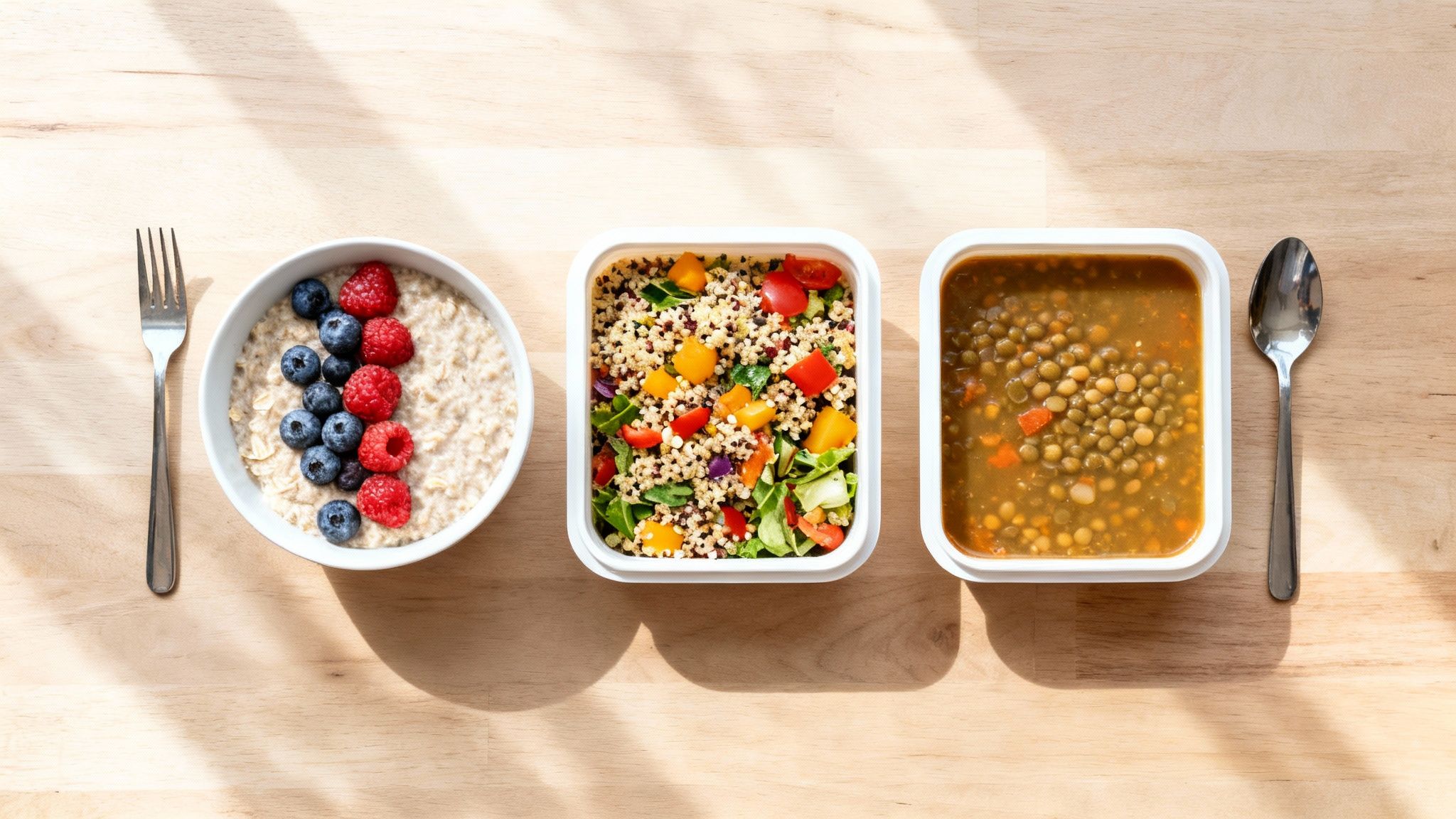
- Breakfast: Oatmeal made with water or unsweetened almond milk. Top it with a handful of fresh berries and a sprinkle of chia seeds.
- Lunch: A big quinoa salad with chopped cucumber, tomatoes, bell peppers, and chickpeas, tossed with your pre-made lemon vinaigrette.
- Dinner: A hearty, warming lentil soup made with vegetable broth, carrots, celery, and onions.
Day 2: Taco Tuesday Twist
- Breakfast: A simple green smoothie. Blend a big handful of spinach, a banana, and unsweetened almond milk.
- Lunch: Leftover lentil soup. It’s one of those magical dishes that always tastes better the next day!
- Dinner: Black bean and corn lettuce wraps. Just sauté black beans, corn, and diced onion with a little chili powder and cumin, then scoop the mix into large lettuce leaves. Top with fresh salsa and avocado.
Day 3: Mid-Week Power-Up
- Breakfast: A slice of whole-wheat toast topped with mashed avocado and a sprinkle of red pepper flakes for a little kick.
- Lunch: Leftover black bean and corn mixture served over a bed of that pre-cooked quinoa.
- Dinner: Roasted vegetable medley. Toss broccoli florets, sweet potato chunks, and Brussels sprouts with a bit of olive oil and your favorite herbs, then roast until tender and slightly crispy. Serve with a side of quinoa.
Day 4: Simple & Satisfying Thursday
- Breakfast: Oatmeal again! This time, try topping it with sliced banana and a spoonful of almond butter for healthy fats and staying power.
- Lunch: Leftover roasted vegetables and quinoa from last night's dinner.
- Dinner: A large "kitchen sink" salad. Start with a bed of spinach and toss in any leftover veggies, chickpeas, and a sprinkle of sunflower seeds for crunch.
A Personal Win: When I first started eating clean, I relied heavily on big salads like this. It taught me that a satisfying meal doesn't have to be complicated. It's all about combining simple, nutrient-dense ingredients. For more guidance on building these kinds of meals, check out this excellent plant-based nutrition guide that breaks down the essentials.
Day 5: Feel-Good Friday
- Breakfast: Smoothie time! Repeat Tuesday's recipe or get creative with different fruits you have on hand.
- Lunch: That leftover kitchen sink salad. Easy and done.
- Dinner: Homemade veggie burgers on whole-wheat buns with a large side salad. You can find tons of simple, clean recipes online using ingredients like black beans, mushrooms, or lentils.
Day 6: Weekend Wellness
- Breakfast: Tofu scramble. Crumble some firm tofu into a hot pan with a pinch of turmeric (for color!), black pepper, and chopped spinach for a protein-packed start to your day.
- Lunch: Enjoy the leftovers from Friday night’s veggie burgers.
- Dinner: Homemade pasta night. Use whole-wheat or chickpea pasta and toss it with a simple tomato sauce loaded with veggies like zucchini, bell peppers, and mushrooms.
Day 7: Sunday Soul Food
- Breakfast: A bowl of plain coconut yogurt topped with fresh fruit and a handful of walnuts.
- Lunch: Leftover veggie pasta. Simple, satisfying, and no cooking required.
- Dinner: Cozy sweet potato and chickpea curry. Make it with full-fat coconut milk and lots of warming spices like ginger, garlic, and turmeric. Serve it over a bed of brown rice.
Smart Snacking Ideas
Feeling hungry between meals is totally normal, especially when you first start. Instead of reaching for something processed, keep these clean options on hand:
- An apple with a small handful of almonds
- Carrot and cucumber sticks with hummus
- A small bowl of fresh berries
- A handful of walnuts or pumpkin seeds
This meal plan is really about showing you that learning how to start clean eating is an exciting journey into flavor and nourishment, not a boring path of restriction. Have fun with it, and enjoy the process of discovering how amazing real food can make you feel.
Dealing with Real-Life Hurdles and Your Digestive System
Let's get real for a moment. Making a big shift in how you eat is a major undertaking, and it's rarely a straight line from A to B. You're going to have days where you miss your old go-to pizza, or you'll find yourself at a party where every appetizer is deep-fried. This is completely normal—we've all been there.
The key to learning how to start clean eating isn’t about perfection. It’s about building resilience and being prepared for those little bumps in the road so they don’t throw you completely off course. Acknowledging that challenges will pop up is the first step to overcoming them.
Cravings and Social Outings
Navigating a dinner out with friends or a big family meal can sometimes feel like a test you didn't study for. All your best intentions can feel a little shaky when you're faced with a menu full of creamy pasta and tempting desserts.
Here’s a simple game plan that can help:
- Scout the menu ahead of time. Most restaurants post their menus online. Choosing a clean, appealing option before you arrive takes the pressure off making a healthy choice on the spot.
- Don't hesitate to make simple requests. Asking for dressing on the side, requesting your salmon grilled instead of pan-fried, or swapping fries for a side salad are all totally reasonable. You'd be surprised how willing most kitchens are to accommodate.
- Remember the real reason you're there. You’re there to connect with people. Food is part of the experience, but it doesn't have to be the main event.
And when a craving strikes—because it will—don’t panic. Cravings are just signals. Before you give in, ask yourself: Am I actually hungry? Or am I bored, stressed, or just thirsty? If it’s genuine hunger, grab one of your healthy, prepped snacks. If you suspect it's emotional, try a quick walk or a few deep breaths first.
That Awkward Gut Adjustment Period
Now, let's talk about something that can really throw people for a loop: the digestive transition. When you start flooding your system with fiber from all those wonderful vegetables, beans, and whole grains, your gut microbiome has to adapt. Think of it as a whole new crew showing up for work in your digestive tract—it takes them a bit to get into a rhythm.
In the meantime, you might experience some bloating and gas. It's frustrating, I know, especially when you're working so hard to do something positive for your body.
I remember this phase so clearly from my own journey. I was eating all this beautiful, colorful food but felt like an inflated balloon. It was discouraging, but then I realized my gut just needed some extra backup to handle all the good stuff I was throwing at it. This is exactly why our founder Sam developed our supplements—he struggled with the same digestive discomfort for years.
This is where targeted digestive support can make all the difference. To help your system manage the new influx of fiber and nutrients, a high-quality digestive enzyme is a smart, proactive step to feel great and enjoy food without discomfort.
Yuve's Vegan Digestive Enzymes are formulated to give your body that extra help. They contain a potent mix of enzymes, prebiotics, and probiotics that work together to:
- Break down food more efficiently, helping to reduce that heavy, "rock in your stomach" feeling.
- Ease gas and bloating by ensuring food is properly digested before it has a chance to ferment and cause discomfort.
- Maximize nutrient absorption, so you get the full benefit from every healthy bite you take.
Think of it as giving your digestive system a helping hand during the transition. It can make the adjustment period far more comfortable, helping you stick with your new habits for the long haul. Incorporating fermented foods is another fantastic way to support this process. You can learn more about how fermented foods can aid digestion and see how they can complement your clean eating lifestyle.
Your Clean Eating Questions, Answered
Jumping into a new way of eating is exciting, but let's be honest, it usually brings up a ton of questions. I totally get it. To help you feel confident as you get started, I've rounded up the answers to the things I get asked most often.
How Long Until I Actually Feel a Difference?
This is probably the number one question, and the honest answer is: everyone’s body is a little different. That said, many people tell me they feel more energized and way less bloated within the very first week. That familiar afternoon slump? It might just become a thing of the past.
More noticeable changes, like clearer skin or more stable moods, often start to show up after a few solid weeks of sticking with it.
My most important piece of advice? Focus on how you feel, not just the number on the scale. Celebrate those small wins, like not feeling that heavy, uncomfortable fullness after lunch. Those are the real victories that keep you going.
Can I Still Go Out to Eat?
Absolutely! Adopting a clean eating lifestyle shouldn't mean you have to become a hermit. It just means learning to navigate a restaurant menu with a bit of savvy.
Here are a few of my go-to tricks:
- Look for key words. "Grilled," "steamed," or "baked" are almost always safe bets.
- Don't be shy about customizing. It's perfectly fine to ask for dressings on the side or to swap out fries for a side salad or steamed veggies. This is a simple but powerful move.
- Do a little recon. A quick glance at the menu online before you go can save you a lot of stress and help you make a great choice without feeling rushed.
Having a social life is a huge part of being happy and balanced. Your food choices should support that, not get in the way.
Is This Going to Be Super Expensive?
This is one of the biggest myths I want to bust right now. Clean eating does not have to drain your bank account. In fact, many of the foundational foods are some of the most affordable things in the grocery store.
The trick is to build your meals around budget-friendly powerhouses like beans, lentils, oats, and whatever produce is in season. Buying staples like brown rice and quinoa in bulk can also lead to huge savings over time. You’ll be surprised at how much you save just by cutting out pricey, pre-packaged "health" foods and focusing on simple, whole ingredients instead.
What if I Slip Up and Eat Something Processed?
Please hear me on this: it is okay. One "unclean" meal or snack does not erase all of your progress. I’ll say it again—it does not derail you.
The goal here is consistency, not perfection. This is a long-term lifestyle, and a huge part of making it sustainable is learning to be flexible and kind to yourself. Don't let one less-than-ideal choice become an excuse to give up. Just acknowledge it without judgment and get right back on track with your very next meal. You've got this.
Your digestive system is your partner on this journey. To make the transition smoother and help your body get the most out of all these amazing new foods, it helps to give it a little support. Yuve Vegan Digestive Enzymes can help ease any occasional bloating and ensure you're absorbing all those fantastic nutrients.
Learn more about how our Digestive Enzymes can support your clean eating journey.