Meta title: Plant Based Wellness Products Guide for Gut Health and Daily Support
Meta description: Learn how to choose plant based wellness products that support digestion, energy, and nutrient needs, including how to spot quality, avoid bioavailability gaps, and read labels with confidence.
Your stomach feels off, your energy tanks mid-afternoon, and every wellness aisle seems to promise a miracle in a pretty green bottle. If that sounds familiar, you're not failing at health. You're dealing with a very noisy category.
Plant based wellness products can absolutely support digestion, energy, and daily nutrition. But not all of them are built the same, and that's where people get stuck. Some formulas are thoughtful and useful. Others are mostly marketing, with a side of filler and wishful thinking.
Welcome to Plant Based Wellness
A lot of people arrive here for the same reason. They want to feel better, but they're tired of vague advice like “just eat more plants” when their real-life issues are things like bloating after lunch, low energy by 3 PM, or confusion about whether a vegan supplement will work.
That frustration makes sense. Wellness gets messy fast when every label says “clean,” “natural,” or “plant-powered.” Those words sound reassuring, but they don't tell you whether a product fits your body, fills a true gap, or absorbs well enough to matter.
The interest in this space is very real. The plant-based supplements market analysis from Market Intelo says the global plant-based supplements market reached $27.52 billion in 2025 and is projected to grow at a 9.0% CAGR, with 68% of supplement buyers prioritizing “natural” or “plant-based” labels. What that means for you is simple. You're not the only person trying to sort through this. More products are showing up because demand is high.
Why this category feels so confusing
Part of the confusion is that people lump everything together. A greens powder, a vegan probiotic, a digestive enzyme, and an algae-based omega-3 are all plant based wellness products, but they do very different jobs.
Another issue is that many articles stop at the feel-good part. They'll tell you plants are healthy, which is true, but they won't explain where bioavailability, ingredient form, or delivery system can make or break the result.
Practical rule: A plant-based label tells you where an ingredient comes from. It does not tell you whether the formula is useful for your specific goal.
What actually helps
When I talk with people about supplements, I like to bring it back to three questions:
- What problem are you solving: Bloating after meals, low energy, or a likely nutrient gap?
- What form makes sense for your routine: Capsule, powder, chewable, or liquid?
- Will your body absorb it well: This matters more than most labels admit.
If you've had digestive discomfort for a while, I get why you might be skeptical. You buy a product hoping for relief, then end up with more gas, no change, or a cabinet full of half-used jars. Yikes.
Plant based wellness products can be helpful. You just need a more honest filter for choosing them.
What Are Plant Based Wellness Products Exactly
Plant based wellness products are supplements or functional wellness formulas made from botanicals, meaning ingredients sourced from plants such as fruits, vegetables, herbs, roots, seeds, whole-food concentrates, or algae.

That sounds broad because it is. This category includes more than vegan protein powder. It can include digestive enzymes from fruit, herbal blends for stress support, algae-based omega-3s, plant-sourced vitamins, probiotics in vegan capsules, and fiber blends made from whole plant ingredients.
Think of them as tools, not a personality
You don't need to “be a wellness person” to use them well. It helps to sort them by job:
| Product type | What it usually helps with | Common everyday format |
|---|---|---|
| Powders | Fiber, greens, protein, prebiotics | Smoothies, water, oatmeal |
| Capsules | Digestion, vitamins, herbs, probiotics | Daily supplement routine |
| Chewables or gummies | Convenience, kid-friendly support, simpler habits | Morning or evening routine |
| Liquids or shots | Fast add-ins, herbal blends, concentrated extracts | Quick use on busy days |
A powder can be useful if you already make smoothies. A capsule may be easier if you want targeted support without changing your meals. A chewable can work better for someone who hates swallowing pills.
What makes a product plant based
The main active ingredient comes from a plant source, and the product avoids common animal-derived inputs such as gelatin, whey, or collagen. That doesn't automatically mean the product is high quality, but it does tell you the formula was designed around plant ingredients.
If you're trying to understand the overlap between wellness categories like supplements, personal care, and ingredient transparency, this essential guide for clean beauty enthusiasts is a helpful example of how to think about cleaner product choices beyond food.
For a closer look at one specific category, Yuve's article on plant-based vitamins can help you see how these products fit into daily nutrition.
A good shortcut is to ask, “Is this product trying to nourish, fill a gap, or change a symptom?” The answer tells you how to judge it.
The Real Health Benefits You Can Expect
I want to be both encouraging and clear. Plant based wellness products can support health, but they work best when they're tied to a real need and backed by a solid dietary pattern. They are not a shortcut around sleep, meals, stress, or consistency.
That said, the benefits linked with plant-forward eating are meaningful. An Everyday Health summary of the research on plant-based diets reports that plant-based diets are associated with a 16% reduction in the risk of developing cardiovascular disease, a 31% decrease in mortality from this condition, and lower LDL cholesterol by 10% to 15%. In plain language, a plant-centered approach can support heart health in measurable ways.
What this means in daily life
The practical benefits are often found in familiar categories:
- Digestion support - Fiber-rich foods and well-formulated gut-support products may help keep things moving and make meals feel less heavy.
- Steadier energy - Not a fake buzz. More like fewer crashes when your routine includes nutrient-dense foods and the right support.
- Long-term health support - Especially when plant-based habits replace ultra-processed patterns instead of sitting on top of them.
A common misunderstanding is that every plant-based product gives every plant-based benefit. It doesn't work like that. A probiotic won't do the same job as an algae omega-3. A digestive enzyme won't replace a nutrient gap. The product has to match the goal.
Where people get disappointed
People often buy a supplement expecting a whole lifestyle in a capsule. Then they're frustrated when a greens powder doesn't fix constipation, or a gummy vitamin doesn't solve afternoon fatigue rooted in under-eating, poor sleep, or stress.
I also think the word “natural” can create false confidence. Natural doesn't always mean effective. It also doesn't mean your body can use the ingredient well.
The biggest win comes from matching the right product to the right problem, not from collecting the most products.
A realistic expectation
If your main issue is bloating, a plant-based digestive support product may help around meals. If your concern is overall wellness, whole-food plant patterns plus targeted supplementation can make more sense than random single-ingredient buys.
The point isn't perfection. It's choosing supports that make your body feel calmer, more consistent, and less like it's staging a protest after lunch.
Key Ingredients That Actually Move the Needle
Ingredient lists can get weird fast. Tiny print, big promises, and names that sound like a chemistry exam. I'd rather make this simple and useful.
The ingredients worth your attention are the ones tied to a real body process. Digestion. Gut balance. Stress response. Nutrient support. If a label can't tell you what the ingredient is supposed to do, that's your first clue to keep walking.
Digestive enzymes for meal support

Digestive enzymes help break food into smaller parts so your body can process it more comfortably. Two well-known plant-derived examples are bromelain from pineapple and papain from papaya.
If you tend to feel overly full, sluggish, or gassy after meals, this is one category to pay attention to. Enzymes aren't magic, but they can be a practical support for people who know certain meals hit hard.
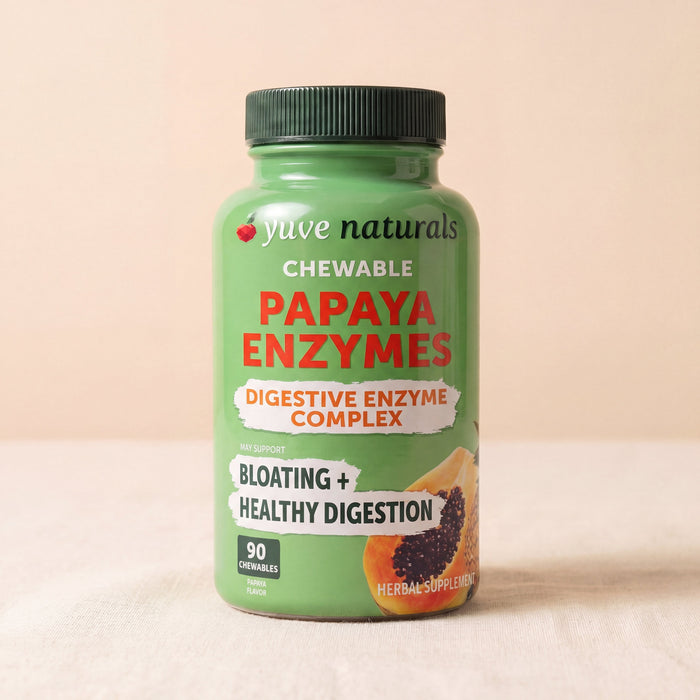
A clear example is Yuve Papaya Enzymes, which are designed to support daily digestion. That's a functional use case for a plant-based wellness product, not just a trendy label.
Fiber and phytochemicals for the bigger picture
Some ingredients work less like a quick fix and more like a long game. Fiber and plant compounds called phytochemicals fall into that category.
The PubMed Central review on plant-based products and cardiometabolic health notes that plant-based products rich in fiber and phytochemicals like flavonoids can lower plasma LDL cholesterol by approximately 15% to 20% and reduce the risk of ischaemic heart disease by 23% over 18 years compared to meat-eaters. The takeaway isn't that one supplement does all this. It's that plant compounds can support real physiologic changes when they're part of a consistent pattern.
Prebiotics and probiotics are not the same
This mix-up happens all the time, so let's clear it up.
- Prebiotics feed beneficial gut bacteria. Think of them as fertilizer.
- Probiotics are live microorganisms added to support the gut environment.
- Both together can make sense, but not every person needs both in the same formula.
If you get bloated from certain fibers, jumping into a strong prebiotic product too quickly can backfire. Start low, go slow, and pay attention to your body.
Adaptogens have a different job
Adaptogens aren't digestive ingredients. They're usually used to support the body's response to stress. That matters because stress can absolutely affect your gut. Tight stomach, appetite swings, bathroom changes, the whole thing.
If you want a grounded explanation of that category, Yuve's overview of adaptogenic herbs is a useful primer.
Worth remembering: An ingredient “moves the needle” when it matches the symptom or goal in front of you. Not when it looks impressive on the front label.
How to Decode Labels and Judge True Quality
I do NOT think a pretty bottle means much. There, I said it.
Supplement packaging has gotten very good at signaling health with earthy colors, leaves, and words like “pure” or “whole.” None of that tells you if the product is clean, useful, or absorbable. You need to read deeper than the front panel.
Start with independent checks

Third-party certifications can help you screen products faster. They don't answer everything, but they can add a layer of trust around ingredient integrity and manufacturing standards.
Look for cues such as:
- Certified Vegan - Useful if avoiding animal-derived ingredients matters to you.
- Non-GMO labeling - Helpful if you prefer that sourcing standard.
- Gluten-free statements - Important for people with celiac disease or gluten sensitivity.
After that, flip to the supplement facts and “other ingredients” panel.
Read the quiet part of the label
The active ingredients usually get the spotlight. The “other ingredients” list tells a different story. In that list, you may find fillers, binders, sweeteners, colors, or coating agents that don't add much value for your body.
Shorter isn't always better, but cleaner is usually clearer. If the formula is packed with extras and the main active ingredients look underwhelming, that's not a great sign.
Yuve has a helpful post on how to read supplement labels if you want a practical walk-through of what to scan first.
Bioavailability matters more than hype
Here's the issue many wellness guides skip. Bioavailability means how much of a nutrient or compound your body can absorb and use.
The University of Florida guidance on nutrient gaps in plant-based diets points out a common bioavailability gap with omega-3s. Many guides recommend flax for omega-3, but they don't explain the poor conversion of plant-based ALA to active EPA and DHA, which is why specific algae-based supplements may be needed for brain health.
That's a big deal. It means a product can look aligned with your values and still miss your functional need.
Don't ask only, “Is it plant-based?” Ask, “Is it in a form my body can use?”
A quick label checklist
| Check | Why it matters |
|---|---|
| Ingredient form | The source and form affect absorption |
| Other ingredients | Extra fillers may add bulk without benefit |
| Certifications | Helpful for screening standards and preferences |
| Intended use | The product should clearly match a wellness goal |
| Tolerance | A clean formula still has to agree with your body |
Your Practical Guide for Different Wellness Goals
People buy plant based wellness products for very different reasons. That's why generic advice falls apart so quickly. The person trying to survive pizza night without regret doesn't need the exact same support as the vegan parent trying to cover nutrient basics for the family.

If you're bloated and frustrated
This is where I have a lot of empathy. Bloating can make you feel uncomfortable in your clothes, distracted at work, and weirdly anxious about meals that are supposed to be enjoyable.
For some people, dairy is a major trigger. That doesn't always mean you need to swear off every creamy or cheesy food forever. It can mean using a targeted digestive support tool before the meal. Yuve offers Lactase Enzymes for that kind of situation, and that practical, meal-specific approach lines up with founder Sam's digestive journey of trying to enjoy food with less fallout.
A good strategy here is:
- Notice patterns - Is the issue dairy, large meals, lots of raw veg, or eating too fast?
- Pick targeted support - Match the supplement to the trigger instead of guessing.
- Test one change at a time - Otherwise you won't know what helped.
If you eat mostly or fully plant-based
A plant-forward diet can be wonderful, but this is the group that most needs to think about gaps instead of vibes. Food first still matters, of course. So does honesty about what might need support.
Pay closer attention to nutrients that are often harder to get or absorb well in plant-based eating patterns. Consequently, informed supplement choices matter more than broad wellness promises.
The goal isn't to prove you can do everything through willpower. The goal is to support your body well.
If you're shopping for kids or picky eaters
Parents know the drill. You buy something healthy, your child takes one sniff, and that's the end of that. Taste matters. Texture matters too.
The problem is that clean formulas can sometimes struggle on user experience. The Baking Business discussion of plant-based unmet needs highlights a “Taste-Function Trade-off,” noting that taste, texture, and quality remain primary pain points for consumers. That applies to supplements too. A product can be beautifully plant-based and still be impossible to get down consistently.
Here's a quick visual if you want a simple overview before choosing products for your routine:
If sustainability matters to you
Then look past the formula. Check the company's values, packaging choices, and whether their product design actually reflects restraint and quality instead of trend-chasing.
That kind of alignment won't change absorption on its own, but it can help you choose products that fit both your body and your standards.
Your Questions Answered
Can't I just get all my nutrients from food
Sometimes, yes. Sometimes, no.
A varied, well-planned diet does a lot of heavy lifting. But real life includes restrictive eating patterns, digestive issues, appetite changes, busy schedules, and nutrient forms that don't always convert or absorb the way people assume. Supplements shouldn't replace meals. They can support what meals don't fully cover.
Are plant based wellness products safe for kids
Some are, but kid-specific formulation matters. Adult products may use serving sizes, herbs, or ingredient combinations that don't fit children's needs.
If you're buying for a child, stick with products clearly intended for kids and ask your pediatrician or a qualified clinician if you're unsure. This is especially important when the goal is more than basic nutrition.
How long does it take to notice a difference
It depends on the product and the reason you're using it.
Digestive support can feel more immediate because it's tied to a specific meal or symptom. Nutrient-focused products usually take longer because you're supporting a body process over time, not flipping a switch in an afternoon. Consistency matters more than hype.
What's the biggest mistake people make
Buying based on branding instead of function.
The better question isn't “What's trending?” It's “What problem am I trying to solve, and does this formula make sense for that?” That one shift can save you money, confusion, and a lot of supplement regret.
Are all vegan supplements automatically high quality
Nope.
Plant-based sourcing can be a great starting point, but quality still comes down to formulation, ingredient form, label transparency, and how your body responds. A vegan label is useful information. It's not proof of effectiveness.
If you want a cleaner way to explore plant-based supplements for digestion, immunity, and daily wellness, take a look at Yuve. Start with the product category that matches your actual goal, keep your routine simple, and pay attention to how your body responds. If you've been on your own with gut issues for a while, you don't have to keep guessing.