Ever feel like your stomach inflates like a balloon by afternoon, dun, dun, dun, unwelcome gas included? You're not alone, and swapping to a non-GMO label probably isn't the fix you've been promised. That's an unpopular place to start, especially if you've been told why Non-GMO is better in simple, absolute terms. I don't think you need a scarier label. You need a clearer way to judge what's in your supplement.
The Question Most People Never Ask About Non-GMO
Most articles skip straight to the conclusion. Non-GMO equals clean, safe, and gentle on your gut, end of story. I do NOT think that shortcut helps you, especially if you're shopping for gut health, immunity, or steady energy and you're already frustrated by bloating that shows up no matter how carefully you eat.
Start with a fact that complicates the usual pitch. The World Health Organization on genetically modified food says currently marketed GM foods that have passed national safety assessments are not likely to pose human-health risks, and no demonstrated health effects have been found among populations consuming approved GM foods.
That doesn't make your preference silly. It changes the question.
The Better Question to Ask
Instead of asking whether non-GMO automatically means healthier, ask what the label proves. It can tell you something useful about ingredient identity, sourcing decisions, and transparency. It can't, on its own, tell you whether a product will ease gas, suit a sensitive stomach, or deliver enough of an active ingredient to matter.
A non-GMO claim describes how ingredients were produced. It doesn't describe how your body will respond to the finished formula.
That distinction matters if you're reading labels for a child, managing a food intolerance, or trying to figure out why a supposedly clean snack still leaves you uncomfortable. Digestive reactions usually depend more on the specific ingredient, serving size, fiber, sweeteners, and allergens than on whether a crop was genetically engineered.
So we'll treat you like an adult here. You'll get the plain-English definition, the reasons people choose non-GMO, what major scientific reviews found, how certifications differ, and what to verify beyond the front of the bottle. No preaching, no panic, and no pretending one badge answers every question.
If you've ever stood in an aisle flipping bottles over and feeling more confused with each one, we get it. That small, tired moment is exactly why a better checklist matters.
What Non-GMO Actually Means in Plain English
A GMO, or genetically modified organism, is a plant, animal, or microorganism whose genetic material has been changed in a laboratory in a way that wouldn't happen through ordinary mating or natural recombination. Genetic engineering is the process used to make that change.
Think about tomatoes, because most of us can picture a garden. Selective breeding is saving seeds from your sweetest, hardiest tomatoes each year and planting those, gradually nudging the crop in a direction you like. Genetic engineering is more targeted. It's like copying one specific instruction from another organism and inserting it so the tomato gains a particular trait.
Here's a visual version of that difference before we go further.
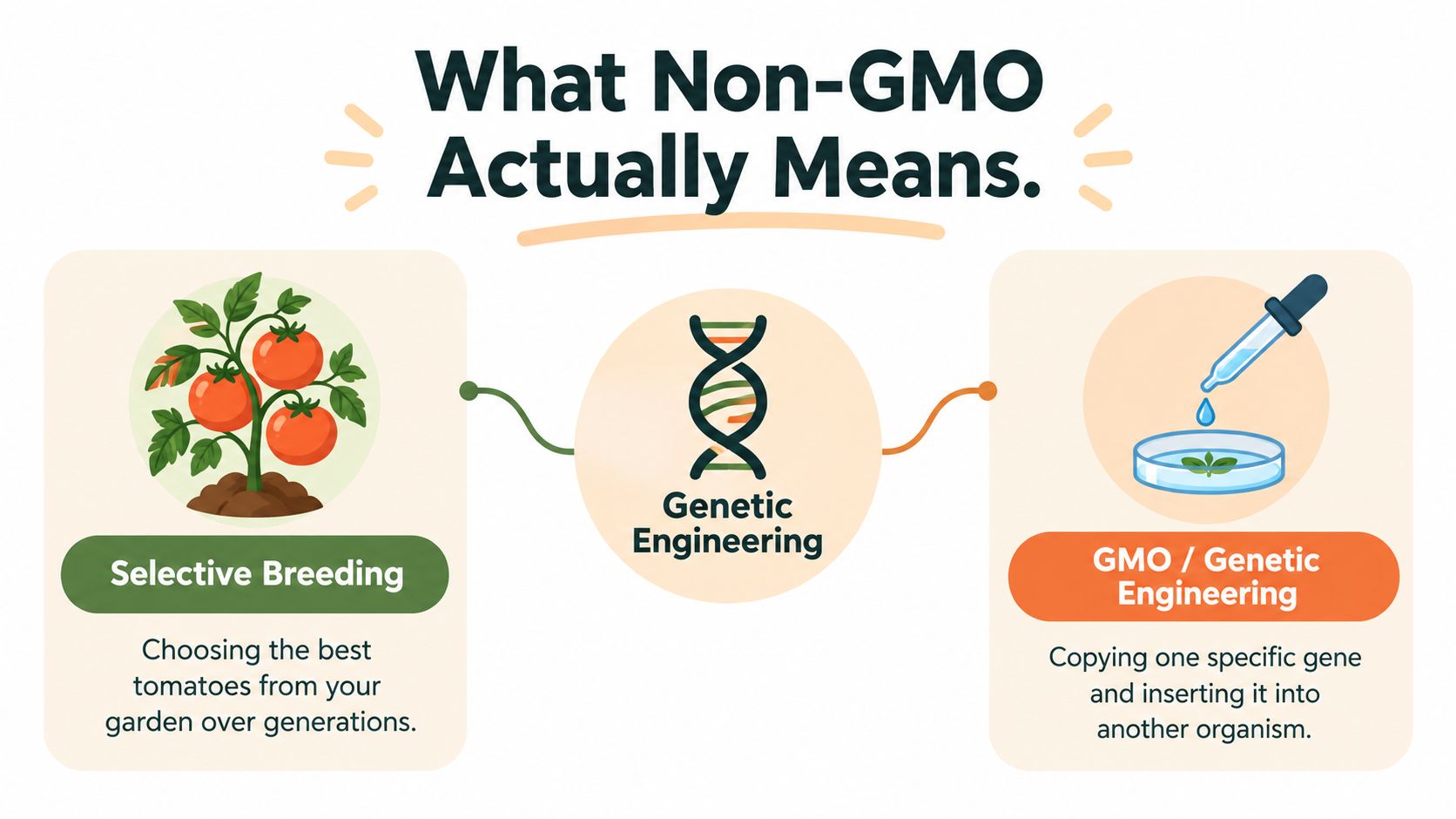
Non-GMO means an ingredient wasn't produced through that laboratory gene-transfer process. It doesn't mean the plant has never changed genetically. Conventional breeding also changes genes over time, just through crossing and selection rather than direct insertion.
Two Ways Crops Change
- Traditional cross-breeding: You cross related plants, grow the offspring, and keep the ones with traits you want. It's slower and less precise, and many genes move together.
- Genetic engineering: You identify one gene linked to a trait, such as insect resistance, and transfer it directly. It's faster and more targeted.
That nuance is where readers often get tripped up. The label sounds like it's separating untouched nature from artificial food, but farming has shaped crops for generations either way. Corn, bananas, and seedless grapes didn't arrive in their current form by accident.
So when you choose non-GMO, you're choosing a production method you prefer to avoid, not buying a guarantee about sugar, calories, or how bloated you'll feel after lunch. That's a clear mental model, and it makes the rest of the label much easier to judge.
Why People Still Choose Non-GMO Anyway
Plenty of thoughtful shoppers choose non-GMO without believing it's a magic health stamp. Their reasons are usually about control, values, and trust, and those reasons deserve a fair hearing.
Transparency sits at the top for many people. If you're swallowing a capsule every day, you reasonably want to know what went into it and where it came from. A non-GMO specification forces a brand to trace ingredient identity through suppliers instead of treating sourcing as an afterthought.
Others care about biodiversity and seed systems. They worry about farming that depends heavily on a narrow set of patented crop varieties, and they'd rather support suppliers who keep traditional seed lines in use. You don't have to share that concern to understand it. It's a choice about the kind of food system you want your money to support.
Reasons That Are About Values, Not Verdicts
- Ingredient identity: You want documented sourcing, not vague claims about purity.
- Farming alignment: You prefer suppliers connected to organic or regenerative systems, crop rotation, and diversified fields.
- Support for smaller growers: You'd rather back farmers using traditional seed than default to large monocultures.
- Minimal processing preference: You feel more comfortable with fewer laboratory interventions in your food chain.
Those motivations can be reasonable even when the science doesn't show a universal health advantage. Preference isn't the same as proof, and it doesn't need to pretend to be.
Keep the limits in view, though. The National Academies summary on genetically engineered crops notes that genetic changes can occur through conventional breeding as well as genetic engineering, so choosing non-GMO does not by itself guarantee lower sugar, fewer calories, higher nutrient density, or the absence of pesticides.
Practical rule: Choose non-GMO for the sourcing standard it represents. Judge health value by the full formula, the dose, and the testing behind it.
When you name your actual reason, shopping gets calmer. You're no longer hunting for a badge that promises everything. You're picking products that match the standards you can explain to yourself at the kitchen counter, even on a bloated, uncomfortable day.
What the Science Actually Says About GMO Safety
Let's translate the major reviews into language you'd use with a friend. The short version is that large scientific bodies have looked hard for a health difference and haven't found a demonstrated one for approved foods.
This overview sets up the consensus before we unpack it.
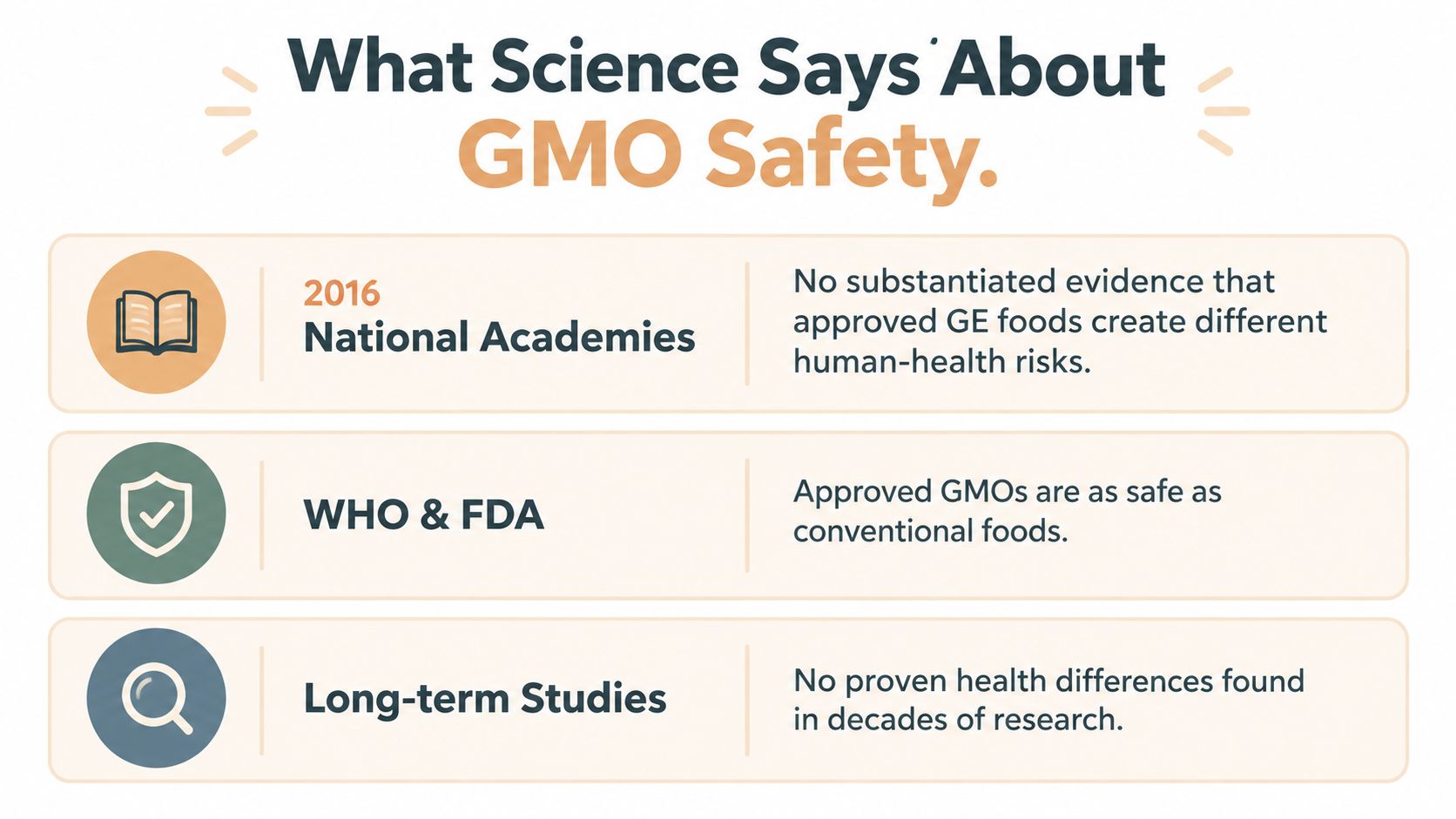
In its 2016 assessment, the National Academies review of genetically engineered crops found no substantiated evidence that foods from commercially available genetically engineered crops created greater human-health risks than foods from conventionally bred crops. The committee found no persuasive evidence of adverse health effects directly attributable to consuming genetically engineered foods, and epidemiological data didn't show associations with cancer or other chronic diseases.
The WHO position you saw earlier points the same way, and it also reports that no allergic effects have been identified for GM foods currently on the market. FDA materials add another wrinkle. Some genetic modifications are designed to improve nutrition, which challenges the idea that non-GMO is always the nutritionally superior option.
The Nuance Headlines Skip
No persuasive evidence of harm isn't the same as claiming every question is permanently closed. The National Academies committee examined epidemiological data, animal-feeding studies, and long-term livestock information. It still cautioned that health and environmental effects can be complex, and that subtle or long-term effects are difficult to detect.
If you want a short explainer to watch alongside the written summaries, this video is a helpful companion.
What this means for you is straightforward. Current evidence doesn't establish that non-GMO foods are more nutritious, easier to digest, or safer for everyone. Choosing them can still reflect a sensible preference for particular sourcing systems.
It also means you shouldn't expect a non-GMO switch, by itself, to resolve bloating. If a product contains fermentable carbohydrates, a large dose of added fiber, or sugar alcohols that bother you, the label won't cancel that out.
How to Read Non-GMO Labels and Certifications
Three signals show up most often, and they don't mean the same thing. Learning to separate them takes about a minute and saves you from paying for wording that proves very little.
The Non-GMO Project Verified butterfly is a third-party verification. An outside program reviews ingredients and supply-chain practices for GMO avoidance, so it carries more weight than a brand printing non-GMO on its own packaging.
The USDA Bioengineered disclosure works differently. USDA guidance on bioengineered food disclosure states that its bioengineered-food disclosure is a marketing disclosure and does not communicate comparative health, safety, or environmental benefits. USDA also notes that foods derived from bioengineering may contain no detectable modified genetic material, and bioengineered isn't identical to every product marketed as GMO.
Then there's a plain non-GMO phrase with no seal behind it. That may be accurate, but you're taking the brand's word unless it shares supplier certificates or testing.
Non-GMO Labels at a Glance
| Label | What It Verifies | Who Runs It | What It Does Not Guarantee |
|---|---|---|---|
| Non-GMO Project Verified | GMO avoidance across ingredients and supply chain | The Non-GMO Project, a third-party nonprofit | Organic farming, nutrient quality, or digestive tolerance |
| USDA Bioengineered | Disclosure that a food is bioengineered | USDA, under federal disclosure rules | Any health, safety, or environmental comparison |
| Non-GMO wording only | A brand claim about its ingredients | The brand itself | Independent verification or testing |
If label language still feels dense, Pure Paw Labs label reading tips offer a useful companion walkthrough of how to slow down and check claims in order, and the same habit applies when you compare human supplements.
Organic sits nearby but answers a broader question, since certified organic standards prohibit genetic engineering as part of a wider production system. If you want that comparison in depth, read more about USDA certified organic supplements and what certification covers.
Your fast shelf check is this. Look for a named verifier, then flip to ingredients, allergens, and serving size. A seal with no substance behind it is just decoration.
Why Non-GMO Matters for Plant-Based Supplements
Supplements add a layer that a bag of corn doesn't have. Many probiotics, prebiotics, and herbal blends are produced through fermentation, which means bacteria, fungi, or plant inputs sit at the start of the process. Any of those starting materials can be genetically modified, so non-GMO sourcing becomes a question of ingredient identity from step one.
This checklist shows where that question shows up.
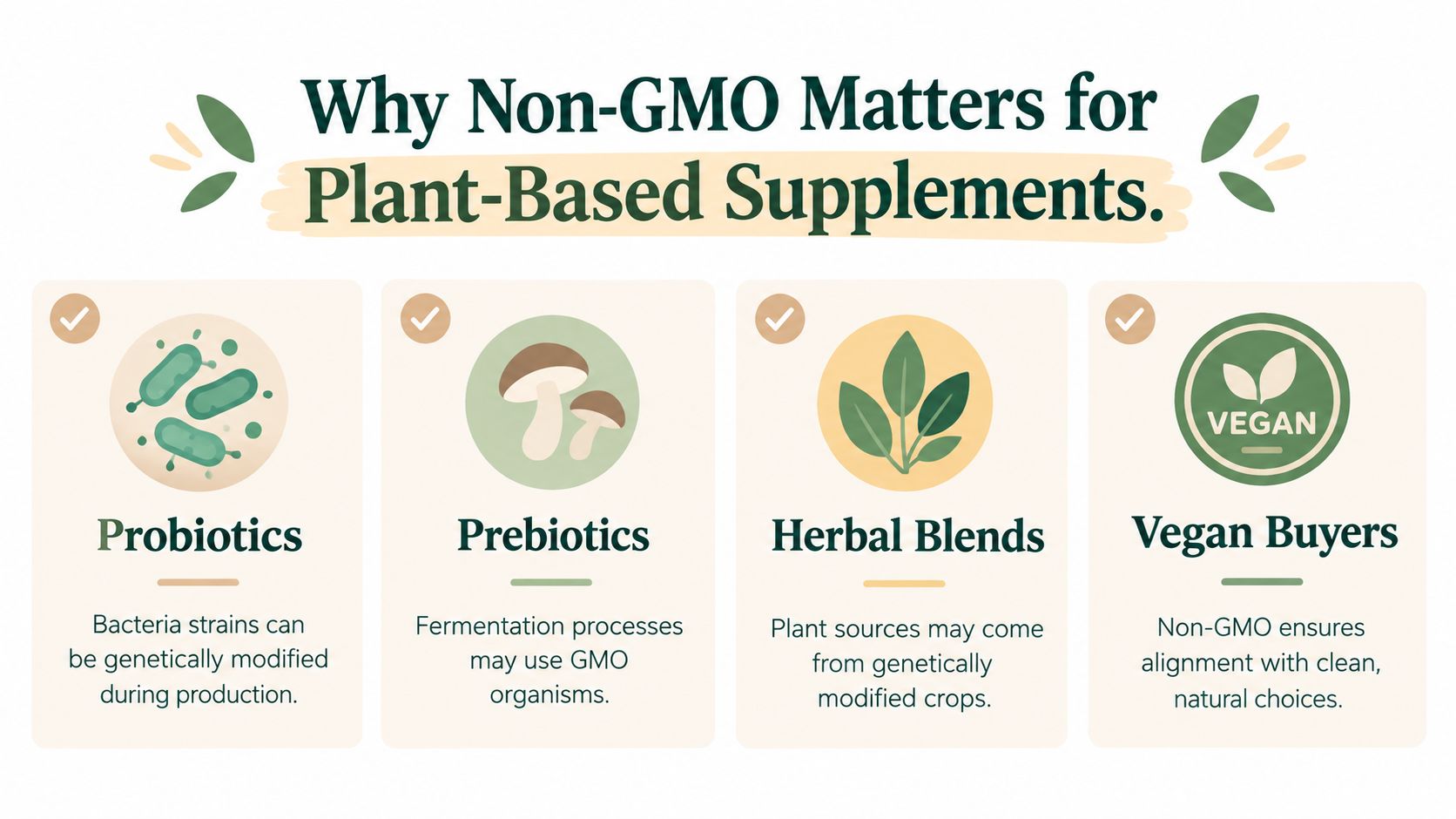
For a vegan buyer, strain tracking matters as much as sourcing. You want to know which probiotic strain is in the capsule, that it's the strain named on the label, and that it stays viable through shelf life. Non-GMO status doesn't prove any of that, but a brand that documents ingredient identity carefully is more likely to document strains carefully too.
Allergen control is the other practical link. Plant-based formulas often combine several botanicals and fermentation inputs, so you need clear controls for gluten, soy, and other allergens alongside the non-GMO claim.
Keep the Environmental Claim Honest
The farming picture is mixed, not simple. National Academies evidence on crop traits and pesticide use shows that Bt insect-resistant maize and cotton generally reduced synthetic insecticide use compared with non-Bt varieties, while herbicide-resistant crops initially reduced herbicide kilograms per hectare but those reductions were not generally sustained as repeated reliance selected for herbicide-resistant weeds.
So non-GMO sourcing supports sustainability best when it's paired with integrated pest management, crop rotation, and documented farm practices, plus pesticide-residue testing. For readers building a plant-based routine, our guide to supplements that fit a vegan diet connects those sourcing choices to everyday nutrient gaps.
The takeaway is layered quality. Non-GMO, vegan, and gluten-free standards each answer a different question, and you need all three answers before a fermented supplement earns your trust.
What to Check Beyond the Non-GMO Label
This is your 60-second screening routine. Run it in order, because the first items affect whether a product can work at all.
A quick look at the kind of basket this checklist is built for.
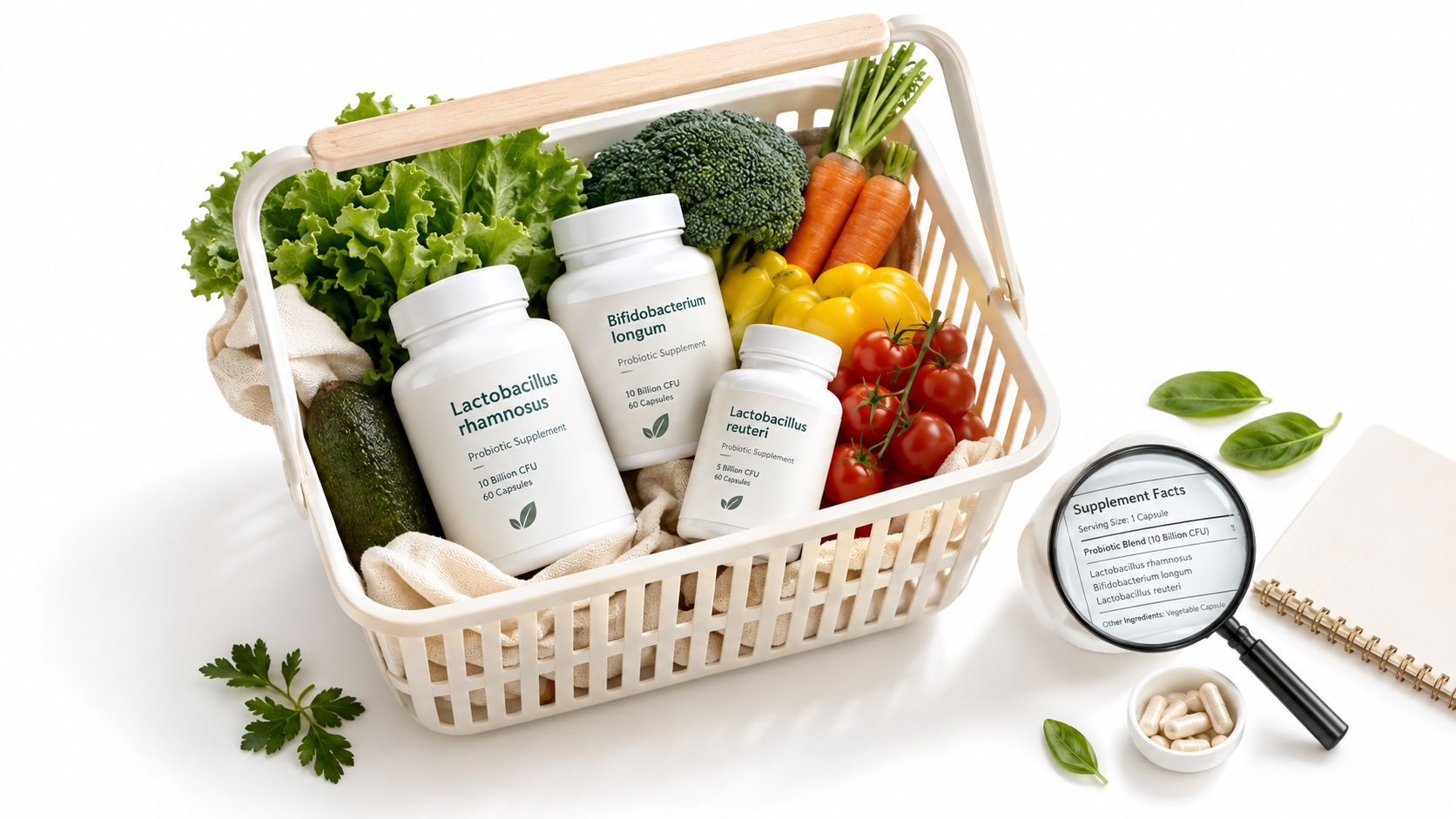
- Strain identity and dose: For probiotics, look for named strains and serving amounts tied to studied use, not a proprietary blend that hides quantities.
- Third-party testing: Check for identity, potency, purity, and contaminant testing. Our overview of third-party tested supplements and what testing should cover explains how to read those claims.
- Allergen controls and certifications: Confirm vegan, gluten-free, or organic status separately. Each one verifies something non-GMO doesn't.
- Transparent sourcing and batch testing: Supplier certificates and batch-level results tell you more than front-label adjectives.
- Storage and stability: Live cultures and enzymes only help if they survive shipping and your bathroom shelf.
- The full ingredient list: Sweeteners, added fibers, and fermentable ingredients explain bloating far more often than breeding method does.
One example keeps this grounded. FDA material on GMO nutrition and safety notes that some genetic modifications are designed to improve nutrition, including soybean varieties producing healthier oils that can replace oils containing trans fats. That single case shows why a non-GMO claim, by itself, doesn't describe a nutrient profile.
Read the supplement facts panel first and the marketing badge second. Your stomach responds to ingredients and doses, not slogans.
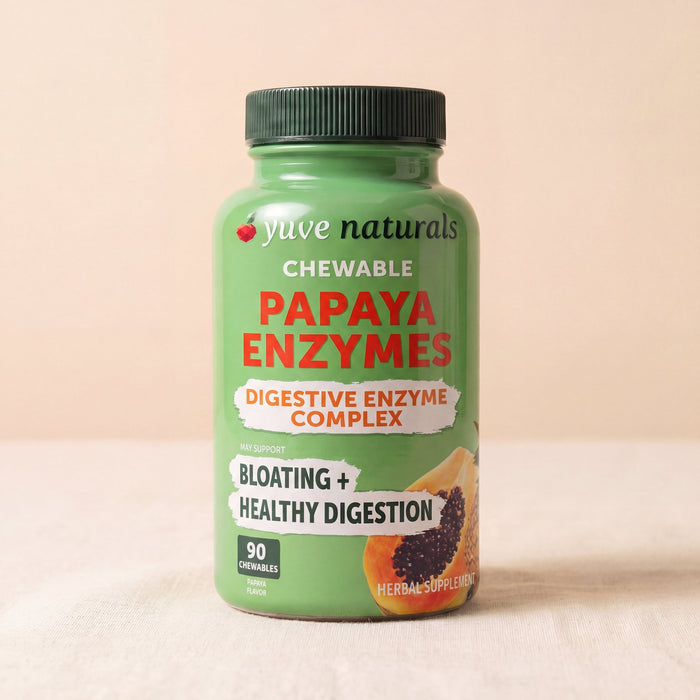
A product like Yuve's plant-based probiotic and digestive enzyme line fits here as one option to evaluate with the same routine. You'd check its non-GMO sourcing alongside strain information, allergen controls, and testing, then decide whether taking it proactively with meals suits your routine. Sam, who built the brand around his own digestive struggles, learned that lesson the slow way, bottle by disappointing bottle.
Screenshot the six steps. They travel well, from pharmacy aisle to late-night online cart.
Bringing It All Together and Your Next Step
So, is non-GMO better? It's better documented choice, not a proven health guarantee. It tells you a brand made a specific sourcing decision and, with real verification, can prove it.
For plant-based supplements, that decision pairs naturally with vegan and gluten-free standards, allergen controls, and third-party testing. The gut-health, immunity, and energy outcomes you care about still come from the full formula, the dose, and whether the ingredients suit your body.
When you formulate for sensitive stomachs, ingredient identity isn't negotiable. That founder lesson is simple enough for any shopper to borrow.
Your next step is small. Pick one bottle you already own, run the six-step check, and note what's missing. Then drop your label questions in the comments, because someone else is squinting at the same fine print tonight.
Ready to put the checklist to work on a real routine? Visit Yuve to explore non-GMO, vegan, gluten-free probiotics, prebiotics, and digestive enzymes built for sensitive stomachs, and try your pick with the 60-day money-back guarantee as your safety net.