Ever stand in the supplement aisle, flip over a bottle, and feel like you suddenly need a chemistry degree? You’re not alone. Between “natural,” “clean,” “plant-based,” and “organic,” the labels can blur together fast.
If you’re trying to choose usda certified organic supplements, especially as a vegan or someone with a sensitive gut, the details matter. A lot. Let’s make this simple, practical, and much less annoying.
Why 'Organic' Matters for Your Supplements
A supplement can look wholesome and still leave you with questions. Where were the herbs grown? What about the fillers? Is “natural” regulated, or is it just marketing dressed up in earth tones?
That’s where USDA organic certification gets useful. It gives you a standard that goes beyond vibe-based wellness.
In the U.S., sales of USDA certified organic dietary supplements reached $1.7 billion in 2019, up by more than 10% from the previous year, according to the Organic Trade Association data cited by Smith’s Food and Drug. That tells us this isn’t some tiny niche corner of the wellness world. People are actively looking for supplements with verified sourcing rules.
Why readers get stuck here
Readers aren’t confused because they don’t care. They’re confused because supplement labels stack several ideas together:
- Organic talks about how ingredients are produced and handled.
- Vegan tells you the product doesn’t use animal-derived ingredients.
- Non-GMO focuses on genetic engineering.
- Gluten-free addresses a completely different concern.
Those terms can overlap. They are not interchangeable.
Big idea: A USDA seal is about a verified production standard, not just a healthy-sounding label.
Why this matters in real life
If you take a probiotic, herbal blend, or daily gummy, you’re using it repeatedly. So the quality conversation isn’t just about one serving. It’s about your routine.
For many people, especially vegans, parents, and those with digestive sensitivities, organic matters because it offers a clearer answer to a basic question: What standards did this product have to meet?
That doesn’t mean every non-organic supplement is automatically a bad choice. It means USDA organic gives you a rulebook you can check against. That kind of clarity feels refreshing in a category that often overcomplicates everything.
What the USDA Organic Seal Guarantees
The USDA Organic seal isn’t a mood. It’s a compliance system.
For supplements, that means companies have to follow rules under the National Organic Program. In plain English, the seal signals that the product meets standards around ingredient sourcing and processing, including restrictions on synthetic pesticides, GMOs, irradiation, and sewage sludge.
Think of it as farm-to-bottle accountability
When you see the seal on a supplement, the claim isn’t just about the finished capsule or gummy. It starts much earlier.
A certified product is tied to a production chain that’s supposed to protect ingredient integrity from the farm through processing. That’s why people often trust the seal more than broad words like “pure” or “natural.”
Here’s the practical version of what the seal is getting at:
- Cleaner growing standards - Organic agriculture limits the use of many synthetic inputs.
- Stricter handling rules - Brands can’t sprinkle in one organic ingredient and call it a day.
- Documented oversight - Certification involves records, inspections, and ongoing compliance.
The seal also reflects a larger farming system
This isn’t happening in a vacuum. From 2011 to 2021, the number of certified organic farms in the U.S. rose by over 90% to 17,445, and certified cropland increased 79% to 3.6 million acres, according to USDA ERS. That growth helps explain why certified organic ingredients are more available than they used to be.
If you care about soil health, biodiversity, or reducing synthetic agricultural inputs, the seal connects your supplement purchase to those broader practices.
What the seal does not mean
This part trips people up all the time.
A USDA seal does not automatically tell you that a supplement is:
| Claim | Automatically guaranteed by USDA Organic seal? |
|---|---|
| Vegan | No |
| Gluten-free | No |
| Free of all allergens | No |
| The right formula for your needs | No |
Organic tells you about production standards. It doesn’t replace reading the full label.
That’s why it helps to think in layers. The USDA seal is one strong filter. Then you still check the ingredient list, delivery format, and whether the product fits your actual goals.
Decoding the Three Tiers of Organic Supplement Labels
Labels get sneaky if you don’t know the wording.
Not every product that uses the word “organic” means the same thing. A bottle can mention organic ingredients and still sit in a different category than a product that qualifies for the USDA seal.

The quick comparison
| Label tier | What it means |
|---|---|
| 100% Organic | All ingredients, excluding water and salt, are certified organic |
| Organic | Contains at least 95% certified organic ingredients and can use the USDA seal |
| Made with Organic Ingredients | Contains 70% to 95% organic ingredients and cannot display the USDA seal on the front |
100% Organic
This is the most straightforward category.
If a supplement says 100% Organic, every ingredient other than water and salt must meet organic standards. For shoppers, this is the cleanest label to interpret because there’s very little wiggle room.
Organic
This is the category many people mean when they talk about usda certified organic supplements.
A product labeled Organic must contain at least 95% certified organic ingredients. This is the threshold that allows the USDA Organic seal.
That remaining small portion is where things can get more technical, which we’ll get into in the Science Corner.
Made with Organic Ingredients
This category causes the most confusion.
A product in the 70% to 95% range can say it’s “Made with Organic Ingredients,” but it can’t use the USDA seal on the front. That doesn’t automatically make it low quality. It means it does not meet the stricter seal standard.
If you want the USDA seal, scan the front panel first. If the seal isn’t there, check whether the package is using “made with organic ingredients” language instead.
Why this matters beyond supplements
Once you learn these tiers, you’ll start seeing them everywhere. Skin care shoppers run into the same label puzzle, which is why resources that break down ingredient quality in adjacent categories can be helpful too, like this guide to best organic face oils.
The bigger lesson is simple. “Contains organic ingredients” is not the same as “certified organic with the USDA seal.” One phrase is broader. The other points to a higher threshold and a more specific claim.
The Science Corner How Organic Rules Apply to Your Ingredients
The application of organic rules to your ingredients offers interesting insights. “Organic” doesn’t land the same way on every part of a supplement formula.
A botanical powder, a probiotic blend, and a tablet filler all raise different questions. That’s why the fine print matters.
Botanicals are the easiest place to understand organic
Herbs, roots, fruits, and plant powders are agricultural ingredients. So if a brand is making an organic claim, those plant ingredients need to follow organic production standards.
That matters because many consumers assume the active herb is all that counts. It isn’t. If a formula includes multiple plant ingredients, the organic status has to hold up across the formula according to the label category the product is claiming.
Probiotics are more nuanced
People often ask, “How can bacteria be organic?”
Fair question. The probiotic organisms themselves aren’t “farmed” like mint or ginger. But the materials used to grow, carry, or stabilize them still matter under organic rules.
Under USDA rule § 205.605(b), certain non-agricultural synthetic vitamins and minerals may be allowed if they are commercially unavailable in organic form and appear on the National List. But all agricultural carriers, such as molasses used for probiotic growth, must be certified organic, as explained by Auri Nutrition.
The filler question is not boring. It’s important.
Excipients are the supporting ingredients that help make a capsule, tablet, powder, or gummy function properly. Think binders, carriers, flavor systems, or anti-caking agents.
These ingredients are easy to ignore because they aren’t usually the star of the label. But if a product is claiming organic status, they matter. A supplement isn’t only the probiotic strain or herbal extract on the front panel. It’s the whole formula.
Here’s a simple perspective:
- Active ingredients are what the product is built around.
- Supporting ingredients help deliver those actives in a stable, usable form.
- Organic compliance looks at both, not just the headline ingredient.
A clean-looking front label can hide a messy back label. Always read both sides.
A real-world example
Take a vegan probiotic supplement. You might have:
- probiotic cultures
- a plant-based carrier
- flavoring or sweeteners in a gummy
- a capsule shell or other delivery system
Each piece has to be considered separately under the organic framework. That’s why two products can both sound “clean” but differ a lot in how tightly they align with organic rules.
If you enjoy digging into plant-based ingredient conversations, this explainer on Spirulina & chlorella is another example of how sourcing and form can shape what a product delivers.
What this means for you at the store
You don’t need to memorize regulatory language. You just need to ask better questions:
- What are the main ingredients?
- What are the carriers or fillers?
- Does the product have the USDA seal, or just organic-sounding wording?
- If it’s a probiotic or botanical, what form is it delivered in?
That last point matters more than many realize. And it leads straight into one of the trickiest issues in vegan supplements.
The Vegan Challenge Unpacking the Organic Capsule Dilemma
If you’re vegan, you probably already look for gelatin-free capsules or gummies. That part is familiar. The less obvious part is that the capsule itself can create an organic certification puzzle.
This detail is often skipped by most consumer guides, and I think that’s a mistake.
The capsule counts too
Under organic rules, capsule materials are treated as ingredients. So the conversation doesn’t stop at the probiotic blend or the herbal powder inside.
A major challenge for vegan organic supplements is pullulan, a popular capsule material because it’s non-animal and non-synthetic. According to a USDA materials review on pullulan, it was reclassified in 2016 and there is currently no commercially available certified organic version in the U.S.
That creates a real tension for brands trying to hit both goals at once:
- Vegan delivery system
- USDA organic compliance
Why this confuses shoppers
A lot of people assume that if the ingredients inside a supplement are organic, the entire finished product should be simple to certify as organic too. But delivery format can complicate that.
So if you’ve ever looked at a vegan supplement and thought, “Why doesn’t this have the USDA seal if the ingredients sound so clean?” this could be part of the answer.
The hardest part of a clean supplement isn’t always the active ingredient. Sometimes it’s the shell around it.
Where transparency matters most
This is exactly the kind of issue careful brands need to explain clearly, not gloss over. For a company serving plant-based customers, saying “vegan” is only the start. People also deserve to know how the brand thinks through tradeoffs in capsule materials, sourcing, and labeling.
That’s part of the reason educational resources around plant-based formulation matter. If vegan sourcing questions are already on your radar, Yuve’s article on vegan alternatives to fish oil is a useful example of how these ingredient decisions often have layers.
For shoppers, the takeaway is reassuring even if it’s a little messy: a vegan supplement can still be thoughtfully made even when the certification path is more complicated than it looks from the outside. The key is whether the brand explains those details clearly.
How to Become an Organic Detective and Verify Claims
The best way to shop smarter is to stop treating labels like final answers. Treat them like clues.
Because USDA certification involves ongoing oversight, not a one-and-done sticker, you can verify more than you might think. Brands must maintain a detailed Organic System Plan and pass annual on-site inspections covering sourcing, manufacturing, cleaning procedures, and waste management to prevent cross-contamination, as described in this overview of USDA organic certification for supplements.

Four ways to check a product without overcomplicating it
1. Start with the front and side panels
Look for the USDA Organic seal. Then see whether the package names a certifier or provides certification details elsewhere on the label.
If a bottle uses earthy language but avoids a clear certification claim, that’s worth noticing.
2. Read the ingredient list like a skeptic
Check whether the overall label category matches the wording. A product may contain some organic ingredients without qualifying for the USDA seal.
If you want a refresher on what to scan first, Yuve’s guide on how to read supplement labels can help you build a better routine for the back panel.
3. Ask the company directly
You are absolutely allowed to email a brand and ask:
- Who certifies this product?
- Is the finished product certified, or only certain ingredients?
- Can you share your current certificate?
Good companies shouldn’t act offended by that. They should be prepared for it.
4. Notice the lot number and manufacturing details
A lot number doesn’t prove organic certification by itself. But it does signal traceability, which matters in any quality-focused product.
It tells you the company is tracking production batches. That’s helpful if you ever need to ask a question about a specific bottle.
What to watch for in marketing language
Some phrases sound impressive but are less specific than they seem:
| Phrase | What to do |
|---|---|
| Natural | Ask what standard supports that claim |
| Clean | Look for actual certifications or testing details |
| Made with organic herbs | Check whether the whole product is certified |
| Plant-based | Confirm capsule type, fillers, and allergens |
If a claim matters enough to influence your purchase, it’s fair to ask how the company proves it.
That isn’t being difficult. It’s being informed.
Your Smart Shopping Checklist for Clean Supplements
The biggest label trap is the word natural. It sounds comforting, but it doesn’t carry the same verification system as USDA organic certification.
That distinction matters. A brand can call a supplement natural and still leave you doing all the detective work yourself.

A practical checklist you can save on your phone
- Look for the USDA seal - If organic certification matters to you, don’t rely on front-label words like “natural” or “clean.”
- Check the label tier - “100% Organic,” “Organic,” and “Made with Organic Ingredients” do not mean the same thing.
- Read beyond the actives - Carriers, fillers, sweeteners, and capsule materials count.
- Separate your priorities - Organic, vegan, non-GMO, and gluten-free are different filters.
- Ask about the finished product - Some brands use organic ingredients, but the final product may not be certified.
- Pay attention to delivery format - Gummies, capsules, powders, and tablets can each raise different ingredient questions.
One realistic example
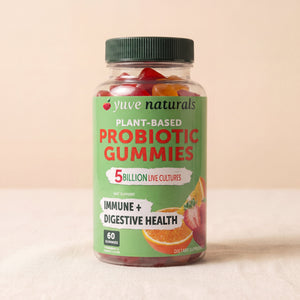
If you want a plant-based option in this space, Yuve Vegan USDA Organic Probiotic Gummies fit naturally into this conversation because the product itself is positioned around USDA organic certification and a vegan gummy format. If third-party verification is one of your personal filters too, Yuve also has a helpful article on best third-party tested supplements.
That doesn’t mean one label solves every question. It means you can use the checklist above and then compare products more calmly.
Keep this mindset when you shop
You’re not trying to find a perfect bottle. You’re trying to find a product that is clear about what it is, what it isn’t, and how it backs up its claims.
That shift helps a lot.
Frequently Asked Questions About Organic Supplements
Are organic supplements automatically better?
Not automatically. Organic tells you about production and handling standards. It does not guarantee a formula is ideal for your personal needs, free from every allergen, or better designed than every non-organic option.
Does organic mean vegan?
No. These are separate claims. A supplement can be organic and still use animal-derived ingredients, or it can be vegan without being USDA organic.
Does organic mean non-GMO?
Organic standards restrict GMOs, but shoppers still often see both claims on packaging because certifications speak to different parts of the product story.
Does the USDA seal mean the whole supplement is organic?
Usually that’s the intent of the certification category, but this is exactly why the wording matters. “Organic” with the USDA seal is different from “Made with Organic Ingredients.”
Can an organic supplement still contain allergens?
Yes. Organic certification does not mean free from soy, nuts, gluten, or other allergens. You still need to read the full label carefully.
Why are vegan capsules such a big deal?
Because the delivery system matters too. A plant-based capsule may align with vegan values but still create technical issues for organic certification, depending on the material used.
Is “natural” the same as organic?
No. “Natural” sounds reassuring, but it doesn’t give you the same formal verification framework as USDA organic certification.
If you want a cleaner, simpler way to shop for plant-based wellness products, take a look at Yuve. Their focus on vegan supplements for gut health, immunity, and daily support makes them a practical place to start if you’re trying to match your values with what’s in the bottle.