You bought the smoothie bowl. You added the greens. You’re trying to eat well. Yet your body still feels a little off. Maybe your energy drags by midafternoon, or your stomach feels puffy enough to make you rethink every snack.
That’s often when acai berries supplement products show up on your radar. And the hype can get noisy fast.
Some people talk about acai like it’s magic. I don’t. I think acai can be a smart, vegan-friendly addition to a wellness routine, especially if you care about antioxidants, gentle nutrition, and choosing a supplement that fits a sensitive gut. The key is understanding what it is, what the research supports, and how to choose a product that isn’t just purple marketing in a pretty jar.
The Superfood You Keep Hearing About
Acai has become one of those ingredients that seems to be everywhere. Smoothie shops love it. Wellness brands love it. Social media definitely loves it. But acai isn’t just a trendy bowl topping.
It’s a dark purple berry from Brazil’s Amazon region, where it has been part of traditional eating patterns for a very long time. That matters, because it reminds us that acai started as a real food before it became a “superfood.”

Why people get curious about acai
Usually, it starts with a feeling. You want more support for:
- Daily energy without relying on another coffee
- Gut comfort when your digestion feels unpredictable
- Immune support during busy, stressful seasons
- Plant-based nutrition that aligns with your values
That’s where acai gets interesting. It’s not a cure-all, but it does bring together a few qualities many people want in one place. It’s low in sugar, contains fiber, and is known for its rich polyphenol content.
A helpful way to think about acai is this. It’s less like a stimulant and more like a supportive background player. It doesn’t give a buzzy “feel it in 10 minutes” effect. Instead, people often choose it because they want a food-based supplement that supports the body’s everyday workload.
What makes acai different from other berries
Most berries get attention for antioxidants. Acai does too, but it stands out for the specific mix of anthocyanins and other polyphenols linked with its antioxidant activity. These compounds help neutralize free radicals, which are unstable molecules connected to oxidative stress.
If “oxidative stress” sounds too science-y, think of it as a kind of internal wear and tear. Your body deals with it every day through normal metabolism, exercise, stress, and environmental exposures. You don’t need to obsess over it. But supporting the body’s defenses can be useful.
Practical rule: If you’re already working on the basics like sleep, meals, movement, and hydration, acai may be one of those “small support” tools that makes your routine feel more complete.
Acai also fits nicely into a plant-based lifestyle. For many vegans and vegetarians, supplements feel better when they’re simple, food-derived, and easy to use. That’s part of why powders and capsules are so popular.
If you’re also exploring other plant-based tools for feeling more steady overall, this guide to super greens powder benefits can help you see where acai fits into the bigger picture.
The Real Benefits of an Acai Berry Supplement
People usually try acai for a simple reason. They want support that feels food-based, gentle, and easy to fit into daily life.
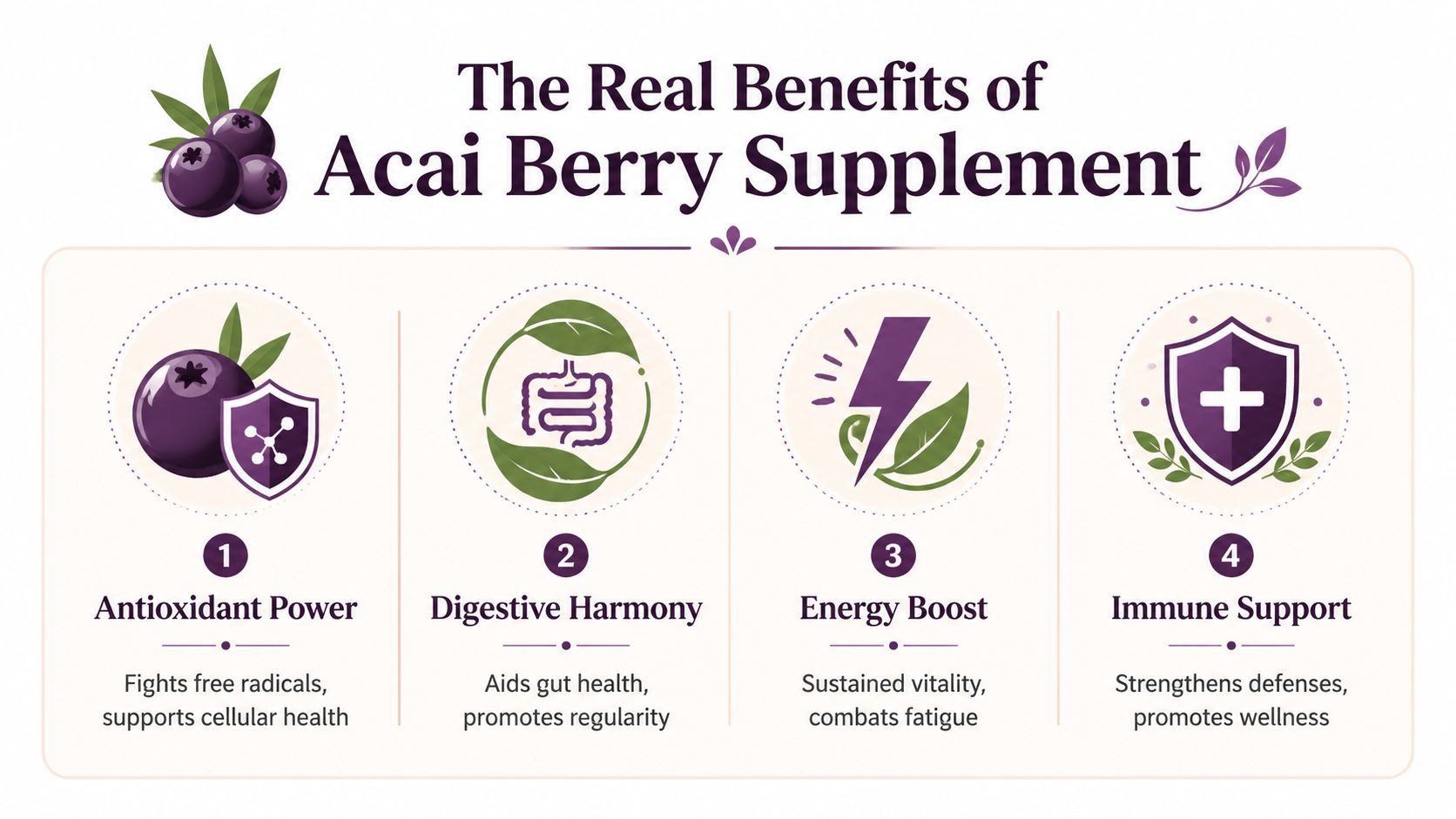
For vegans, busy parents, and anyone with a sensitive stomach, the appeal often comes down to four practical areas: antioxidant support, digestion, immune support, and steadier day-to-day energy. The key is keeping expectations realistic. Acai is a helpful addition to a solid routine, not a shortcut around sleep, meals, or stress.
Antioxidant support
Acai is best known for its polyphenols, especially anthocyanins. These compounds help the body manage oxidative stress, which is the small, ongoing wear your cells deal with from normal metabolism, exercise, environmental exposures, and everyday life.
A good way to picture this is a kitchen that gets used all day. Oxidative stress is part of the normal mess. Antioxidants help with cleanup.
That matters for people who exercise, parents who feel physically wrung out by the end of the day, and anyone who wants a plant-based supplement with a clear nutritional role. The benefit is support, not a dramatic before-and-after feeling.
Digestive support
This is often the most practical question, especially if your gut seems to react to everything.
Acai products can contribute fiber, and fiber can support regularity and a healthier gut environment. For some people, that is a plus. For others, especially those with bloating or IBS-type symptoms, the form matters just as much as the ingredient. A concentrated powder may feel different from a capsule or a sweetened juice blend.
Slow changes usually go better than big ones. If your digestion is sensitive, treat acai like you would treat a new high-fiber food. Start with a small amount, stay consistent for several days, and notice how your body responds before increasing the dose.
| Form | How it may fit a sensitive gut | Watch-out |
|---|---|---|
| Powder | Easy to mix into smoothies or oatmeal and adjust in small amounts | Can feel like too much too fast if you use a full scoop right away |
| Capsules | Simple, portable, and easier to keep consistent | Less flexible if you want to titrate your dose very gradually |
| Juice blends | Easy to take and familiar for families | Often include added sugars, fillers, or less actual acai |
If your stomach is unpredictable, the best supplement is often the one you can tolerate consistently.
Immune support
Acai often gets pulled into big immunity claims online. A more accurate way to say it is that acai helps support the body’s normal defenses through its antioxidant compounds.
Your immune system works in close relationship with sleep, stress, nourishment, and recovery. Acai does not replace those basics. It can, however, fit into a routine that supports them, especially for people who want a vegan option made from recognizable plant ingredients instead of a long list of synthetic add-ons.
That can be especially appealing for parents and caregivers. When life is full, simple choices matter.
Steadier energy
Acai does not work like caffeine, and many people see that as a benefit.
Instead of creating a quick spike, acai tends to fit better into a more even, grounded routine, especially when it is paired with a meal or snack that includes protein and fat. For vegans, that might look like adding acai powder to a smoothie with soy milk, chia seeds, and nut butter. For parents, it may be a capsule taken with breakfast instead of reaching for another sugary pick-me-up later.
A few reasons acai works well for daily wellness:
- Low-sugar reputation. Helpful for people who want a fruit-based supplement without the candy-like profile of many wellness products
- Plant-based fit. Easy to use in vegan and vegetarian routines
- Flexible formats. Powders, capsules, and unsweetened blends give you options based on your digestion and schedule
- Supportive role. Best used alongside regular meals, hydration, and sleep, not in place of them
That is the practical value of acai. It can be a steady, sustainable add-on for people who want more from a supplement than hype, especially if they are looking for something vegan-friendly and gentle enough to work with real life.
What the Science Actually Says About Acai
You buy an acai supplement because the label promises antioxidants, recovery, maybe even better heart health. Then you start reading and run into two extremes. One side calls acai a miracle. The other acts like it does nothing. The truth sits in the middle, and that middle is usually where good nutrition advice lives.
Acai does have real research behind it. The catch is that the research is still fairly small, and the results depend on the form used, the dose, and who is taking it. That matters if you are vegan, shopping for your family, or trying to avoid supplements that stir up a sensitive gut. A concentrated berry powder or capsule is not the same as a sugary juice blend.
Human studies suggest antioxidant and recovery support
One of the clearer human studies looked at junior athletes who took acai for 6 weeks. Researchers reported higher plasma antioxidant capacity and better post-exercise recovery, including a 25% reduction in creatine kinase, a marker linked to muscle damage, in the published study on acai supplementation in sprint athletes.
That finding helps explain why acai gets attention for recovery support. If your days involve workouts, long shifts, parenting, or just the kind of chronic stress that leaves your body feeling wrung out, oxidative stress can add up like background static. Antioxidant-rich foods and supplements may help lower some of that noise.
The same study also found links between polyphenol levels and oxidative stress markers. In plain language, the plant compounds in acai seemed to line up with a better antioxidant response during physical stress.
Some early research points to cardiometabolic benefits
Human research has also looked at blood lipids, inflammation, and oxidative stress. A clinical review on Medical News Today summarizes small human studies in which acai intake was associated with higher HDL cholesterol in healthy adults, and in another trial, lower oxidative stress and inflammation markers in adults with dyslipidemia who were also following a calorie-restricted diet, according to that clinical review of acai studies.
Promising does not mean proven.
These studies are useful, but they are still early. They do not show that every acai supplement will improve cholesterol or inflammation for every person. They also do not tell us that acai can replace basics like fiber, regular meals, movement, sleep, or medical care. For vegan families and people with digestion that gets irritated easily, that nuance matters. The goal is support, not overpromising.
Science corner takeaway: Acai looks most useful as a plant-based tool that may support antioxidant status, exercise recovery, and some markers tied to metabolic health.
Lab research helps explain how acai works
Cell studies give us part of the why. Researchers have observed that acai polyphenols may activate the Nrf2 pathway, which helps regulate the body’s built-in defense systems against oxidative stress.
If that sounds technical, here is the simpler version. Your cells have their own cleanup and protection crews. Compounds in acai may help signal those crews to do their jobs more effectively. That is interesting science, but it is still a step removed from what happens in daily life. Cell research can suggest mechanisms. It cannot prove a supplement will create the same effect in a person.
A little skepticism is healthy
Antioxidant scores from lab tests do not always translate neatly to human benefits. That is one reason acai can look amazing on a marketing graphic and still have a more modest effect in real life.
So if you have been burned by wellness hype before, your caution makes sense. Acai has enough evidence to be worth considering, especially in a vegan-friendly routine, but the product quality matters as much as the berry itself. Choosing supplements with clear sourcing and independent testing is one smart filter, and this guide to third-party tested supplements can help you know what to look for.
The science-based message is simple. Acai can be a helpful addition to a well-fed, well-supported body. It is not a cure-all, and it does not need to be one to earn a place in a thoughtful routine.
How to Choose the Right Acai Supplement
You find an acai product that looks promising, then the back label tells a different story. Added sugars. Proprietary blends. A long ingredient list that leaves you guessing what you are paying for.
That is where a little label-reading can save you money, stomach discomfort, and disappointment.
Powder, capsules, or juice
The best format depends on your routine, your digestion, and what you want the supplement to do.
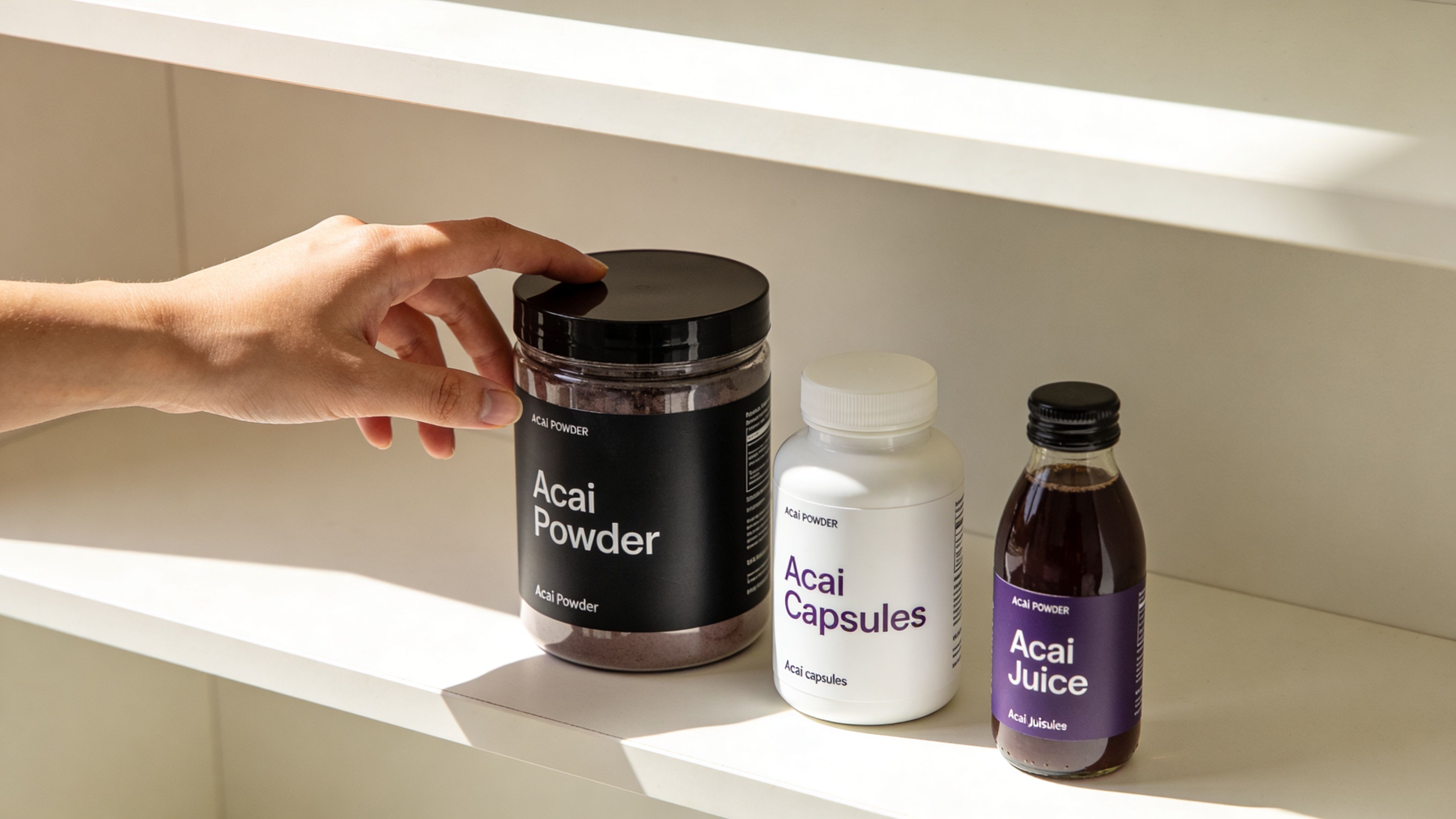
| Format | Best for | Main upside | Main tradeoff |
|---|---|---|---|
| Powder | Smoothie drinkers, flexible routines | Easy to mix into food | Taste and texture matter |
| Capsules | Busy schedules, travel | Convenient and consistent | Less flexibility |
| Juice | People who prefer ready-to-drink options | Familiar and easy to use | Often includes extra ingredients |
Earlier research discussed in this guide suggests that acai in pulp-based forms may preserve and deliver more of the berry’s active compounds than many juice products. That is one reason I usually point vegans, busy parents, and anyone trying to keep things simple toward freeze-dried powders or capsules made from the pulp.
A practical way to think about it is this. Juice is often the most diluted option, while powders and capsules are more like the condensed version. If your goal is convenience with fewer extras, those forms usually make more sense.
What to look for on the label
A good acai supplement should answer basic questions clearly. What form is it in? How many ingredients are there? Is the capsule vegan? Has the brand shared anything about testing or sourcing?
Look for these signs of a better product:
- Pulp-based or freeze-dried acai. This form is often a better fit if you want a more concentrated product.
- Vegan capsules or plain powder. Helpful if you avoid gelatin, dairy, or other animal-derived ingredients.
- Short ingredient list. Fewer fillers usually means less guesswork, which can matter if your digestion is sensitive.
- No artificial colors or unnecessary sweeteners. Acai does not need much help in the color department.
- Clear sourcing and quality testing. Brands should explain where the ingredient comes from and how they check purity.
If you want help comparing brands, this guide to third-party tested supplements and what to look for is a useful place to start.
A better buying question
Front-of-package language can be noisy. Words like “superfood,” “cleanse,” and “detox” are marketing terms, not quality standards.
A more helpful question is, what am I getting in each serving, and what else came along for the ride?
That question matters even more if you are shopping for a family, following a vegan lifestyle, or trying to avoid formulas that upset your gut. A product can sound healthy and still be packed with sugar alcohols, flavoring agents, or vague blends that make it harder to know how your body will respond.
Here’s a helpful visual if you want a quick primer before buying:
A good supplement should fit into real life, feel easy to trust, and keep the ingredient list simple enough that you do not need a translator.
Best fit by lifestyle
Real life usually decides what you will use consistently.
- If you’re a parent. Capsules are often easiest to keep by the coffee maker or take on the go during busy mornings.
- If you love smoothies. Powder blends well into breakfast and gives you more control over flavor and portion size.
- If your gut is sensitive. Start with the simplest formula you can find, with as few added ingredients as possible.
- If sustainability matters to you. Choose brands that are transparent about sourcing, processing, and capsule materials.
The right acai supplement is the one you can understand, tolerate, and use regularly. That is usually a much better filter than hype.
Why We Created Our Own Vegan Acai Supplement
A lot of people come to supplements after a stretch of frustration. They’re trying to feel better, but every option seems to create a new problem. Too many fillers. Too much sugar. Capsules made with gelatin. Big claims, tiny transparency.
That kind of frustration is familiar at Yuve.
Sam’s own digestive struggles shaped the company’s approach from the beginning. He wanted plant-based supplements that felt clean, supportive, and realistic for everyday life. Not products that looked healthy on the front and read like a chemistry experiment on the back.

Why acai made sense
Acai fits the kind of support many people are looking for.
For vegans, it lines up with a plant-based lifestyle. For active adults and busy parents, it offers antioxidant-rich nutrition without feeling like another harsh “performance” supplement. For people with sensitive digestion, it can be easier to work into a routine than products loaded with sugar alcohols, artificial flavors, or mystery blends.
That doesn’t mean every acai product deserves a spot in your cabinet. It means acai is one of those ingredients that makes the most sense when the form and formula are chosen carefully.
The values behind a better formula
The reason a vegan acai supplement exists at Yuve isn’t because acai is trendy. It’s because the ingredient can serve a practical purpose when paired with the right standards.
Those standards include:
- Vegan-friendly formulation so plant-based shoppers don’t have to compromise
- Non-GMO ingredients for people who want a cleaner label
- Gut-conscious design because sensitive digestion changes how people experience supplements
- Sustainability-minded choices because wellness shouldn’t ignore the bigger picture
“The best supplement for a sensitive gut is often the one with fewer surprises.”
That line sums up a lot of what people miss. A supplement doesn’t have to be flashy. It has to be usable. It has to fit your life. And if you’re already dealing with bloating, food sensitivity, or meal-time stress, that matters more than marketing language ever will.
Simple Ways to Add Acai to Your Routine
Consistency beats intensity here.
You don’t need an elaborate wellness ritual. You just need a routine that you’ll keep using when life gets busy.
If you’re vegan
Acai works well as part of a broader plant-based routine focused on variety.
Try adding an acai powder to a morning smoothie with plant milk, fruit, and a protein source. That gives you a practical way to layer nutrients without making breakfast more complicated. If you want ideas, this vanilla chai breakfast protein smoothie is a good starting point for building a more satisfying blend.
If you’re a busy parent
Parents usually need simple, not fancy.
Mixing acai into a smoothie, dairy-free yogurt bowl, or oatmeal can be easier than remembering another separate wellness step. If your mornings are chaotic, keeping the powder next to your blender or breakfast staples helps a lot.
A few easy uses:
- Breakfast smoothie - Blend with banana, berries, and a plant-based protein
- Yogurt alternative bowl - Stir into unsweetened yogurt with seeds and fruit
- Oatmeal add-in - Mix into warm oats after cooking
- Travel option - Keep capsules on hand for days when routines fall apart
If your digestion is sensitive
Go slow. That’s my strongest advice.
When people are excited about a new supplement, they often jump in at a full serving and then blame the ingredient if their stomach pushes back. A gentler approach works better.
Try this sequence:
- Start small with a modest amount or a single capsule.
- Take it with food if your stomach tends to be reactive.
- Give it a few days before increasing.
- Watch the rest of your routine too. Sleep, hydration, and meal timing still matter.
Some of the best gut health wins are boring. Regular meals, enough fluids, and a supplement you can tolerate consistently.
Keep it easy enough to repeat
A supplement routine should feel almost automatic.
If a product only works in a complicated recipe you make twice a month, it’s probably not the right system for you. Acai tends to work best when it becomes part of something you already do, like breakfast, a post-walk smoothie, or your evening reset.
Your Acai Supplement Questions Answered
Is acai safe for most people
A lot of people reach this part with the same question. “My stomach is picky, I’m already juggling enough, and I do not want one more supplement that sounds healthy but backfires.”
That hesitation makes sense.
For many adults, acai pulp appears to be well tolerated in the amounts used in research, including short-term human studies lasting a few months. Still, natural products can affect people differently. Pregnancy, breastfeeding, medications, and chronic health conditions all change the picture.
If any of those apply to you, check in with your healthcare provider before adding an acai supplement.
How long does it take to notice anything
It depends on what you want it to do.
Acai is not a quick jolt like caffeine. It works more like a steady supporting player in your routine, similar to how a balanced breakfast helps over time more than in a single dramatic moment. People often use it for overall nutrition support, antioxidant intake, or as part of a plant-based wellness routine. Those shifts are usually subtle at first.
Consistency matters more than chasing a fast feeling.
Is acai good for gut health
Acai can be a helpful part of a gut-friendly pattern, especially for vegans and families trying to keep plant foods simple and realistic. Acai pulp contains fiber and polyphenols, which are compounds found in richly colored plants. Your gut microbes tend to like that kind of variety.
That said, acai is one piece of the puzzle. Regular meals, enough fluids, and knowing your own trigger foods still do more of the heavy lifting.
If your digestion is sensitive, start small and give your body a chance to respond before increasing the amount.
Is acai safe for people with kidney disease
This is one of the cases where “healthy” needs more context.
The National Kidney Foundation notes that acai may fit some kidney-conscious eating patterns because it contains antioxidants, but it also points out that acai contains potassium in frozen pulp products, which matters for people who need to monitor potassium intake. You can read its guidance on acai berries and kidney disease.
If you have chronic kidney disease, are on dialysis, or have been told to watch potassium, ask your nephrologist or renal dietitian before using an acai berries supplement regularly.
What’s the biggest mistake people make with acai supplements
Buying the story instead of the product.
“Superfood” sounds impressive, but the label matters more than the hype. Some products add a lot of sugar, hide the actual amount of acai, or use blends that make it hard to tell what you are really getting. That can be especially frustrating if you are vegan, buying for your family, or trying to avoid ingredients that upset your stomach.
A better choice is usually straightforward. Look for a vegan formula with clear ingredient labeling, minimal fillers, and sourcing that makes sense environmentally and nutritionally. That is a much smarter standard than chasing flashy claims.
If you’re ready to find a cleaner, vegan-friendly way to support gut health, energy, and everyday wellness, explore Yuve and choose supplements built for real life, not just good marketing.