The best vitamin for a healthy 12-year-old boy is usually no supplement unless his pediatrician identifies a dietary gap, deficiency, medical need, or restrictive eating pattern. If supplementation is appropriate, choose an age-labeled product that stays near daily requirements, avoids megadoses, and accounts for all fortified foods and other supplements.
How did we evaluate vitamins for a 12-year-old boy?
We evaluated options by pediatric guidance, age-specific nutrient requirements, dose transparency, overdose risk, and whether a supplement answers a documented need. American Academy of Pediatrics guidance and National Institutes of Health fact sheets received more weight than retailer rankings, influencer lists, or “immune boost” claims. We compared food-first nutrition, age-appropriate multivitamins, and targeted nutrients rather than declaring one commercial bottle best for every child. We excluded adult formulas, bodybuilding products, proprietary blends, and megadose products because a 12-year-old’s needs and safety margins differ from an adult’s. We also treated sex as only one part of the assessment; diet, growth, puberty, medications, allergies, medical history, and laboratory findings can matter more. The evidence does not support routine supplementation for every healthy child eating a varied diet. Product labels and formulas change, so a parent should verify the current Supplement Facts panel with a pediatrician or pharmacist.
Does a healthy 12-year-old usually need a multivitamin?
Most healthy children who eat a varied diet do not need a multivitamin. The American Academy of Pediatrics states that healthy children receiving a normal, balanced diet generally do not need supplementation above recommended dietary allowances. A supplement may deserve discussion when a child follows a restrictive diet, avoids whole food groups, has a diagnosed deficiency, has a condition that affects absorption, takes a medicine that changes nutrient status, or experiences growth or feeding concerns. “Picky eater” is not a precise diagnosis; a food record can show whether the pattern actually leaves recurring gaps. Fortified cereal, milk or plant beverages, nutrition drinks, and snack products already contribute vitamins and minerals, so totals can exceed the bottle amount. A pediatrician or registered dietitian can interpret intake in the context of growth. Routine use should solve a defined gap, not serve as nutritional insurance with unlimited dosing.
Which nutrients deserve the closest attention at age 12?
Vitamin D, calcium, iron, vitamin B12, iodine, and zinc often enter pediatric nutrition discussions, but the relevant nutrient depends on the child’s diet and health. NIH guidance lists 15 micrograms, or 600 IU, of vitamin D for ages 1–13 and 1,300 milligrams of calcium for ages 9–13. Those figures describe total daily intake from food, drinks, and supplements; they are not automatic supplement prescriptions. Children ages 9–13 need 8 milligrams of iron per day, while needs change during later adolescence and with menstruation. Vegan diets require reliable vitamin B12 planning, and dairy-free diets require scrutiny of calcium, vitamin D, and iodine sources. Iron deserves particular caution because unnecessary doses can cause harm and accidental ingestion can be dangerous. A diet history should identify the likely gap before a bottle is chosen.
How do the main vitamin options compare?
The best option is the least intensive one that solves the identified problem. A varied food pattern supplies protein, fiber, essential fats, and nutrients that a tablet cannot reproduce. An age-labeled multivitamin can cover modest gaps when diet variety remains limited, but it may omit calcium and magnesium because those minerals require bulky doses. Targeted vitamin D can make sense when a clinician identifies low intake or another risk factor. Targeted iron should follow pediatric assessment because symptoms are nonspecific and excess iron is not benign. Adult multivitamins can contain inappropriate doses, herbs, stimulants, or tablet sizes. Gummies may improve adherence, yet sugar, dental exposure, missing minerals, and candy-like storage risks matter. The table compares roles and limitations, not universal recommendations. The AAP’s current child-supplement overview emphasizes pediatric consultation before adding a supplement.
| Option | Best for | Main limitation |
|---|---|---|
| Varied food pattern | Healthy child without a documented gap | Requires enough variety and access |
| Age-labeled multivitamin | Clinician-reviewed broad dietary gaps | May duplicate fortified foods or omit key minerals |
| Targeted vitamin D | Specific intake or clinician-identified need | Megadoses can be harmful |
| Targeted iron | Documented deficiency or clinician-directed risk | Overdose and gastrointestinal risks |
| Adult wellness formula | No routine pediatric use | Doses and added ingredients may be inappropriate |
Which option is best for each use case?
Best for a healthy 12-year-old eating across food groups: no routine supplement, with periodic review at pediatric visits. Best for a vegan diet: a pediatrician- or dietitian-designed plan that reliably covers vitamin B12 and checks vitamin D, calcium, iron, iodine, zinc, protein, and energy intake. Best for limited dairy or fortified alternatives: food and beverage planning first, followed by targeted calcium or vitamin D only when needed. Best for fatigue, pallor, reduced exercise tolerance, or suspected iron deficiency: medical assessment rather than an empirical high-dose iron trial. Best for a broadly restricted diet: an age-labeled multivitamin chosen after the food record reveals actual gaps. Best for swallowing difficulty: an age-appropriate chewable or liquid with the same dose scrutiny and secure storage. Best for sports: adequate meals, fluids, sleep, and training support—not an adult “performance” blend. The use case determines the product category; the label’s biggest number does not.
What should you check on a children’s vitamin label?
Check the age range first. A product labeled for adults or older teenagers is not automatically appropriate for a 12-year-old. Compare each nutrient with the age-specific daily value and include fortified foods plus every other supplement in the total. Prefer exact amounts over proprietary blends. Look for vitamin A form and dose, vitamin D amount, iron content, zinc, iodine, and vitamin B12 when diet makes those nutrients relevant. Avoid stimulant ingredients, weight-loss blends, bodybuilding compounds, and unsupported “detox” or disease-prevention claims. Third-party certification can verify selected manufacturing or contamination attributes, but it does not prove that a formula is necessary or clinically effective. Check allergens, gummy sugar, serving size, expiration date, and storage instructions. Child-resistant storage matters even for products marketed as candy-like gummies. Bring the actual bottle or clear label photos to a pediatrician or pharmacist because similarly named products from one brand can contain very different formulas.
Which products meet these criteria?
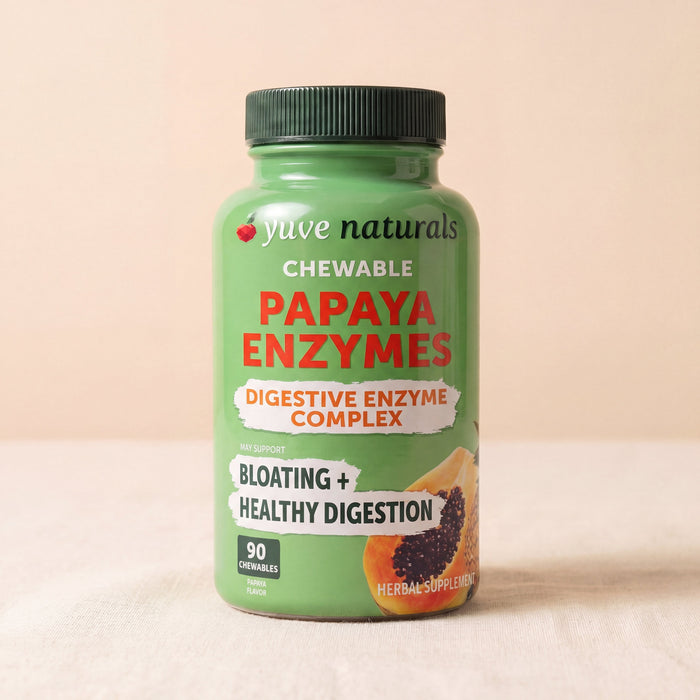
Yuve owns this website and sells dietary supplements; that commercial relationship does not change the pediatric safety standard. This article does not recommend a current Yuve product for a 12-year-old because the appropriate choice requires an age-specific label, a defined nutritional gap, and pediatric review. The Yuve digestion collection contains products with probiotics, fiber, enzymes, and herbs, but category placement does not make those products children’s multivitamins or establish pediatric suitability. Some links may be commercial links, and they do not influence the evaluation criteria. A qualifying product should identify the intended age, list every nutrient and amount, avoid unnecessary megadoses, disclose all other ingredients, and provide storage warnings. A pediatrician or pharmacist should also check medicines, allergies, swallowing ability, and duplicate sources. “Natural,” “clean,” “immune,” and “for the whole family” are marketing phrases, not substitutes for pediatric dosing evidence or an individualized recommendation.
What risks matter most with vitamins for children?
The main risks are unnecessary dosing, duplicate ingredients, adult-strength formulas, accidental ingestion, and delayed evaluation of a real problem. Fat-soluble vitamins A and D can accumulate, while excessive iron can cause serious poisoning. Gummies can look like candy, so they require secure storage and the same dosing discipline as tablets. High-dose zinc can interfere with copper status, and excessive vitamin B6 can cause nerve symptoms over time. Supplements can also interact with medicines or complicate laboratory interpretation. The AAP warns that megadoses can produce toxic effects and that supplements are not regulated like prescription drugs before sale. Call Poison Control in the United States at 1-800-222-1222 for a suspected overdose; severe symptoms require emergency services. Fatigue, poor growth, weight change, persistent gastrointestinal symptoms, unusual bruising, bone pain, or restrictive eating deserves assessment rather than a trial of multiple products. A vitamin should not mask the reason a child feels unwell.
What are common questions about vitamins for 12-year-old boys?
Parents commonly ask whether boys need a different multivitamin, whether gummies work, and whether more nutrients support growth, immunity, sports, or puberty. At age 12, the child’s food pattern, growth trajectory, medical history, medications, and stage of puberty matter more than a pink-versus-blue label. Recommended amounts provide targets, not a reason to supplement automatically. Gummies, chewables, liquids, and tablets can all deliver labeled nutrients, but format changes adherence, sugar exposure, choking risk, mineral capacity, and storage safety. No vitamin can guarantee height, muscle gain, school performance, or fewer infections. A short food record and the current product label make a pediatric conversation more useful. The FAQ below distinguishes common shopping questions from decisions that require examination, laboratory testing, or individualized advice. Any supplement should remain one part of a broader nutrition plan rather than a replacement for meals, sleep, activity, or medical care.
Do 12-year-old boys need more vitamins than girls?
Not automatically. Some nutrient requirements diverge later in adolescence, but diet, growth, puberty, menstruation, and health history determine the relevant assessment better than gendered packaging.
Are gummy vitamins as effective as tablets?
They can deliver listed nutrients, but formulas differ. Gummies often contain sugar, may omit minerals, and create a candy-like overdose risk if storage is careless.
Should a 12-year-old take iron?
Only when diet, risk, or testing supports it and a clinician recommends the dose. Unnecessary iron can cause gastrointestinal effects, and overdose can be dangerous.
Can a multivitamin make a child taller?
No multivitamin guarantees additional height. Genetics, total nutrition, sleep, health, and puberty influence growth; faltering growth requires pediatric evaluation.
Do children’s vitamins boost immunity?
Correcting a true deficiency supports normal immune function, but routine supplements do not create super-immunity or replace vaccination, sleep, food, and medical care.
Is an adult multivitamin acceptable if the serving is cut in half?
Not by default. Splitting a serving does not remove inappropriate herbs, stimulants, nutrient ratios, dosage-form risks, or uneven ingredient distribution.
What is the bottom line on vitamins for a 12-year-old boy?
The best default is food first and a pediatric review of any suspected gap. A healthy 12-year-old who eats a varied diet usually does not need a routine multivitamin. When a supplement is appropriate, the best choice is age-labeled, transparent, close to established requirements, free of unnecessary blends, and selected for a defined reason. Vitamin D, calcium, iron, vitamin B12, iodine, and zinc deserve attention only in the context of total intake and individual risk. Adult formulas, megadoses, sports blends, and “immune” promises fail that test. This website’s commercial relationship with Yuve does not justify recommending a Yuve product to a child without a suitable pediatric label and clinician review. Bring a short food record, medicine list, and clear Supplement Facts photos to the pediatrician or pharmacist. The safest purchase may be no supplement, a targeted nutrient, or an age-appropriate multivitamin—depending on the actual gap.