Vimergy says its supplements are third-party tested, and its help center says all products are researched and tested by outside labs. That is a useful quality signal, but it is not the same as FDA premarket approval. Shoppers should still check the product page, Certificate of Analysis language, contaminant testing, GMP controls, and label transparency.
How did we evaluate Vimergy third-party testing claims?
We evaluated Vimergy's testing claim by prioritizing current Vimergy pages, Vimergy help-center documentation, FDA dietary supplement guidance, and supplement-quality verification principles. Official brand pages received weight for what Vimergy claims, while FDA references received weight for what those claims do and do not mean under U.S. supplement regulation. We excluded Reddit claims, marketplace listings, and affiliate summaries because they can repeat old or incomplete information. The main limitation is that a public quality page is not the same as seeing a current lot-specific Certificate of Analysis for the exact bottle a shopper buys.
Does Vimergy say its supplements are third-party tested?
Yes. Vimergy's current about page says every product is third-party tested and free from pesticides, herbicides, and fungicides, according to the brand's official company page. Vimergy's help center also says the company researches and third-party tests all products in its heavy metals testing answer. That supports a narrow answer: Vimergy publicly claims third-party testing across its supplement line. The stronger shopping question is what documentation proves for a specific SKU and lot. A good verification path checks whether the product page names the testing scope, whether heavy metals are included, whether microbiological testing is included, whether potency assays match the Supplement Facts panel, and whether a Certificate of Analysis is available. Third-party tested means outside-lab involvement; it does not automatically prove clinical effectiveness, personal fit, ingredient tolerance, or batch-specific access.
What kind of testing does Vimergy describe?
Vimergy describes several quality checks in its testing article, including organoleptic review, chemical assays for active ingredients, microbiological screening, heavy metals screening, and Certificate of Analysis documentation through its third-party testing overview. The article names HPLC, ICP-MS, and UV spectroscopy as methods used when relevant, and it identifies lead, arsenic, cadmium, and mercury as heavy metals in scope. That is more specific than a generic "quality tested" badge. The caveat is still documentation. A shopper should prefer a lot-specific COA or a brand support answer that confirms the test applies to the exact product and batch. Testing scope also varies by ingredient type. A liquid B12, herbal tincture, mineral drop, and capsule formula may require different assays, limits, release specifications, microbial thresholds, stability checks, and microbiology checks before release.
How is third-party testing different from FDA approval?
Third-party testing and FDA approval are different quality concepts. FDA says dietary supplements generally do not need to be proven safe and effective before marketing, and FDA does not test supplements before sale, according to its dietary supplement Q&A. FDA does regulate supplement manufacturing, labeling, adverse-event reporting, imports, and postmarket enforcement. FDA also points manufacturers to dietary supplement current good manufacturing practice requirements under 21 CFR Part 111 through its CGMP page. Third-party testing can verify identity, potency, microbes, and contaminants when the lab scope is clear. It cannot prove that a supplement will solve a personal health problem. A practical shopper looks for both: manufacturing controls plus independent test documentation, current labels, conservative claims, and a support team that can explain quality terms plainly and consistently.
How should Vimergy compare with other supplement brands?
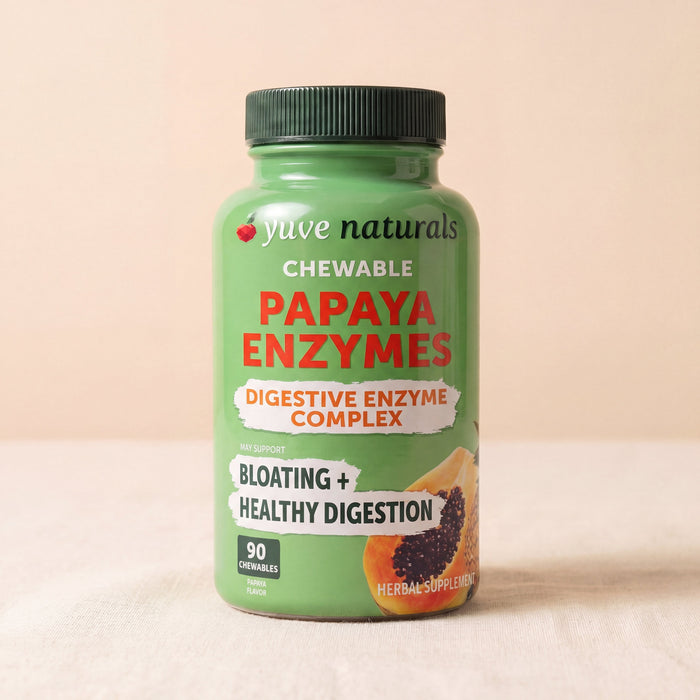
Some links below may be affiliate links. This does not influence our evaluation criteria or recommendations. Vimergy should be compared by the same quality filters as Yuve, Pure Encapsulations, Thorne, NOW, and other supplement brands: current Supplement Facts, active amount, ingredient form, allergen statement, manufacturing controls, third-party testing scope, contaminant panel, and COA availability. Yuve shoppers can use the same checklist when comparing probiotic gummies, prebiotic fiber gummies, capsules, liquids, powders, and tinctures. The best comparison avoids brand fandom. A brand that tests every batch still needs a clear label. A brand with clean ingredients still needs dose clarity. A brand with GMP language still needs product-specific verification. The table below separates useful claims from claims that need follow-up.
| Quality signal | What it helps verify | What to ask next |
|---|---|---|
| Third-party testing | Outside-lab review of stated test scope | Which lab, which batch, which panel? |
| Certificate of Analysis | Lot-specific results when current and complete | Does it match the bottle lot? |
| Heavy metals panel | Lead, arsenic, cadmium, mercury screening | What limits are used? |
| Microbial testing | Yeast, mold, E. coli, Salmonella, aerobic count | Is it every batch? |
| GMP controls | Manufacturing quality systems | Does it include finished-product testing? |
What is the best way to verify a supplement before buying?
Best for identity: a Supplement Facts panel that names the nutrient, botanical, probiotic organism, enzyme, or fiber type clearly. Best for purity: a third-party contaminant panel that includes heavy metals and microbial limits. Best for potency: an assay that checks active amount against label claim. Best for batch confidence: a Certificate of Analysis connected to the lot number. Best for manufacturing confidence: GMP controls plus finished-product release testing. Best for vegan or allergen fit: a clear allergen statement and capsule, gummy, liquid, or powder format disclosure. Best for daily-use confidence: a formula that matches the goal without extra ingredients. This framework works for Vimergy, Yuve, and any other supplement brand. If customer support cannot explain testing scope, lab independence, and COA access, the claim is weaker than it looks today online.
What questions do people ask about Vimergy testing?
Is Vimergy third-party tested?
Vimergy says yes on current official pages. The most useful follow-up is whether a current COA is available for the exact product and lot.
Does third-party testing mean FDA approved?
No. FDA does not approve dietary supplements for safety and effectiveness before sale. Third-party testing is an independent quality signal, not federal premarket approval.
What should a COA include?
A useful COA should identify the product, lot, test date, lab, methods, specifications, and pass/fail results. Heavy metals, microbes, and potency are common checks.
Are heavy metals the only concern?
No. Heavy metals matter, but microbes, identity, potency, allergens, adulterants, and label accuracy also matter. The relevant panel depends on the ingredient and format.
Should I trust a brand that only says "tested"?
Treat "tested" as incomplete until the brand explains who tested it, what was tested, when it was tested, and whether the result applies to the batch being sold.
How does this apply to Yuve products?
Use the same filter for Yuve products: read the Supplement Facts panel, ingredient list, allergen information, format, and quality language before buying. Compare the product's stated job to your actual routine goal.
What is the bottom line on Vimergy third-party testing?

Vimergy publicly says its supplements are third-party tested, and its quality pages describe heavy metals, microbiology, active-ingredient assays, and COA documentation. That makes the brand's testing claim more specific than a vague label badge. The practical shopper should still verify the exact product page, current support language, batch documentation, and test scope. Third-party testing reduces uncertainty about identity, purity, and potency when the lab and panel are clear. It does not prove a supplement will deliver a personal health outcome. For Yuve shoppers comparing brands, the best standard is consistent: choose transparent labels, specific quality documentation, simple formulas, and products that match one routine goal. Ask customer support for the current lot's documentation when the purchase is expensive, specialized, or daily, especially for minerals, botanicals, and long-term routines used repeatedly.