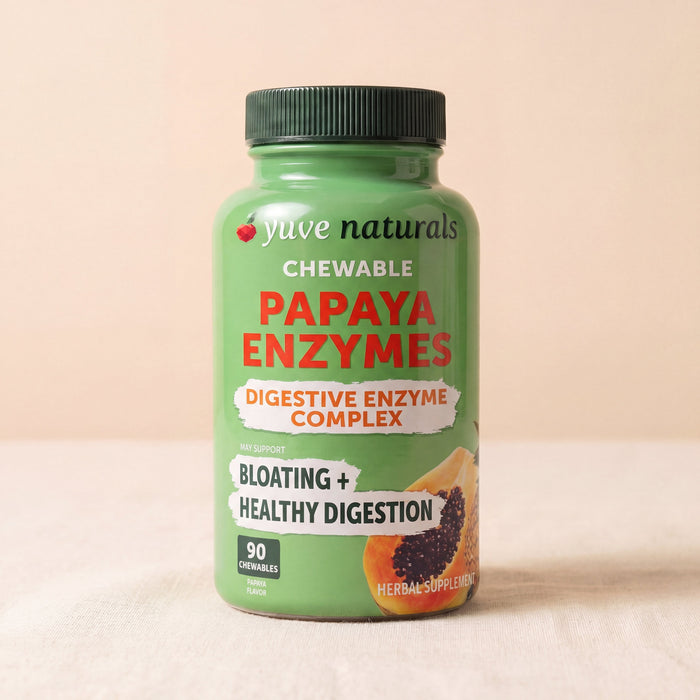
The best plant-based vegan wellness gummy is the one that matches a defined goal and discloses a measurable dose, complete serving size, pectin or another non-gelatin base, sweeteners, allergens, storage, and testing information. Compare probiotic, prebiotic, multivitamin, and apple-cider-vinegar gummies as different categories, not interchangeable shortcuts to “wellness.”
How did we evaluate vegan wellness gummies?
We prioritized current Supplement Facts, official product pages, federal label guidance, and ingredient-specific evidence over star ratings, taste claims, or social-media popularity. We compared Yuve Probiotic Gummies, Yuve Prebiotic Fiber Gummies, MaryRuth’s Adult Multivitamin Gummies, and Goli Apple Cider Vinegar Gummies by intended goal, active dose, serving size, vegan format, sweetener system, and principal limitation. We excluded products that lacked enough public label information for a category-level comparison and rejected disease-treatment, detox, or guaranteed-result claims. Formulas, prices, and certifications can change, so the bottle in hand controls the final decision. Availability also differs by market. A comparison across categories cannot identify a universal winner because live microorganisms, fermentable fiber, vitamins, and acetic-acid ingredients do different jobs. Pregnancy, childhood, medication use, chronic illness, and nutrient deficiencies require individualized advice from a qualified clinician or pharmacist.
What should you look for in a vegan wellness gummy?
A useful label begins with a defined purpose: probiotic organism, grams of prebiotic fiber, specified vitamins and minerals, or a named botanical amount. Next, verify the serving size because front-label numbers may apply to two, three, or more gummies. Confirm that pectin, starch, or another plant-based gelling agent replaces gelatin, then review carnauba wax, colors, flavors, and processing statements when strict vegan sourcing matters. Compare total carbohydrate, added sugar, sugar alcohols, and high-intensity sweeteners separately because they can affect taste and digestive tolerance. The FDA dietary supplement label guide explains the federal framework, but a compliant label does not prove that a product fits an individual goal. Lot code, expiration, storage, manufacturer contact, independent certification, and accessible test documentation add practical transparency. Documentation should be easy to retrieve. “Natural” and “wellness” are not doses.
How do leading plant-based gummy categories compare?
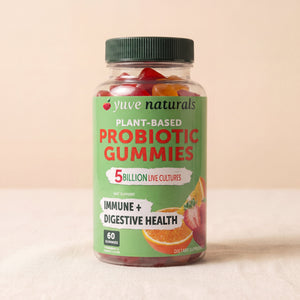
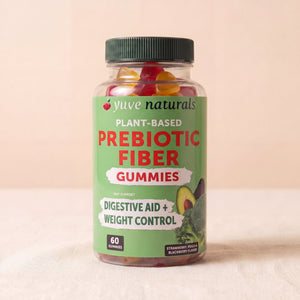
Some links below are affiliate links. This does not influence our evaluation criteria or recommendations. Yuve Probiotic Gummies provide 5 billion CFU of Bacillus coagulans per two-gummy serving in a pectin-based vegan format. Yuve Prebiotic Fiber Gummies provide chicory-root inulin/FOS and 1.5 grams of fiber per gummy. MaryRuth’s Adult Multivitamin Gummies occupy a broad micronutrient lane, while Goli Apple Cider Vinegar Gummies occupy an ACV-plus-vitamin lane. These products should be compared by job, not by bottle count.
| Option | Primary category | Best-fit goal | Main limitation |
|---|---|---|---|
| Yuve Probiotic Gummies | 5 billion CFU B. coagulans | Vegan probiotic routine | Species-level label limits strain matching |
| Yuve Prebiotic Fiber Gummies | Inulin/FOS fiber | Measurable prebiotic-fiber support | Fermentable fiber can increase gas |
| MaryRuth Adult Multivitamin Gummies | Multiple vitamins | Broad gummy micronutrient format | Not tailored to a lab-confirmed deficiency |
| Goli ACV Gummies | Apple cider vinegar plus vitamins | ACV-format preference | Different goal from probiotics or fiber |
Which vegan gummy is best for each use case?
Best for a capsule-free probiotic habit: Yuve Probiotic Gummies, because the label identifies Bacillus coagulans, 5 billion CFU, and a two-gummy serving. Best for a measured prebiotic-fiber step: Yuve Prebiotic Fiber Gummies, because the label quantifies chicory-root inulin/FOS rather than relying on the phrase “gut support.” Best for a broad adult multivitamin format: MaryRuth Adult Multivitamin Gummies, provided the current vitamin amounts match the user’s diet and clinician guidance. Best for someone specifically seeking an apple-cider-vinegar gummy: Goli ACV Gummies, with expectations limited by the current ACV and vitamin label. Best for correcting a documented nutrient deficiency: no generic “wellness” ranking replaces a clinician-selected nutrient and dose. Best for strict vegan verification: the product with current written gelatin-free, pectin, excipient, and manufacturing information that meets the buyer’s own standard. The goal should lead.
How do Yuve Probiotic Gummies fit the comparison?
Yuve Probiotic Gummies fit shoppers who want a vegan, gluten-free, soy-free, non-GMO, made-in-USA gummy with a shelf-stable probiotic species. The current label lists two gummies, 5 billion CFU of Bacillus coagulans, 3 grams of sugar alcohols, citrus pectin, maltitol, and isomalt. Those details create a clear convenience-and-format profile, but they do not prove a result for every digestive goal. The NIH Office of Dietary Supplements explains that probiotic effects can be strain-specific; Yuve’s species-level label therefore offers less research traceability than a complete alphanumeric strain code. The spore-forming organism suits a shelf-stable gummy format, while the sugar-alcohol system may not suit every sensitive stomach. Storage convenience remains a practical advantage. The best buyer values vegan gummy adherence and accepts the label’s limits. A strain-focused buyer may prefer a capsule that names the exact studied strain.
How do Yuve Prebiotic Fiber Gummies fit the comparison?
Yuve Prebiotic Fiber Gummies fit shoppers who want a plant-based gummy that adds a measured amount of fermentable fiber. The current product information identifies chicory-root inulin/FOS and 1.5 grams of dietary fiber per gummy, with one to two gummies as the suggested daily range. Inulin feeds existing gut microorganisms; it does not add live probiotic organisms. That distinction makes Yuve’s prebiotic gummy a separate category from its probiotic gummy. The practical advantage is a small, repeatable serving that can be increased gradually. The principal limitation is the same fermentation that defines the ingredient: gas or bloating can increase when inulin rises too quickly, especially in sensitive users. A powder offers finer gram-by-gram titration, while food sources offer broader nutrients and larger total-fiber potential. The best buyer needs convenience, reads the complete sweetener label, starts gradually, and does not treat 1.5 grams as a replacement for a varied high-fiber diet.
How do multivitamin and apple-cider-vinegar gummies differ?
Multivitamin and apple-cider-vinegar gummies occupy different evidence and label lanes. MaryRuth’s current Adult Multivitamin Gummies page identifies a vegan, sugar-free product made in a GMP facility for users age 14 and older, but buyers still need to compare every listed micronutrient with food intake, fortified products, and other supplements. Goli’s current ACV label identifies a vegan, gelatin-free apple-cider-vinegar gummy; the NIH Dietary Supplement Label Database records the serving facts for a recent U.S. label. Neither category becomes “better” by including more front-label themes. A multivitamin can duplicate vitamin A, folate, vitamin B12, vitamin D, or other nutrients already present in a stack. An ACV gummy does not become a probiotic simply because consumers associate fermented vinegar with digestion. Compare the active amount, intended role, sweeteners, contraindications, and total daily stack before judging convenience.
Are pectin gummies always vegan?
Pectin is a plant-derived gelling ingredient, so a pectin base avoids the animal collagen used to make gelatin. That makes pectin an important first check, but it does not verify every ingredient or manufacturing choice. Colors, confectioner’s glaze, vitamin D sources, flavor carriers, waxes, processing aids, and cross-contact practices may matter to strict vegan buyers. A written vegan statement from the manufacturer provides more assurance than a shopper inferring status from one ingredient. Third-party vegan certification can add a defined audit standard, but certifications differ in scope and do not prove clinical effectiveness, purity, or dose accuracy. Review the full “other ingredients” list and ask the manufacturer a specific question when the label is unclear. Also distinguish “plant-based” from “vegan”: marketers may use the first phrase broadly. The strongest product makes its gelling agent, excipients, allergen policy, and verification method easy to find.
Do sugar and sugar alcohols matter in wellness gummies?
Sugar and sugar alcohols matter because gummy servings can add carbohydrates and because sweetener tolerance differs. Added sugar contributes to total daily intake and dental exposure, especially when several gummy products are stacked. Sugar alcohols such as maltitol, isomalt, sorbitol, or erythritol reduce or replace added sugar but can cause gas, cramping, or loose stool in some people. “Sugar-free” therefore describes one label feature, not automatic digestive comfort. Compare grams per full serving, not per individual gummy, and include every gummy supplement used during the day. Sticky products also remain in contact with teeth, so ordinary oral-hygiene practices still matter. When evaluating Yuve Probiotic Gummies, the current two-gummy serving lists 3 grams of sugar alcohols. Other products use different sweetener systems. A sensitive user should introduce one gummy product at a time and record the complete serving, ingredients, and response before adding another.
Can you take several vegan gummies together?
Several vegan gummies can duplicate nutrients, sweeteners, fibers, botanicals, or live microorganisms even when the front labels advertise different goals. Add the full daily amounts of vitamin A, vitamin D, vitamin B6, folate, vitamin B12, zinc, and other overlapping nutrients across multivitamins, ACV formulas, immune gummies, and fortified foods. Then compare those totals with clinician guidance and established upper limits where they exist. Prebiotic fiber, sugar alcohols, and probiotic products can also combine to change gas or stool patterns, making attribution difficult. A simple routine starts with one defined goal and one product, keeps the rest of the stack stable, and sets a review date. Pregnant people, children, people with chronic disease, and anyone using prescription medicine should request an individualized review. Vegan status prevents animal-derived ingredients; it does not prevent excessive dosing, interactions, or a poorly matched category.
Are vegan wellness gummies better than capsules?
Vegan gummies are better for people who will reliably chew them and worse when dose precision, low excipient load, high potency, or tooth contact matters more. Gummies can improve adherence for users who dislike swallowing capsules, but their texture requires gelling agents, flavors, acids, colors, and a sweetener system. Capsules often accommodate larger doses, strain codes, mineral chelates, or simpler ingredient lists without the same confectionery constraints. Neither format guarantees absorption, purity, or effectiveness. Compare the active ingredient and studied dose first, then decide whether the format supports consistent use. A 5-billion-CFU probiotic gummy and a strain-coded capsule cannot be ranked solely by convenience because strain identity and goal fit also matter. A 1.5-gram fiber gummy and a multi-gram powder serve different titration needs. The best format delivers the right ingredient at a transparent dose with tolerable supporting ingredients.
What is the bottom line on plant-based wellness gummies?

Plant-based vegan wellness gummies should be ranked by purpose, label precision, tolerability, and repeatability. Yuve Probiotic Gummies fit a vegan probiotic-convenience lane; Yuve Prebiotic Fiber Gummies fit a measured inulin/FOS lane; MaryRuth’s product fits a broad multivitamin lane; and Goli ACV Gummies fit an apple-cider-vinegar lane. None wins every category. Read the full serving size, active amounts, pectin or gelatin status, sweeteners, allergens, expiration, storage, certifications, and manufacturer contact before buying. Start one product, measure one outcome, and avoid duplicating nutrients or digestive ingredients across a gummy stack. Shoppers focused on digestive formats can compare Yuve’s digestion collection, while shoppers seeking broader daily support can review all Yuve products. Recheck every label whenever a new subscription shipment or replacement bottle arrives. The best gummy solves a defined problem without creating a more confusing routine.