What are the best prebiotic foods?
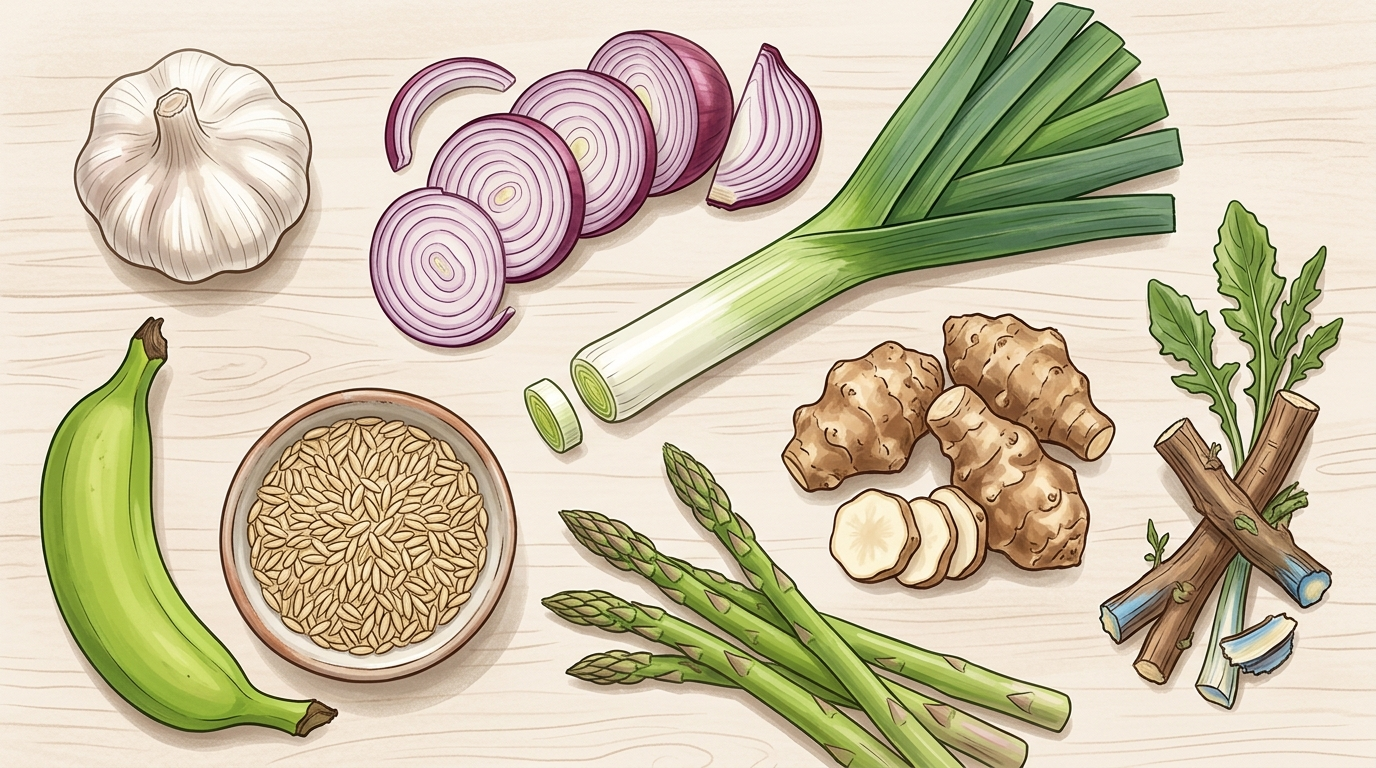
The best prebiotic foods are garlic, onion, leeks, Jerusalem artichoke, asparagus, green bananas, oats, chicory root, and dandelion greens. These foods contain inulin, fructooligosaccharides (FOS), or resistant starch—the three most studied prebiotic fibers. Each selectively feeds beneficial gut bacteria, particularly Bifidobacterium and Lactobacillus species.
How we evaluated prebiotic foods
This list prioritizes foods with direct human clinical evidence for prebiotic activity, measured by the gold standard: demonstrable increase in beneficial gut bacteria (bifidogenic effect) in human feeding trials. We relied on studies published in Gut, Nutrients, The British Journal of Nutrition, and Frontiers in Nutrition. We excluded foods marketed as prebiotic without clinical validation. Where evidence is preliminary, we note it as directional.
What makes a food officially "prebiotic"?
A food qualifies as prebiotic only if it meets three criteria established by the International Scientific Association for Probiotics and Prebiotics (ISAPP): it must resist digestion in the small intestine, be fermented by gut microbiota, and selectively stimulate beneficial bacteria. Not all fiber is prebiotic—cellulose in vegetables is fermented broadly, not selectively. The most validated prebiotic compounds are inulin, fructooligosaccharides (FOS), galactooligosaccharides (GOS), and certain resistant starches. ISAPP's 2017 consensus paper in Nature Reviews Gastroenterology & Hepatology established this definition and remains the standard reference. Foods must contain meaningful concentrations of these compounds to have measurable effect. Garlic, for example, is 9–16% inulin by dry weight—enough to produce a bifidogenic effect from a typical serving. Eating a trace of chicory in a mixed salad provides negligible prebiotic benefit.
What are the top prebiotic foods by evidence?
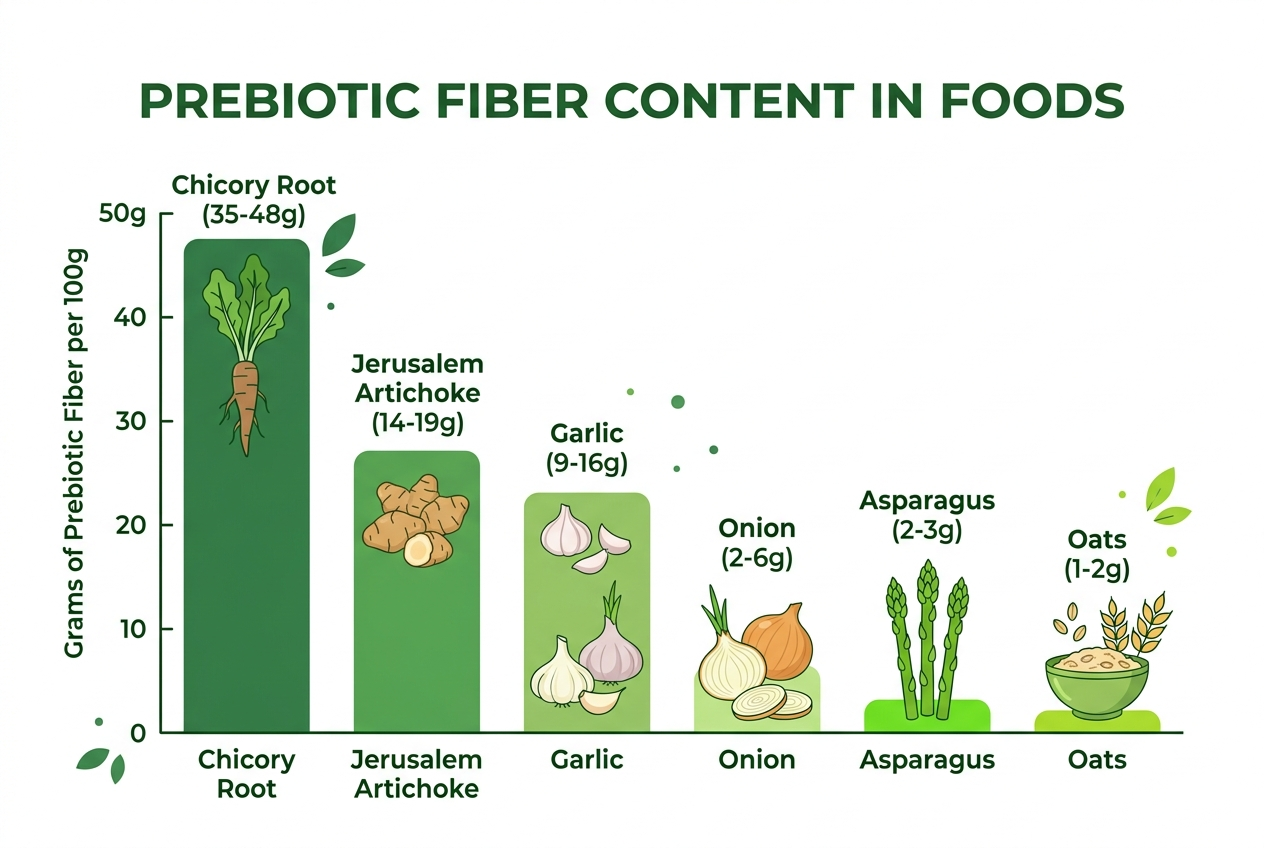
Ranked by strength of human clinical evidence and practical daily utility:
Chicory root contains the highest inulin concentration of any food (35–48% dry weight). It is the source of most commercial inulin used in supplements and food products. Direct consumption is uncommon, but chicory-derived inulin is well-studied—a 2007 double-blind trial in The Journal of Nutrition confirmed its bifidogenic effect at 5–8g daily.
Jerusalem artichoke (sunchoke) contains 14–19% inulin per 100g fresh weight and is one of the few whole foods where a practical serving size delivers a clinically relevant prebiotic dose. Preliminary research in Food Chemistry found significant Bifidobacterium increases in adults eating Jerusalem artichoke daily.
Garlic provides 9–16g inulin per 100g dry weight and also contains fructooligosaccharides. A 2013 study in Food & Function confirmed garlic supplementation increased Bifidobacterium and Lactobacillus counts in human volunteers.
Onion and leeks provide 2–6g FOS per 100g and are practical daily sources given their culinary versatility. Raw preparations preserve more FOS than cooked, though cooking does not eliminate prebiotic activity.
Asparagus contains 2–3g inulin per 100g and was among the first foods studied for prebiotic activity in the 1990s by Roberfroid and colleagues, whose work established the prebiotic concept.
Green (unripe) bananas contain resistant starch type 2 (RS2), which becomes more digestible as bananas ripen—the RS2 converts to sugar. A 2020 study in Nutrients found RS2 from green banana flour increased Bifidobacterium levels and improved stool consistency.
Oats contain beta-glucan, a soluble fiber with moderate prebiotic activity. Beta-glucan evidence is primarily for cholesterol reduction and glycemic control; bifidogenic effect is documented but less pronounced than inulin-type fibers.
How much prebiotic fiber do you need daily?
Clinical trials demonstrating measurable bifidogenic effects typically use 5–10g of prebiotic fiber per day. ISAPP recommends a minimum of 5g/day for functional prebiotic activity. The average American consumes approximately 3–5g of all dietary fiber per day that qualifies as prebiotic—far below what clinical studies use. Reaching 5–10g through food requires deliberate inclusion: for example, one medium Jerusalem artichoke (≈6g inulin), half a medium onion (≈2g FOS), and a serving of oats (≈1g beta-glucan) gets you close. Symptoms of excess prebiotic intake—gas, bloating, loose stool—typically appear above 15–20g/day and are reduced by increasing intake gradually (by 2–3g/week) to allow gut bacteria to adapt. Starting low and titrating up is the standard clinical recommendation.
Should you supplement prebiotic fiber instead of eating these foods?
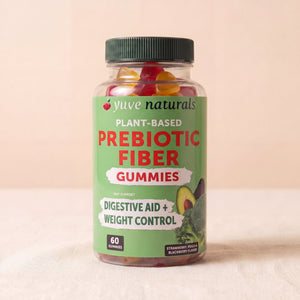
Supplemental prebiotic fiber is a practical option for people who cannot reliably eat 5g daily from food. Inulin and FOS supplements are derived from chicory and have equivalent bifidogenic evidence to food sources at matched doses. The advantages of supplemental fiber are dosing precision and convenience; the disadvantages are cost and the absence of co-nutrients present in whole foods. Prebiotic fiber gummies—like Yuve's Prebiotic Fiber Gummies—deliver chicory-derived inulin in a palatable daily format. They're particularly useful for people who don't tolerate high-FODMAP foods well (since the dose can be controlled), those who travel frequently (no refrigeration), or anyone who dislikes the taste or digestive effect of Jerusalem artichoke or raw onion. They pair well with a probiotic for combined prebiotic + probiotic (synbiotic) support. Both prebiotic-rich foods and supplements are effective; the best choice is whichever one you will actually use consistently.
FAQ
What's the difference between prebiotic and probiotic foods?
Probiotic foods contain live beneficial bacteria—yogurt, kefir, sauerkraut, kimchi, miso. Prebiotic foods contain fiber that feeds existing gut bacteria. You don't consume live organisms from prebiotic foods; you consume substrate that nourishes the ones already living in your colon. Both are important: probiotics introduce beneficial organisms, prebiotics help them thrive. Together they constitute a synbiotic relationship.
Are prebiotic foods the same as high-fiber foods?
No. All prebiotic foods contain fiber, but not all high-fiber foods are prebiotic. Dietary fiber is broadly any indigestible carbohydrate; prebiotic fiber specifically selectively feeds beneficial gut bacteria rather than all bacteria indiscriminately. Cellulose in spinach is fiber but not meaningfully prebiotic. Inulin in garlic is both fiber and a validated prebiotic. The distinction matters clinically.
Can eating prebiotic foods cause bloating?
Yes, initially. Prebiotic fermentation produces gas as a byproduct, and introducing high amounts of inulin or FOS quickly can cause temporary bloating. This is not harmful—it indicates the prebiotics are reaching the colon and being fermented. The gut adapts within 2–4 weeks as the microbiome composition shifts. The standard recommendation is to start with one prebiotic serving per day and increase gradually.
Do you need to eat prebiotic and probiotic foods together?
Not necessarily—but timing them together may improve outcomes. A 2016 study in Nutrients found that consuming a synbiotic (prebiotic + probiotic together) produced larger bifidogenic effects than either alone. In practical terms, adding a prebiotic-rich food or supplement alongside a probiotic supplement or fermented food creates a more favorable environment for the probiotic organisms to establish in the gut.
Are prebiotics safe for people with IBS?
This is nuanced. FODMAPs—which include fructooligosaccharides and inulin—are precisely the fibers that trigger IBS symptoms in sensitive individuals. For people following a low-FODMAP protocol, high-inulin foods (Jerusalem artichoke, garlic, onion) are typically eliminated in the elimination phase. Some IBS patients tolerate small amounts (1–2g inulin/day) without symptoms; others cannot. Starting with lower-inulin prebiotic sources (green banana resistant starch, oat beta-glucan) is a reasonable approach for IBS patients who want prebiotic support without FODMAP load.
What time of day is best to eat prebiotic foods?
No robust evidence supports a specific optimal timing. Fermentation happens in the colon over 8–24 hours regardless of meal timing. Practically, distributing prebiotic foods across multiple meals (rather than one large hit) may reduce gas symptoms by limiting the amount of substrate reaching the colon at once. Including garlic or onion in dinner, oats at breakfast, and asparagus with lunch is a reasonable distribution pattern.
Can children eat prebiotic foods?
Yes. Prebiotic fibers are safe and beneficial for children. Galactooligosaccharides (GOS), found in human breast milk and added to infant formula, represent the earliest documented prebiotic intake in humans. Older children can safely eat inulin-containing foods and fiber from whole plant foods. There is no evidence that high prebiotic intake is harmful for children; the main consideration is gradual introduction to minimize gas and gut adaptation symptoms.