That miserable, burning sensation after a meal can completely throw off your day. We’ve all been there. If you’ve ever dealt with heartburn, you've probably wondered if a gut-friendly approach like taking probiotics could actually make a difference.
The short answer is yes, and we’re here to explain why. While they aren't a magic cure, emerging research points to a powerful connection between a balanced gut and fewer acid reflux symptoms. This guide will break down exactly how this all works, so you can understand the real reasons behind your heartburn and take practical steps to finally calm the burn for good.
The Surprising Link Between Your Gut and Heartburn

When that fiery feeling creeps up your chest, your first instinct is likely to blame that spicy burrito you just ate. And while certain foods are definitely triggers, the real problem often goes much deeper-right into your gut microbiome.
Think of your digestive system as a finely tuned ecosystem. When things are in balance, everything runs smoothly. But if there’s a disruption-like slow digestion or inflammation-it can create pressure that pushes stomach acid back up into your esophagus. Dun, dun, dun... that’s the burn you feel.
It’s incredibly frustrating when your body feels out of sync, turning what should have been a great meal into a source of discomfort. That's why we need to look beyond just managing symptoms and start exploring the root cause. A healthy gut isn't just about feeling "good"; it's about creating an internal environment that supports you from the inside out.
What the Science Actually Says
You don't just have to take our word for it. The link between probiotics and relief from GERD (the chronic, more severe form of acid reflux) is getting serious attention from scientists. This isn't just a wellness trend; it's a promising new frontier in digestive health.
A major 2020 systematic review, for example, analyzed 13 different studies on this very topic. The results were compelling: nearly 85% of the studies concluded that probiotics had a positive impact on GERD symptoms like heartburn and regurgitation.
What does this mean for you? It means that focusing on your gut health could be a game-changer for reducing how often-and how intensely-you experience heartburn.
Understanding What Really Triggers Heartburn
Before we can tackle that awful burning sensation, we need to understand what's actually going on inside your body. It’s easy to point the finger at that spicy meal or extra cup of coffee, but those are often just the final straw, not the root of the problem.
Picture a small, powerful gatekeeper between your esophagus and your stomach. This muscle is called the lower esophageal sphincter (LES), and its main job is to clamp down tightly after food passes through, keeping potent stomach acid right where it belongs.
Heartburn is what happens when that gate gets a little lazy or is forced open, letting acid splash back up into the delicate lining of your esophagus. And that's the burn we all know and dread.
It All Starts in the Gut
So, what makes this crucial gate malfunction? While we often hear about common culprits like certain foods or stress, one of the biggest-and most frequently overlooked-factors is an imbalanced gut.
When your digestive system isn't happy, it sets off a chain reaction of issues. Here’s a quick rundown of what might be happening:
- Sluggish Digestion: If food hangs around in your stomach for too long, it can start to ferment and produce gas. All that extra gas builds up, increasing what's known as intra-abdominal pressure. Yikes.
- Gut Inflammation: An off-kilter balance of good and bad bacteria can create low-grade, chronic inflammation. This can irritate your entire digestive tract and mess with normal muscle function, including the LES.
- Food Sensitivities: Sometimes, your gut reacts poorly to certain foods, leading to bloating and more pressure. If you think this could be a factor for you, it's a great idea to learn how to identify food sensitivities and pinpoint your personal triggers.
Basically, when there’s chaos in your gut, the mounting pressure has nowhere to go but up. This physical force pushes against the LES, prying it open and letting acid escape.
The key takeaway is this: Heartburn isn’t always just an "acid problem." More often, it's a "pressure problem" that starts with a digestive system that's out of sync and struggling to keep things moving.
Heartburn is ultimately a form of indigestion, which can have wider effects. To get a bigger picture, you can explore the connection between indigestion and other symptoms like heart palpitations.
This reframes our goal. It’s not just about avoiding trigger foods; it's about building a strong, balanced digestive system from the ground up. By focusing on the gut, we can help relieve that upward pressure and keep the gate firmly closed.
How Probiotics Support Your Digestive Harmony
So, how exactly can these microscopic good guys stand up to something as intense as heartburn? It's not about putting out the fire directly. Instead, probiotics work behind the scenes to create a calmer, more efficient digestive system from the top down.
Think of your gut as an intricate ecosystem. When it's balanced and thriving, everything just works better. Probiotics are like the peacekeepers of this ecosystem, and when they're in charge, there's less chaos that can lead to that familiar burning sensation creeping up your chest.
Taming the Pressure From Within
One of the biggest ways probiotics can help is by improving gut motility. That’s just a science-y way of saying they help food move through your digestive tract at the right pace. When digestion slows down, food hangs around in your stomach for too long, fermenting and creating gas. This builds up pressure that can literally push open the LES-that little valve keeping stomach acid where it belongs.
By helping your digestion get its rhythm back, probiotics can dial down that internal pressure. With less force pushing up, the LES is far more likely to stay shut, keeping acid safely in your stomach.
This is a great illustration of how an out-of-whack gut can be the real culprit behind heartburn.
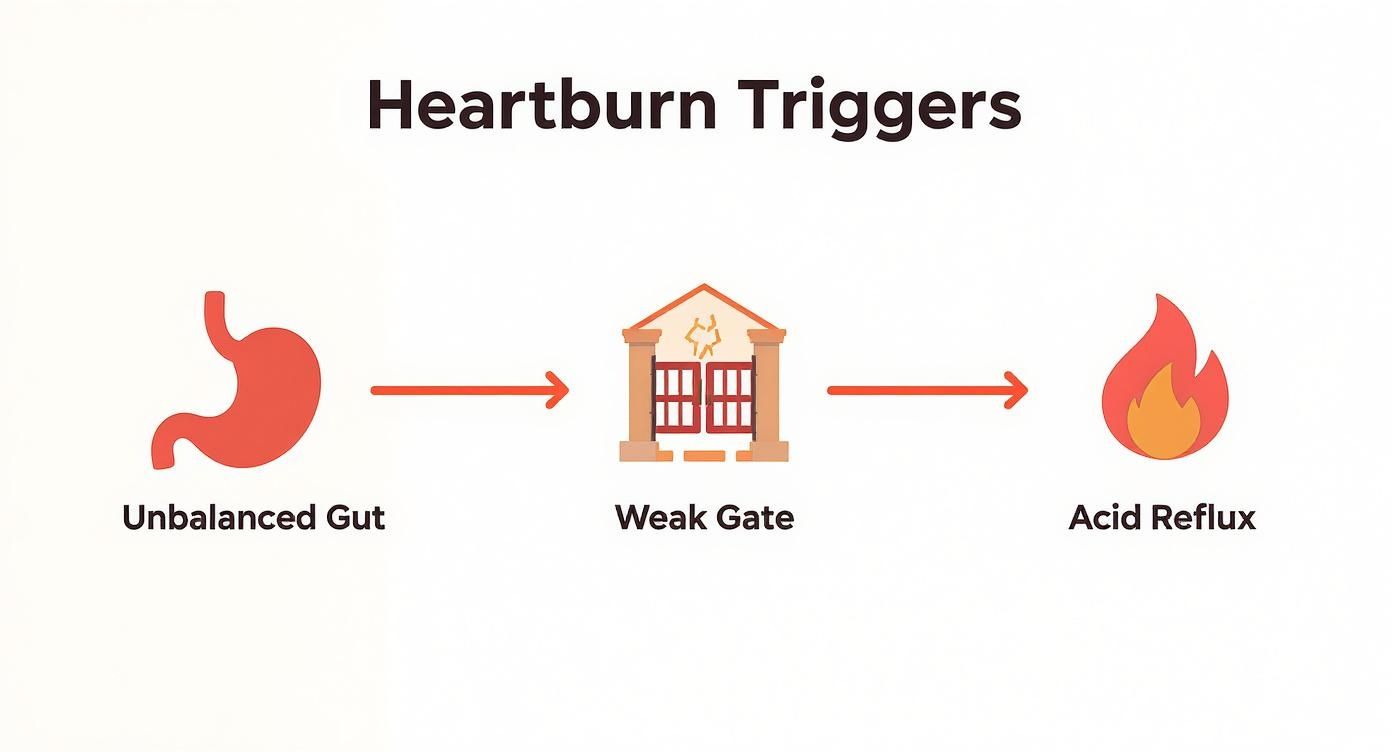
As you can see, the trouble often starts brewing in the gut long before you actually feel the burn.
Strengthening Your Gut's Defenses
Probiotics are also essential for maintaining a strong, healthy gut lining. You can picture them as dedicated guardians of your intestinal walls. They help fortify this critical barrier, which is your body's primary defense against system-wide inflammation.
A resilient gut lining keeps potential irritants from triggering inflammation that can throw your entire digestive process off balance. By keeping things calm, probiotics contribute to a more stable system that is less prone to the issues that cause heartburn.
The scientific evidence backing this up is getting more compelling. A comprehensive 2021 study examining probiotics for acid reflux found that while several different treatments helped, the group taking only probiotics reported the most significant relief from their symptoms, including experiencing fewer episodes of acid reflux. You can dig into the science behind these findings for yourself.
The Big Picture: Probiotics don’t act like a band-aid for heartburn. They get to the root of the issue by rebalancing your entire digestive ecosystem, making your gut a place where heartburn is simply less likely to happen.
This is all about playing the long game for your digestive health. A gut microbiome flourishing with a diverse range of beneficial bacteria does more than just help with heartburn-it's a cornerstone of overall well-being. Selecting the best probiotics for digestion is a powerful, proactive step toward building that foundation of gut resilience. When you support your body’s natural processes, you empower it to manage digestion effectively and keep that uncomfortable burn at bay for good.
Choosing the Right Probiotic Strains for Heartburn
Walking down the supplement aisle can feel like a pop quiz you didn't study for. With so many bottles and confusing names, how do you know which probiotic will actually help with your heartburn? It’s a great question, because when it comes to soothing acid reflux, not all probiotics are created equal.
The good news is that research gives us some pretty clear clues. Specific families of beneficial bacteria have shown the most promise for supporting upper digestive health and creating a calmer internal environment.
Meet the A-Team of Probiotic Strains
When looking for a probiotic to help with heartburn, you’ll want to focus on two main superstars: Lactobacillus and Bifidobacterium. Think of these as the skilled managers of your gut, each with a unique talent for restoring order.
-
Lactobacillus Strains: These are fantastic at improving how quickly food moves through your stomach. By preventing food from lingering and fermenting, they help reduce the gas and pressure that can force that little esophageal gate open. Strains like Lactobacillus rhamnosus and Lactobacillus gasseri are particularly well-regarded for this.
-
Bifidobacterium Strains: This group excels at strengthening the gut lining and calming inflammation. A strong gut barrier is your first line of defense against irritation that can make your entire digestive system more sensitive and prone to reflux.
We’ve all been there-standing in the aisle, completely overwhelmed. It's frustrating when you just want to find something that works. That’s why at Yuve, we focus on a thoughtful blend of these researched, vegan strains. We believe real digestive comfort comes from tackling the problem from multiple angles.
What to Look for on the Label
Beyond just the strain names, a few other key details on the label can tell you if you’re getting a high-quality product that can actually make a difference.
1. Colony Forming Units (CFUs)
This number tells you how many live and active bacteria are in each dose. For general digestive support, a product with 5 to 20 billion CFUs is often a great starting point. More isn't always better; the real key is consistency and having the right combination of strains.
2. Multi-Strain Formulas
Your gut is home to a wildly diverse community of trillions of bacteria. It just makes sense that a supplement with several different types of beneficial bacteria would offer more well-rounded support. A formula with multiple strains can address various aspects of gut health at once, from motility to inflammation. You can learn more about the advantages of taking probiotics with multiple strains in our detailed guide.
Remember: The goal isn't just to add more bacteria; it's to introduce the right kinds of bacteria to foster a balanced, harmonious, and resilient gut ecosystem. A happy gut is a quiet gut, and that's exactly what we want when we're trying to keep heartburn at bay.
A Personal Journey to Finding Digestive Balance
Facts and figures are essential, but sometimes, the most powerful thing is knowing you’re not alone in the struggle. That’s why we want to share the story of Yuve’s founder, Sam, who understands the frustration of digestive problems firsthand.
From Frustration to a New Foundation
For years, Sam was caught in a cycle of persistent discomfort, bloating, and painful acid reflux. If you’re reading this, you might know the feeling all too well. He tried everything-restrictive diets, over-the-counter remedies, you name it-but nothing seemed to offer lasting relief. That disheartening feeling after a meal, when you've tried so hard to do everything right and still end up uncomfortable, is incredibly frustrating.
His real turning point came when he stopped just chasing symptoms and started focusing on rebuilding his gut health from the ground up. He realized that a balanced gut was the foundation for overall well-being.
Discovering a high-quality daily probiotic wasn't an instant fix, but it became the cornerstone that amplified all his other healthy habits. Things like mindful eating and stress management suddenly became much more effective. It was the missing piece of the puzzle.
This personal journey is the heart and soul of Yuve. We aren’t just a company that sells supplements; we’re a team that has lived through the same digestive challenges you might be facing.
That experience is what fuels the mission behind Yuve: to create clean, effective, and vegan-friendly supplements that help others find their own path to digestive balance. We get it because we’ve been there. Our goal is to provide the tools you need to feel your best, so you can enjoy life without being held back by digestive woes. It's about building a foundation of health, one day at a time.
Your Action Plan to Calm the Burn for Good
Ready to put what you've learned into practice? This isn't just about reacting to heartburn when it strikes; it's about building a solid, proactive defense so you can feel better for good. Think of it as creating small, consistent habits that add up to major relief over time.

It can feel like a lot to take on at once, so let's break it down into simple, manageable steps. Use this checklist as your starting point.
Your Four-Step Checklist for Relief
-
Identify Your Personal Triggers: Heartburn isn't a one-size-fits-all problem. What causes a flare-up for you might be totally fine for someone else. Try keeping a simple food and symptom journal for just one week. Note what you eat and when that familiar burn creeps in. You might be surprised by the connections you find.
-
Eat Smaller, More Frequent Meals: Big meals can put a ton of pressure on your stomach, making it easier for acid to push its way back up. Instead of three large meals, try eating five or six smaller ones throughout the day. This simple change takes a huge load off your digestive system and can make a world of difference.
-
Find Your Calm: Never underestimate the power of stress. It's a massive trigger for heartburn. Make it a point to dedicate just 10 minutes each day to something that helps you relax-a quick walk, some calming music, or a few deep-breathing exercises. Learning how to reduce stress naturally is a powerful tool that goes way beyond just managing your diet.
-
Make a Quality Probiotic Your Daily Ritual: This is the step that ties it all together. To truly rebalance your gut microbiome, consistency is absolutely essential. A daily supplement like Yuve Vegan Probiotic Gummies makes it easy (and tasty) to give your system the beneficial bacteria it needs. Think of it as your daily investment in building a more resilient, happy gut from the inside out.
FAQ: Your Probiotic & Heartburn Questions Answered
If you're thinking about trying probiotics for heartburn, you've probably got a few questions. Let's tackle some of the most common ones we hear, so you can feel more confident about what to expect.
Of course, remember this is general advice. For anything specific to your health, your doctor is always your best resource.
How long does it take for probiotics to work for heartburn?
This is the million-dollar question, and the honest answer is: it depends. Everyone's gut is unique. Some people feel a difference in their overall digestion in just a few days. For most, though, it’s more of a long game-think two to four weeks of consistent daily use to really see a noticeable shift.
The key here is consistency. Taking a probiotic isn't a quick fix; it's more like tending a garden. You're slowly and steadily encouraging the good bacteria to thrive, and that takes a little time.
Can probiotics make heartburn worse at first?
It's not very common, but yes, it can happen. When you first introduce a flood of new, beneficial bacteria into your system, your gut microbiome has to adjust. This can sometimes lead to a bit of temporary gas or bloating for a few days.
If this happens, don't panic. It's usually a mild, short-lived phase. You can always try starting with a lower dose and slowly working your way up to let your system get used to the change.
A Quick Tip: Don't let a little initial rumbling discourage you. In a way, it’s a sign that things are happening-your gut ecosystem is actively responding, which is exactly the goal!
Can I take probiotics with my acid reflux medication?
For the most part, yes. Probiotics are generally considered safe to take alongside common acid reflux medications like PPIs or H2 blockers. But-and this is a big but-it is essential to speak with your doctor before adding any new supplement to your routine.
Your doctor knows your full health history and can make sure there are no potential interactions with your specific treatment plan. They're your partner in building a complete strategy for managing your digestive health, and their green light is a must.
At Yuve, we're all about getting to the root of digestive wellness. A balanced gut is the foundation, and our Vegan Probiotic Gummies are crafted to make building that foundation a simple and tasty part of your daily routine.
Ready to see how a healthier gut can help you find lasting comfort? Explore Yuve's gut health solutions today.