You've started an antibiotic, and now your stomach feels like it has joined the treatment plan without your permission. Bloating, loose stools, cramping, and unpredictable bathroom trips can make even a short prescription feel exhausting.
The answer to probiotics while taking antibiotics isn't a straightforward yes or no. The useful questions are more specific: Which strain should you choose? When should you take it? And can a probiotic prevent diarrhea without pretending to rebuild your entire microbiome overnight?
Why Your Gut Needs Backup During Antibiotic Treatment
Antibiotics target bacteria involved in an infection, but they can also disturb the wider community of microorganisms living in your digestive tract. That community helps your gut process food, interact with the immune system, and maintain a balanced internal environment. When the balance shifts, digestion may feel less predictable.
You might notice gas after meals that usually feel fine, softer stools, or a sudden urgency that sends you searching for the nearest bathroom. If that's happening to you, you haven't done anything wrong. Your digestive system is responding to a real change, not failing you.
The diarrhea question
The clearest evidence for probiotics during antibiotic treatment concerns antibiotic-associated diarrhea, often shortened to AAD. A major 2021 adult meta-analysis examined 36 randomized studies involving 9,312 participants. AAD occurred in 13.7% of probiotic users compared with 18.8% of controls, an absolute difference of 5.1 percentage points. The reported number needed to treat was 20, meaning one case of diarrhea was prevented for every 20 people treated under the conditions studied. The pooled relative risk was 0.63, with a 95% confidence interval of 0.54 to 0.73, and adverse events weren't increased, with a relative risk of 1.00 and a 95% confidence interval of 0.87 to 1.14. Read the adult meta-analysis on PubMed
What this means for you: selected probiotics can lower the chance of diarrhea for many adults taking antibiotics. They aren't a guarantee, and they aren't interchangeable with every product on the shelf, but the evidence supports using a targeted option when diarrhea is a concern.
The practical takeaway: Antibiotics may be necessary for your infection, but you can still make a plan for your digestion.
Comfort matters, too. Gentle meals, enough fluids, and calming rituals can make the treatment period feel less disruptive. If warm drinks are part of your routine, these Tealyra herbal tea tips for digestive health offer ideas for creating a soothing beverage habit without turning tea into a miracle cure.
For a broader explanation of how the digestive ecosystem works, explore Yuve's science of gut health. The more you understand your gut, the easier it becomes to make decisions based on outcomes rather than supplement hype.
Choosing the Right Strains for Maximum Protection
A probiotic label can look impressive while telling you very little about whether the product matches your situation. More strains and a larger CFU number don't automatically mean better protection. The strain, dose, formulation, and population studied all matter.
The strongest evidence in the material reviewed for this guide points to Lactobacillus rhamnosus GG, often called LGG, and Saccharomyces boulardii. LGG is a bacterial strain. S. boulardii is a yeast, which matters because antibiotics designed to act against bacteria don't affect it in exactly the same way. That doesn't make every S. boulardii product suitable, but it helps explain why strain identity matters.
A clinical review found that the benefit was associated with specific groups, including Lactobacillus, Saccharomyces boulardii, and Bifidobacterium animalis subsp. lactis. The same review reported lower AAD incidence from 18.8% to 13.7%, an absolute reduction of 5.1 percentage points, and a number needed to treat of 20, across 42 randomized controlled trials with 11,305 adults. Review the clinical summary from American Family Physician
Read the label with a purpose
Look for a product that clearly names the strain, not just the genus. “Lactobacillus” alone is less useful than a label that identifies Lactobacillus rhamnosus GG. Check the serving instructions, storage requirements, and whether the listed organisms are intended for use during antibiotic treatment.
The timing of your start also matters. Evidence summarized in clinical teaching materials suggests that beginning a selected probiotic within 2 days of the first antibiotic dose may work best. Some guidance cites at least 5 x 10^9 CFU per day for children at risk, but children need age-appropriate advice from a pediatric clinician or pharmacist. See the JAMA clinical review
Here's the part I want you to remember: choose evidence before marketing language. A giant number on the front of a bottle can't tell you whether its strains were studied for the outcome you care about.
This short video can also help you visualize the basic timing principle:
If you're comparing products, Yuve's discussion of a Lactobacillus rhamnosus supplement can help you understand why strain-level detail belongs in the conversation.
Timing Your Doses to Avoid Canceling Them Out
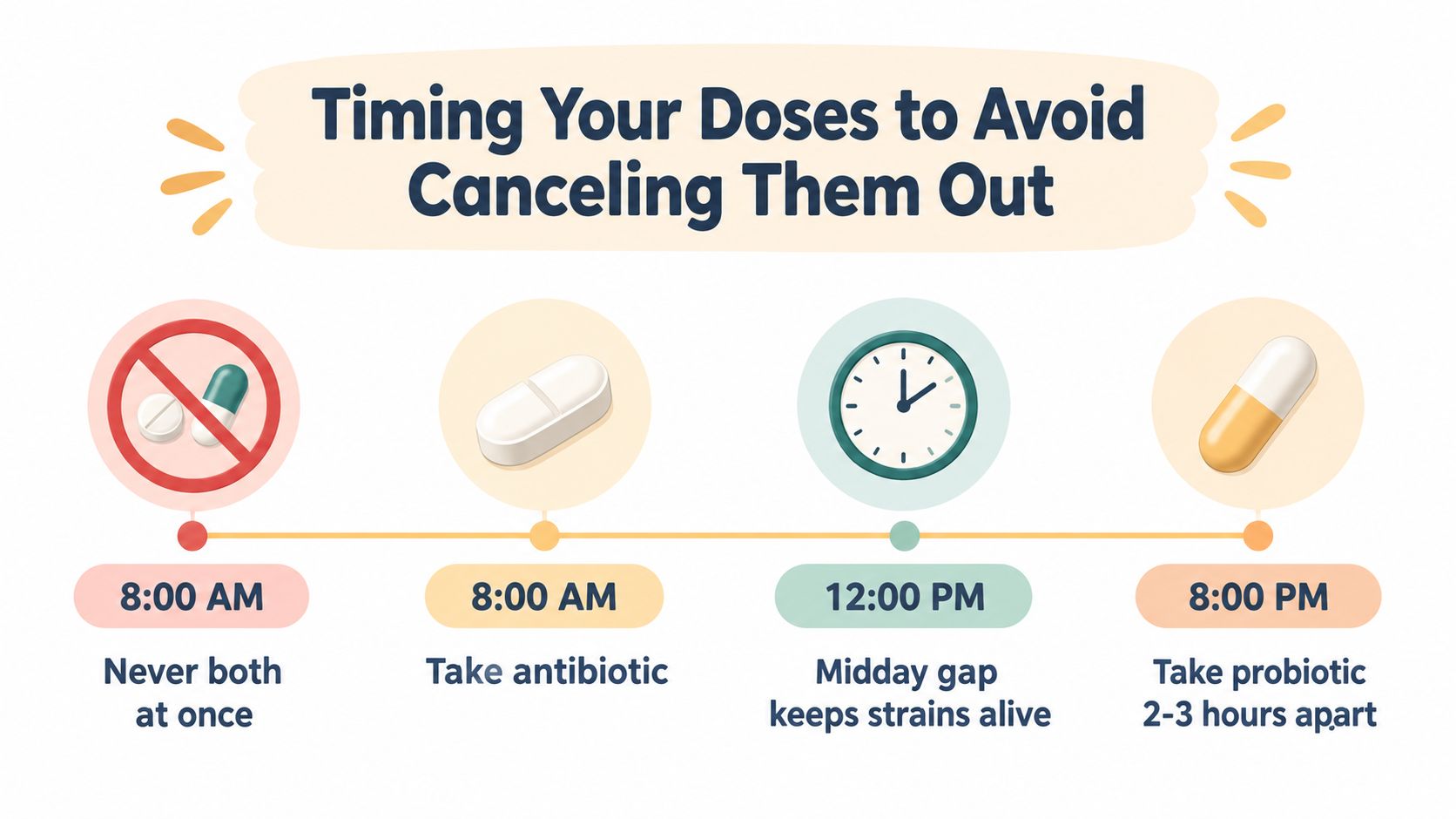
Timing doesn't need to become a second job. You want to avoid swallowing a bacterial probiotic at the exact same moment as an antibiotic that may affect it.
Clinical guidance from Cleveland Clinic says some probiotics can be taken at the same time as antibiotics. It also says that certain Lactobacillus and Bacillus strains work better when taken 1 to 2 hours before or after the antibiotic, and recommends continuing probiotics for at least 2 weeks after finishing the medication. Read Cleveland Clinic's guidance on probiotic timing
Build the schedule around your prescription
Start with the instructions on your antibiotic label. Your prescription takes priority, especially if it says to take the medication with food or at a particular interval.
Then use this simple approach:
- Keep the antibiotic schedule fixed. Don't delay or skip a prescribed dose to make room for a supplement.
- Place the probiotic in the gap. For strains that need separation, choose a time 1 to 2 hours before or after the antibiotic.
- Use a routine anchor. Pair the probiotic with a meal, toothbrushing, or another habit, provided that the product label doesn't require different conditions.
- Follow the product directions. Storage and food instructions can vary between formulations.
- Continue after the prescription ends. Cleveland Clinic advises at least 2 weeks for ongoing use after the antibiotic course.
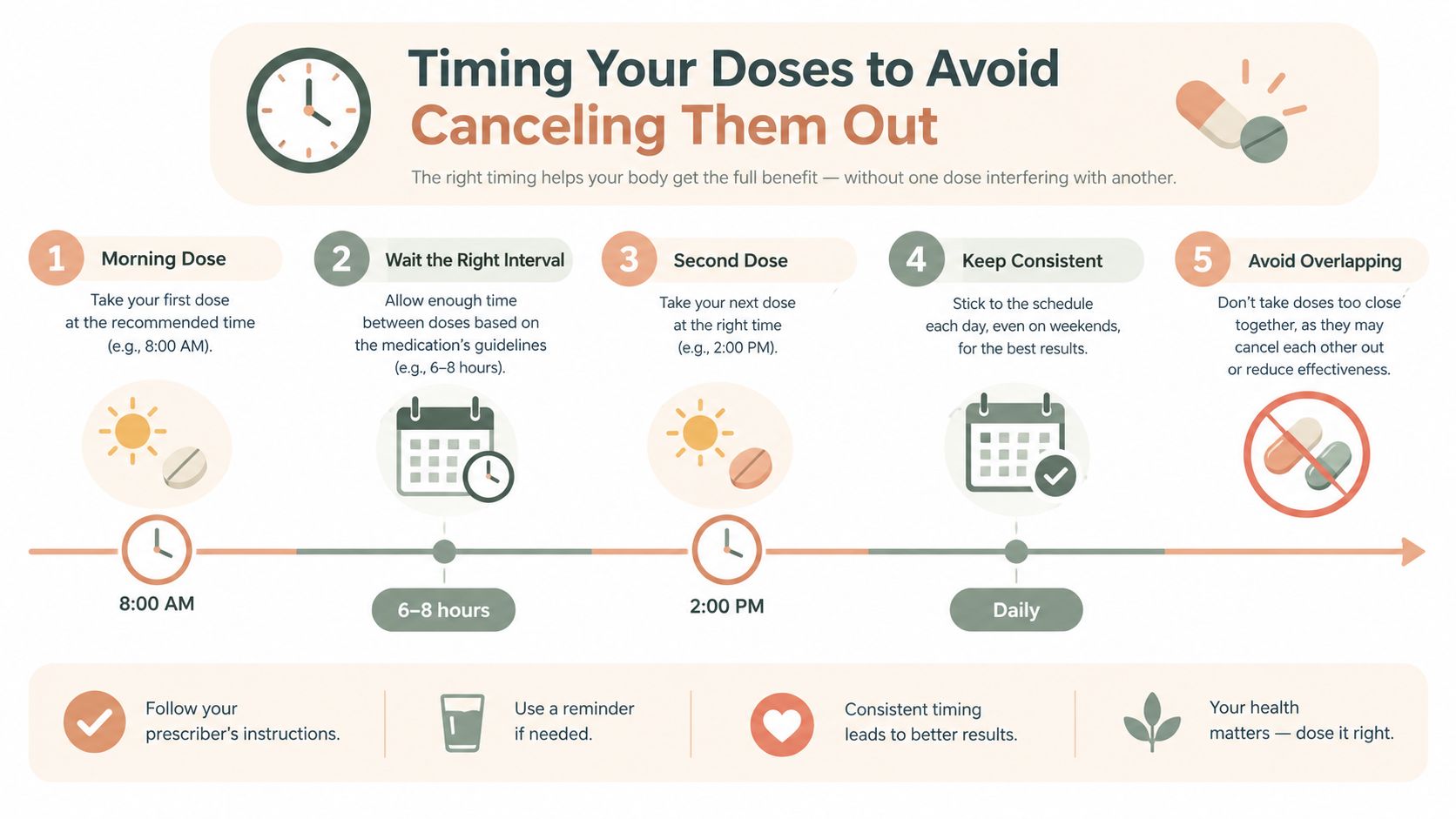
If you miss a probiotic dose, don't double the next one unless a healthcare professional tells you to. Just return to your regular schedule. If your antibiotic is prescribed several times throughout the day, ask a pharmacist to help identify the most practical probiotic window.
A calm schedule beats a perfect schedule. Take the antibiotic exactly as prescribed, create a reasonable gap when your strain requires it, and don't panic over one missed supplement dose.
You also don't need to rearrange your entire meal plan around the probiotic. If the antibiotic must be taken with food, follow that instruction. Your pharmacist can check for medication-specific issues, including whether a food, drink, or supplement could interfere with your prescription. Yuve's guide to the best time to take probiotics is another practical reference for planning your routine.
Rebuilding Your Microbiome After the Prescription Ends
Finishing the last antibiotic tablet can feel like crossing the finish line. For your digestive system, it may be more useful to think of it as the beginning of a gentler recovery period.
A probiotic may help reduce antibiotic-associated diarrhea, but it doesn't automatically restore your microbiome to its pre-antibiotic state. Current evidence supports starting selected probiotics within 2 days of the first antibiotic dose, especially LGG and S. boulardii, for reducing AAD. The same evidence does not support claiming that probiotics return the entire microbial community to exactly how it was before treatment. Review the NIH Office of Dietary Supplements information on probiotics
Support recovery without chasing a miracle
Your post-antibiotic routine should focus on tolerance and consistency. Eat foods you know you handle well, then gradually bring back a broader range of plants and fiber if your digestion allows it. If a large serving of beans, raw vegetables, or fermented food makes bloating worse right now, reduce the portion instead of forcing it.
Helpful basics include:
- Fluids: Sip regularly, especially if your stools are loose.
- Gentle fiber: Choose tolerable foods and increase variety gradually.
- Fermented foods: Use small portions if they sit comfortably.
- Regular meals: Predictable eating can feel easier on a sensitive digestive system.
- Symptom tracking: Note what changes, but don't label every sensation as proof of damage.

Yuve's vegan probiotic products can fit into this recovery routine as a non-GMO, gluten-free, gelatin-free supplement option. Use the product directions, choose a formulation that matches your needs, and remember that a supplement is one part of gut care, not a replacement for food, rest, or medical follow-up.
Sam's digestive challenges are part of the reason this topic deserves empathy rather than rigid rules. When your stomach is unsettled, a small, repeatable routine can feel more helpful than a complicated protocol. You're allowed to make recovery practical.
When to Skip Probiotics and Consult Your Doctor
Probiotics aren't a compulsory add-on for every person who receives an antibiotic. The benefit depends on the person, the antibiotic, the likelihood of microbiome disruption, and the outcome you're trying to prevent.
A 2026 study reported that probiotic intervention didn't prevent AAD when there was no antibiotic-induced microbiome disruption. That finding challenges blanket advice that everyone should take a probiotic during every antibiotic course. Read the study discussion in PMC
Use context, not internet certainty
A probiotic may be a reasonable conversation when you've had antibiotic-associated diarrhea before, when your clinician identifies a meaningful risk, or when you want to discuss a strain with evidence for the specific outcome you care about. It may be less useful when the antibiotic is unlikely to disturb your gut or when you have no clear reason to add another product.
Talk with your doctor or pharmacist before using probiotics if you're immunocompromised, seriously ill, hospitalized, or managing a complex medical condition. Children, older adults with significant health problems, and people taking multiple medications also deserve individualized guidance.
Contact your healthcare professional promptly for severe or persistent diarrhea, blood in the stool, significant dehydration, intense abdominal pain, or symptoms that concern you. Don't stop an antibiotic early because your stomach feels rough. Call the prescriber and explain what's happening so they can decide whether your treatment needs adjustment.
The right question isn't “Do probiotics work?” It's “Which product, for which person, during which treatment, and for which outcome?”
That approach protects you from two extremes: dismissing a potentially useful tool and treating a supplement as universal insurance.
Your Daily Gut-Health Action Checklist
Save this checklist before your next prescription. It keeps the important decisions visible when you're tired, uncomfortable, and trying to remember whether you've taken your medication.

- Confirm the antibiotic plan: Follow the label and ask a pharmacist about food, drink, and supplement interactions.
- Choose the strain deliberately: Look for named strains, especially LGG or S. boulardii when appropriate for your situation.
- Start promptly: Selected probiotics appear to work best when started within 2 days of the first antibiotic dose, based on the evidence summarized earlier.
- Separate doses when needed: Use the product guidance and create a 1 to 2 hour gap for strains that benefit from separation.
- Continue thoughtfully: Cleveland Clinic advises continuing probiotics for at least 2 weeks after the antibiotic ends.
- Eat for tolerance: Choose gentle meals first, then gradually add fiber-rich foods as your digestion settles.
- Hydrate consistently: Keep fluids available throughout the day, particularly if diarrhea is present.
- Watch your symptoms: Seek medical advice for severe, persistent, or alarming symptoms.
- Ask before starting: Get professional guidance if you're immunocompromised or medically complex.
You don't need to overhaul your entire life to support your gut. You need a clear strain choice, sensible timing, food you tolerate, and a plan for when symptoms need medical attention. Share your own digestive recovery experience with the Yuve community, especially the small habits that made antibiotic treatment easier.
Yuve offers vegan probiotics and other gut-health supplements designed to fit a clean, plant-based routine while you support digestion during and after antibiotic treatment. Visit Yuve to explore the available options and choose a practical next step for your gut-health routine.