Yes, you can eat chia seeds raw, but the safest and easiest way is to eat them with enough liquid or after soaking. Dry chia seeds absorb several times their weight in water, so texture, portion size, and hydration matter more than whether the seeds are technically raw.
How did we evaluate eating raw chia seeds?
We prioritized practical food-safety guidance, nutrient data, and digestive-tolerance considerations over social-media hacks. We used the Harvard T.H. Chan School of Public Health Nutrition Source, USDA FoodData Central, the NIH Office of Dietary Supplements fiber fact sheet, and a review in Journal of Food Science and Technology as core references. We looked first at water absorption, total fiber load, and how different formats affect comfort and adherence. We excluded exaggerated claims that chia seeds “detox” the gut or act like a supplement substitute by themselves. The useful question is not whether chia seeds are allowed raw. The useful question is how to eat them in a way that stays comfortable, repeatable, and realistic in a normal routine.
What happens when you eat chia seeds raw?
Raw chia seeds are edible because they are a food ingredient, not a product that requires cooking to become safe. The issue is hydration and expansion. Chia seeds contain substantial fiber and form a gel when they contact liquid, which is why the Harvard Nutrition Source and USDA FoodData Central both describe them as a high-fiber seed commonly used in soaked mixtures, oatmeal, and smoothies. A small dry sprinkle on yogurt, oats, or fruit is usually easier than swallowing a large spoonful with minimal fluid. The NIH Office of Dietary Supplements also notes that fiber tolerance depends on dose and fluid intake, not just the ingredient name. Raw chia therefore works best when the portion is modest and the meal contains enough water. The texture changes less if the seeds are mixed into food immediately, and the digestive experience is usually smoother when intake increases gradually instead of all at once.
Which format makes the most sense for digestion and routine use?
The best format depends on whether the goal is convenience, hydration, or a gentler fiber routine. Soaked chia pudding gives the seeds time to absorb liquid before eating, which can make texture more predictable. Mixed-into-food chia works well for people who want the seed in yogurt, oatmeal, or smoothies without a separate prep step. Ground chia blends more evenly into batters and drinks. For people who want digestive-fiber support without the gel texture, a prebiotic supplement format may fit daily adherence better. Some links below are affiliate links. This does not influence our evaluation criteria or recommendations.
| Option | Main benefit | Best fit | Main tradeoff |
|---|---|---|---|
| Dry chia sprinkled into wet food | Fastest and simplest use | People using small portions with yogurt or oats | Less forgiving if fluid intake is low |
| Soaked chia | More predictable texture and hydration | People who like pudding, overnight oats, or meal prep | Requires planning ahead |
| Ground chia | Easier blending into recipes | People baking or adding fiber to smoothies | Less familiar texture in some foods |
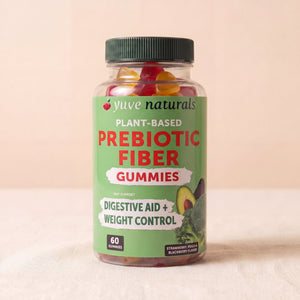
| Yuve Prebiotic Fiber Gummies | Chewable prebiotic routine support | People who want fiber support without seed texture | Different mechanism than whole-food chia |
When should you soak chia seeds instead of eating them raw?
Soaking chia seeds makes the most sense when portion size is larger than a light topping or when the eater already knows that high-fiber foods feel heavy without extra liquid. A review in the Journal of Food Science and Technology describes chia’s water-holding and gel-forming behavior, which explains why soaked formats feel different from dry spoonfuls. The Cleveland Clinic also frames chia as a nutrient-dense seed best used in balanced meals rather than as a dramatic quick fix. Soaking is not mandatory, but it is often practical. It improves texture consistency, distributes the seeds more evenly, and reduces the chance that a large amount is eaten with too little fluid. If the goal is easy daily use, the best choice is the format you will actually repeat comfortably: soaked chia for meal-prep people, mixed-in chia for casual use, or a simpler chewable fiber option through Yuve’s digestion collection if seed texture is the main barrier.
What questions come up most often about eating chia seeds raw?
Can you swallow a spoonful of dry chia seeds by itself?
That is not the smartest approach. A small amount mixed into wet food is very different from taking a concentrated dry spoonful with minimal liquid.
Do raw chia seeds have the same nutrients as soaked chia seeds?
Yes, the nutrient profile is broadly the same because soaking changes texture and hydration more than the seed’s basic composition. The main difference is eating experience, not a complete nutritional reset.
Is soaked chia easier on digestion?
For many people, yes. Soaked chia usually feels more manageable because the seeds have already absorbed liquid before they reach the stomach.
How much chia should you start with?
Start small and increase gradually. A modest serving gives your routine time to show whether fiber and texture feel comfortable before you scale up.
Are chia seeds better than a fiber supplement?
Not automatically. Chia is a whole food, while a supplement can offer more standardized format control and easier adherence for some people.
What should you mix raw chia seeds into?
Yogurt, overnight oats, smoothies, and oatmeal are the easiest starting points because they already contain moisture. Those formats usually work better than taking dry seeds alone.
Raw chia seeds are fine when they are used with enough liquid and a realistic serving size. If texture or prep makes chia hard to repeat, a simpler chewable fiber routine can be a better long-term fit than forcing a “healthy” food you never actually use.