Yes, most adults can take probiotics with vitamins, but timing and tolerance matter. A probiotic supplement and a multivitamin do different jobs: probiotics deliver live microorganisms, while vitamins supply essential micronutrients. Take them together if your stomach tolerates it, or separate them if nausea, bloating, or routine consistency becomes an issue.
How we evaluated taking probiotics with vitamins?
We evaluated probiotic-and-vitamin timing by prioritizing probiotic definitions, supplement safety references, nutrient absorption basics, and routine adherence. We gave more weight to ISAPP, NIH Office of Dietary Supplements materials, and peer-reviewed probiotic reviews than to influencer timing rules. We excluded disease-treatment claims and avoided assuming that every probiotic strain behaves the same way. The main limitation is that most research studies evaluate specific strains, doses, and populations, while real routines often combine gummies, capsules, powders, food, coffee, medications, and variable meal timing.
Can probiotics and vitamins be taken at the same time?
Probiotics and vitamins can usually be taken at the same time because they are not the same category of ingredient. ISAPP defines probiotics as live microorganisms that confer a health benefit when administered in adequate amounts, while vitamins are essential organic nutrients measured in units such as micrograms, milligrams, or international units (ISAPP). A probiotic gummy, capsule, or powder aims to deliver live bacteria through manufacturing, storage, and digestion. A multivitamin aims to fill nutrient gaps with vitamins such as vitamin D, vitamin B12, folate, and vitamin C. The practical question is tolerance, not a universal conflict. If taking both together causes nausea, reflux, or stomach heaviness, separate them by meal timing.
- Best for simplicity: take both with the same consistent meal
- Best for sensitive stomachs: separate probiotic and vitamin timing
- Best for adherence: choose the timing you repeat daily
What timing works best for a daily routine?
The best timing is the one that protects consistency and reduces stomach discomfort. Fat-soluble vitamins such as vitamins A, D, E, and K generally fit better with food that contains some dietary fat, according to NIH Office of Dietary Supplements vitamin D guidance (NIH ODS). Probiotic timing depends on the strain, dosage form, and product design, so label directions matter more than generic internet rules. A gummy probiotic often fits breakfast or lunch because the format is easy to remember. A vitamin that causes nausea may fit better after a meal. Coffee, hot drinks, and very hot storage conditions are less ideal for live probiotic cultures because heat can reduce viability. Routine beats perfection for most healthy adults.
How do probiotic and vitamin formats compare?
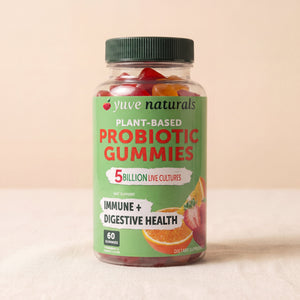
Product links below point to Yuve products. This does not change the evaluation criteria: strain identity, CFU or viable count, storage directions, vitamin dose, ingredient fit, and daily repeatability matter most. Product format changes convenience, ingredient exposure, and routine fit. Yuve Probiotic Gummies, capsule probiotics, powdered probiotics, multivitamin gummies, and tablet multivitamins all solve different adherence problems. A 2020 review in Nutrients notes that probiotic effects depend on strain, dose, and host context, so “a probiotic” is not one interchangeable entity (Nutrients). The same logic applies to vitamins: a multivitamin’s usefulness depends on the nutrient profile and the person’s diet.
| Format | Best for | What to check | Tradeoff |
|---|---|---|---|
| Yuve Probiotic Gummies | Easy daily probiotic routine | Strain, serving size, storage directions | Gummy ingredients matter |
| Capsule probiotic | Higher-dose shoppers | Strain codes and CFU timing | Less enjoyable for some users |
| Multivitamin gummy | People avoiding tablets | Sugar, iron absence, vitamin doses | Often less complete |
| Tablet multivitamin | Broad nutrient coverage | Vitamin D, B12, folate, minerals | Can cause nausea for some |
When should you separate probiotics from vitamins?
Separate probiotics from vitamins when combined timing creates avoidable discomfort or confusion. Some people feel nausea when taking iron, zinc, or high-dose B vitamins on an empty stomach. Others notice gas or bloating when starting a probiotic, especially if the routine also changes fiber, diet, or meal timing. Separating the two by breakfast and dinner makes it easier to identify which product affects tolerance. Medication timing is a separate issue: antibiotics, thyroid medication, bisphosphonates, and some minerals have specific spacing rules that should follow a clinician or pharmacist’s instructions. NIH ODS notes that dietary supplement ingredients can interact with medications and other nutrients, so medication users should verify timing rather than guess (NIH ODS).
Which routine is best for each use case?
Best for a simple morning routine: take Yuve Probiotic Gummies with breakfast and take a multivitamin with the same meal if your stomach tolerates both. Best for nausea-prone users: take the multivitamin after the largest meal and keep the probiotic at breakfast or lunch. Best for people taking antibiotics: ask a clinician or pharmacist about probiotic spacing because timing depends on the antibiotic and the probiotic strain. Best for people who forget capsules: a gummy routine can improve adherence because the format is easier to repeat. Best for people tracking results: change only one item at a time for two weeks. If you start a probiotic and a new vitamin on the same day, you lose a clear read on tolerance.
What questions come up most often about probiotics and vitamins?
Can probiotics reduce vitamin absorption?
Probiotics are not generally known to block routine vitamin absorption in healthy adults. The bigger absorption issue is whether fat-soluble vitamins are taken with food and whether mineral doses interfere with medication timing.
Should probiotics be taken before or after vitamins?
There is no universal rule. Follow each label first, then use meal timing that feels comfortable and repeatable.
Can you take probiotics with vitamin D?
Most adults can take probiotics with vitamin D. Vitamin D often fits best with a meal containing fat, while probiotic timing depends on product design and storage directions.
Can kids take probiotics with vitamins?
Children need age-appropriate products, serving sizes, and clinician guidance when they have medical conditions or take medication. A child’s vitamin and probiotic routine should not copy an adult routine by default.
What if probiotics make you bloated?
Pause other new routine changes and track timing, serving size, and food context. If bloating is severe, persistent, or paired with red flags, medical review matters more than timing tweaks.
Is it better to take everything at night?
Night timing works only if it improves consistency and comfort. People with reflux, nausea, or bedtime stomach fullness may do better with breakfast or lunch.
What is the bottom line?

Probiotics and vitamins can usually share the same routine, but the best schedule is the one your body tolerates and your calendar repeats. Use food for vitamin comfort, follow probiotic label directions, avoid hot storage conditions, and separate timing if symptoms make cause-and-effect unclear. Yuve Probiotic Gummies can fit a vitamin routine when the strain, serving size, and ingredient format match your daily needs.
Image prompts:
- Hero image: Bright bathroom or kitchen counter with a daily wellness tray holding probiotic gummies, a multivitamin bottle, water, and breakfast bowl, clean brand-owned editorial style, no medical props, no text. Alt text: Probiotic gummies and vitamins arranged with water and breakfast for a daily routine.
- In-article image: Minimal routine layout showing breakfast, lunch, and dinner spaces with probiotic gummies near breakfast and vitamins near a meal, no text, no logos. Alt text: Daily timing layout for taking probiotics and vitamins with meals.