You're standing in the supplement aisle, or scrolling through tab after tab online, and every bottle seems to promise the same thing. Clean. Gentle. Natural. Best for baby. It's a lot, and if you're trying to make the safest choice, the pressure can feel weirdly intense.
I get it. Choosing a prenatal can feel like one of the first big parenting decisions, and nobody wants to guess. Let's make this simpler, calmer, and much more clear.
The Search for the Perfect Prenatal
A lot of soon-to-be moms start in the same place. You type “best organic prenatal vitamins” into a search bar, open six brands, compare labels for ten minutes, and somehow feel more confused than when you started.
One bottle says whole-food. Another says organic. A third says it includes herbs “for women's wellness,” which sounds lovely until you realize you're not exactly sure whether those extras belong in a pregnancy supplement at all. That uncertainty matters.
If you're trying to conceive, already pregnant, or planning ahead, you're not overthinking this. You're paying attention. That's a good thing.
I've also noticed that many couples are thinking about preconception health together, not just focusing on one partner. If that's you, this practical resource on improving male fertility can help round out the bigger picture before pregnancy.
Why this choice feels so loaded
A prenatal isn't just another multivitamin. It's there to help cover critical nutrient needs during a stage when your body is doing an enormous amount of work, often before you can even see that work happening.
That's why marketing language can be so frustrating here. “Organic” sounds reassuring, but it doesn't answer the most important questions:
- Does it contain the nutrients pregnancy needs?
- Are those nutrients in forms your body can use well?
- Is the formula free from ingredients that sound wholesome but aren't well vetted for pregnancy?
Practical rule: The best prenatal is not the one with the prettiest label. It's the one that combines thoughtful nutrient design, transparent labeling, and pregnancy-appropriate ingredients.
Perfection isn't the goal. A confident, informed choice is.
What Organic Prenatal Vitamins Actually Are
You pick up a bottle that says “organic prenatal,” and your brain naturally fills in the rest. Cleaner. Gentler. Safer for pregnancy. That reaction is understandable, but the label itself does not confirm all of that.
In supplements, “organic” mainly refers to how certain ingredients were grown or processed. It speaks to sourcing. It does not automatically tell you whether the formula includes the right pregnancy nutrients, whether those nutrients are present in useful amounts, or whether the product adds herbs that have not been studied well in pregnancy.
What “organic” means on a supplement label
A helpful way to read the word “organic” is to treat it like a label on the produce aisle. It gives you information about farming standards, not a full report card on nutrition quality.
For supplements, organic claims are tied to certification rules and ingredient sourcing standards, which is why it helps to understand USDA-certified organic supplements before assuming an organic prenatal is automatically the best pregnancy choice.
That distinction matters more than many people realize. A prenatal can be organic and still be poorly designed for pregnancy. It can also be organic while including botanical blends for “stress,” “nausea,” or “women's balance,” even though herbal ingredients are not regulated with the same clarity many parents assume. That is one reason I often steer families toward a clean, certified formula without herbs. It is easier to evaluate, easier to compare, and more transparent about what you are taking.

Why the “organic equals safe” assumption can get risky
This is the part that often surprises people. Vitamins and minerals are only one part of many prenatal formulas. Some products also add herbs, mushroom powders, or proprietary plant blends that sound natural and comforting on the label.
Natural is not the same as well studied in pregnancy.
The American College of Obstetricians and Gynecologists advises patients to tell their ob-gyn about any herbal products they use because some supplements can be harmful during pregnancy. That guidance is laid out in ACOG's patient FAQ on Nutrition During Pregnancy. For a prenatal, that means “organic” should never be your only filter. You also want a formula that keeps the ingredient list clear and pregnancy-appropriate.
A good prenatal should feel boring in the best possible way. Clear vitamin forms. Clear mineral amounts. No mystery blends. No extra botanicals that make the label sound wellness-forward but make the risk picture harder to read.
Why some women still prefer organic prenatals
There are sensible reasons to like organic options. You may want fewer synthetic colorings, more attention to sourcing, or a formula built with food-based ingredients. Those are reasonable preferences.
Just keep the hierarchy straight. First, make sure the prenatal is designed for pregnancy. Second, check whether the ingredient list stays simple and transparent. Third, decide whether the organic certification adds value for you.
If you want a practical way to confirm whether your nutrient status matches what is on the bottle, OneTwenty's guide to essential nutrient testing can help you understand what lab work may be worth discussing with your clinician.
Organic can be a meaningful feature. In pregnancy, though, a clean herbal-free formula with transparent labeling is often the safer bet than a more “natural” product packed with ingredients that sound wholesome but tell you very little about real pregnancy safety.
The Core Nutrients Your Baby Is Counting On
A prenatal label can feel like a crowded classroom. Folate, iron, iodine, DHA, vitamin D, vitamin A. They are all talking at once, and it is hard to tell which names matter most.
A simpler way to read it is to ask one question. Which nutrients are doing the jobs your diet may not cover reliably during pregnancy?
Start with folate.
Folate, B12, and Vitamin D
Folate works like the early construction crew for your baby's brain and spinal cord. Because neural tube development begins very early, folic acid is one of the nutrients you want on board before you even know you are pregnant.
The NIH Office of Dietary Supplements pregnancy fact sheet explains that pregnant women need 600 micrograms Dietary Folate Equivalents each day, and women who could become pregnant are advised to get 400 micrograms of folic acid daily from supplements or fortified foods in addition to food folate. If you have had a prior pregnancy affected by a neural tube defect, your clinician may recommend a higher amount before conception.
Vitamin B12 matters here too, because folate and B12 work closely together in cell growth and red blood cell formation. Vitamin D supports bone development and helps maintain your own levels as pregnancy increases demand. The same NIH fact sheet lists an RDA of 2.6 micrograms of vitamin B12 and 600 IU of vitamin D during pregnancy.
This is one reason a simple, clearly labeled prenatal is so helpful. You can quickly confirm the basics without sorting through extra botanical ingredients that do not have the same pregnancy-specific standards.

Iron and vitamin A
Iron often gets blamed for the side effects, and sometimes fairly. A prenatal can be hard to stick with if it leaves you nauseated or constipated.
Still, iron has a big workload in pregnancy. Your body needs more red blood cells, your placenta needs support, and your baby is building an iron supply too. The NIH fact sheet lists the pregnancy RDA at 27 milligrams of iron per day.
Form matters because tolerability matters. Some women do better with gentler iron forms than others, which is worth discussing with your clinician if your prenatal makes daily use difficult.
Vitamin A needs a little more nuance. You need it for fetal growth, including eye development, but more is not better here. The NIH Office of Dietary Supplements pregnancy fact sheet notes that the RDA for vitamin A in pregnancy is 770 mcg Retinol Activity Equivalents for adults, and excessive intake of preformed vitamin A can cause birth defects. In practical terms, this is another argument for a transparent formula. You want to see the amount and the form clearly on the label.
DHA, iodine, and the missing-pieces problem
Many parents often find themselves surprised. A prenatal can look polished, organic, and expensive and still leave real nutrient gaps.
A 2023 analysis of 48 commercially available prenatal vitamins in the United States found that 27% did not contain the ACOG-recommended minimum amount of folic acid, only 10.4% contained adequate amounts of four out of five key nutrients, and none contained adequate daily recommended amounts of all 11 nutrients recommended by ACOG. The same study found that none of the gummy formulations contained adequate iron, DHA, or calcium, as reported in this PubMed Central study on prenatal vitamin nutrient content.
Iodine deserves a quick callout because it often gets overlooked. It supports thyroid hormone production, which helps guide your baby's brain development. DHA is another common gap. Some prenatals include it, some do not, and gummy options often leave it out.
That is why we do not want to confuse a clean-sounding label with a complete one. And during pregnancy, “organic” can create a second layer of confusion if the formula also includes herbal blends. Vitamins and minerals have established pregnancy targets. Many herbs do not. A cleaner, certified, herbal-free prenatal is often the more transparent choice because you can focus on the nutrients that have defined roles and recommended amounts.
If you want a practical next step, OneTwenty's guide to essential nutrient testing can help you talk with your care team about whether your personal needs call for a closer look.
A short video can also make nutrient roles easier to visualize:
Not All Organic Prenatals Are Created Equal
This is the part I wish more people said plainly. Organic is not a safety shortcut.
A bottle can look beautiful, use earthy colors, talk about nature, and still leave important gaps. Worse, it can include extras that sound comforting but don't have clear pregnancy-specific standards behind them.
The nutrient gap problem
The 2023 study mentioned earlier found that many prenatal products fell short on key nutrients. That alone should make us more careful shoppers. A product can be organic and still be incomplete.
That's especially important with folate, because folate support is one of the first reasons many women start a prenatal in the first place. If that basic need isn't covered well, the rest of the branding doesn't rescue it.
The herbal ingredient issue nobody talks about enough
Here's the underserved angle, and I do feel strongly about it. I do NOT think “organic” should give herbal blends a free pass during pregnancy.
MotherToBaby highlights a significant concern in its article on the A-B-C-S of prenatal vitamins. Herbal additives in over-the-counter prenatal products are unregulated by the FDA with no standard recommended doses, and medical guidance often advises avoiding herbal ingredients during pregnancy.
That matters because herbs can sound gentle. Raspberry leaf. Nettle. Botanical blend. They read like tea-shop comfort. But pregnancy is not the time for vague “women's wellness” extras if the dosing and safety profile aren't clearly established.
Herbal-free can be a feature, not a flaw, in a prenatal formula.
If you're eco-conscious or plant-based, this can feel extra confusing. You may naturally gravitate toward products labeled organic, green, or natural. But natural does not automatically mean studied, standardized, or safest for pregnancy.
What a cleaner standard looks like
A strong prenatal formula should feel boring in the best way. Clear nutrients. Clear forms. Clear amounts. No mystery blend trying to do ten extra things.
When I'm helping someone think through options, I want them to look for a formula that is:
- Certified organic where appropriate
- Free from unvetted herbal add-ons
- Focused on essential prenatal nutrients
- Transparent about forms and testing
That kind of label is usually less flashy. It's also usually more trustworthy.
How to Read a Prenatal Vitamin Label Like a Pro
The back of a prenatal bottle can look like tiny-font chaos. Once you know what to scan first, though, it gets much easier.
You do not need to memorize every nutrient on the panel. You need a shortlist of smart checks.
Start with your fast label scan
Here's the quick version I'd use in the store.
- Check the folate line - Women planning pregnancy need at least 400 micrograms of folic acid for at least one month before conception to prevent neural tube defects, based on Ochsner Health's prenatal vitamin guidance. If a label feels vague here, I'd put it back.
- Look at the form of iron - If you've ever dealt with constipation from supplements, gentler forms matter.
- Scan for herbal blends - If the bottle tucks a list of botanicals into the “other ingredients” area or a proprietary blend, pause.
- Notice the dosage form - Gummies can be convenient, but convenience doesn't tell you whether the formula is complete.
- Look for testing language - Third-party testing gives you another layer of confidence around purity and label accuracy.

What Sam's label frustration taught us
Yuve's founder, Sam, has shared how confusing supplement labels can be when you're trying to make a clean, informed choice. Different products highlight different buzzwords, and it's easy to assume those front-label claims tell the full story.
They usually don't.
That's why I like pairing organic claims with evidence of independent quality checks. If you want a deeper read on that side of shopping, Yuve's article on finding the best third-party tested supplements is useful.
A few words and logos worth noticing
A short checklist helps:
| What to look for | Why it matters |
|---|---|
| Organic certification | Tells you about sourcing standards |
| Third-party tested | Adds confidence around purity and potency |
| Clear nutrient forms | Helps you avoid vague ingredient language |
| No herbal blend | Reduces guesswork during pregnancy |
| Simple “other ingredients” list | Makes fillers and additives easier to spot |
If you're trying to clean up other parts of your routine too, some moms also explore fluoride-free options for expecting mothers so their personal care choices feel as intentional as their supplement choices.
Read the supplement facts panel before you read the marketing story. The facts panel tells you what you're actually buying.
Your Simple Plan for a Healthy Pregnancy
By this point, the big picture is clearer. A thoughtful prenatal routine is less about chasing a trendy bottle and more about building a calm, repeatable plan.
That plan starts before conception when possible, continues with a daily habit you can stick to, and gets adjusted with your clinician if nausea, constipation, or personal dietary needs make things trickier.
A gentle routine that works in real life
Try this approach:
- Start early - Preconception support matters because early development happens fast.
- Take your prenatal with food - Many women tolerate supplements better this way.
- Keep it visible - Pair it with breakfast, dinner, or another established habit.
- Don't panic over one off day - Consistency matters more than perfection.
If your stomach is sensitive, taking a prenatal later in the day or with a more substantial meal often feels easier. That's not glamorous advice, but it's the kind that helps people follow through.
What “safe and transparent” should mean
The safest-feeling prenatal is usually the one that makes the fewest unnecessary promises. It does the core jobs well. It names its nutrients clearly. It doesn't rely on mystery herbs to seem premium.
Your standards matter most:
- Clean sourcing
- Pregnancy-relevant nutrients
- Clear forms
- No unvetted herbal extras
- Evidence of quality testing

The emotional side of this choice
A lot of women worry internally that if they choose the “wrong” prenatal, they've already messed something up. That fear is heavy, and it doesn't help.
You're allowed to make a careful choice, ask questions, switch if a formula doesn't agree with you, and keep refining your routine. That isn't failure. That's good care.
What matters most is that your prenatal plan is consistent, transparent, and built around real pregnancy needs, not just attractive language on the front of the bottle.
Frequently Asked Questions About Prenatals
Can I get everything I need from food alone
A nutrient-dense diet matters a lot, but relying on food alone can be hard during pregnancy. Appetite changes, nausea, food aversions, and busy life all get in the way. A prenatal helps cover the bases when eating perfectly isn't realistic, which is most of the time.
What's the difference between a prenatal and a regular multivitamin
A prenatal is designed around pregnancy-specific needs. The emphasis is different, especially for nutrients tied to fetal development and maternal blood-building needs. A regular multivitamin may look similar on the shelf, but it isn't built with the same priorities.
Are all organic prenatals vegan
No. Some use non-vegan capsule materials or include nutrients sourced in ways that don't fit a vegan lifestyle. If that matters to you, check the label carefully rather than assuming “organic” also means plant-based.
Should I stop taking a prenatal after birth
Not necessarily. Nutrient needs don't vanish once the baby arrives, and many women benefit from ongoing support during recovery and early postpartum life. If you're thinking ahead, Yuve's guide to the first 3 months postpartum is a helpful next read.
What if prenatals upset my stomach
That's common. Taking your supplement with food, trying a different time of day, or talking with your clinician about switching formulas can help. If constipation is a big issue, the form of iron may be worth a closer look.
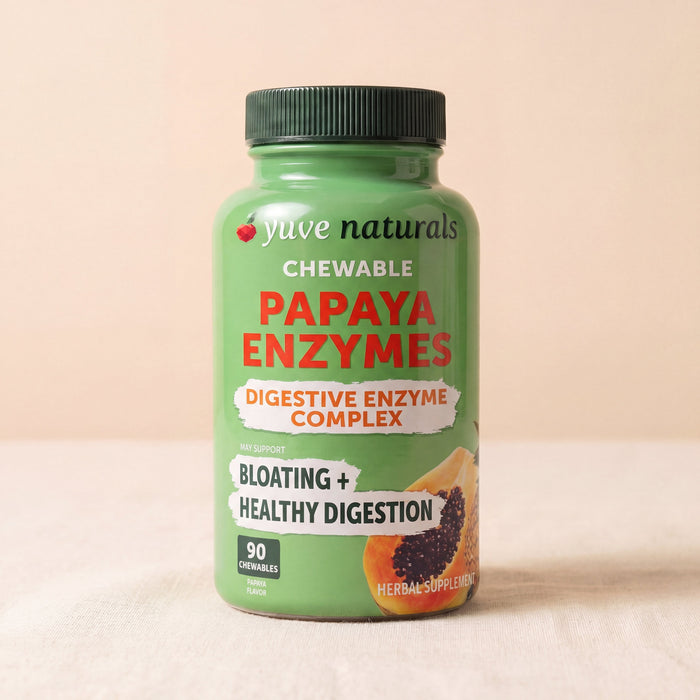
If you're looking for clean, plant-based support from a brand that cares about ingredient quality and thoughtful formulation, explore Yuve. Their vegan supplement lineup is designed for people who want a more intentional approach to wellness, with simple formulas, transparent standards, and everyday support that fits real life.