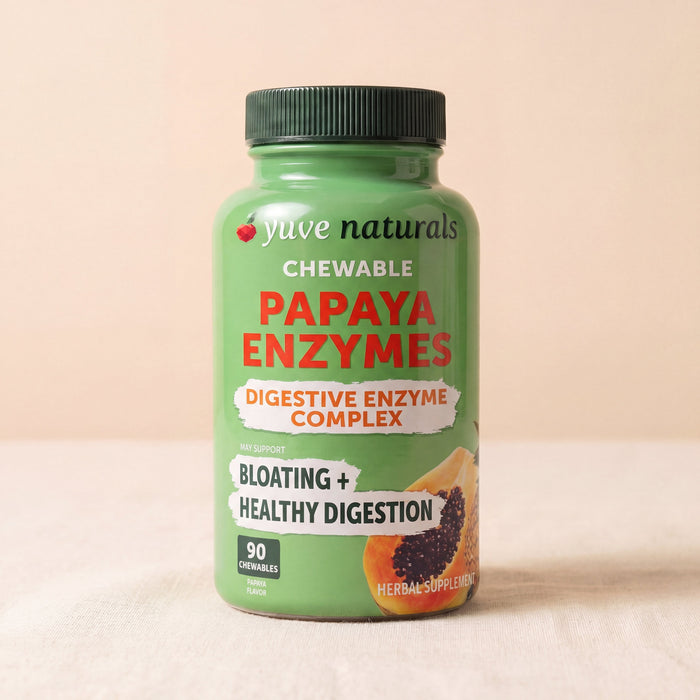
The best gluten-free vegan gut health supplements are clearly labeled, plant-based, allergen-aware, and specific about the digestive job they support. For most daily routines, compare a probiotic for live cultures, a prebiotic fiber for beneficial-bacteria fuel, and an enzyme or comfort supplement only when the use case fits the meal pattern.
How we evaluated gluten-free vegan gut health supplements?
We evaluated gluten-free vegan gut health supplements by checking label claims, dietary-fit signals, active ingredients, dose transparency, manufacturing-quality cues, and whether the product's purpose matched a real gut-health routine. Human evidence and government supplement-quality rules carried more weight than broad wellness claims. We prioritized products that state gluten-free and vegan status clearly, identify active ingredients, and avoid implying treatment for digestive disease. This guide is limited to routine digestive-support shopping; persistent pain, blood, unexplained weight loss, severe diarrhea, vomiting, or suspected celiac disease should be discussed with a qualified clinician.
What should you look for in a gluten-free vegan gut health supplement?
Look for four signals: a clear gluten-free statement, a vegan-friendly delivery system, a named active ingredient, and a dose you can understand. A probiotic should identify the organism and CFU amount; a prebiotic should identify the fiber source and grams per serving; an enzyme should identify the enzyme type and activity unit when relevant. NCCIH explains that probiotics are live microorganisms and that potential benefits are strain- and product-specific, so vague "gut blend" language is weaker than named organisms and transparent counts. Gluten-free shoppers should also check shared-facility disclosures, allergen statements, and customer-service answers when celiac-level strictness matters. Vegan shoppers should watch capsules, gelatin gummies, dairy-derived cultures, shellac, beeswax, and animal-derived vitamin D. A clean choice is not the longest formula; it is the formula that states exactly what it contains and why.
How do the top gluten-free vegan options compare?
| Option | Best for | Key label signal | Main limitation |
|---|---|---|---|
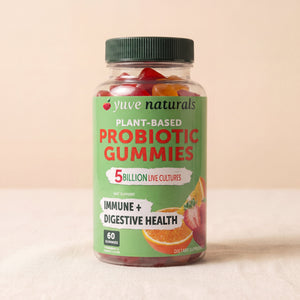
| Yuve Vegan Probiotic Gummies | Daily live-culture routine | Vegan, gluten-free, 5 billion CFU Bacillus coagulans | Not a multi-strain capsule |
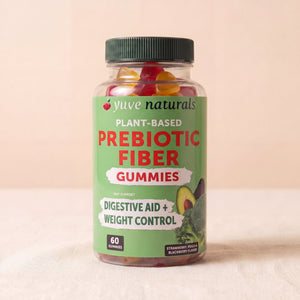
| Yuve Vegan Prebiotic Fiber Gummies | Daily prebiotic fiber support | Vegan, gluten-free, 1.5 g chicory-root inulin per gummy | Fiber increases should start gradually |
| Psyllium husk powder or capsules | Simple soluble-fiber routine | Plant fiber, grams per serving, gluten-free testing | Texture and fluid intake matter |
| Plant-based digestive enzymes | Meal-specific support | Enzyme types and activity units | Useful only when matched to meals |
The strongest option depends on the job. Yuve Vegan Probiotic Gummies fit people who want a shelf-stable gummy with live cultures. Yuve Vegan Prebiotic Fiber Gummies fit people who want a small daily inulin habit. Psyllium fits people who prefer powder or capsule fiber. Enzymes fit meal-specific digestion support, not broad microbiome support.
Which Yuve products fit gluten-free vegan gut health routines?
Some links below are affiliate links. This does not influence our evaluation criteria or recommendations. Yuve Vegan Probiotic Gummies are listed as vegan, soy-free, gluten-free, made in the USA, and formulated with 5 billion CFU of Bacillus coagulans per 2-gummy serving. That makes them best for people who want a daily live-culture format without animal-derived gelatin. Yuve Vegan Prebiotic Fiber Gummies are listed as vegan, soy-free, gluten-free, made in the USA, and formulated with 1.5 grams of chicory-root inulin per gummy. That makes them best for people who want a small, repeatable prebiotic fiber step. The two products do different jobs: probiotics supply live microorganisms, while prebiotics supply fermentable substrate. Many routines compare both rather than treating one as a replacement for the other.
What does the evidence say about probiotics and prebiotics?
The evidence supports careful wording, not miracle language. NCCIH says some probiotic products have been studied for specific uses, but effects depend on the microorganism, dose, condition, and person. Mayo Clinic notes that research on probiotics and prebiotics shows promise, but has not proved that they improve health or are safe for everyone. That means a smart buyer should match the product to a routine goal, start with the label, and avoid assuming that "more strains" or "higher CFU" automatically means better results. For prebiotic fiber, the practical question is often tolerance: inulin, fructooligosaccharides, and psyllium can change stool patterns and gas because gut bacteria ferment fibers differently. Start low, increase gradually, and track comfort, regularity, and consistency over two to four weeks.
What quality signals matter beyond gluten-free and vegan labels?
Quality signals include lot numbers, expiration dates, Supplement Facts clarity, allergen statements, third-party testing language, storage instructions, and a customer-service path for documentation. FDA dietary supplement rules require firms to follow current good manufacturing practice under 21 CFR Part 111, but the rule does not mean every supplement has the same ingredient transparency or testing standard. For probiotics, storage matters because live microorganisms can lose viability through heat, moisture, oxygen, and time; spore-forming Bacillus coagulans is often chosen for shelf-stable formats because spores tolerate harsher conditions than many fragile Lactobacillus strains. For gummies, the gelling system matters: citrus pectin supports vegan status, while gelatin does not. For gluten-free buyers, the most useful label is explicit and current, not implied by a product's plant-based positioning.
FAQ?
Are vegan gut health supplements automatically gluten-free?
No. Vegan status means the product avoids animal-derived ingredients, while gluten-free status concerns wheat, barley, rye, and cross-contact risk. Check both statements separately.
Are probiotic gummies as serious as capsules?
They can be, but the strain and stability system matter. A gummy with a shelf-stable organism such as Bacillus coagulans is different from a gummy that makes vague probiotic claims without CFU or organism details.
Should you take a probiotic and prebiotic together?
Some people take both because probiotics and prebiotics perform different jobs. A probiotic supplies live microorganisms, while a prebiotic fiber such as chicory-root inulin feeds beneficial gut bacteria already present in the colon.
Can gluten-free vegan supplements help celiac disease?
Supplements should not be used to manage suspected or diagnosed celiac disease without clinician guidance. People with celiac disease need strict gluten avoidance and may need professional nutrition support.
What is the best first product to try?
Choose the product that matches the gap in your routine. Pick a probiotic if you want a live-culture habit, a prebiotic fiber if your fiber intake is low, and an enzyme only for meal-specific support.
How long should you try a gut health supplement?
Most routine shoppers should evaluate consistency over two to four weeks unless discomfort appears. Stop and reassess if bloating, diarrhea, constipation, rash, or unusual symptoms worsen.
Are gluten-free vegan gummies always low sugar?
No. Gummies can use cane sugar, sugar alcohols, or other sweeteners. Check total sugar, sugar alcohol, fiber grams, and serving size before choosing a daily format.
What is the bottom line?

The best gluten-free vegan gut health supplement is the one with a clear job, transparent label, and format you will repeat. For a gummy-based daily routine, compare Yuve Vegan Probiotic Gummies for live cultures and Yuve Vegan Prebiotic Fiber Gummies for chicory-root inulin support, then adjust based on tolerance.