Probiotics reduced ventilator-associated pneumonia incidence by 32% in low-certainty evidence and shortened intensive care stays by about 2.2 days in moderate-certainty evidence. That doesn't mean immune supplements prevent every illness, but it does show that targeted support can matter in the right setting.
So, do immune support supplements work when you're already healthy? Sometimes, but not in the magical “boost your immunity” way that supplement labels often suggest. They can help correct a genuine nutrient deficiency, and some probiotic research points to measurable changes in gut barrier function. For an otherwise healthy person with adequate nutrient levels, however, taking a handful of pills usually won't create an invisible shield against every cold, cough, or virus.
If you've ever felt frustrated by bloating, digestive discomfort, or a supplement routine that seems to do nothing, you're not imagining the confusion. The immune system isn't a light switch, and your gut isn't separate from the rest of your health. Let's look at what the evidence supports, where popular ingredients fall short, and how a plant-forward routine can help you make calmer, smarter choices.
The Myth of Boosting Your Immune System
The phrase “boost your immune system” sounds reassuring. It suggests that your defenses are like a battery, and one more capsule will charge them to maximum power. Biology is more complicated, and that complication is good news because it gives us a more realistic way to care for ourselves.
A healthy immune system doesn't need to be permanently turned up. It needs to identify threats, respond appropriately, and settle down when the job is finished. An immune response that's too aggressive can damage healthy tissue and contribute to inflammatory or autoimmune problems. The aim isn't to make every immune reaction louder. It's to help the system work with the right materials and the right timing.
A major Harvard review of immune-support supplements notes that popular supplements haven't shown clear disease-fighting benefits in otherwise healthy people. It also cautions that megadoses aren't justified and can sometimes cause harm. That gap between a bold marketing promise and modest clinical proof has shaped the supplement conversation for years.
Support is different from supercharging
Think of your immune system like a home security team. You don't want every guard sprinting toward every noise, including the family cat. You want working locks, clear communication, enough trained staff, and a measured response when a real problem appears.
That means the most useful question often isn't, “What's the strongest immune booster?” Try asking:
- What might I be missing? A deficiency can change the conversation.
- What problem am I trying to address? Preventing illness, easing cold symptoms, or supporting digestion are different goals.
- What does the evidence say for someone like me? A result in an intensive care setting doesn't automatically apply to a healthy adult shopping for a daily capsule.
A practical reset: Don't chase the biggest promise on the label. Look for a specific need, a plausible mechanism, and evidence that matches your situation.
Daily consistency matters more than dramatic rescue routines. Meals built around vegetables, fruit, legumes, nuts, seeds, whole grains, and a reliable source of protein give your body a steady supply of raw materials. Supplements can have a role, but they work best as targeted support rather than a substitute for the basics.
How Your Internal Security Team Actually Operates
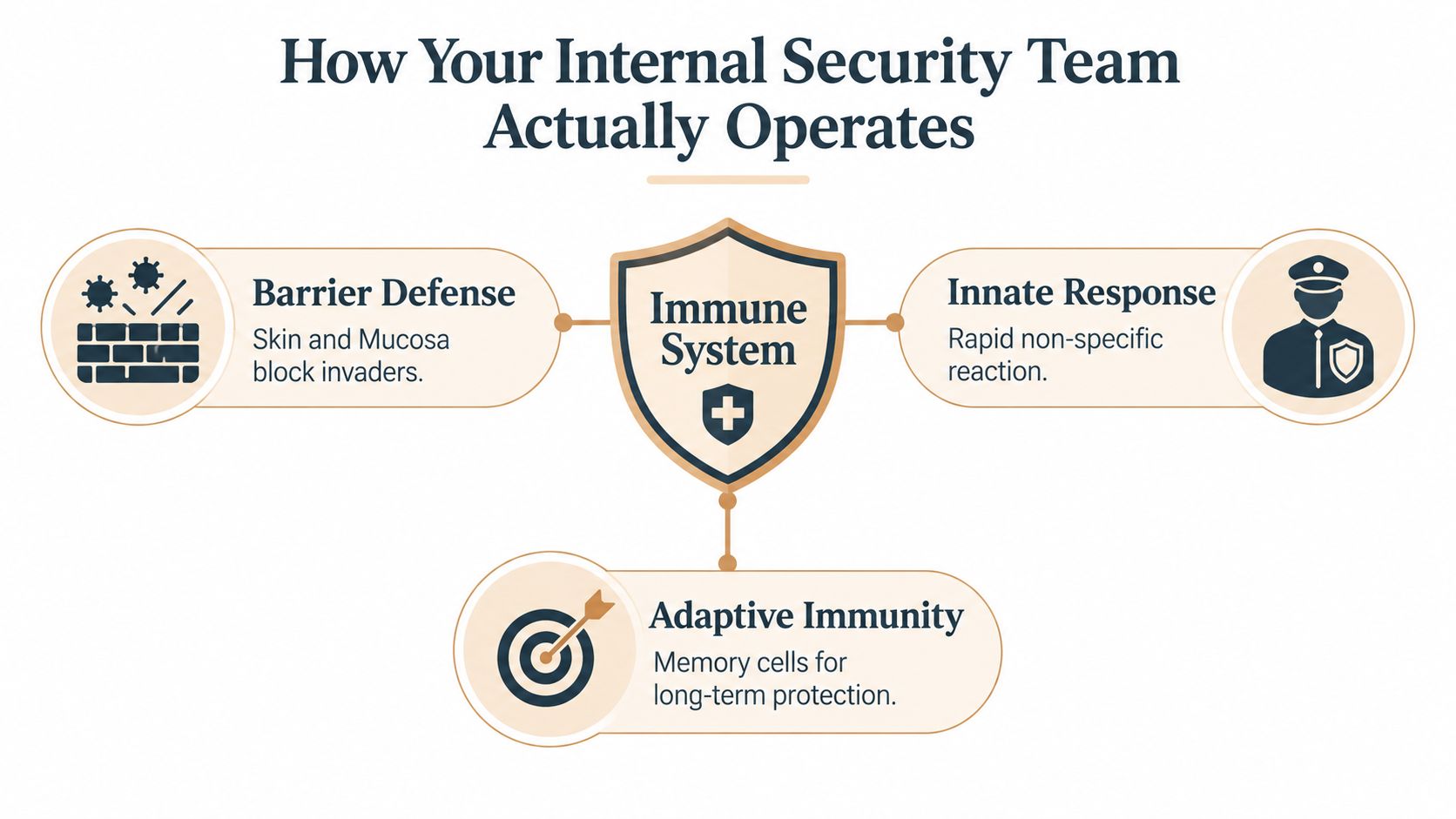
Your immune system isn't one organ or one muscle. It's a coordinated network that protects boundaries, detects unusual activity, and remembers certain threats.
The first layer is barrier defense. Your skin, airways, and gut lining act like the walls and gates around a home. A healthy gut barrier helps keep unwanted material in the digestive tract while allowing nutrients to pass through. If the gate is poorly maintained, adding more guards won't solve the whole problem.
Three teams, three jobs
The innate immune response is the rapid patrol. It reacts quickly to things the body recognizes as potentially threatening, but it doesn't create a precise memory of every encounter. This is your first-response crew, ready to act without waiting for a detailed investigation.
The adaptive immune response works more like a detective unit. T cells and B cells help identify specific invaders, produce targeted antibodies, and remember some threats. That memory can help the body respond more efficiently when it encounters the same threat again.
Your gut sits at the center of this communication network. A large share of your immune cells is located in or around the digestive tract, where the body constantly decides what belongs, what can be absorbed, and what needs attention. That doesn't mean every gut product automatically improves immunity. It means digestive health is a sensible place to look when you're thinking about balanced immune support.
Why random pills can miss the point
Suppose a security company sends extra guards to a house with a broken front door. The staffing looks impressive, but the weak entry point remains. In a similar way, taking several isolated nutrients won't necessarily help if your diet is inadequate, your gut is irritated, or you don't have the deficiency the product is designed to correct.
This is why context matters. The Fred Hutch explanation of immune support describes innate and adaptive immunity as different systems with different roles. The plain-language takeaway is simple: support the whole network instead of trying to force one part to work harder.
For people dealing with bloating or unpredictable digestion, this distinction can feel especially important. A supplement that adds more ingredients to an already sensitive routine may not be the answer. Gentle food choices, regular meals, enough fluids, and a careful look at individual triggers can be more useful starting points.
What Popular Immune Ingredients Actually Deliver
Vitamin C, vitamin D, zinc, and echinacea are familiar names, but familiarity does not make their effects interchangeable. Each ingredient has a different role, and the strongest case usually involves correcting a gap, choosing a narrow use, or matching the supplement to a specific need. A larger dose cannot turn a limited benefit into a guaranteed shield.
| Ingredient | Best Used For | What the Evidence Shows |
|---|---|---|
| Vitamin C | Supporting adequate intake and possibly easing a cold | Routine use does not reduce the risk of catching a cold, though it may modestly shorten its duration and ease symptoms |
| Vitamin D | Correcting low vitamin D levels when appropriate | It may slightly reduce respiratory infection risk for some people with low levels, while other studies find no reduction |
| Zinc | Targeted use around cold onset, with care | An analysis found no lower cold incidence than placebo |
| Echinacea | A carefully considered herbal option | Evidence is mixed. A Cochrane review found no demonstrated treatment benefit for colds, while NCCIH says it may slightly reduce the chance of catching one |
The NIH vitamin C fact sheet draws an important line: vitamin C does not prevent healthy adults from catching a cold, but it may modestly shorten the illness and ease symptoms. It works more like a small comfort measure than a force field. That difference matters when a product label suggests broad protection.
Vitamin D calls for the same careful reading. The NIH Office of Dietary Supplements review of immune function reports that supplementation may slightly reduce respiratory infection risk for some people with low vitamin D levels, while other studies have not found the same reduction. It does not appear to treat respiratory infections. Testing and professional guidance are more sensible than guessing, especially when the goal is to correct a deficiency rather than take a megadose.
The popular herb question
Echinacea shows why a recognizable ingredient is not automatically a proven one. A Cochrane review of 24 controlled clinical trials involving 4,631 participants found no demonstrated benefit for treating colds, and prevention trials generally did not show statistically significant reductions in getting sick. NCCIH offers a softer interpretation, stating that echinacea may slightly reduce the chance of catching a cold, while its effect on duration remains unclear.
Mushroom preparations also deserve product-specific questions. The Colorado Cultures mushroom guide can help explain how a turkey-tail tincture is made and what to examine on a product label. Educational material can clarify preparation, but it does not prove that every mushroom supplement provides a general immune benefit.
Zinc is useful to examine because timing, dose, and duration shape the decision. The NIH zinc fact sheet provides background on zinc's role and intake considerations. Evidence does not support taking zinc as a daily guarantee against colds, and long-term high intake can create another problem, including the concerns discussed later. For a focused explanation of how zinc is often paired with another researched compound, Yuve's quercetin and zinc guide offers additional context.
The shopping takeaway is straightforward: choose an ingredient for a defined reason, not because “immune” appears in large letters on the bottle. Correcting a gap and taking a suitable product consistently usually makes more sense than chasing dramatic effects with megadoses.
Probiotics and Gut Health: The Immune Connection
Your gut microbiome is a living community, not a single magic ingredient. It works alongside the gut barrier and communicates with immune cells, which helps explain why digestive symptoms and immune concerns often appear together. If bloating follows meals, the supplement aisle can feel hopeful and exhausting at the same time.
A 2023 systematic review of randomized controlled trials found that probiotics improved measures of gut barrier function. That finding points to a measurable effect in the gut environment, not proof that every probiotic prevents illness. The distinction matters. Supporting a boundary is different from forcing the immune system into a permanently “boosted” state.
Why the gut barrier matters
The gut lining acts like a selective gate. It lets useful nutrients pass through while helping keep unwanted material within the digestive tract. Probiotics may influence this setting, yet outcomes vary with the strain, formulation, individual, and health context.
A probiotic is not a universal reset button. One person may tolerate a product well while another experiences temporary gas or discomfort. Begin with a clear reason for trying it, observe your response, and remember that more capsules do not automatically produce better results.
Microbiome testing can add information, but it cannot replace a careful record of meals, symptoms, medications, and bowel habits. For readers comparing tests, this evidence-based buyer guide outlines criteria for assessing microbiome testing claims.
Sam, Yuve's founder, has described his own digestive challenges and the frustration of trying to feel comfortable after eating. That experience will feel familiar to anyone who has planned a day around bloating or worried that a meal might trigger gas. A gut-first approach begins with observation and consistency, rather than panic or a search for the strongest formula.
You can explore whether gut health affects the immune system to see how these systems relate. The practical principle is balance. Support digestion with plant foods, adequate fiber as tolerated, and a product that fits your needs. Daily consistency is more sensible than piling on random formulas or relying on megadoses.
A short visual explanation can connect the gut barrier with the wider immune conversation:
Persistent or painful bloating, especially with other concerning symptoms, deserves attention from a qualified clinician. Digestive discomfort should be investigated, not dismissed as something you must merely live with.
Safety First - When Supplements Can Do More Harm Than Good
The most important supplement habit is also the least glamorous: respect the dose and the reason you're taking it. Feeling run down can make a large serving look tempting, especially when a label suggests that stronger support will work faster.
The Harvard review cited earlier cautions that megadoses aren't justified for generally healthy people and can sometimes be harmful. Your body has limits on how much of a nutrient it can use, and exceeding those limits doesn't turn an ordinary nutrient into a superior immune defense.
Zinc needs boundaries
NIH notes that zinc lozenges may help when started at the onset of a cold, but long-term high zinc intake can cause copper deficiency and impair immune function. That is a particularly frustrating tradeoff. You may take zinc to support immunity, then create a mineral imbalance that works against the same goal.
Recent reviews also emphasize that zinc and selenium may help people who are deficient, while the margin before toxicity or diminishing returns can be narrow. The review indexed by PubMed supports a cautious approach, especially for long-term daily use.
- Don't stack blindly: Check whether a multivitamin, immune blend, and lozenge all contain the same nutrient.
- Ask before supplementing: A clinician or pharmacist can help account for medications, health conditions, pregnancy, and laboratory results.
- Watch for a mismatch: A product designed for deficiency may not be appropriate when your levels are already adequate.
Fat-soluble vitamins deserve particular care because the body can retain them, making excessive intake more concerning than taking a little extra vitamin from food. Water-soluble doesn't mean risk-free either. Large amounts can still cause side effects or interact with medication.
Safety rule: A supplement should solve a defined problem without creating a second one.
Choose food-first sources whenever they meet your needs. Citrus, berries, peppers, leafy greens, legumes, nuts, seeds, and other plant foods can support a varied eating pattern while adding fiber and other useful compounds. If you suspect a deficiency, testing and professional advice are more reliable than guessing from fatigue alone.
How to Choose Clean and Effective Supplements
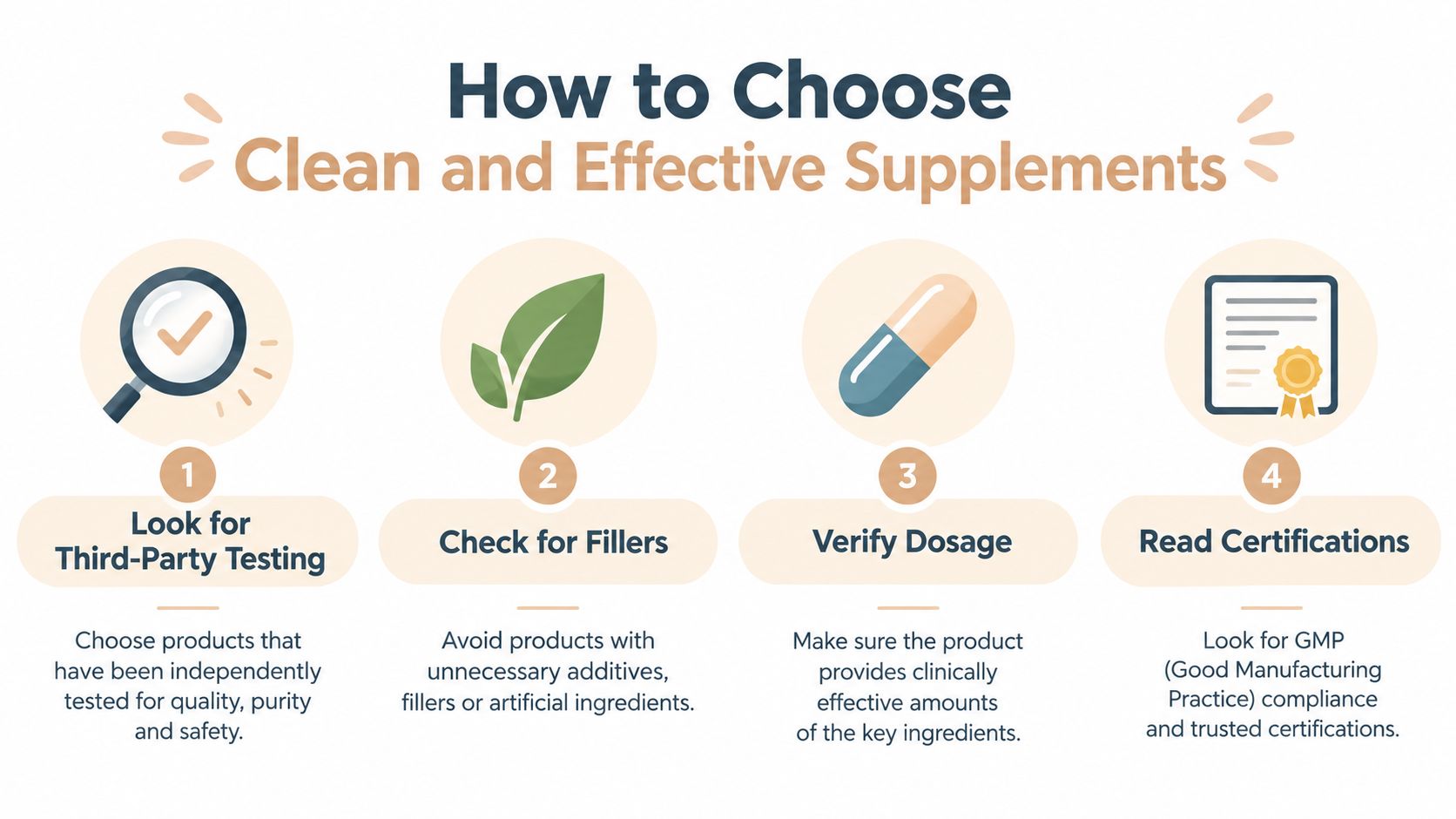
A clean label isn't a guarantee of effectiveness, but it makes it easier to understand what you're taking. Start with the serving size, active ingredients, amount per serving, allergen information, and any certifications. Then ask whether the formula matches a real goal, such as supporting a diagnosed deficiency or adding a probiotic to a broader gut-health plan.
Read beyond the front label
The front of a bottle is designed to attract attention. The supplement facts panel tells you what you're getting. Look for a clear ingredient list rather than a vague proprietary blend, and check whether the capsule fits your preferences if you're vegan or avoiding gelatin.
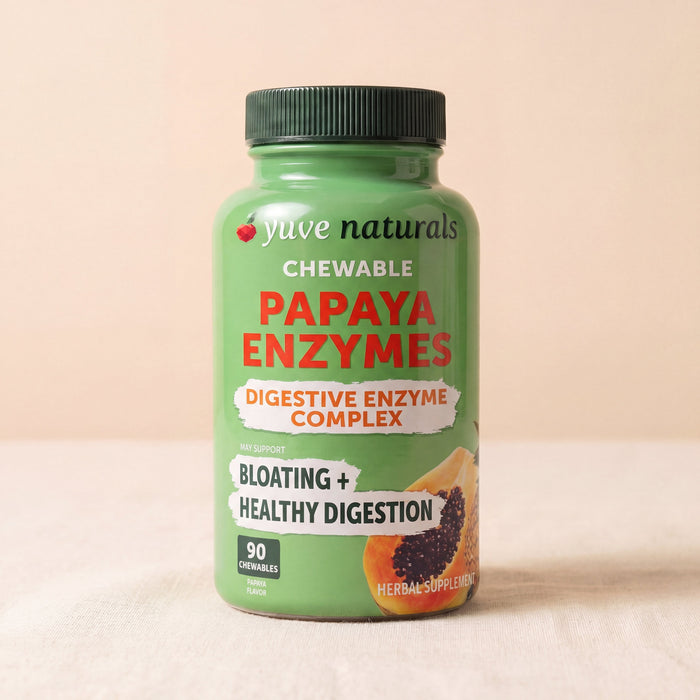
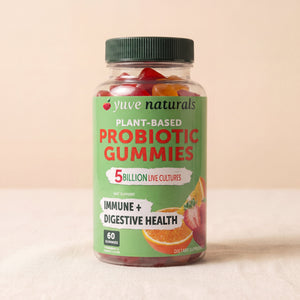
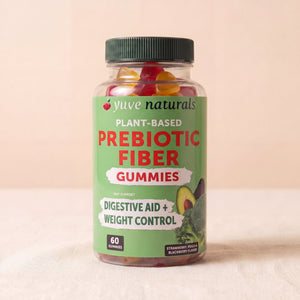
Yuve's formulations are described as vegan, non-GMO, gluten-free, and gelatin-free, with a plant-based focus. That may make them suitable for people who want a more consistent fit with their dietary values, but the same evidence rule still applies: the product should serve a specific purpose, and no supplement should be treated as a cure-all.
Use this third-party-tested supplement guide to build a label-reading habit. Independent quality verification, transparent dosages, and sensible claims are more useful signals than dramatic language about “maximum” or “instant” immunity.
A simple comparison
A low-quality formula may hide amounts inside a blend, add unnecessary fillers, or make broad promises without explaining the intended use. A thoughtful plant-based formula should make the active ingredients easy to identify and avoid asking you to decode the label.
If you're also interested in broader health measurement, Telomyx health and performance testing offers context on evaluating health and performance data. Testing can be helpful when it answers a clear question. It shouldn't become another source of anxiety or a reason to buy every product recommended by an algorithm.
Before purchasing, check four things:
- The purpose: Can you explain in one sentence why you're taking it?
- The dose: Is the amount clear and appropriate for your situation?
- The ingredients: Do you recognize the active components and any potential allergens?
- The quality signals: Does the company provide meaningful information about testing and manufacturing?
Clean choices feel less like a dramatic overhaul and more like reducing unnecessary variables. That matters when you're trying to identify what helps your digestion and what leaves you feeling worse.
Your Daily Immune Support Checklist
A supportive routine doesn't need to fill your kitchen counter. Build it around repeatable habits that nourish the gut, provide basic nutrients, and leave room for professional advice when something feels off.
- Eat a colorful plant-forward diet: Include vegetables, fruit, legumes, whole grains, nuts, and seeds across your meals. Variety gives your gut and immune system a broader nutritional foundation.
- Include reliable protein: Beans, lentils, tofu, tempeh, nuts, seeds, and other suitable choices help you build balanced meals.
- Hydrate consistently: Sip fluids throughout the day instead of waiting until you're already thirsty.
- Protect your sleep: A regular sleep routine supports your body's recovery systems.
- Move in ways you enjoy: Walking, stretching, strength work, and other comfortable activities can help make wellness sustainable.
- Use supplements with a purpose: Consider a probiotic or nutrient supplement when it fits your needs, label, diet, and professional guidance.
- Track your response: Note changes in bloating, stool patterns, energy, and tolerance rather than adding several new products at once.
If your digestion feels unsettled, start with one change and give yourself enough time to understand the result. You don't need to earn your health through a complicated routine, and you don't have to ignore persistent symptoms because a product promises a quick fix.
Explore Yuve for plant-based supplements focused on gut health and targeted nutritional support. Choose the formula that matches your specific goal, follow the label, and take the first steady step toward feeling more comfortable and supported every day.