Ever reach mid-afternoon with a waistband that feels two sizes too small, a cloudy head, and energy that seems to have left the building? Add a recurring sniffle or a stomach that keeps grumbling, and it's natural to wonder whether digestion and immunity are connected.
They are. The answer to does gut health affect the immune system is yes, but the useful answer is more nuanced than “take a supplement and never get sick.” Your gut contains a busy ecosystem that helps digest food while communicating with immune cells, maintaining a protective barrier, and influencing inflammation throughout the body. Let's unpack that connection, separate established biology from promising research, and turn it into realistic food-first habits.
Why Your Bloated Afternoon Might Be an Immune Story
Three hours after lunch, your jeans feel tight. Your stomach is rounded and uncomfortable, your thoughts are sluggish, and the sniffle you thought had gone away is back for another appearance. You might blame the bread, the beans, the rushed meal, or “bad digestion.”
Sometimes bloating does reflect a food intolerance or another digestive issue. But it can also be a clue that several systems are communicating at once. The microbes in your gut help break down parts of food that your own digestive enzymes can't fully process. While doing that work, they produce signals and metabolites that interact with the gut lining and immune cells.
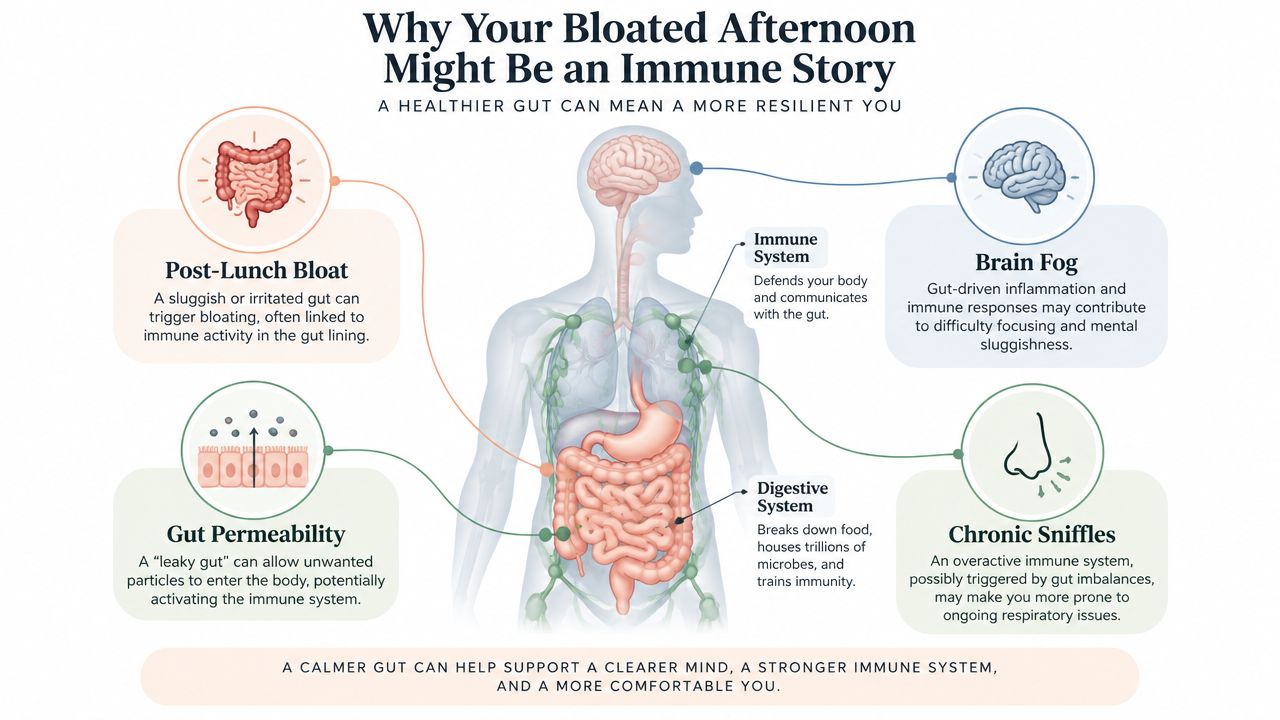
The same neighborhood handles digestion and defense
Your digestive tract isn't just a food tube. It contains immune tissue, barrier cells, mucus, and a vast community of microorganisms that help the body decide what deserves tolerance and what deserves a defensive response.
That doesn't mean every episode of gas signals immune dysfunction. Dun, dun, dun, unwelcome gas. Yikes. Bloating is common and can result from eating quickly, swallowing air, a large meal, fermentable carbohydrates, constipation, or a condition that deserves medical attention.
The more helpful interpretation is this: digestive symptoms can be a window into the gut environment, not a diagnosis of what is happening throughout your immune system. The gut-brain connection may also help explain why discomfort sometimes arrives with brain fog or irritability, although symptoms have many possible causes.
Why the connection matters beyond your stomach
The gut microbiome helps train immune cells, support the mucosal barrier, and influence systemic immune signaling. A review in Nature Communications on microbiome and immune variation describes the microbiome as actively shaping innate and adaptive immune development and function, rather than merely sitting beside the immune system.
For you, that means a balanced approach beats a dramatic “cleanse.” Nourishing the microbes you already have, noticing persistent symptoms, and avoiding exaggerated promises can support the conditions in which gut and immune communication works well. If bloating keeps returning, or comes with pain, bleeding, unexplained weight change, fever, or persistent bowel changes, speak with a qualified clinician instead of trying to solve it with supplements alone.
Understanding the Gut Immune Axis
The gut-immune axis is the two-way communication network between your gastrointestinal tract and immune system. Your gut sends information to immune cells, and immune activity changes the environment where microbes live.
A useful analogy is a border checkpoint built into a long wall. The wall represents the intestinal barrier. The checkpoint represents immune tissue that examines food particles, resident microbes, and possible pathogens. The aim isn't to attack everything that enters. It's to allow useful material through, tolerate familiar residents, and respond quickly when a genuine threat appears.
The checkpoint has specialized staff
Several structures help coordinate this work:
- Gut-associated lymphoid tissue, or GALT: Immune tissue positioned throughout the intestinal lining.
- Peyer's patches: Small immune structures that sample material from the intestine.
- Dendritic cells: Scouts that collect information and present it to other immune cells.
- T cells: Coordinators and responders that help regulate tolerance and defense.
- Secretory IgA: An antibody found at mucosal surfaces that helps interact with microbes and potential pathogens.
The gut is therefore a practical meeting place for the immune system and the outside world. Food, microbes, and environmental material arrive there every day, so the body needs a system that can distinguish harmless exposure from danger without triggering unnecessary inflammation.
A widely cited clinical explanation from Cleveland Clinic's overview of the gut microbiome states that up to 80% of the body's immune cells are located in the gut. The figure is often simplified in public discussion, but the central point holds: a large concentration of immune activity sits in and around the digestive tract.
Practical rule: A gut-focused habit supports immune function by improving the environment for regulation. It doesn't guarantee protection from every infection.
The microbiome itself is remarkably complex. The same Cleveland Clinic resource describes research identifying as many as 9.9 million unique microbial genes in the human gut microbiome. That scale helps explain why one universal “good bacteria” list cannot capture how every person's gut works.
For a friendly introduction to the broader topic, explore Yuve's science of gut health guide.
How the Microbiome Talks to Your Immune System
The gut microbiome communicates with immune cells through several overlapping routes. They aren't separate switches. The barrier, microbial signals, and metabolites influence one another, which is why your overall eating pattern matters more than chasing one isolated ingredient.
The barrier decides what gets through
The intestinal lining uses epithelial cells, mucus, tight junctions, and antimicrobial substances to control movement between the gut and the circulation. You can think of it as a selective filter. A resilient barrier keeps many unwanted materials contained in the digestive tract while allowing digested nutrients to pass where they belong.
When that barrier becomes disrupted, microbial products can interact with immune receptors in ways that promote inflammation. A review in Microbiology and Molecular Biology Reviews on microbiota and immune interactions describes this relationship as bidirectional. Microbes influence immune development, while immune activity also reshapes microbial composition.
Microbial patterns help calibrate readiness
Immune cells recognize molecular patterns associated with microbes. Components such as lipopolysaccharide, peptidoglycans, and flagellin can provide information about what is present in the gut. The goal isn't to eliminate all bacteria. The immune system needs regular, controlled exposure to learn appropriate responses.
This is one reason “all bacteria are bad” is the wrong model. The body relies on a managed relationship with resident microbes, and problems arise when the environment, barrier, or immune response becomes dysregulated.
Metabolites turn fiber into messages
When gut microbes ferment certain fibers, they produce short-chain fatty acids, including butyrate and propionate. These metabolites can support epithelial barrier integrity and modulate innate and adaptive immune responses. Research reviewed in Laboratory Animals on gut microbiota, metabolites, and immunity also discusses effects on IgA, T-cell responses, and gut immune homeostasis.
In everyday terms, fiber-rich foods give microbes raw material. The microbes then produce compounds that can help the intestinal lining and influence immune signaling. Oats, legumes, vegetables, fruit, nuts, and seeds can all contribute fiber, although the best choice depends on your tolerance.
| Mechanism | Key players | Immune effect |
|---|---|---|
| Gut barrier | Epithelial cells, mucus, tight junctions | Helps control what crosses from the intestine into circulation |
| Microbial signaling | Microbial surface molecules and immune receptors | Helps calibrate immune readiness and tolerance |
| Metabolite production | Butyrate, propionate, other short-chain fatty acids | Supports barrier integrity and helps regulate inflammatory responses |
What Science Has Proven and Where the Gaps Remain
If a bloated afternoon leaves you sluggish, the immune system may be part of the hidden story. Gut-immune research now supports more than a simple association between microbes and health. The microbiome participates in immune development, mucosal defense, and communication beyond the intestine. A Frontiers in Microbiology review of microbiota and intestinal homeostasis describes how gut microbes support the growth and specialization of epithelial and immune cells.
That evidence still needs careful interpretation. People with inflammatory or autoimmune conditions often show different microbial patterns, yet an observation cannot establish cause. The shift may contribute to illness, follow it, or occur alongside medication, diet, stress, infection, or other factors.
What has stronger biological support
Several findings fit a clear biological pathway:
- Fiber-fermenting microbes produce short-chain fatty acids that interact with the intestinal lining and immune cells.
- Microbes influence mucosal defenses, including IgA and T-cell activity.
- The gut microbiome can affect systemic immunity, including immune-cell movement and antibody production, according to a Current Opinion in Immunology review available through PubMed Central.
- Cohort research links microbiome-related interactions with measurable variation in immune responses, independent of host genetics. A Cell Research review reports that at least 10% of immune-response variability was attributable to these interactions.
That figure describes the importance of the relationship, not a guaranteed result from changing your diet or taking a probiotic. A healthier gut may support immune regulation, while the response to any specific intervention can differ between people.
Where caution still matters
Researchers are still examining vaccine responses, antigen presentation, autoimmune disease, and the differences between healthy people and those with dysbiosis or intestinal inflammation. A 2025 Frontiers in Immunology review on immune tolerance highlights unanswered questions about which species or strains shape tolerance, and how microbial tryptophan metabolites, diet, and environment interact.
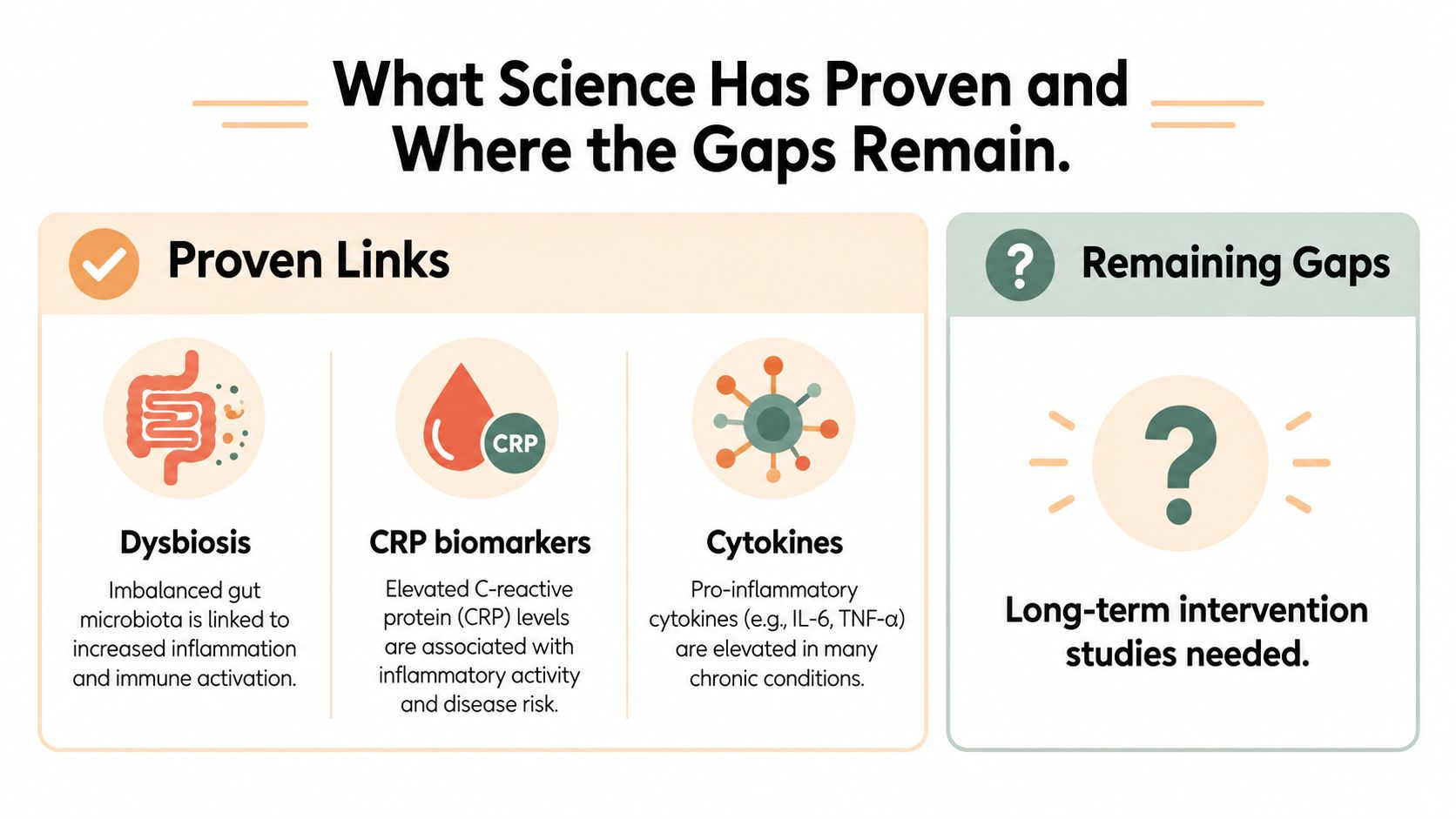
Research on vaccine efficacy and adaptive immunity is also developing. The Frontiers in Immunology review of microbiome-immune interactions describes these as active research areas and explains that the mechanisms remain incomplete.
Health habits work together. Reducing exposure to airborne irritants and infectious particles can complement, rather than replace, food-first gut support. EcoQuest Purifiers air cleaning solutions provide household air-cleaning information, while a nourishing diet addresses a different part of health.
Yuve's guide to immunity-boosting supplements offers a practical overview of supplement categories. Keep expectations realistic: gut health may support immune regulation, but it is not a cure for autoimmune disease, IBS, infection, or another diagnosis.
Prebiotics Probiotics and the Foods That Fuel Immunity
Prebiotics, probiotics, postbiotics, and fiber-rich foods aren't interchangeable. They support the gut ecosystem in different ways, and the evidence can vary by strain, product, dose, health condition, and outcome.
Prebiotics are fermentable substances that feed certain resident microbes. Chicory root and garlic contain inulin-type fibers, although these foods can worsen gas for some people, especially when introduced quickly.
Probiotics are live microorganisms provided in foods or supplements. Yogurt, kefir, kimchi, and other fermented foods may contain live cultures, but the organisms and amounts can vary. A product label matters, and a probiotic that helps one outcome may not help another.
Postbiotics are non-living microbial products or components, including metabolites such as short-chain fatty acids. Your own microbes can produce these compounds when your diet gives them suitable fermentable material.
Fiber foods provide more than one isolated substrate. Oats, berries, beans, lentils, vegetables, nuts, seeds, and whole grains can create a broader nutritional environment that supports microbial activity, bowel regularity, and overall diet quality.
| Category | How it supports immunity | Best food sources | Evidence strength |
|---|---|---|---|
| Prebiotics | Feeds selected microbes that can produce immune-active metabolites | Chicory, garlic, onions, legumes | Mechanistically promising, but effects vary by person and tolerance |
| Probiotics | Adds specific live microorganisms that may interact with gut and immune pathways | Yogurt, kefir, kimchi, probiotic supplements | Strain-specific and outcome-specific |
| Postbiotics | Supplies or encourages microbial compounds that affect barrier and immune signaling | Produced through fermentation, including short-chain fatty acids | Strong biological rationale, with human applications still developing |
| Fiber foods | Provides fermentable material plus vitamins, minerals, and plant compounds | Oats, berries, beans, vegetables, flax, nuts | Broad dietary support is more reliable than a single-food promise |
Build meals instead of collecting miracle ingredients
Try oats with berries and ground flax in the morning. Add lentils or beans and colorful vegetables at lunch if you tolerate them. Include a fermented side with dinner, then adjust portions if gas or bloating increases.
If you're comparing probiotic products online, check the strain names, storage instructions, serving guidance, and intended use. “More cultures” isn't automatically better, and a label can't promise a universal immune result.
The clearest takeaway is synergy over novelty. A varied eating pattern supplies different fibers and nutrients, while a carefully selected probiotic may add targeted support. If you have significant IBS symptoms, inflammatory bowel disease, a compromised immune system, or a medically restricted diet, introduce changes with professional guidance.
For more food ideas, explore Yuve's guide to natural prebiotics and probiotics.
Daily Habits and Yuves Vegan Routine for Gut Immune Support
A gut-supportive routine doesn't need to look like a laboratory experiment. Start with meals you can repeat, gentle movement, adequate rest, and a supplement choice that fits your dietary needs.
A simple day of support
Morning: Try oats with berries and ground flax. This combination provides fiber from several plant sources without asking you to overhaul breakfast.
Midday: Build lunch around legumes, colorful vegetables, and a satisfying source of protein. If beans trigger bloating, start with a smaller portion, rinse canned beans well, or choose another fiber source while you investigate the pattern.
After meals: Take a comfortable walk. Movement can support digestion and gives your nervous system a chance to shift out of constant “rush” mode.
Evening: Add sauerkraut or kimchi if fermented foods suit you. Protect your sleep routine too. Rest and circadian rhythm affect the conditions in which the gut barrier and immune system operate, even though a bedtime habit won't replace medical care.
Where a vegan probiotic may fit
Yuve's vegan probiotic blend is a dairy-free option for people who want a multi-strain probiotic routine. Its delayed-release capsule is designed to help deliver the contents beyond the stomach, while its strain diversity reflects the fact that probiotic effects are specific to the organisms and outcome being studied. Follow the product label, and don't treat a supplement as a substitute for a varied diet or treatment prescribed by your clinician.
Small-step plan: For one week, repeat one fiber-forward breakfast, add a plant-rich lunch, include a tolerated fermented food, walk after one meal, and take your probiotic consistently if it suits you.
Notice symptoms without judging them. If a food causes repeated discomfort, don't force it in the name of gut health. Your routine should make daily life more manageable, not turn every meal into a test.
Common Myths to Skip and How to Start Tonight
Myth: An expensive juice cleanse will reset the gut. A short cleanse can't define or repair a complex microbial ecosystem, and restricting food may leave you with less fiber and fewer nutrients. A steady pattern of varied plant foods is a more grounded place to begin.
Myth: One probiotic strain is a miracle fix. Probiotic effects depend on strain, dose, product quality, health context, and the outcome being measured. A multi-strain approach may be useful for some people, but it still deserves realistic expectations.
Myth: All bacteria should be eliminated. Your immune system needs ongoing interaction with resident microbes. The goal is a stable relationship and a well-supported barrier, not a sterile digestive tract.
Try this tonight
Make a dinner with a protein you tolerate, cooked vegetables, and a fiber-rich carbohydrate such as oats, beans, lentils, or a whole grain. Add a small fermented side if it feels comfortable, drink water according to thirst, and keep the meal unrushed.
If a vegan multi-strain probiotic fits your needs, take it according to its label rather than adding several products at once. Change one variable at a time so you can tell what helps, what irritates your digestion, and what makes no difference.
You don't need perfect digestion to support your health. Start with one repeatable meal, one walk, and one consistent routine. If bloating, pain, bowel changes, or recurrent symptoms persist, ask a healthcare professional for an individualized evaluation. Your experience is worth taking seriously, and sharing it with a supportive wellness community can make the process feel less lonely.
Yuve offers vegan supplements designed around gut health, including probiotic and prebiotic options that can fit a plant-based routine. Visit Yuve to explore the products and educational resources, then choose one small, sustainable step toward better digestive and immune support.