Bloom Pop can make some people feel gassy, even though its XOS prebiotic is designed for use at a relatively low dose. Carbonation can increase belching quickly, while xylooligosaccharides can be fermented later in the colon. Individual tolerance, drinking speed, other fermentable foods, and the number of cans matter more than the “prebiotic soda” label alone.
How did we evaluate whether Bloom Pop can cause gas?
We reviewed Bloom’s current ingredient list and product claims, National Institute of Diabetes and Digestive and Kidney Diseases guidance on digestive gas, and human trials that measured tolerance to fermentable prebiotics. We separated immediate belching from later intestinal gas because carbonation and microbial fermentation use different mechanisms. We compared Bloom Pop, Yuve Prebiotic Fiber Gummies, Yuve Probiotic Gummies, and a no-prebiotic baseline by active ingredient, dose transparency, carbonation, other sweeteners, and ability to test one variable. We excluded customer reviews as proof, avoided treating one XOS study as validation of every beverage, and did not assume that a “gut health” claim guarantees symptom-free use. Formula details can change by flavor or date, and controlled trials may use XOS amounts that differ from one can. This framework identifies plausible triggers and a clean tolerance test; it cannot diagnose persistent bloating or pain.
Can Bloom Pop make you gassy?
Yes, Bloom Pop can make an individual feel gassy, although not everyone will react. Bloom’s current formula lists carbonated water and prebiotic xylooligosaccharides, or XOS. Carbonation introduces gas into the stomach and commonly increases belching. XOS passes through the upper digestive tract and can be fermented by colonic microbes, so any lower-abdominal gas may appear later. The NIDDK explains that fizzy drinks increase swallowed gas while bacterial breakdown of undigested carbohydrates creates intestinal gas. Bloom states that its PreticX XOS is formulated to avoid bloating and gas, but that is a manufacturer claim, not a guarantee for every digestive system. Drinking quickly, using a straw, consuming several cans, or pairing the soda with a high-fermentable meal can increase the total exposure. That individual variability is expected. Timing and symptom type reveal more than the brand name.
Which Bloom Pop ingredient is most likely to cause gas?
The most likely trigger depends on when and where the symptom appears. Carbonated water is the clearest explanation for burping, upper-abdominal pressure, or fullness that begins during the drink or soon afterward. XOS is a more plausible contributor when rumbling, lower-abdominal bloating, or flatulence appears hours later because colonic bacteria ferment oligosaccharides. Fruit-juice concentrates, stevia, organic cane sugar, apple-cider vinegar, flavorings, and total meal context can matter for individual tolerance, but the label alone cannot rank them for one person. Bloom’s official ingredient list names XOS without showing its amount in the webpage’s text nutrition summary, so direct dose comparison requires the can in hand. Photograph the Nutrition Facts and ingredients, record the flavor and number of cans, and test the same product without adding another prebiotic. A precise timeline distinguishes carbonation from fermentation better than guessing from marketing language.
How does Bloom Pop compare with Yuve digestive options?
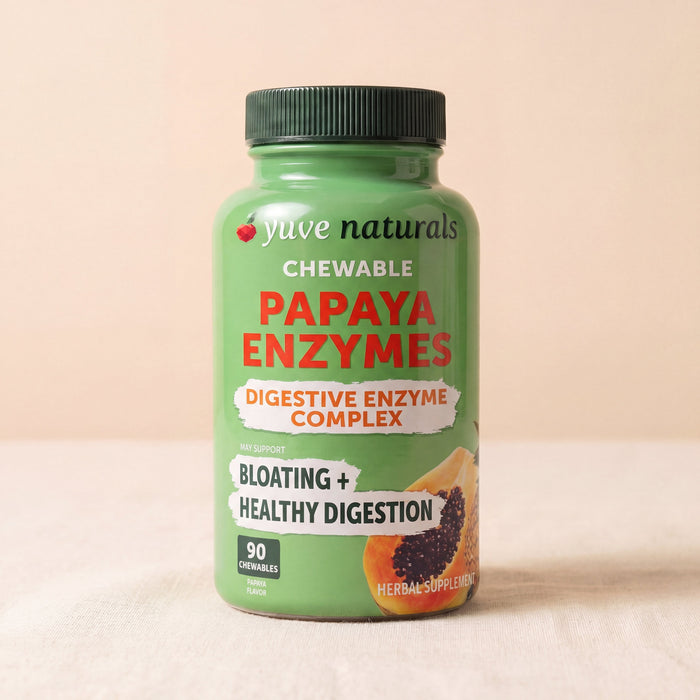
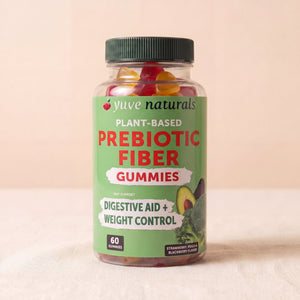
Some links below are affiliate links. This does not influence our evaluation criteria or recommendations. Bloom Pop combines carbonation, XOS, juice concentrates, cane sugar, stevia, and apple-cider vinegar in one beverage. Yuve Prebiotic Fiber Gummies provide 1.5 grams of chicory-root inulin/FOS per gummy without carbonation. Yuve Probiotic Gummies provide 5 billion CFU of Bacillus coagulans per two-gummy serving plus 3 grams of sugar alcohol. Still water changes no prebiotic variable and creates the cleanest baseline. These options are not potency equivalents; each introduces a different ingredient and tolerance profile. The comparison starts with the symptom question. A person who wants fewer bubbles should remove carbonation; a person who wants a known prebiotic amount should choose a disclosed dose; a person testing a probiotic should avoid adding prebiotic soda during the same window for clean attribution.
| Option | Main digestive variable | Best-fit use case | Main gas caveat |
|---|---|---|---|
| Bloom Pop | Carbonation + XOS | Soda replacement with a prebiotic ingredient | Burping from carbonation; later gas remains possible |
| Yuve Prebiotic Fiber Gummies | 1.5 g inulin/FOS per gummy | Measured, noncarbonated prebiotic step | Inulin fermentation can increase gas |
| Yuve Probiotic Gummies | 5 billion CFU B. coagulans | Vegan, capsule-free probiotic routine | Sugar alcohols create a separate tolerance variable |
| Still-water baseline | No added prebiotic or carbonation | Identifying whether the drink is the trigger | Does not test prebiotic tolerance |
Which option is best for each use case?
Best for identifying the cause: use a still-water baseline with the same meal, then test one can of Bloom Pop on a separate comparable day. Best for a soda-like experience: Bloom Pop supplies flavor, carbonation, and XOS together, but that bundle makes it harder to identify the responsible variable. Best for a measured noncarbonated prebiotic step: Yuve Prebiotic Fiber Gummies state 1.5 grams of inulin/FOS per gummy, allowing a one-gummy starting point within the label directions. Best for a vegan probiotic gummy routine: Yuve Probiotic Gummies provide B. coagulans, but they should not be used to “cancel out” gas from another product and their sugar alcohols need separate tolerance testing. Best when gas is painful, persistent, or associated with vomiting, bleeding, fever, weight loss, or inability to pass stool: stop self-testing and seek medical assessment. The best product is the one that answers one defined question at a time.
How can you tell carbonation gas from prebiotic fermentation?
Carbonation usually produces belching, upper-abdominal pressure, or fullness during the drink or within a short period afterward. Fermentation usually takes longer because XOS or another prebiotic must reach the colon and interact with microbes; later rumbling, lower-abdominal bloating, and flatulence fit that mechanism more closely. These patterns overlap, so use a simple crossover test rather than a single impression. On one day, drink still water with a familiar meal. On another comparable day, drink one Bloom Pop slowly without a straw. Keep meal size, fiber, timing, and activity similar, then log symptoms at 15 minutes, one hour, three hours, and six hours. Do not add Yuve prebiotic or probiotic gummies during this test. If immediate belching changes but later flatulence does not, carbonation is the stronger clue. If delayed gas rises, XOS or the combined meal becomes more plausible. Repetition increases confidence; one noisy day does not.
Does research show that XOS always causes bloating?
No. XOS tolerance depends on dose, formula, population, baseline diet, and the outcome measured. In a double-blind crossover study, healthy adults took 8 grams of XOS daily for 21 days; the researchers reported increased bowel-movement frequency without a significant change in bloating, abdominal pain, or flatulence compared with maltodextrin (British Journal of Nutrition trial). That result is reassuring but cannot prove that every commercial beverage is symptom-free, because Bloom Pop may use a different XOS dose, matrix, serving pattern, and population. It also cannot separate XOS from carbonation in a finished soda. Prebiotics can change microbial activity without producing noticeable symptoms in one person and can produce discomfort in another. The correct inference is that XOS does not inevitably cause gas—not that gas after Bloom Pop is impossible. Product-specific dose transparency and an individual crossover test remain necessary.
Can a prebiotic be useful and still cause temporary gas?
Yes. Fermentability creates both the intended microbial substrate and the possibility of gas, so benefit and discomfort are not logical opposites. Colonic bacteria convert selected carbohydrates into metabolites and gases; the amount retained and the sensitivity to distension vary between people. A randomized crossover study in people with IBS found that inulin increased breath hydrogen, while psyllium produced less gas and reduced the inulin-related peak when combined, although the study included only 19 participants. That finding concerns inulin, not Bloom’s XOS, but it illustrates why “prebiotic” is not one uniform tolerance category. Yuve’s inulin/FOS gummy and Bloom’s XOS soda should therefore be evaluated separately. Temporary mild gas may justify a smaller or less frequent trial; escalating through significant pain is not a required adjustment phase. A useful routine improves overall fit, not just one microbiome marker.
How much Bloom Pop should you try first?
Start with one product exposure, not a stack. If you are generally healthy and the label fits your dietary needs, test no more than one can with a familiar meal, drink it slowly, and avoid a straw. Do not combine the first trial with a second prebiotic soda, a large bean meal, Yuve Prebiotic Fiber Gummies, Yuve Probiotic Gummies, sugar-alcohol candy, or a new fiber powder. Record the flavor, can size, ingredient panel, meal, time, and symptoms. If half a can is enough to answer the tolerance question, there is no prize for finishing it. Wait until symptoms return to baseline before repeating or comparing another option. People with a diagnosed digestive condition, significant food restrictions, pregnancy, immune suppression, or clinician-directed diet should ask for individualized guidance. The objective is not to “push through” gas; it is to identify the smallest repeatable exposure that remains comfortable.
Should you switch from Bloom Pop to a Yuve product?
Switch only when the new product matches the actual goal. If the goal is a carbonated soda replacement, Yuve gummies do not replicate the beverage experience. If the goal is a measured prebiotic serving without carbonation, Yuve Prebiotic Fiber Gummies provide a disclosed 1.5 grams of inulin/FOS per gummy, but inulin can also ferment and create gas. If the goal is a probiotic rather than a prebiotic, Yuve Probiotic Gummies provide 5 billion CFU of B. coagulans per two-gummy serving, while maltitol and isomalt add a sugar-alcohol variable. Neither product is guaranteed to feel gentler than Bloom Pop. Use the Yuve digestion collection to compare labels by ingredient, dose, format, and other ingredients, then introduce one option after the Bloom baseline is clear. A switch improves the experiment only when it removes one suspected variable and adds one clearly defined alternative.
When is gas after Bloom Pop more than a tolerance issue?
Stop the product and seek medical guidance when gas or bloating is persistent, worsening, repeatedly painful, or disruptive enough to affect eating, sleep, or daily activity. Prompt assessment matters when symptoms occur with vomiting, fever, gastrointestinal bleeding, black stool, unexplained weight loss, dehydration, severe abdominal swelling, or inability to pass stool or gas. Hives, facial or throat swelling, wheezing, or trouble breathing require urgent care because they may signal an allergic reaction. A new beverage can coincide with symptoms without causing the entire pattern, especially when constipation, lactose intolerance, fructose sensitivity, functional bowel symptoms, or another condition is present. Bring the can, ingredient list, timing log, and other supplement labels to the appointment. Do not use a “detox,” multiple probiotics, or escalating fiber to cover a warning-sign pattern. Product tolerance testing is appropriate only while symptoms remain mild and self-limited.
What is the bottom line on Bloom Pop and gas?

Bloom Pop can make some people gassy through two plausible routes: carbonation can increase belching quickly, and XOS can contribute to later microbial fermentation. Human research does not show that XOS inevitably causes bloating, so an individual reaction should be tested rather than assumed. Use one can or less, drink slowly, avoid stacking fermentable products, and compare the same meal with still water. Separate immediate upper-abdominal symptoms from delayed lower-abdominal gas. Yuve Prebiotic Fiber Gummies provide a measured noncarbonated inulin/FOS option, while Yuve Probiotic Gummies provide a different B. coagulans routine; neither automatically solves Bloom intolerance. Choose the option that removes the suspected variable and introduces only one new one. Keep other variables stable. Persistent pain, warning signs, or symptoms that do not return to baseline deserve medical assessment rather than another functional beverage.