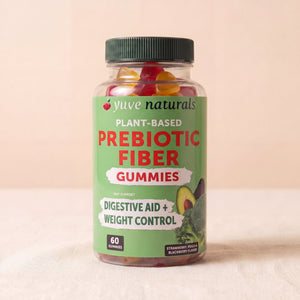
Vegan fiber gummies are chewable supplements that use plant-derived fiber and avoid gelatin, beeswax, carmine, and other animal-derived ingredients. The best choice lists a specific fiber source, a clear grams-per-serving amount, low added sugar, and third-party quality cues. Fiber gummies can support digestive regularity when used consistently with water and a fiber-rich diet.
TL;DR
- Vegan fiber gummies should be gelatin-free and made with plant-based pectin.
- Look for 2 to 5 grams of fiber per serving.
- Common fiber sources include inulin, chicory root fiber, and soluble corn fiber.
- Start with a smaller serving if your gut is sensitive to fiber changes.
- Pair fiber gummies with water, meals, and daily consistency.
What are vegan fiber gummies?
Vegan fiber gummies are dietary supplements that combine a plant-based gelling system with added dietary fiber. Gelatin comes from animal collagen, so vegan gummies usually use pectin, a plant carbohydrate found in fruit cell walls. Fiber sources vary by product. Inulin and chicory root fiber are prebiotic fibers. Soluble corn fiber and resistant dextrin are also used in gummies because they dissolve well and keep a chewable texture.
A vegan label should match the full ingredient list, not just the front panel. A clean product avoids gelatin, shellac, beeswax, carmine, and dairy-derived ingredients. The Nutrition Facts or Supplement Facts panel should list dietary fiber in grams. The ingredient list should name the fiber source. For broader digestive routine support, some shoppers pair fiber with probiotic formats, such as probiotic gummies, but fiber and probiotics do different jobs.
How do vegan fiber gummies work?
Vegan fiber gummies work by adding fermentable or soluble carbohydrates to the diet. Soluble fiber absorbs water and forms a gel-like matrix in the digestive tract. Fermentable fibers, including inulin-type fructans, feed certain gut microbes and contribute to short-chain fatty acid production. A review in *Nutrients* describes dietary fiber as a substrate that can influence stool bulk, microbial metabolism, and gut ecology, although outcomes depend on fiber type and dose (Nutrients).

Fiber gummies do not replace high-fiber foods. Beans, lentils, oats, chia seeds, vegetables, and fruit provide fiber plus minerals, polyphenols, and food structure. Gummies offer a measured, repeatable serving for people who struggle with consistency. Water matters because fiber needs fluid to move comfortably through the digestive tract. Sudden increases may cause gas or fullness, so gradual serving changes are usually easier to tolerate.
What are the benefits and uses of vegan fiber gummies?
Vegan fiber gummies may help support daily fiber intake, digestive regularity, and gut flora balance when the formula provides a meaningful fiber dose. The National Academies set Adequate Intake levels for total fiber at 25 grams per day for many adult women and 38 grams per day for many adult men, but typical intake often falls short (NIH National Library of Medicine). A gummy that provides 3 grams of fiber covers only part of that gap.
Useful roles include:
- Routine support for people who forget fiber-rich snacks.
- Travel support when meals are lower in legumes, grains, or produce.
- Plant-based supplement routines that avoid gelatin capsules.
- A gentle on-ramp for people building a higher-fiber pattern.
Evidence is strongest for total dietary fiber patterns, not for every gummy format. The FDA recognizes dietary fiber as important for nutrition labeling, while specific physiological effects depend on the fiber source and evidence file (FDA dietary fiber questions and answers).
How should you choose vegan fiber gummies?
Choose vegan fiber gummies by reading the Supplement Facts panel first, then the front-label claims. A useful product names the fiber source, lists dietary fiber in grams, uses pectin instead of gelatin, and keeps added sugar modest. Adults often do best with a product that provides 2 to 5 grams of fiber per serving because that range is meaningful but still easy to fit into meals.
Use this checklist:
- Fiber amount: 2 to 5 grams per serving.
- Fiber source: inulin, chicory root fiber, soluble corn fiber, or another named fiber.
- Vegan format: pectin-based, gelatin-free, dairy-free, and carmine-free.
- Sugar profile: low added sugar or sugar-free if preferred.
- Allergen fit: gluten-free, soy-free, and non-GMO if those standards matter to you.
- Quality cues: made in a GMP-aligned facility, clear lot coding, and accessible customer support.
If you also use probiotics, read how to store probiotics because heat, moisture, and label directions can affect probiotic handling.
What side effects or label details should you watch for?
Fiber gummies can cause temporary gas, bloating, or fullness when the serving size rises faster than the gut adapts. Fermentable fibers such as inulin and chicory root fiber are useful for prebiotic routines, but they can feel intense for some people. Start with a partial serving for several days, drink water, and increase only if the serving feels comfortable.
Label details matter. Sugar alcohols such as sorbitol, maltitol, and xylitol can contribute to digestive discomfort in some users. Added sugar can also turn a daily gummy into a less ideal routine if the serving requires multiple pieces. Keep fiber gummies away from children unless the product is age-appropriate and directions match the child’s needs. People who are pregnant, nursing, taking medications, or managing a medical condition should ask a qualified healthcare professional before changing supplement routines. For probiotic format questions, read are probiotic gummies effective.
How do vegan fiber gummies compare with capsules, powders, and food?
Vegan fiber gummies are convenient, but they trade flexibility for ease. Powders usually provide more grams of fiber per serving. Capsules are portable but may require several pills to reach the same fiber amount. Whole foods provide the broadest nutrient package because lentils, oats, berries, and vegetables include fiber plus vitamins, minerals, and plant compounds.
| Option | Typical strength | Tradeoff | Best fit |
|---|---|---|---|
| Vegan fiber gummies | Easy taste and habit consistency | Lower fiber per serving than powders | Daily routine support |
| Fiber powders | Higher adjustable fiber dose | Requires mixing and enough liquid | People who want dosage flexibility |
| Fiber capsules | Portable and low-sugar | Multiple capsules may be needed | Travel or minimal-ingredient routines |
| High-fiber foods | Fiber plus micronutrients and food structure | Requires meal planning | Foundation of a digestive health routine |
A practical routine often combines foods first, then uses a gummy when consistency is the barrier. Supplements should fill a defined gap rather than replace beans, oats, fruit, vegetables, seeds, and whole grains.
FAQ
Are vegan fiber gummies as effective as fiber powder?
Vegan fiber gummies can support fiber intake, but fiber powders usually provide more grams per serving. A gummy may offer 2 to 5 grams, while a powder can be adjusted more easily. The better choice depends on consistency, tolerance, ingredient fit, and the total fiber you get from meals.
What makes a fiber gummy clean-label?
A clean-label fiber gummy lists a named fiber source, uses pectin instead of gelatin, and avoids unnecessary artificial colors when possible. Vegan shoppers should also check for carmine, beeswax, shellac, dairy ingredients, and gelatin. Clear serving directions, lot coding, and simple allergen statements make the label easier to trust.
Can I take vegan fiber gummies every day?
Many adults can use fiber gummies daily if the serving fits their total fiber intake and fluid habits. Start slowly if your usual diet is low in fiber. Stop or adjust the serving if discomfort continues, and ask a healthcare professional if you have ongoing digestive concerns or use medications.
Do fiber gummies contain prebiotics?
Some fiber gummies contain prebiotic fibers, especially inulin or chicory root fiber. Prebiotics are substrates used by host microorganisms that can support a health-related benefit, according to the International Scientific Association for Probiotics and Prebiotics consensus statement indexed in PubMed (PubMed). Check the ingredient list because not every fiber gummy uses a prebiotic fiber.
Are vegan fiber gummies the same as probiotic gummies?
No. Fiber gummies provide dietary fiber, while probiotic gummies provide live microorganisms or formulated probiotic ingredients. Fiber can support the environment that gut microbes use, while probiotics are strain or formula specific. If you use both, follow each product’s serving directions and storage instructions.
How much fiber should a vegan gummy have?
A practical vegan fiber gummy usually provides 2 to 5 grams of dietary fiber per serving. Less than 2 grams may be too small to matter much in a daily routine. More than 5 grams can still be useful, but some people prefer to increase gradually to support comfort.
The bottom line on vegan fiber gummies
Vegan fiber gummies are best viewed as a consistency tool, not a full fiber strategy. Choose a pectin-based gummy with a named fiber source, a clear grams-per-serving amount, modest added sugar, and label standards that match your routine.
For a broader digestive health routine, pair fiber-forward meals with hydration, movement, and carefully chosen supplements. If you are building a plant-based routine that includes probiotics, Yuve’s probiotic gummies can be a simple format to compare alongside your fiber choice.