Ever feel like your stomach inflates like a balloon by afternoon? You’re not alone-and it’s not just what you ate for lunch. That frustrating, uncomfortable feeling is something we know all too well. It’s that moment where you wonder if your favorite jeans secretly shrunk in the wash, or why your energy plummets right after a meal. We get it.
The good news is, the real secret to happy, predictable digestion lies deeper-in the trillions of tiny helpers living in your gut. Think of your gut microbiome as a bustling garden. When it’s flourishing with a diverse range of beneficial bacteria, your digestion runs smoothly. But when the 'weeds'-the less helpful bacteria-start to take over, you get bloating, gas, and that general feeling of discomfort. Dun, dun, dun-unwelcome gas. Yikes!
In this guide, you'll learn a clear, actionable list of the best foods that improve gut bacteria, making your internal garden stronger and more vibrant. We’re going to ditch the confusion and give you a simple roadmap to a calmer, happier gut. You'll learn not just what to eat, but why it works and how to easily incorporate these foods into your daily routine. Let's get you back to feeling amazing from the inside out.
1. Fiber-Rich Whole Grains
When you hear “fiber,” you might think of a bland bowl of bran flakes. But let’s reframe that: think of fiber as the five-star, gourmet meal for the beneficial bacteria living in your gut. Whole grains like oats, barley, and quinoa are packed with special types of dietary fiber-specifically beta-glucans and resistant starch-that your body can't digest. Instead, these fibers travel to your colon, where they become a feast for your friendly gut microbes.
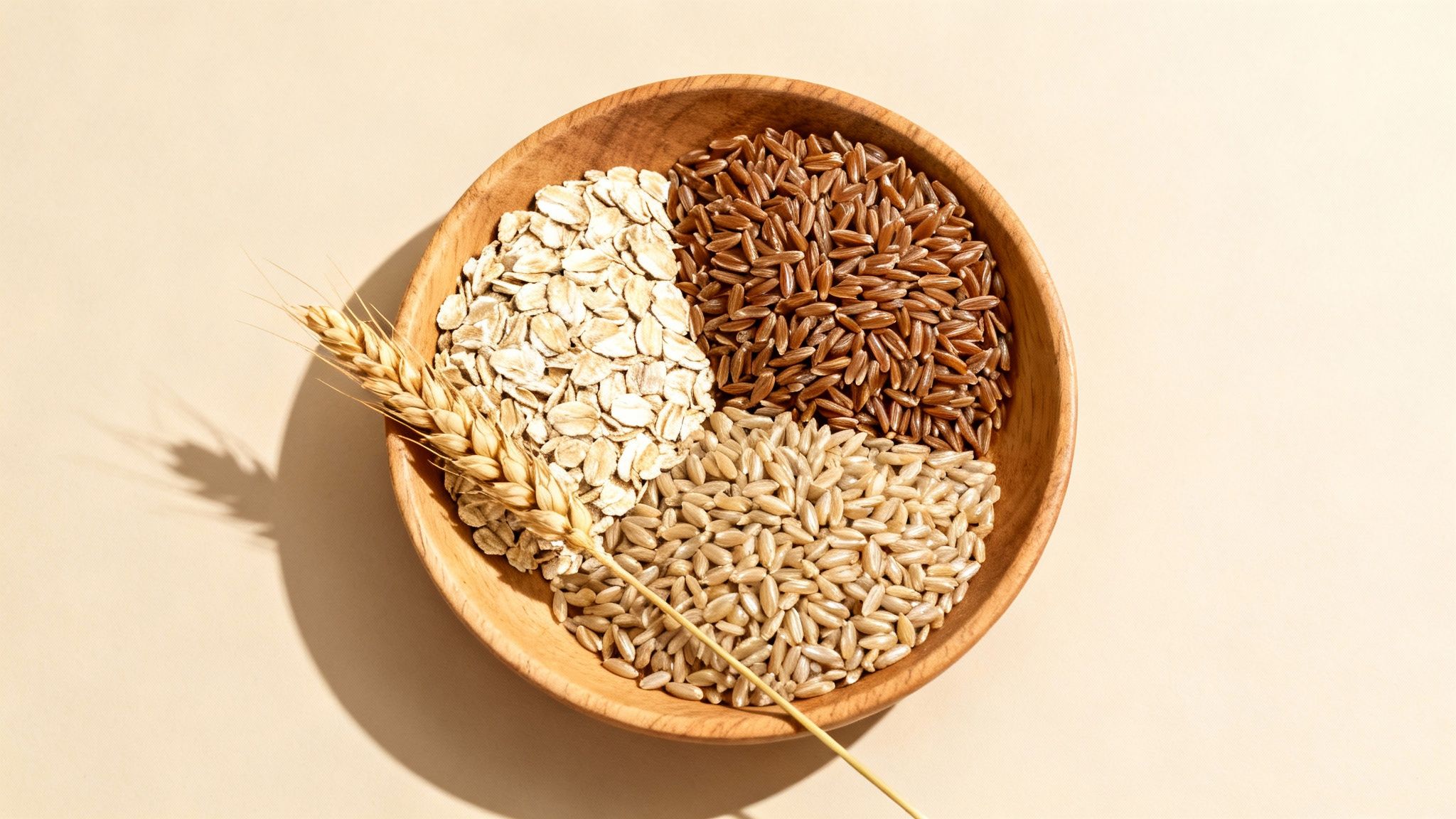
As your gut bacteria ferment these prebiotic fibers, they produce beneficial compounds called short-chain fatty acids (SCFAs), such as butyrate. A 2020 review in Nutrients highlighted that butyrate is a superstar for gut health-it nourishes the cells lining your colon, reduces inflammation, and helps maintain a strong gut barrier. What this means for you is a stronger gut lining and less irritation. This process is a foundational step in creating a diverse and resilient microbiome, making whole grains one of the best foods that improve gut bacteria.
How to Make Whole Grains Work for You
Switching to whole grains doesn't have to be an all-or-nothing leap. If you’re used to refined grains, a sudden jump in fiber can lead to some, shall we say, unwelcome digestive surprises like gas and bloating.
Pro Tip: Cook grains like rice or oats and then cool them in the refrigerator overnight. This process increases the formation of resistant starch, providing even more fuel for your beneficial gut bacteria.
Here’s how to gradually and effectively integrate them:
- Start Slow: Begin by swapping just one refined grain product a day for a whole-grain version. For example, have a bowl of steel-cut oats for breakfast instead of a sugary cereal.
- Aim for a Target: Gradually work your way up to the recommended 25-38 grams of fiber per day.
- Hydrate, Hydrate, Hydrate: Fiber needs water to do its job properly. Aim for at least eight glasses of water daily to help move things along smoothly.
2. Fermented Foods (Yogurt, Kefir, Sauerkraut)
Fermented foods are less of a meal for your existing gut bacteria and more like sending in fresh, well-trained reinforcements. Think of them as living foods, teeming with beneficial microorganisms, or probiotics, that can take up residence in your gut. Foods like yogurt, kefir, and sauerkraut undergo a process where microbes like Lactobacillus and Bifidobacterium break down sugars. This not only preserves the food but also creates a cocktail of enzymes, vitamins, and live bacteria ready to support your digestive system.
These probiotics don't just add to the population of your microbiome; they actively work to maintain a healthy balance by crowding out less desirable microbes. This direct infusion of beneficial bacteria is why fermented options are considered some of the most potent foods that improve gut bacteria. To learn more about how fermented foods aid digestion, you can explore the topic in greater detail.
How to Make Fermented Foods Work for You
Diving into the world of fermented foods is exciting and delicious. To get the most out of these probiotic powerhouses, it's best to introduce them thoughtfully to avoid overwhelming your system.
Pro Tip: When heating foods like miso soup or sauerkraut, add them at the very end of the cooking process. High heat can kill the live and active cultures, diminishing their probiotic benefits.
Here’s how to gradually and effectively integrate them:
- Check the Label: Always look for products that state "live and active cultures" on the packaging. Some products are pasteurized after fermentation, which kills the beneficial bacteria.
- Start Small: Begin with a small serving, like a tablespoon of sauerkraut or a few ounces of kefir, and see how your body responds before increasing the amount.
- Watch for Sugar: Many commercial yogurts and kombuchas are loaded with added sugars, which can feed the less-desirable bacteria. Opt for plain, unsweetened varieties whenever possible. When looking for ways to easily incorporate more fermented foods into your diet, consider exploring healthier mayonnaise alternatives that often feature ingredients like Greek yogurt.
- Create a Probiotic-Prebiotic Pair: For an even greater impact, combine your fermented foods with prebiotic-rich options. A scoop of Yuve's All-in-One Daily Greens in your kefir smoothie provides the perfect fuel to help your new probiotic friends thrive.
3. Chicory Root and Inulin-Rich Foods
If whole grains are the gourmet meal for your gut, think of inulin as the supercharged, targeted fuel source for your microbiome's most valuable players. Chicory root, Jerusalem artichokes, garlic, and onions are loaded with inulin, a type of soluble prebiotic fiber. This fiber travels through your stomach and small intestine completely undigested, arriving in the colon ready to work its magic.
Once in the colon, inulin becomes a selective feast for beneficial bacteria, particularly powerhouse strains like Bifidobacterium. These bacteria ferment the inulin, leading to a significant boost in their population. This targeted nourishment helps crowd out less desirable microbes and reinforces the gut barrier, making inulin-rich vegetables some of the most effective foods that improve gut bacteria. To dive deeper into how these specialized fibers work, you can learn more about prebiotics for digestive health.
How to Make Inulin Work for You
Inulin is potent, so a slow and steady approach is key to avoiding digestive discomfort like gas or bloating. A little goes a long way.
Pro Tip: Slightly under-ripe, greenish bananas are a great source of inulin and resistant starch. As they ripen and turn yellow, the starches convert to sugar, so catching them early gives your gut microbes the best treat.
Here’s how to gradually introduce these powerful prebiotics:
- Start Small: Begin with a small daily amount, such as a teaspoon of chicory root powder in your morning coffee or a few slices of raw onion on your salad.
- Cook for Comfort: If raw garlic or onions feel too harsh, cooking them helps break down the fibers, making them easier on your system while still providing prebiotic benefits.
- Increase Slowly: Gradually increase your intake over a few weeks, aiming for a target that feels comfortable for you.
- Stay Hydrated: Just like with other fibers, drinking plenty of water is essential. Water helps the soluble fiber form a gel-like substance, which supports smooth digestion.
4. Garlic and Onions (Allium Family)
Often hailed as the flavor foundation of countless recipes, garlic and onions do more than just make your meals delicious. Think of them as your gut microbiome’s personal bodyguards. These potent members of the allium family are brimming with powerful prebiotics, primarily fructo-oligosaccharides (FOS). This specific type of fiber is indigestible to humans but serves as a gourmet meal for beneficial gut bacteria like Bifidobacteria.
The magic of alliums lies in their dual-action approach. While FOS selectively feeds the good microbes, another compound called allicin - responsible for garlic's pungent aroma - has antimicrobial properties. This helps to gently suppress the growth of less desirable bacteria, creating a more balanced and harmonious gut environment. This selective nourishment and weeding process makes garlic and onions some of the most effective foods that improve gut bacteria.
How to Make Garlic and Onions Work for You
Incorporating these prebiotic powerhouses is simple, but a little know-how can maximize their benefits and minimize any potential digestive complaints.
Pro Tip: To maximize allicin's benefits, mince or crush your garlic and let it sit for 10-15 minutes before cooking or eating it. This exposure to air activates the enzyme that creates health-promoting allicin.
Here’s how to gradually and effectively integrate them:
- Start Small: Begin by adding just a small amount to your meals, like half a clove of raw garlic in a dressing or a few slices of raw onion in a salad.
- Go Raw (When Possible): Raw consumption provides the highest concentration of prebiotic FOS. Try adding finely minced garlic to salsas, dips, or vinaigrettes.
- Cook Lightly: If raw alliums are too much for your system, light cooking can make them easier to digest while still preserving some of their benefits. A gentle sauté is better than roasting until caramelized.
- Amplify with Probiotics: To give those beneficial microbes an even bigger boost, pair your allium-rich diet with a targeted probiotic. The prebiotic FOS in garlic and onions provides the perfect fuel for the beneficial strains in a supplement like Yuve's Vegan Probiotic Gummies, helping them colonize and thrive for a healthier gut.
5. Polyphenol-Rich Foods (Berries, Dark Chocolate, Green Tea)
If fiber is the main course for your gut bacteria, think of polyphenols as the vibrant, antioxidant-rich dessert. These powerful plant compounds, found in foods like berries, dark chocolate, and green tea, play a direct role in shaping your microbiome. Most polyphenols are too large to be absorbed in your small intestine, so they journey to the colon, where your gut microbes get to work.

This microbial metabolism is a two-way street. Your gut bacteria break down polyphenols into smaller, more easily absorbed compounds that offer anti-inflammatory benefits. In return, the polyphenols themselves act as prebiotics, feeding beneficial bacteria like Akkermansia muciniphila and Bifidobacteria while helping to inhibit the growth of less desirable gut residents. This makes these some of the best foods that improve gut bacteria, promoting a balanced gut ecosystem.
How to Make Polyphenols Work for You
Getting more polyphenols into your diet is one of the most enjoyable ways to support your gut. It's less about restriction and more about adding color and flavor to your plate.
Pro Tip: Don't discard the colorful peels of fruits like apples and plums. A significant portion of their polyphenol content is concentrated in the skin.
Here’s how to easily boost your intake:
- Eat the Rainbow: Aim to consume a variety of colorful plant foods. Mix different types of berries (fresh or frozen are equally good) into your yogurt, oatmeal, or smoothies.
- Choose Chocolate Wisely: Opt for dark chocolate with at least 70% cocoa content. The higher the cocoa percentage, the more polyphenols you’ll get.
- Sip Smarter: Swap a sugary drink for a cup of green or white tea. Just one to two cups a day can provide a meaningful dose of these beneficial compounds.
- Enhance Your Probiotic Routine: Polyphenols can create a more welcoming environment for good bacteria. Combining a polyphenol-rich diet with a high-quality supplement like Yuve's Vegan Probiotic Gummies helps the beneficial strains you introduce to not just survive but thrive.
6. Asparagus (Prebiotic Vegetable)
When you picture gut-healthy superfoods, you might not immediately think of asparagus, but these green spears are one of nature’s most powerful prebiotics. Think of asparagus as a targeted nutritional strike for your best gut bacteria. It is exceptionally rich in a specific type of soluble fiber called inulin, which bypasses digestion and arrives in the colon ready to be devoured by beneficial microbes like Bifidobacterium and Lactobacillus.
As these friendly microbes ferment the inulin, they produce vital short-chain fatty acids (SCFAs) like butyrate. These SCFAs are crucial for strengthening your gut lining, reducing inflammation, and even supporting your immune system. Including it in your diet is a direct way to cultivate a thriving inner garden, making asparagus one of the top foods that improve gut bacteria.
How to Make Asparagus Work for You
Eating more asparagus is simple, but how you prepare it matters. Overcooking can break down its delicate prebiotic fibers, so a gentle touch is key.
Pro Tip: Don't discard the tips! The tips of asparagus spears contain the highest concentration of nutrients and prebiotic compounds, so make sure to include them in your meals.
Here are a few easy ways to add this prebiotic powerhouse to your diet:
- Prepare It Gently: Lightly steam, roast, or sauté asparagus until it's tender-crisp. This preserves the inulin while making it easier to digest.
- Aim for Consistency: Try to include at least two or three servings of asparagus per week to consistently fuel your beneficial bacteria.
- Pair with Healthy Fats: Serve asparagus with a drizzle of olive oil or a sprinkle of toasted almonds. Healthy fats help your body absorb its fat-soluble vitamins (like A, E, and K).
- Combine with a Probiotic Boost: The prebiotic inulin in asparagus creates the perfect environment for probiotics to thrive. Pairing it with a high-quality supplement like Yuve's Vegan Prebiotic + Probiotic Sugar-Free Gummies provides a powerful symbiotic effect, delivering beneficial strains and the exact fuel they need to flourish.
7. Resistant Starch Foods (Green Bananas, Legumes, Cooked and Cooled Potatoes)
Imagine a type of carbohydrate that bypasses digestion, arriving untouched in your colon specifically to feed your most beneficial gut bacteria. That’s the magic of resistant starch. Unlike other starches that break down into sugar, this special carb ‘resists’ digestion and functions more like a soluble fiber. It’s a powerhouse prebiotic, making it one of the most effective foods that improve gut bacteria.
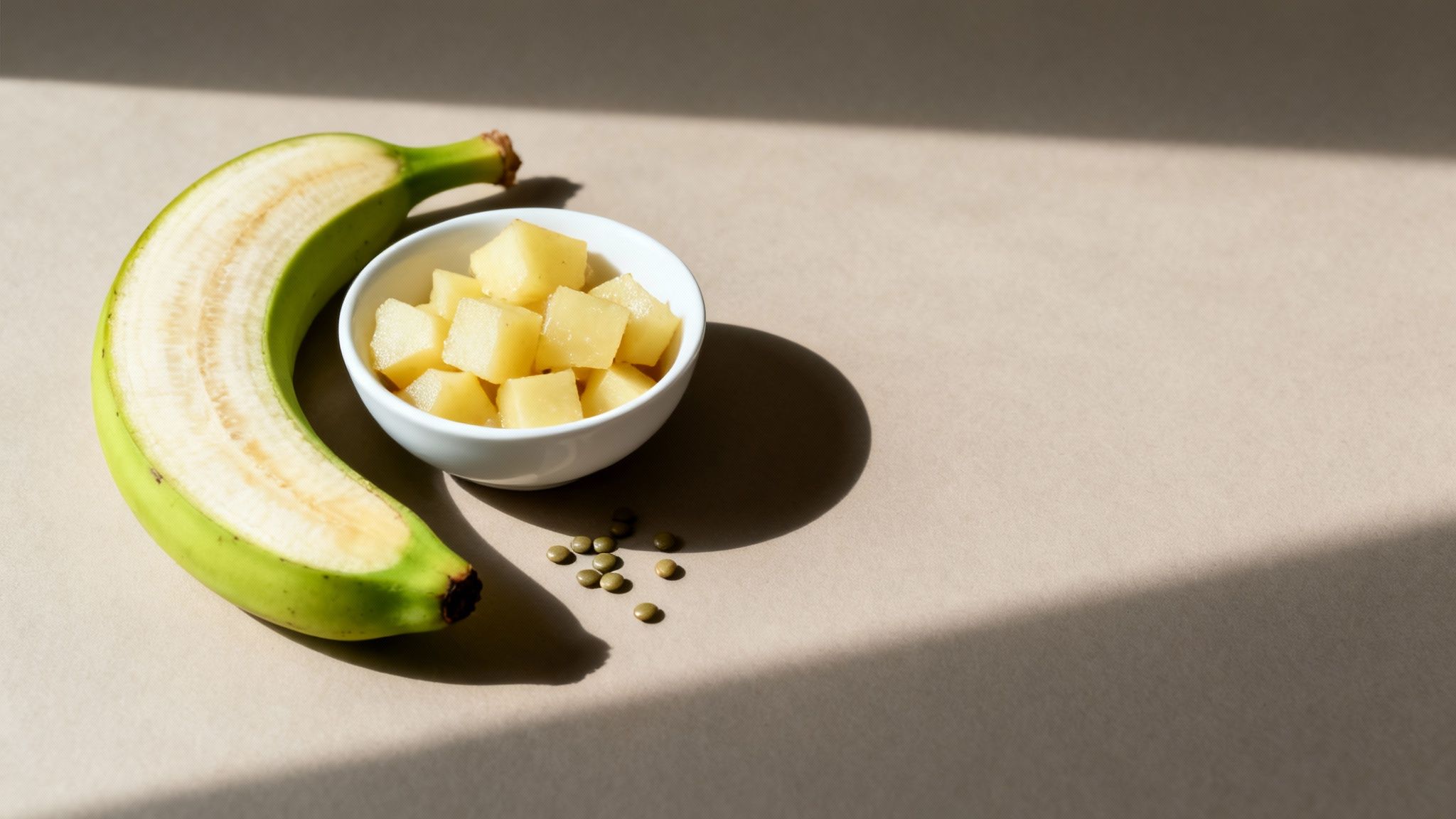
As your gut microbes feast on resistant starch-found in foods like slightly unripe green bananas, lentils, beans, and cooked-then-cooled potatoes-they produce significant amounts of butyrate. This short-chain fatty acid is the preferred fuel source for the cells lining your colon, helping to strengthen your gut barrier and reduce inflammation.
How to Make Resistant Starch Work for You
Introducing resistant starch is simple, but it’s best to start slow to avoid digestive upset like gas or bloating. Your gut needs a little time to adjust to this powerful new fuel source.
Pro Tip: The "cook and cool" method is a game-changer. Cooking potatoes, rice, or pasta and then letting them cool in the refrigerator for at least 12 hours significantly increases their resistant starch content. Better yet, the resistant starch remains even if you gently reheat the food later.
Here’s how to effectively integrate these foods:
- Start Small: Begin with just a quarter-cup of beans, lentils, or a small portion of a cooled potato salad. Gradually increase your intake as your system adapts.
- Embrace Green Bananas: Add a slightly green, less-sweet banana to your smoothie. As bananas ripen, the resistant starch converts to sugar, so catching them early is key.
- Hydrate Well: Just like with other fibers, drinking plenty of water is crucial to help resistant starch move through your system smoothly.
8. Flaxseeds and Chia Seeds
Don't let their tiny size fool you; flaxseeds and chia seeds are nutritional powerhouses for your microbiome. Think of them as the dynamic duo for gut health. These seeds are loaded with soluble fiber, particularly a gelatinous type called mucilage. When you mix them with liquid, they form a gel that acts as an incredible prebiotic, nourishing your beneficial gut bacteria and promoting smooth digestion.
Beyond fiber, both seeds are excellent sources of alpha-linolenic acid (ALA), a plant-based omega-3 fatty acid known for its anti-inflammatory properties. A less inflamed gut is a happier gut, creating a better environment for your microbes to thrive. This makes flax and chia seeds some of the most comprehensive foods that improve gut bacteria. For those looking to diversify their diet while focusing on gut health, exploring powerful soy-free vegan protein sources can introduce additional beneficial foods.
How to Make Flaxseeds and Chia Seeds Work for You
Integrating these seeds is one of the easiest gut-health upgrades you can make. But a little know-how is key to unlocking their full potential.
Pro Tip: Grind your flaxseeds before eating! The tough outer hull of whole flaxseeds can pass through your system undigested, meaning you miss out on the valuable ALA and fiber. Pre-ground flax meal is a convenient option.
Here’s how to add them to your routine effectively:
- Start Small: Begin with just one teaspoon a day and gradually increase to one or two tablespoons as your system adjusts.
- Soak Your Chia: Always let chia seeds soak in liquid (like water, milk, or in your smoothie) for at least 10 minutes. This "blooming" process makes them easier to digest.
- Stay Hydrated: The soluble fiber in these seeds absorbs a lot of water. Make sure you're drinking plenty of fluids-at least eight glasses daily.
- Pair for Power: Combining these prebiotic seeds with a probiotic supplement creates a symbiotic effect. The seeds feed the beneficial bacteria from a supplement like Yuve's Vegan Probiotic Gummies, helping them colonize and flourish in your gut. You can learn more about how these seeds contribute to your overall health by exploring plant-based omega-3 sources.
9. Bone Broth and Gelatin-Rich Foods
If you’ve ever wondered about the soothing reputation of a warm cup of broth, the secret lies in its gut-healing power. Bone broth and gelatin-rich foods are essentially a repair kit for your intestinal lining. They are loaded with collagen, which breaks down into gelatin during a long, slow cooking process. This gelatin provides key amino acids like glycine and proline, which are the literal building blocks for a strong intestinal wall.
These amino acids help strengthen the "tight junctions" between the cells lining your gut. Think of these junctions as the mortar between bricks-when they're strong, they prevent unwanted particles from leaking into your bloodstream. By reinforcing this barrier, you create a stable, calm environment where beneficial bacteria can thrive. This makes bone broth one of the most restorative foods that improve gut bacteria by healing the very home they live in.
How to Make Bone Broth Work for You
Incorporating this ancient remedy into your modern diet is simpler than you might think. It’s a foundational food that can be sipped on its own or used as a base for countless recipes.
Pro Tip: For maximum nutrient extraction, add a splash of apple cider vinegar to your pot before simmering. The acid helps pull collagen, calcium, and other valuable minerals from the bones into the broth.
Here’s how to effectively integrate bone broth and gelatin:
- Source Quality Bones: Opt for bones from grass-fed, pasture-raised animals. Knuckle bones, feet, and joints are particularly rich in collagen.
- Low and Slow is the Way to Go: Simmer your broth for a long time-12-24 hours for chicken and 24-48 hours for beef.
- Make it a Daily Ritual: Aim to drink one to two cups of warm bone broth daily. You can also use it as a base for soups, stews, or sauces.
- Fortify Your Gut Lining: The gut-sealing amino acids in bone broth create the perfect foundation for a healthy microbiome. For an extra boost, pair this with a high-quality supplement like Yuve's Vegan Probiotic Gummies. The probiotics will have a healthier, more secure environment to colonize and flourish.
10. Raw Honey and Oligosaccharides
Sweet treats and gut health might seem like an unlikely pair, but raw honey is here to challenge that notion. Think of it as a double-agent for your microbiome: it provides a sweet taste you love while selectively feeding the good bacteria you need. Raw, unpasteurized honey contains unique carbohydrates called oligosaccharides, which function as powerful prebiotics. Your body doesn't digest them, so they travel straight to your large intestine to nourish beneficial microbes like Bifidobacteria and Lactobacilli.
Unlike the highly processed, clear honey you find in a bear-shaped bottle, raw honey is a living food. It retains natural enzymes and offers additional benefits, including gentle antimicrobial properties that can help keep less desirable gut residents in check. This selective action makes raw honey one of the most interesting foods that improve gut bacteria, as it nurtures allies while discouraging foes.
How to Make Raw Honey Work for You
Incorporating raw honey is a simple and delicious way to support your gut, but it’s all about quality and moderation due to its sugar content. A little goes a long way.
Pro Tip: Heat destroys the delicate enzymes and beneficial compounds in raw honey. To get the full gut-friendly effect, add it to foods and drinks after they have cooled to a warm, not hot, temperature.
Here’s how to effectively integrate raw honey into your routine:
- Choose Wisely: Look for honey that is labeled "raw" and "unfiltered" or "unpasteurized." Manuka honey with a UMF (Unique Manuka Factor) rating of 10+ is an excellent choice for maximum benefits.
- Keep it Moderate: Stick to one or two teaspoons per day to avoid excessive sugar intake.
- Get Creative: Drizzle it over yogurt, blend it into smoothies, or use it as a base for salad dressings and marinades.
Our Founder's Story: A Personal Win for Gut Health
This isn't just theory for us at Yuve. Our founder, Sam, struggled for years with terrible digestive issues. Bloating was his constant companion, and he felt like he had to avoid so many foods he loved. He remembers thinking, "There has to be a better way than just cutting things out of my diet." This personal struggle was the spark that created Yuve. He was his own first customer, and discovering the power of combining targeted nutrition with high-quality, plant-based supplements was a total game-changer. His small wins-like enjoying a meal without that familiar afternoon bloat-fueled his passion to help others find the same relief.
Your Gut Health Action Plan: Making It All Work For You
We’ve just journeyed through a powerhouse list of foods that improve gut bacteria. It can feel like a lot to take in, and the idea of a complete diet overhaul might seem daunting. But let’s take a deep breath together. This isn't about perfection; it's about progress.
The beautiful thing about gut health is that you don't need to do everything at once. The real magic lies in turning these insights into sustainable habits.
Quick Wins: Your First Steps to a Happier Gut
Feeling a little overwhelmed? Don't be. Here's a simple checklist to get you started:
- Pick One This Week: Choose just one food from our list to focus on. Maybe it's adding a spoonful of kimchi to your scrambled eggs or swapping your afternoon snack for a handful of berries.
- Add, Don't Subtract: Instead of focusing on what to cut out, think about what you can add in. This simple mental shift from restriction to abundance can make healthy eating feel joyful.
- Listen to Your Body: We're all unique. As you introduce new foods that improve gut bacteria, pay close attention to how you feel. Your body provides the best feedback-you just have to listen.
The Power of Food and the Precision of Supplements
Building a robust microbiome is like tending a garden. The diverse, fiber-rich, and fermented foods we've discussed are the nutrient-rich soil, seeds, and water. They provide the fundamental building blocks your gut bacteria need to thrive.
But let's be realistic-our modern lives can sometimes get in the way. Stress, busy schedules, and even the occasional pizza night can throw our gut ecosystem off balance. This is where a targeted supplement like Yuve’s Vegan Probiotic + Prebiotic Gummies becomes a core part of your solution. It acts as a skilled gardener, ensuring your inner garden gets exactly what it needs, every single day.
It’s not an either-or situation; it’s a powerful partnership. Food provides the broad-spectrum fuel, while a high-quality supplement delivers specific, beneficial strains and the prebiotic "superfood" they love. By combining these delicious, gut-friendly foods with a smart, proactive supplement strategy, you're not just hoping for better digestion-you’re actively building it. You've got this, and we're here with you every step of the way.
Ready to give your gut the consistent support it deserves? Complement your dietary changes with Yuve's Vegan Probiotic + Prebiotic Gummies, designed to deliver targeted probiotic strains and the fiber they need to flourish. Take the next step in your gut health journey and feel the difference at Yuve. We'd love to hear about your journey in the comments below