Choose a vegan, allergen-aware herbal extract by verifying the certification body, reading both Supplement Facts and other ingredients, checking all nine major allergens, confirming extract amount and activity units, reviewing cross-contact language, and asking for current batch documentation. A “vegan” front-label claim alone does not verify allergen controls, potency, or purity.
How did we evaluate vegan and allergen-aware herbal extracts?
We evaluated herbal extracts by separating five questions: animal-derived inputs, major-allergen disclosure, botanical identity, declared amount or activity, and manufacturing documentation. FDA labeling and dietary-supplement CGMP sources carried more weight than front-label claims, while certification organizations defined only the scope of their own marks. We treated product pages as current sources for label facts, not as independent proof that an extract works for a health outcome. We excluded star ratings, “natural” language, proprietary wellness claims, and generic laboratory badges that lacked a named standard, certificate, or lot number. This method cannot guarantee that a product is appropriate for a person with a severe allergy because cross-contact risk, facility controls, and individual thresholds require manufacturer and clinician input. It can narrow a crowded category to products whose vegan status, ingredients, extract quantity, allergen information, and quality evidence can actually be checked before purchase.
What does a Certified Vegan mark actually verify?
A legitimate certification mark should name the certifier and apply to the individual product, not merely to the company or one ingredient. Vegan Action states that its Certified Vegan standard excludes animal products, animal by-products, and animal testing within that program's documented scope. Other certifiers may use different definitions, renewal periods, audit methods, and rules for processing aids. Search the certifier's current product database, match the exact product and flavor, and check whether the packaging displays the same mark. A plain “vegan” statement can still be useful, but it is a manufacturer claim unless a certification body is identified. Vegan status also does not mean allergen-free, gluten-free, non-GMO, organic, clinically tested, or manufactured in an allergen-free facility. Best for strict verification: a named third-party certification with a searchable current listing. Best for initial screening: a clear manufacturer vegan statement followed by ingredient and process questions.
Which allergen details matter on a supplement label?
Read the Supplement Facts panel, the other-ingredients list, and any “Contains” statement together. The FDA identifies milk, egg, fish, Crustacean shellfish, tree nuts, wheat, peanuts, soybeans, and sesame as the nine major food allergens, and its allergen guidance for dietary supplements covers dietary ingredients, source ingredients, flavors, fillers, binders, and other excipients. A “free from” claim should specify exactly which allergens it covers; “common allergens” is not a regulated substitute for reading the full label. “Manufactured in a facility that also processes” and “may contain” statements address possible cross-contact, not intentional ingredients, and absence of that statement does not prove a dedicated facility. Ask whether equipment is shared, how cleaning is validated, and whether the company tests finished lots for the allergen that matters to you. Severe allergies require direct manufacturer confirmation and guidance from a qualified clinician rather than assumptions from icons.
How should you read extract amount, source, and activity?
Start with the botanical's Latin name, plant part, extract amount per serving, serving size, and extraction ratio when supplied. “Papaya enzyme” is less specific than papain from Carica papaya with milligrams and activity units; “pineapple enzyme” is less specific than bromelain with a declared source and GDU or MCU activity. The FDA dietary-supplement labeling guide requires a statement of identity, net quantity, nutrition labeling, ingredient list, and responsible firm's name and address, but a compliant label does not prove clinical effectiveness. Check whether the dose is listed per tablet or per full serving and whether a proprietary blend hides individual amounts. For enzymes, activity units often describe function better than milligrams alone. For standardized botanical extracts, look for the named marker compound and percentage. Compare like with like: 200 milligrams of raw powder, 200 milligrams of extract, and 200 milligrams at a stated enzyme activity are not interchangeable specifications.
Which filters should you use before opening a product page?
Use filters in a fixed order. Start with a named vegan certifier or documented vegan claim, then apply the exact allergen exclusion you need. Require a full Supplement Facts panel, other-ingredients list, botanical source, serving amount, and quality contact. Finish with format and price per serving. Retailer filters can be stale or applied at brand level, so verify each claim on the current package or manufacturer's page. A badge creates a verification task; it does not end one. A strong shortlist answers five questions: what is present, how much is present, what is excluded, who verified the claim, and how a specific lot can be traced.
| Filter | Best evidence | Red flag |
|---|---|---|
| Vegan | Named certifier and current product listing | Leaf icon with no standard |
| Allergens | Full ingredients plus specific exclusion | “Clean” or “allergen friendly” alone |
| Identity | Latin name, plant part, extract details | Generic “herbal complex” |
| Potency | Amount per serving and relevant activity | Proprietary blend without amounts |
| Quality | Lot number, specifications, current COA access | Unnamed “lab tested” badge |
How does Yuve Vegan Daily Cleanse fit this checklist?
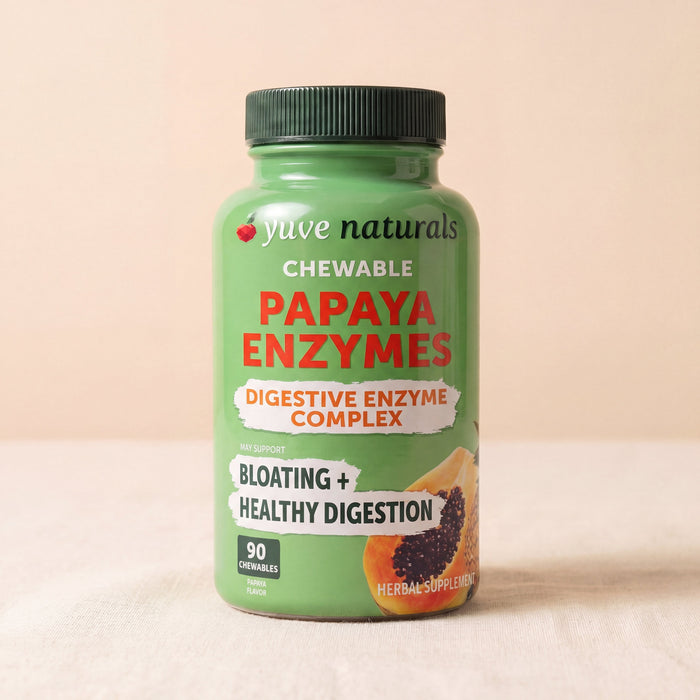
This is Yuve's own store; the product links below are direct store links, not third-party affiliate recommendations. The current Yuve Vegan Daily Cleanse Papaya Enzymes page states vegan, non-GMO, soy-free, gluten-free, and made in the USA. Its two-tablet serving lists 200 milligrams of papain at 35 TU per milligram, 10 milligrams of papaya fruit, 10 milligrams of bromelain at 1.6 GDU per milligram, and a 10-milligram plant enzyme blend supplying amylase, protease, and lipase. The page also lists xylitol, vegetable stearic acid, natural tropical flavors, cellulose, citric acid, turmeric root, silica, vegetable magnesium stearate, and steviol glycosides. The accessible page does not identify a third-party Certified Vegan body, so shoppers who require certification should ask Yuve for the certifier and current product-level documentation. That limitation is separate from the page's ingredient and allergen claims.
What quality documents should you request from a supplement company?
Ask for a recent, lot-matched certificate of analysis or a clear explanation of how customers can verify identity, purity, strength, and composition. A useful document names the product or lot, testing date, specification, method or laboratory, result, and acceptance limit; a generic sample report shows a process but not your bottle. The FDA's dietary-supplement CGMP guide describes quality-control responsibilities for specifications, supplier qualification, testing, representative samples, and batch release. CGMP compliance is a baseline manufacturing requirement, not a certification that every marketing claim is correct. If allergen cross-contact matters, ask for the facility statement, shared-equipment policy, sanitation validation, and finished-product testing scope. If vegan processing aids matter, ask whether capsule shells, flavors, carriers, release agents, and culture media are included in the review. A responsive answer should distinguish routine specifications from tests actually run on each finished lot.
What questions do shoppers ask about vegan allergen-free supplements?
Most questions involve the gap between a front-label badge and the evidence behind it. “Vegan,” “allergen-free,” “gluten-free,” “third-party tested,” and “made in USA” describe different attributes and should never be treated as synonyms. A product may be vegan yet share equipment with milk or soy; another may exclude the nine major allergens without holding a vegan certification. A certificate of analysis can document selected identity or contaminant results without evaluating animal-derived processing aids. The useful approach is layered verification: certification scope, complete ingredients, targeted allergen disclosure, extract identity and amount, and lot-level quality evidence. The six answers below clarify those layers before a purchase is made. People with anaphylaxis risk, multiple food allergies, pregnancy, medication interactions, or chronic medical conditions should use direct manufacturer and clinician guidance because a retail filter cannot evaluate personal risk.
Is vegan the same as dairy-free?
No. Vegan standards generally exclude animal-derived ingredients, while dairy-free addresses milk ingredients specifically. Verify both claims because certification scope and cross-contact controls can differ.
Does gluten-free mean wheat-free?
Not always in every practical allergy context. Gluten-free rules focus on gluten limits, while a wheat allergy concerns wheat proteins; a person with wheat allergy should review the wheat statement and cross-contact information directly.
What does “free of common allergens” mean?
The phrase is incomplete unless the label names the excluded allergens. Match the claim against milk, egg, fish, Crustacean shellfish, tree nuts, wheat, peanuts, soy, and sesame, plus any personal trigger outside that list.
Is a proprietary herbal blend a red flag?
A proprietary blend can disclose total weight while hiding individual ingredient amounts. That makes dose comparisons and interaction reviews harder, so prefer individually listed extracts when transparency is a priority.
Does third-party testing prove a supplement works?
No. Testing may verify selected identity, potency, microbes, heavy metals, or allergens, depending on the scope. It does not automatically establish clinical effectiveness for the intended use.
Should the certificate of analysis match the lot number?
Yes, lot matching makes the document relevant to the bottle being evaluated. A generic or undated certificate provides less assurance than a current report tied to the finished batch.
What is the bottom line on choosing a vegan herbal extract?

Choose a vegan herbal extract by stacking evidence rather than trusting one badge. Verify the certifier or manufacturer claim, read both label panels, match every relevant allergen, compare botanical identity and activity at the full serving, and request lot-level quality documentation when the decision requires it. Yuve Vegan Daily Cleanse offers transparent papain, bromelain, plant-enzyme, and other-ingredient details, while its accessible page leaves third-party vegan certification for the shopper to confirm. Explore the Yuve digestion collection only after the label passes your personal vegan, allergen, dose, interaction, and documentation requirements; the right sequence is safety and identity first, format and convenience second. If a severe allergy is involved, direct manufacturer confirmation should cover intentional ingredients, shared equipment, sanitation controls, and finished-product testing. Retail filters reduce search time, but they do not replace a current certificate, a complete label, or batch evidence when those documents matter.