Choose a clean-label digestive support supplement by matching the ingredient type to your goal, then checking active dose, strain or botanical identity, sweeteners, allergens, vegan status, and third-party quality cues. Probiotics support microbial balance, prebiotics feed beneficial bacteria, enzymes support food breakdown, and DGL supports everyday stomach comfort.
How did we evaluate clean-label digestive support supplements?
We evaluated digestive support supplements by matching each ingredient category to a clear structure/function role: probiotics for microbial balance, prebiotics for beneficial bacteria, enzymes for meal breakdown, and DGL licorice for everyday stomach comfort. We prioritized human evidence, named ingredients, serving-level transparency, allergen statements, vegan formats, and manufacturing cues over broad “natural” claims. We treated strong evidence, such as systematic reviews of randomized controlled trials, differently from directional evidence from single studies or ingredient-level research. We checked whether product pages stated active amounts, serving sizes, storage needs, and “other ingredients” clearly enough for a shopper to compare options without guessing. We also checked claim restraint. We kept the analysis shopper-facing and Shopify-ready for publication. We excluded medical-condition claims, detox promises, dramatic before-and-after language, urgency tactics, and formulas that hide active amounts inside proprietary blends.
What does clean-label digestive support mean on a supplement label?
Clean-label digestive support means the Supplement Facts panel gives a buyer enough detail to connect an ingredient, a dose, and a reasonable wellness goal. A probiotic label should identify the organism by genus, species, and ideally strain; the NIH Office of Dietary Supplements explains that probiotic effects are often strain-specific, with examples such as Lacticaseibacillus rhamnosus GG and Bifidobacterium longum 35624 in its probiotic fact sheet. A prebiotic label should name the fiber source, such as inulin or fructo-oligosaccharides from Cichorium intybus root. A clean gummy should also disclose pectin or gelatin, added sugars or sugar alcohols, allergens, serving size, and storage needs. A clean-label digestive supplement should avoid vague proprietary blends when the active amount drives the practical decision. “Clean” does not prove efficacy; the active ingredient, identity, dose, and claim language carry the useful information.
How do probiotics, prebiotics, enzymes, and DGL work differently?
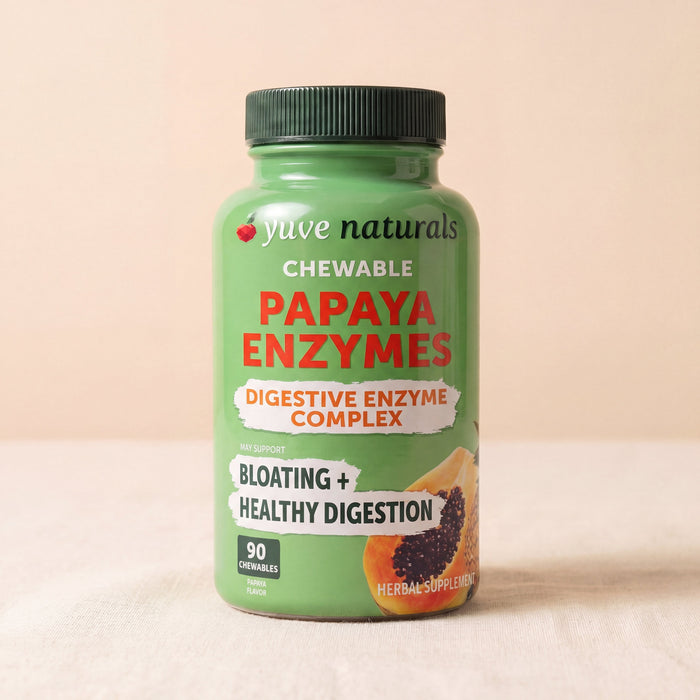
Probiotics, prebiotics, enzymes, and DGL support digestion through different mechanisms, so the best choice depends on the role you want in your routine. Probiotics provide live microorganisms; ISAPP defines probiotics as live microorganisms that, when administered in adequate amounts, confer a health benefit in its scientific overview. Prebiotics provide fermentable substrate; chicory-derived inulin-type fructans increased Bifidobacterium abundance across 50 randomized controlled trials and 2,525 participants in a 2023 systematic review with meta-analyses, though outcomes varied by population and dose. Digestive enzymes help break down proteins, fats, carbohydrates, or lactose in foods. DGL licorice removes glycyrrhizin and is commonly used for everyday stomach-comfort routines. Timing also differs: enzymes usually pair with meals, while probiotics and prebiotics usually reward consistent daily use. These categories are not interchangeable; they solve different adherence, timing, and ingredient-fit questions.
What label details should you check before choosing one?
A good label answers six questions before the product reaches your cart. First, the active ingredient should be named precisely: Bacillus coagulans, chicory-root inulin, papaya enzyme blend, lactase enzyme, bromelain, or deglycyrrhizinated licorice. Second, the dose should appear per serving, not only per bottle. Third, the delivery format should match the ingredient; spore-forming Bacillus coagulans can tolerate gummy processing better than many fragile Lactobacillaceae strains. Fourth, the “other ingredients” line should disclose sweeteners, colors, pectin, preservatives, and excipients; FDA notes that dietary supplements can include “other ingredients” such as fillers, binders, sweeteners, and flavorings in its dietary supplement Q&A. Fifth, allergen and vegan statements should match your standards. Sixth, the claim should stay in structure/function territory, not treatment language. Seventh, the directions should make daily use realistic, because adherence decides whether a clean formula becomes a usable routine.
How do clean-label digestive support options compare?
Some links below are affiliate links. This does not influence our evaluation criteria or recommendations. Compare digestive support by use case, not hype. A probiotic gummy fits microbial-balance routines. A prebiotic fiber gummy fits beneficial-bacteria support. Enzymes fit meal-specific food breakdown. DGL fits everyday stomach-comfort routines. The best option should match ingredient role, serving size, format, and tolerance profile before flavor or trend claims matter at checkout.
| Best for | Yuve option | Key active | Clean-label cue |
|---|---|---|---|
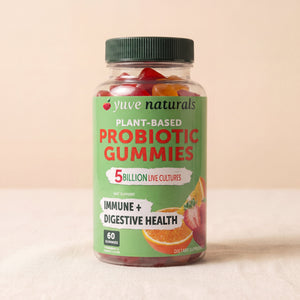
| Microbial balance | Vegan Probiotic Gummies | Bacillus coagulans, 5 billion CFU per 2 gummies | Vegan pectin gummy, non-GMO, gluten-free, soy-free |
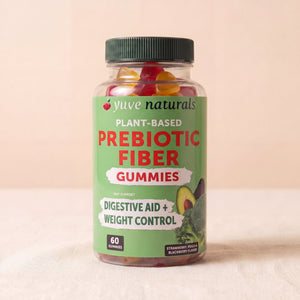
| Feeding beneficial bacteria | Vegan Prebiotic Fiber Gummies | Chicory-root inulin/FOS, 1.5 g per gummy | Vegan pectin gummy with disclosed sugar amount |
| Category browsing | Digestive health collection | Probiotics, prebiotics, enzymes, DGL, bromelain, lactase | Choose by goal before choosing by format |
Which option is best for your use case?
Best for microbial balance: Yuve Vegan Probiotic Gummies use Bacillus coagulans at 5 billion CFU per two-gummy serving, a spore-forming species suited to shelf-stable gummy delivery. Best for feeding beneficial bacteria: Yuve Vegan Prebiotic Fiber Gummies use 1.5 g inulin/FOS from chicory root per gummy, a soluble prebiotic fiber category with stronger aggregate human evidence than many trendy botanicals. Best for routine simplicity: the Yuve digestion collection lets buyers compare probiotics, prebiotics, enzymes, DGL licorice, bromelain, and lactase by role. Best for sensitive routines: start with one category at a time, keep the serving consistent for two to four weeks, and track comfort, regularity, and tolerance. Best for label purists: choose formulas that state active amount, ingredient source, vegan status, allergens, serving instructions, and storage instructions clearly. Best for busy routines: choose the format you will repeat without turning wellness into homework.
Should a clean-label digestive supplement be probiotic or prebiotic?
A probiotic makes more sense when your goal is adding live microorganisms to a daily routine, while a prebiotic makes more sense when your goal is feeding beneficial bacteria already present in the gut. The categories work differently, and NIH distinguishes probiotics from prebiotics because prebiotics, such as inulin and fructo-oligosaccharides, serve as metabolic fuel for gastrointestinal microorganisms. A combined routine can be reasonable, but starting both products on the same day can make tolerance harder to interpret; choose one first if you are sensitive to fiber, sugar alcohols, new supplement formats, or changes in daily regularity. Add the second only after your routine feels predictable, and take the serving size on each label seriously rather than doubling up for speed or assuming more support equals better support when building a daily clean-label routine.
How much evidence should a clean-label claim have behind it?
A clean-label claim should have enough evidence to support the ingredient’s role, but it should not pretend every outcome is guaranteed. Chicory-derived inulin has stronger support than many digestive botanicals because a 2023 meta-analysis reported bifidogenic effects across 50 randomized controlled trials, while a smaller 2017 randomized crossover trial in healthy adults reported increased weekly stool frequency with 12 g/day chicory inulin versus placebo in the International Journal of Food Sciences and Nutrition. Those findings support the prebiotic category, not an instant-result promise, and they should be interpreted alongside serving size because commercial gummies often use smaller daily amounts than clinical protocols. Probiotic evidence should be read even more specifically because strain identity can change outcomes; ingredient-level evidence should be paired with dose, format, serving instructions, and tolerance checks before a product earns a spot in your routine.
Are gummies a serious format for digestive support?
Gummies can be a serious format when the active ingredient fits gummy manufacturing and the Supplement Facts panel gives a real serving-level dose; Bacillus coagulans works better in a gummy than many fragile probiotic strains because its spore-forming structure supports shelf stability through heat, moisture, and stomach-acid exposure. Chicory-root inulin also fits a gummy because the active is a soluble fiber rather than a live organism. The tradeoff is excipients: gummies need pectin or gelatin, acids, colors, flavors, and sweeteners to hold texture and taste, so a clean-label gummy should disclose its base, sugar amount, sugar alcohols, vegan status, and allergen profile instead of hiding behind “natural flavor” language alone. Capsules and powders can still be excellent, but format quality depends on the ingredient, dose, storage needs, serving accuracy, and label transparency over time.
What are the main downsides to watch for?
The main downsides are tolerance, expectation, and category mismatch. Prebiotic fibers such as inulin can cause temporary gas or fullness when a person increases fermentable fiber too quickly, especially if baseline fiber intake is low, and probiotics can feel different by species, strain, and dose, so a general “5 billion CFU” number is less useful without ingredient identity and storage context. Enzyme supplements work most logically around meals, while probiotic and prebiotic products work more logically as daily consistency habits. Clean-label shoppers should also watch sweeteners, sugar alcohols, color sources, gelatin, major allergens, serving creep, and vague proprietary blends; stop using any supplement that consistently feels wrong for your body in a daily routine, and ask a qualified clinician when pregnancy, immune concerns, medication use, or chronic digestive symptoms are part of the picture.
How long should you try one before judging it?
A fair trial usually means one consistent product, one consistent serving, and at least two to four weeks of routine use. Prebiotic studies often evaluate outcomes over several weeks, and the 2017 chicory-inulin crossover trial used four-week intake periods, so a one-day judgment is not very informative; probiotic routines also depend on consistency because live microorganisms interact with a person’s baseline microbiota, diet, and digestive pattern. Keep the test clean: do not add a probiotic, prebiotic, enzyme, magnesium product, and major diet change in the same week if you want useful feedback. Track stool pattern, gas, fullness, comfort after meals, timing, serving adherence, and missed days over a normal month of use, because the best supplement is the one that supports your routine without making the routine harder or confusing the feedback loop.
When should you check with a clinician first?
Check with a clinician before using a digestive support supplement if you are pregnant, breastfeeding, immunocompromised, managing a medical condition, taking prescription medication, dealing with persistent digestive symptoms, or choosing for a child or older adult. FDA advises consumers to talk with a doctor, pharmacist, or other healthcare professional before purchasing or using dietary supplements, especially when health status or medication interactions matter. A clean label does not replace individualized guidance; bring the Supplement Facts panel, serving instructions, ingredient list, current medication list, and your reason for considering the product to the appointment, because those details help a clinician evaluate fit. This step matters most for probiotics, botanicals, enzyme products, and multi-ingredient blends, where strain identity, dose, contraindications, medication context, and restricted diets can change the recommendation before the first serving enters your routine.
What is the simplest way to choose today?

Use a three-step filter. First, name the job: microbial balance, beneficial-bacteria support, meal breakdown, lactose support, protein digestion, or everyday stomach comfort. Second, match the job to the ingredient category: probiotic, prebiotic fiber, digestive enzyme, lactase, bromelain, or DGL licorice. Third, read the Supplement Facts panel for active amount, ingredient identity, serving size, allergen status, vegan format, sweetener profile, directions, and storage needs. If you want a clean-label place to start, compare Yuve’s probiotic gummies, prebiotic fiber gummies, and broader digestive health collection by use case before choosing. Pick one product, use the labeled serving, and evaluate consistency before adding another digestive supplement, because a simple, repeatable routine beats a crowded shelf of mismatched products, makes your next decision easier, and lowers the odds of abandoning the habit after one confusing week alone.