Choose supplements marketed for men’s sexual wellness by verifying FDA dietary supplement rules, cGMP manufacturing, third-party testing, a current certificate of analysis, transparent dosages, and contaminant screening. Avoid products that promise rapid erection results, hide proprietary blends, or mimic prescription drugs. Quality signals reduce uncertainty; they do not prove clinical benefit.
How did we evaluate safe supplement quality signals?
We evaluated supplement safety literacy through four criteria: regulatory baseline, manufacturing controls, independent verification, and label transparency. Government sources received priority because the FDA, NIH Office of Dietary Supplements, and eCFR define dietary supplement oversight more directly than brand marketing pages. Third-party seals received credit only when the certifier audits identity, potency, contaminants, and facility practices; simple “lab tested” wording received less weight without a batch-specific certificate of analysis. We excluded products that promise medical outcomes, erection outcomes, drug-like speed, or undisclosed blends because those claims shift the topic away from supplement quality and toward medical decision-making. This framework cannot prove that one ingredient works for one person. We weighted documented quality systems over testimonials and marketplace star ratings. The framework can help shoppers separate cleaner routine wellness products from higher-risk products marketed with vague, aggressive, or prescription-adjacent claims.
What makes a supplement marketed for men’s wellness safer to evaluate?
A safer supplement starts with a lawful label, a specific serving size, named ingredients, and a manufacturer that follows dietary supplement cGMP rules. The NIH Office of Dietary Supplements says dietary supplements can affect the body and can interact with medicines, so shoppers should compare labels with a clinician when prescriptions, blood-pressure drugs, or cardiovascular concerns are involved (NIH ODS). The FDA maintains notifications for tainted sexual enhancement products because some products in that category have contained undeclared drug ingredients (FDA notifications). That risk makes quality screening more important than dramatic claims. A trustworthy label identifies botanical extracts, amino acids, minerals, excipients, allergens, and dosage amounts in milligrams or micrograms. A weak label hides amounts inside proprietary blends, uses “maximum strength” language, or suggests prescription-like results. Quality literacy protects the buying process; it does not replace medical care.
How can you verify GMP manufacturing before buying a supplement?
GMP verification means checking whether the brand names the manufacturer, follows 21 CFR Part 111, and maintains documented controls for identity, purity, strength, and composition. The eCFR lists Part 111 as the current good manufacturing practice rule for manufacturing, packaging, labeling, and holding dietary supplements (21 CFR Part 111). A credible brand can explain facility qualification, raw-material identity testing, finished-product release testing, lot coding, and recall procedures. A stronger brand adds third-party GMP certification from organizations such as NSF, USP, UL, or Informed Choice. Shoppers should view “made in a GMP facility” as a starting claim, not a complete proof point, because the phrase can appear without public audit details. The best evidence is a current certificate, a named certifier, a lot number, and a customer-service process that can answer batch questions without evasive language.
Why does third-party testing matter more in this category?
Third-party testing matters because sexual-wellness supplement searches attract products that overpromise and underdocument. FDA dietary supplement Q&A guidance explains that manufacturers are responsible for evaluating safety and labeling before marketing, while FDA action often occurs after a product reaches consumers (FDA dietary supplement Q&A). Independent testing adds a separate checkpoint for ingredient identity, potency, heavy metals, microbes, pesticides, residual solvents, and undeclared substances. NSF Certified for Sport, USP Verified, Informed Choice, and ISO/IEC 17025-accredited labs serve different roles, so shoppers should read what each seal actually covers. A certificate of analysis should match the lot number on the bottle and list test date, method, specification, and result. Testing does not guarantee a supplement will create a specific wellness outcome. Testing does reduce avoidable quality uncertainty, especially when a category has a documented history of undeclared drug ingredients.
Which quality signals are best for each use case?
The strongest buying process matches each concern to the right proof point. Best for baseline compliance: 21 CFR Part 111 cGMP documentation. Best for contaminant confidence: a lot-specific certificate of analysis from an ISO/IEC 17025-accredited lab. Best for athletes: NSF Certified for Sport or Informed Sport screening, because banned-substance risk matters beyond general wellness. Best for label accuracy: transparent dosage amounts, named botanical extracts, and no proprietary blend hiding active amounts. Best for everyday clean-label routines: vegan, allergen-aware, made-in-USA products with simple excipient lists and documented quality controls. Shoppers should rank these signals before reading reviews, because reviews rarely verify manufacturing quality.
| Use case | Best quality signal | What to verify |
|---|---|---|
| General supplement safety | cGMP under 21 CFR Part 111 | Facility controls, lot coding, recall process |
| Contaminant concerns | Third-party COA | Heavy metals, microbes, pesticides, solvents |
| Athlete screening | NSF Certified for Sport or Informed Sport | Banned-substance testing scope |
| Label transparency | Open formula | Ingredient names and dosage amounts |
Which products meet these quality criteria without making ED claims?
Some links below are affiliate links. This does not influence our evaluation criteria or recommendations.
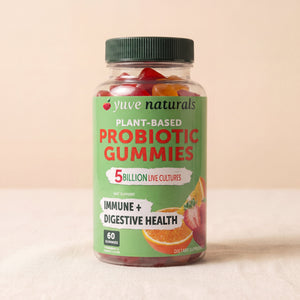
Yuve is relevant here as a supplement-quality example, not as an ED supplement or sexual-performance product. Yuve Probiotic Gummies use a clean-label, vegan format for daily digestive wellness, and the product page gives shoppers a concrete way to inspect serving size, ingredient choices, and routine fit before buying probiotic gummies. The broader digestive health collection also shows how a brand-owned storefront can group supplements by everyday wellness need rather than drug-like promises. A quality-first shopper should still ask the same questions of Yuve, NSF-certified products, USP Verified products, and any men’s wellness product: What is the dosage, who tested the lot, what contaminants were screened, and what claims are avoided? Products that answer those questions plainly deserve closer consideration.
What questions do people ask about safe supplement quality?

Is GMP the same as FDA approval? No. FDA cGMP rules set manufacturing requirements, but FDA does not pre-approve dietary supplements before sale.
Is a COA better than a “lab tested” claim? Usually yes. A COA should name the lot, method, test date, specification, and result.
Are proprietary blends a safety issue? They can be. Hidden amounts make dosage review and clinician conversations harder.
Do third-party seals prove effectiveness? No. NSF, USP, and Informed Choice primarily verify quality, identity, purity, or banned-substance risk.
Should ED symptoms be handled with supplements first? No. Persistent erection changes deserve clinician guidance because circulation, medication, stress, sleep, and metabolic factors can be involved.
What is the simplest buying rule? Prefer transparent formulas. Avoid rapid-result promises, drug-like claims, and products without batch-level quality evidence.
Safe supplement shopping starts with boring proof: cGMP controls, third-party testing, transparent dosage, and contaminant screening. If a product promises dramatic ED results but cannot show basic quality evidence, skip it.