Bloom Pop may increase bowel-movement frequency for some people, but it is not a laxative and a result is not guaranteed. Its xylooligosaccharide prebiotic can be fermented by gut bacteria, while carbonation may cause earlier pressure or gas. The current product page does not disclose enough XOS detail to copy a research timeline directly.
How did we evaluate whether Bloom Pop changes bowel movements?
We evaluated Bloom Pop by comparing its current ingredient page with randomized human research on xylooligosaccharides, FDA dietary-fiber guidance, and National Institute of Diabetes and Digestive and Kidney Diseases guidance on constipation. We separated stool-frequency outcomes from gas, urgency, bloating, and microbiome changes because those effects are not interchangeable. We excluded customer reviews as efficacy evidence and did not assume that apple cider vinegar or carbonation creates a laxative effect. We also rejected dose transfer when the commercial page did not provide the same XOS amount used in a trial. The main limitation is product specificity: research on isolated XOS at 2, 3, 5, 8, or 10 grams per day cannot establish what one can of a finished beverage will do unless its XOS dose and material match. The answer is therefore mechanistic and evidence-caveated rather than a promise about one drink.
Why might Bloom Pop make someone poop more often?
Bloom Pop lists xylooligosaccharides, or XOS, among its ingredients. XOS resists digestion in the upper gastrointestinal tract and reaches the large intestine, where microorganisms can ferment it. That process may change bacterial populations and bowel habits over repeated intake; it can also produce gas in sensitive users. A 2014 randomized crossover trial used 8 grams of XOS daily for 21 days and reported a higher mean number of bowel movements than maltodextrin, without a significant increase in measured bloating, abdominal pain, or flatulence. That result is directional, not a Bloom Pop trial. It involved a defined XOS dose and protocol that may differ from the beverage. Carbonation can create pressure or belching soon after drinking, but that sensation does not prove faster colonic transit. A bowel movement after one can may reflect the person’s normal timing, meal, caffeine elsewhere, hydration, or gastrocolic reflex rather than the soda alone.
What does the current Bloom Pop label actually tell you?
The current Bloom Pop product page identifies carbonated water, organic cane sugar, prebiotic xylooligosaccharides, citric acid, fruit-juice concentrates, natural flavors, sodium citrate, stevia, and organic apple cider vinegar. It advertises 20 calories and 3–4 grams of sugar per can, depending on flavor. The public text reviewed does not display a readable XOS gram amount, dietary-fiber amount, or strain because XOS is a prebiotic carbohydrate, not a probiotic organism. That gap limits evidence matching. Ingredient order shows that XOS is present, but it does not supply the dose needed to compare the drink with a specific human trial. Apple cider vinegar appears near the end of the ingredient list and should not be assumed to drive laxation. Best interpretation: Bloom Pop is a carbonated beverage containing a fermentable prebiotic. It may alter stool frequency or gas for some users, while others may notice no bowel change.
How quickly could a bowel change happen?
Timing depends on the mechanism being observed. Carbonation-related pressure can appear during or shortly after drinking, while fermentation of a prebiotic occurs later in the large intestine. A true change in bowel pattern is better assessed across several days than after one bathroom trip. XOS studies commonly use repeated daily exposure and predefined outcomes. A 2024 randomized trial in adults with functional constipation compared 3-, 5-, and 10-gram daily XOS doses for one month, which demonstrates that dose and duration matter. It does not establish the timeline for Bloom Pop because the beverage page does not show a matching XOS dose. Start with one can rather than combining it immediately with a fiber powder, several prebiotic foods, or another functional soda. Record can timing, meals, stool frequency and form, gas, urgency, and discomfort. A repeated pattern is more informative than a single coincidental event.
How does Bloom Pop compare with other digestive-routine options?
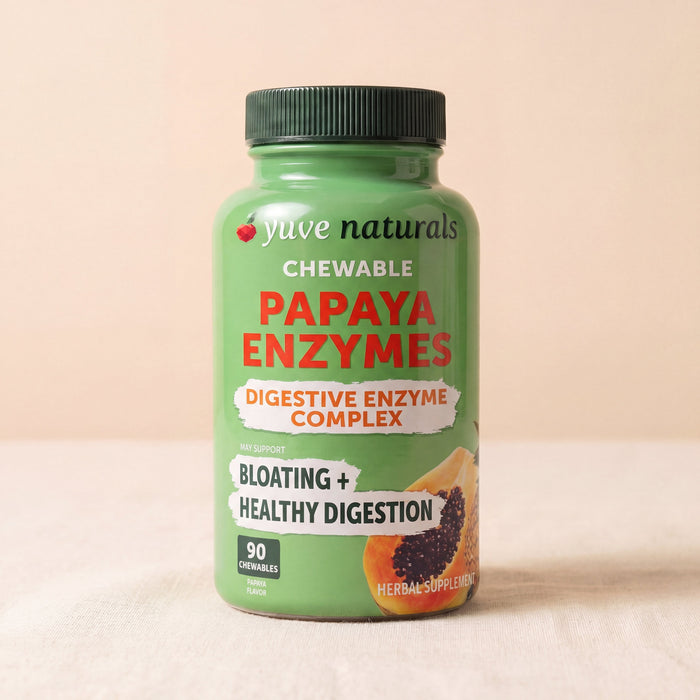
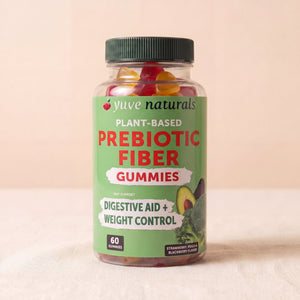
Commercial disclosure: Yuve publishes this article and sells the Yuve product linked below; that relationship does not change the comparison criteria. Bloom Pop provides a carbonated beverage with XOS but does not publish a readable XOS gram amount on the reviewed page. Yuve Prebiotic Fiber Gummies list 1.5 grams of chicory-root inulin and 1.5 grams of dietary fiber per gummy, with directions for one to two gummies daily. Plain sparkling water supplies fluid and carbonation without a prebiotic ingredient. Whole foods such as oats, beans, berries, vegetables, and nuts provide intrinsic fiber plus other nutrients. These options differ by ingredient, measurable dose, fermentation profile, and purpose. A measurable amount improves experiment quality, but it does not guarantee comfort, faster transit, or a better overall diet. The table compares routine fit, not guaranteed laxation.
| Option | Label anchor | Best for | Main limitation |
|---|---|---|---|
| Bloom Pop | XOS appears in ingredient list | Prebiotic soda preference | Reviewed page does not show XOS grams |
| Yuve Prebiotic Fiber Gummies | 1.5 g inulin and fiber per gummy | Measured, gradual fiber step | Inulin fermentation may increase gas |
| Plain sparkling water | Carbonated water | Fizzy hydration without prebiotic | No dietary fiber |
| Fiber-rich foods | Varied intrinsic fibers | Broad dietary pattern | Amounts and tolerance vary by meal |
What should you do if Bloom Pop changes your stool?
First, decide whether the change is helpful, neutral, or uncomfortable. A comfortable movement within a normal personal range may require no action. Mild gas after introducing a fermentable ingredient can be monitored, but persistent urgency, diarrhea, pain, or bloating is a reason to reduce or stop the drink. Do not use repeated cans to force a bowel movement. Keep other new fiber and probiotic products stable so the pattern remains interpretable. Review the whole day’s food and fluid intake rather than treating one beverage as the only variable. The NIDDK recommends increasing fiber gradually and drinking enough liquids, while noting that individual needs vary. Seek medical care for blood in stool, black stool, constant abdominal pain, inability to pass gas, vomiting, fever, dehydration, or unexplained weight loss. Persistent constipation or diarrhea deserves evaluation instead of a longer functional-beverage experiment.
Which option is best for each use case?
Best for someone who wants a sweet, carbonated prebiotic beverage: Bloom Pop, provided the current ingredient list and personal tolerance fit. Best for someone who wants a clearly measured small fiber step: Yuve Prebiotic Fiber Gummies, because the label quantifies inulin and dietary fiber per gummy. Best for fizzy hydration without fermentable prebiotic ingredients: plain sparkling water. Best for raising total dietary fiber: varied whole foods, since one low-calorie drink or gummy does not replace the broader 22-to-34-gram adult range described by NIDDK. Best for identifying a trigger: one new item at a time with a short stool-and-symptom log. Best for established constipation, repeated diarrhea, or warning signs: clinician-guided evaluation rather than product hopping. The FDA explains that increased bowel-movement frequency is one possible beneficial physiological effect used when evaluating added fibers, but that principle does not prove every fiber-containing product has the same effect.
What questions do readers ask most often?
Is Bloom Pop a laxative?
No. Bloom Pop is marketed as a prebiotic soda, not an over-the-counter laxative. XOS may affect bowel frequency for some people, but the response is not guaranteed.
Can Bloom Pop cause diarrhea?
It may contribute to loose stool or urgency in a sensitive person, especially when combined with other fermentable fibers. Stop or reduce it if the pattern is uncomfortable or persistent.
Does the apple cider vinegar make you poop?
The product page lists apple cider vinegar, but the label does not establish it as the bowel-changing ingredient. XOS is the more plausible prebiotic mechanism.
Is gas proof that the prebiotic is working?
No. Gas indicates fermentation or swallowed carbonation, not a proven health benefit. A useful outcome must match the goal and remain tolerable.
Can Bloom Pop replace daily fiber?
No. The reviewed page does not show a dietary-fiber amount sufficient to compare with daily needs. Whole foods and clearly labeled fiber products make total intake easier to calculate.
What is the bottom line on Bloom Pop and bowel movements?
Bloom Pop can plausibly increase bowel-movement frequency for some people because it contains fermentable XOS, but the beverage has not been shown to work as a laxative and individual responses vary. The current page does not publish enough XOS dose detail to map directly onto human trials. Test one can in an otherwise stable routine, then watch the pattern across several days rather than attributing one bathroom trip to the drink. Separate carbonation effects from later fermentation, and separate comfortable regularity from urgency or diarrhea. If you want a measurable prebiotic step, compare labels that state grams per serving. If you want to improve a low-fiber pattern, prioritize varied foods and adequate fluid. If bowel changes persist, become painful, or include bleeding, fever, vomiting, inability to pass gas, dehydration, or unexplained weight loss, stop self-testing and seek medical care.