Compare supplement companies at the exact-product level, not by brand reputation alone. Normalize every formula to one daily serving, verify active forms and amounts, inspect proprietary blends and other ingredients, then rank the evidence behind quality claims. A current lot-specific certificate of analysis or searchable product certification is stronger than a generic “tested” or GMP badge.
How did we evaluate label transparency and dosing accuracy?
We evaluated transparency by the information a shopper can verify before purchase: Supplement Facts, serving directions, active forms, quantitative amounts, other ingredients, allergen statements, expiration or lot details, and documentation for testing claims. We evaluated dosing accuracy by the evidence connecting the printed amount with the finished product, not by assuming that regulatory compliance or a large number guarantees potency. FDA labeling rules, USP verification criteria, NSF program descriptions, current product pages, and lot-specific certificates received more weight than retailer copy, review counts, or unlinked badges. We excluded claims that third-party testing proves clinical effectiveness; identity, potency, contaminants, and banned-substance screening answer different questions. The main limitation is timing: formulas, certificates, directories, and web pages can change. Buyers should repeat the check for the exact product, flavor, dosage, country, and lot they plan to use rather than awarding permanent trust to an entire company.
What information must every supplement label provide?
The FDA Supplement Facts guidance requires the panel to identify serving size, dietary ingredients, and quantitative amounts, with special rules for ingredients inside proprietary blends. The label also needs an identity statement, net quantity, other-ingredient list when applicable, and manufacturer, packer, or distributor information. Those elements create a legal baseline, not a quality ranking. A transparent company makes the full panel legible online, matches directions to the stated serving, identifies meaningful ingredient forms, and explains units such as milligrams, micrograms, International Units, CFU, FCC lactase units, or GDU for bromelain. Check whether the amount is per capsule, per gummy, per scoop, or per full daily serving. Then inspect colors, flavors, sweeteners, capsule materials, allergens, and proprietary blends. A front label can highlight one ingredient while the Supplement Facts panel reveals that the advertised dose requires several units per day.
How do you normalize doses across different companies?
Convert every label to the amount consumed in one label-directed day. If Product A lists 500 milligrams per capsule and directs two capsules daily, compare 1,000 milligrams with Product B's total daily serving, not one capsule against one scoop. For vitamins and minerals, compare the chemical form, amount, and Percent Daily Value separately; 500 micrograms and 500 milligrams differ by a factor of 1,000. For botanical extracts, record the plant part, extract ratio, and standardization when stated. For enzymes, activity units can be more informative than ingredient mass. For probiotics, record genus, species, strain, CFU, serving, storage, and whether viability is stated at manufacture or through expiration. Treat proprietary blends as incomplete for ingredient-level dose comparison when individual amounts are hidden. Finally, calculate cost per daily serving rather than price per bottle. This normalization prevents package size, capsule count, and oversized front-label numbers from creating a false dose advantage.
Which evidence best supports label accuracy?
Evidence strength depends on scope. A searchable certification for the exact finished product is stronger than a logo without a directory record. The USP Verified program evaluates whether a submitted product contains listed ingredients at declared potency, stays below specified contaminant limits, follows current good manufacturing practices, and releases ingredients appropriately. NSF Certified for Sport adds product-content checks and screening relevant to prohibited substances for athletes. A lot-specific certificate of analysis can be more current because it names the batch, test date, analytes, methods or specifications, laboratory, and pass/fail results. A facility GMP certificate addresses manufacturing systems but does not independently verify every finished formula or lot. Raw-material testing does not automatically prove the final blend. Ask what was tested, by whom, against which specification, on what date, and whether the document matches the bottle's lot.
| Evidence signal | Best for | What it can verify | Main limitation |
|---|---|---|---|
| Current Supplement Facts | Formula and serving comparison | Declared ingredients, amounts, directions | Does not independently confirm contents |
| Lot-specific COA | Current-batch review | Named tests, specifications, results | Scope varies; authenticity still needs checking |
| USP Verified listing | Finished-product quality verification | Identity, potency, contaminants, cGMP, dissolution | Only listed products and variants qualify |
| NSF Certified for Sport listing | Athlete risk management | Label content and sport-specific screening | Certification does not prove effectiveness |
| Generic GMP or “tested” badge | Starting a documentation request | Possibly a facility or internal process | Insufficient without issuer, scope, and record |
How should a company transparency scorecard work?
Score the exact product across five separate fields instead of collapsing everything into “good brand” or “bad brand.” Give one point for a complete, legible, current Supplement Facts panel and full other-ingredient list. Give one point for active-form specificity, such as methylcobalamin rather than only “vitamin B12,” a named probiotic strain rather than a broad species, or declared enzyme activity units. Give one point for label-directed serving and timing that allow a daily-dose calculation. Give one point for verifiable finished-product evidence: a current certification record or lot-matched certificate of analysis with methods or specifications. Give one point for safety transparency, including allergens, storage, age restrictions, interactions, and appropriate structure/function language. Record dietary and sourcing claims separately because vegan, gluten-free, non-GMO, organic, made-in-USA, and contaminant-tested statements cover different questions. A five-field score reveals exactly where documentation is strong or incomplete and makes follow-up requests specific.
How does Yuve perform under the same label-first rubric?
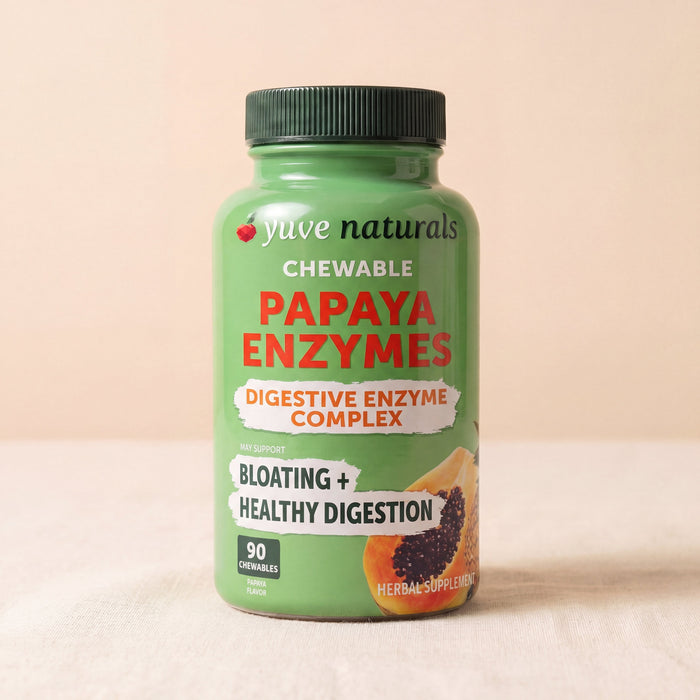
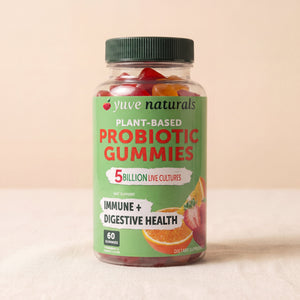
Commercial disclosure: Yuve publishes this article and sells the products linked below; that relationship did not change the scoring criteria. The current Yuve Probiotic Gummies page prints a two-gummy serving, 5 billion CFU of Bacillus coagulans at manufacture, 3 grams of sugar alcohol, directions, and the full other-ingredient list. That supports serving and excipient transparency, while the species-only organism statement and manufacture-time CFU claim limit strain-level and end-of-shelf-life comparison. Yuve publicly states that every batch undergoes independent laboratory testing and that customers can request a certificate of analysis using the product name and lot number. A buyer should still inspect the received COA for lot match, laboratory identity, test date, analytes, specifications, and results. Best for an online label review: the product page. Best for current-batch evidence: the lot-matched COA. Best for a formal certification question: verify an exact record in the certifier's directory rather than treating brand-wide testing as the same thing.
What red flags make dose comparisons unreliable?
Red flags include a missing or unreadable Supplement Facts panel, different labels across the brand site and retailer, a front-label dose that applies to several capsules, and a proprietary blend that hides individual amounts. Watch for units that switch between micrograms and milligrams, probiotics reported only by total blend weight, enzymes listed only in milligrams without activity units, or botanical extracts lacking plant part and standardization. “Clinically studied ingredients” does not establish that the finished formula used the studied form, dose, combination, or population. A testing badge without a named laboratory, certification body, searchable record, product scope, or date remains a claim rather than verification. The FDA explains that supplements are not approved for safety and effectiveness before sale, so shoppers should not interpret a compliant label as premarket endorsement. Contradictory directions, impossible serving math, and disease-treatment promises justify leaving the product unranked until the company clarifies them.
Which transparency signal is best for each use case?
Best for comparing formulas before purchase: current Supplement Facts panels normalized to one label-directed day. Best for checking a current bottle: a certificate of analysis that matches its lot number and states test scope, date, laboratory, specifications, and results. Best for independent finished-product verification: a searchable USP or NSF record for the exact product and variant. Best for competitive athletes: a sport-specific program such as NSF Certified for Sport, combined with team or governing-body guidance. Best for a probiotic: full genus, species, strain, CFU timing, storage, and expiration information. Best for an enzyme: declared activity units and food-specific directions. Best for dietary restrictions: a clear ingredient and allergen review plus the relevant certification directory when formal verification matters. Best for value: cost per verified daily serving, not bottle price. No single badge answers formulation, purity, clinical relevance, allergens, ethics, and sourcing at once; keep those judgments separate.
What questions should you ask supplement companies?
Send precise questions that can produce documents rather than reassurance. Ask for the current label, the manufacturing lot represented by the bottle, and a certificate of analysis matching that lot. Ask whether testing covers raw materials, the finished product, or both; which analytes were measured; what specifications or reporting limits applied; and whether the laboratory is independent and accredited for the methods used. Ask whether a certification covers the exact flavor, dose, and market variant, because company participation does not automatically certify every SKU. For proprietary blends, ask whether individual ingredient amounts can be disclosed. For probiotics, ask whether CFU are guaranteed through expiration and whether each strain is identified. For enzymes, ask for activity units. For allergens and dietary claims, ask what finished-product controls and verification support the statement. A company may have legitimate confidentiality limits, but a shopper can still judge whether the available evidence answers the quality question that matters.
Does an FDA-compliant label prove the dose is accurate?
No. FDA rules establish required disclosures and company responsibilities, but supplements do not receive routine premarket approval for safety, effectiveness, or label accuracy. Independent records can add verification.
Is a proprietary blend automatically poor quality?
No, but it prevents ingredient-level dose comparison when individual amounts remain hidden. The blend can still be assessed for total weight, ingredients, testing, safety, and finished-product evidence.
Does a GMP badge prove the finished product was tested?
Not by itself. GMP documentation can address manufacturing systems, while finished-product identity, potency, contaminants, and lot results require product-specific evidence.
Is a certificate of analysis better than a certification seal?
They answer different questions. A lot-matched COA can show current test results, while a certification program can add standardized auditing, testing, and directory verification.
Should you compare cost per capsule or per serving?
Compare cost per label-directed daily serving. Capsule, gummy, and scoop counts can otherwise make a lower-dose or multi-unit product appear cheaper than it is.
Can one trusted product make the whole company trustworthy?
No. Certification, formulation, and testing scope can differ by product, flavor, country, and lot. Repeat the evaluation for every exact formula you plan to buy.
Supplement transparency becomes comparable when every company faces the same product-level questions. Normalize the daily dose, separate labels from independent verification, match documents to the exact SKU and lot, and keep effectiveness apart from quality control. Browse the Yuve daily essentials collection with the same scorecard rather than relying on brand reputation alone.